Zudio's small-town push lifts Trent profit 25% as Noel Tata steps down
Version 1 of 1 saved 30 Oct 2026, 8:00 am IST · Chain line 323
As it was first published
Zudio's small-town push lifts Trent profit 25% as Noel Tata steps down
Tata's fashion retailer opened its 1,000th Zudio store, and a lawyer will take over as chairman on 12 November.
Picture a shop that sells clothes for under a thousand rupees, changes its racks every 15 days, and almost never holds a sale. That shop is Zudio. On Thursday, 29 October 2026, its owner Trent said Zudio had opened its 1,000th store. On the same day, Trent shared its results for July to September and said its chairman, Noel Tata, will retire on 11 November after 29 years with the company.
Here is what happened, how a cheap clothes shop makes real money, and what more stores mean for shoppers in smaller towns.
First, who is Trent?
Trent is the Tata Group's shop business. It runs the fashion chains Westside and Zudio, a few smaller lifestyle shops, and a grocery chain called Star. Westside aims at a wider lifestyle and fashion shopper. Zudio is the low price, value fashion brand. Trent launched Zudio in 2015 and opened its first store in Bengaluru in 2016.
The numbers, in plain words
Revenue is all the money that comes in from selling things, before any costs. Profit is what is left after paying for everything: clothes, rent, salaries, electricity, tax.
For the July to September quarter, Trent's revenue rose 22% to Rs 5,873 crore. Its net profit rose 25% to Rs 468 crore. These are consolidated numbers. "Consolidated" means the whole family of Trent companies added together, like adding up the pocket money of every sibling in a house.
One report gave a slightly different profit. Business Standard's chairman story put the rise at 23.1% to about Rs 464 crore. Economic Times, Mint and the PTI news agency all report Rs 468 crore, up 25%, from the company's own statement, so that is the figure used here.
There is also a "standalone" number, which counts only the main company, Trent Ltd, on its own. On that basis, profit grew just 9% to Rs 490 crore. Why so slow? A year ago, the same quarter had a one-time gain of Rs 96 crore from selling some things the company owned. Without a similar gain this year, the jump looks smaller.
Another number shows the shops are running better. Trent's operating EBIT margin rose to 11.6% from 10.5% a year earlier. Margin simply means how much of every Rs 100 of sales is kept as profit from running the business. So now, roughly Rs 11.60 out of every Rs 100 stays with Trent, up from Rs 10.50.
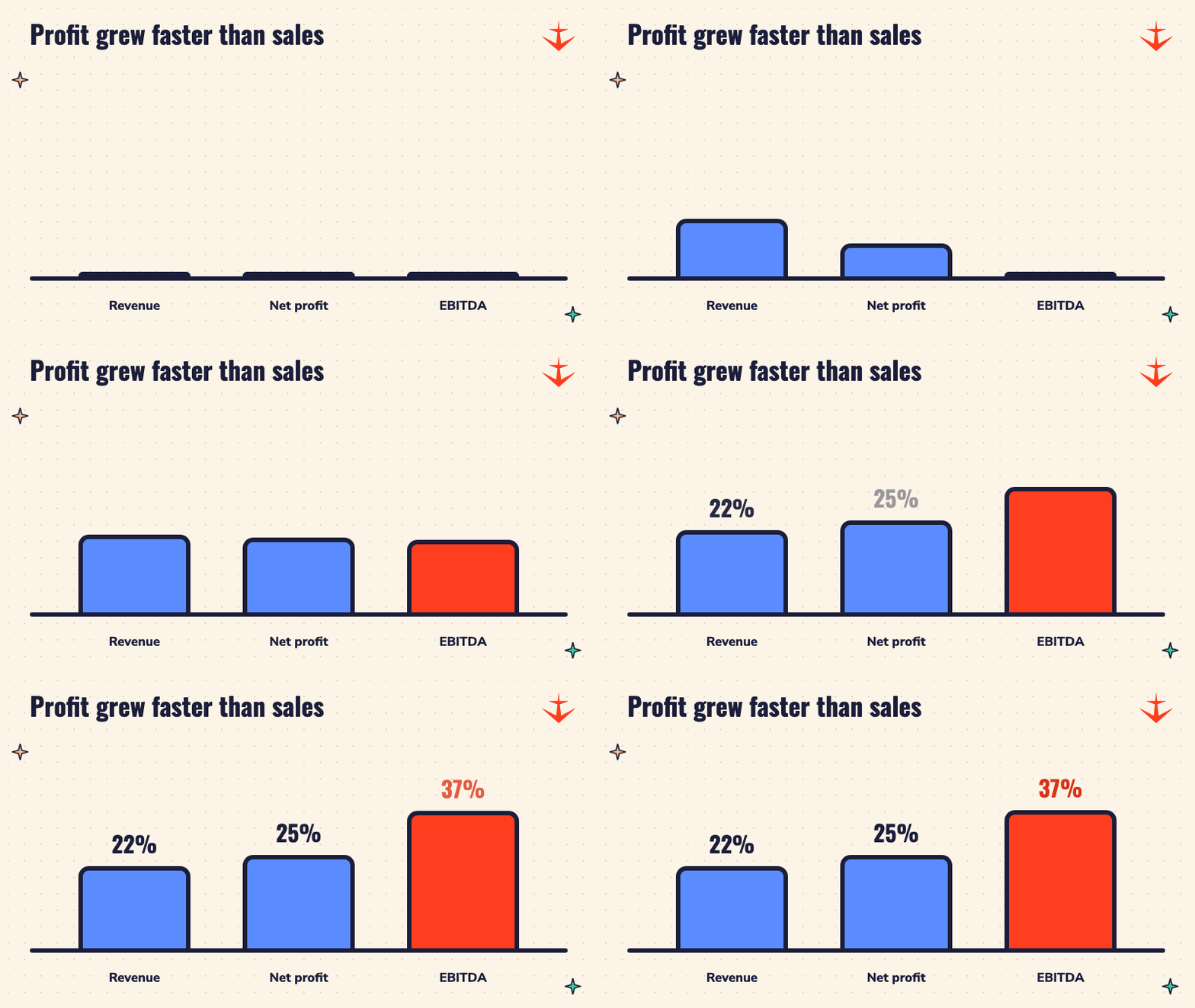
EBITDA, in the chart, is profit before interest, tax and wear and tear on things like buildings and machines. Trent's operating EBITDA rose 37%, according to Economic Times.
How can a Rs 999 shop make money?
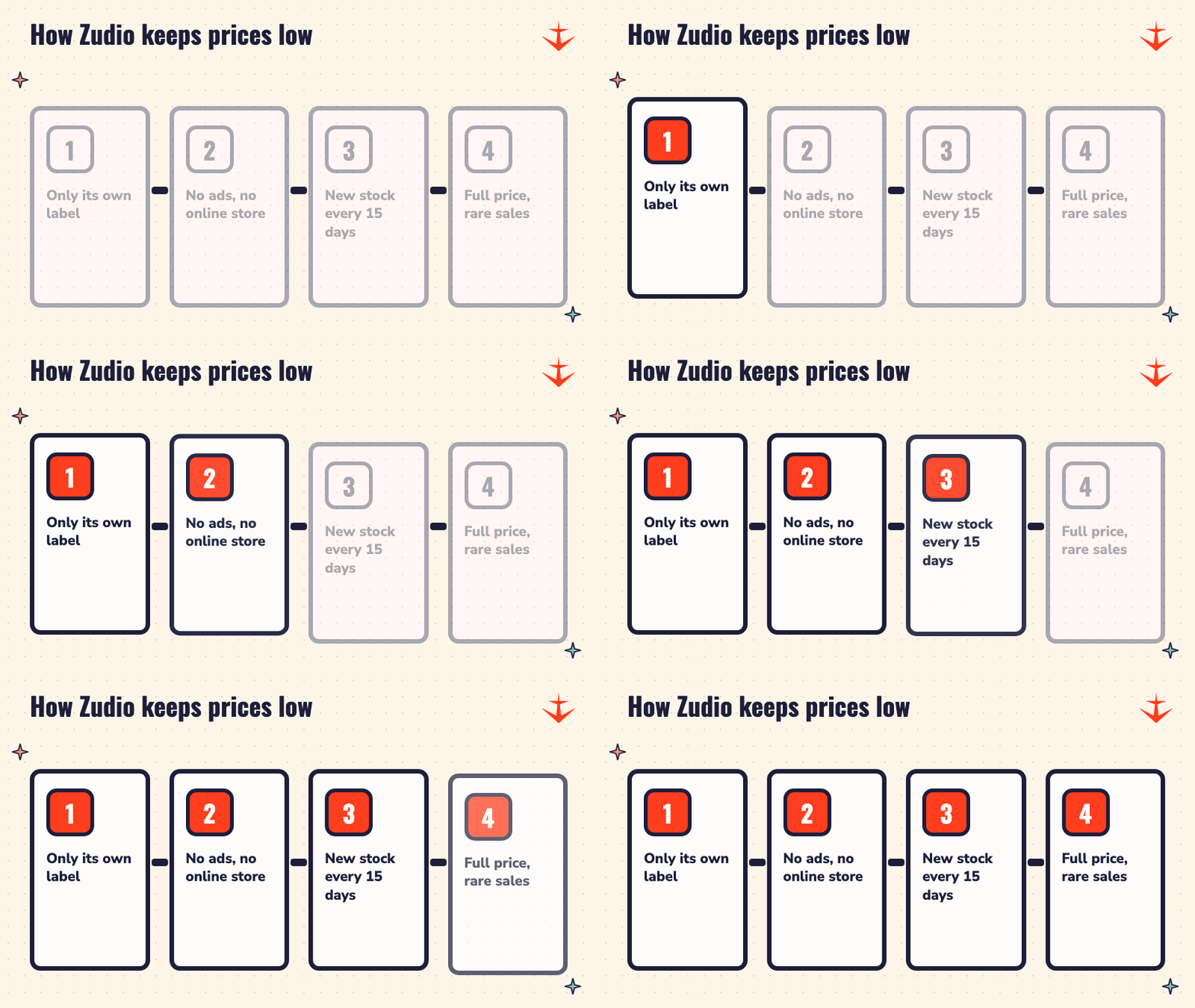
Selling cheap and still earning a profit sounds like a samosa stall that charges Rs 10 and still buys a new scooter. The trick is to cut costs the shopper never notices. A Forbes India analysis by two management professors lists how Zudio does it:
- Only its own label. Every item carries the Zudio name. This is called private label: the shop designs and orders its own clothes instead of buying other brands and paying their extra cut.
- No ads and no online store. Zudio sells only in physical shops and does not spend on advertising. That saves two big bills other brands pay.
- Fresh stock every 15 days. Stock sells and gets replaced fast, which keeps inventory costs low. Inventory is simply the pile of goods a shop holds.
- Full price, almost always. Items sell at MRP, the maximum retail price printed on the tag, with sales only twice a year.
- Someone else pays for the shop. Zudio uses a model called FOCO, short for franchise-owned, company-operated. A franchise partner owns the store, while the company runs it. The analysis says this helps keep running costs low.
The 15-day stock change is unusual. Fund manager Saurabh Mukherjea told Hindustan Times in 2024: "No other apparel firm in the industry turns its inventory as fast."
Why smaller towns matter so much
India's cities are often grouped in tiers. Tier 1 means the biggest metros, like Mumbai or Delhi. Tier 2 and Tier 3 are smaller cities and towns.
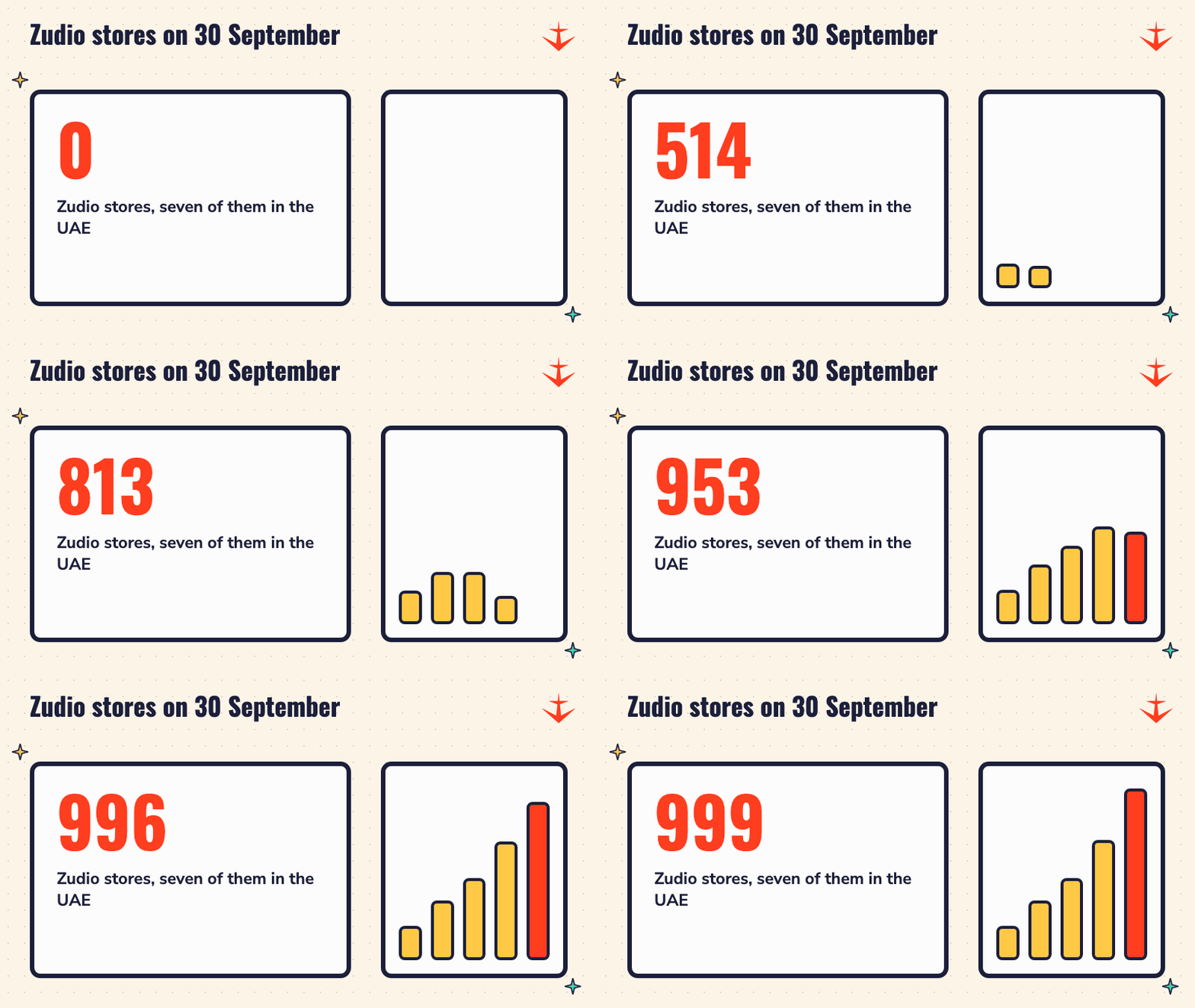
In the July to September quarter, Trent opened 19 Zudio stores and 10 Westside stores, and merged two Zudio shops. By 30 September it had 999 Zudio stores (seven of them in the UAE), 311 Westside stores and 32 other lifestyle stores. Its fashion shops covered more than 18.5 million square feet across 339 cities.
Most new Zudio stores went to smaller places. According to Mint, about eighty five out of every hundred Zudio stores opened in the quarter were in Tier 2 cities and beyond, or in growing areas on the edge of big cities.
Noel Tata said in the results statement: "The compelling reception we are witnessing gives us the conviction to double down into more hinterlands." Hinterlands simply means places far from the big metros.
For a shopper in a small town, this can mean a Zudio or Westside shop closer to home, instead of a trip to the nearest big city.
Trent also said that like-for-like growth in its fashion shops was in the mid-single digits. Like-for-like means comparing only shops that were already open a year ago. It shows whether old shops are selling more, not just whether new shops are adding sales.
More than shirts and jeans
Trent is selling more types of things. Beauty and personal care, innerwear and footwear now bring in more than 21% of its revenue. Westside's online sales, including on the Tata Neu platform, rose 20% in the first half of the year and are now over 6% of Westside's revenue.
Its grocery chain Star grew revenue by more than 20%. Star now runs 87 stores in 13 cities, and more than 74% of its sales come from its own brands. That is the same trick as Zudio: sell your own label, keep more of every rupee.
A new captain for the team
Noel Tata will retire as chairman and director of Trent on 11 November. He has been with the company since 1997. From 12 November he becomes "chairman emeritus", an honorary role, a bit like a retired cricket captain who still gets a seat in the dressing room.
Mint reports that the Tata Group asks non-executive directors to step down from boards at age 70. Noel Tata remains chairman of Tata Trusts, which owns most of Tata Sons.
The new chairman is Bahram Vakil, a co-founder of the law firm AZB and Partners. According to Mint, he is one of India's prominent lawyers on restructuring and bankruptcy, which means fixing or closing down companies in money trouble.
This NDTV Profit video looks at Noel Tata's retail playbook at Trent.
What comes next
Trent says it will keep investing in more stores. Mint reports the company expects its yearly pace of new stores to stay about the same, though the number may jump up and down from quarter to quarter. It also warned that many costs are still rising.
Noel Tata's parting message also pointed abroad. He said he hopes Trent will become an exporter, "carrying the flag of Indian brands into markets beyond our shores." Zudio already runs seven stores in the UAE.
For shoppers, the big picture is simple. More Zudio and Westside shops are heading to smaller towns, and Trent's numbers show that cheap clothes can still earn a profit when costs are kept tight.
Sources
- Economic Times: More Zudio and Westside stores, and Q2 FY27 results
- Economic Times: Noel Tata to step down as Trent chairman
- Business Standard, from the PTI news agency: Trent Q2 net profit rises 25% to Rs 468 crore
- Business Standard: Noel Tata to retire as Trent chairman on Nov 11
- Mint: Trent names Bahram Vakil chairman
- Mint: Noel Tata to retire as Trent chairman
- Forbes India: How Zudio made profitability trendy
- Hindustan Times: Why is Zudio growing?
- Wikipedia: Zudio
- Cover photo: Zudio store at Gopalan Arcade Mall, Rajarajeshwari Nagar (2026), by Gpkp, CC BY-SA 4.0
