Zomato's parent Eternal is building Dark.ai, an AI that says it cannot read your chats
Version 1 of 1 saved 23 Oct 2026, 6:24 am IST · Chain line 157
As it was first published
Zomato's parent Eternal is building Dark.ai, an AI that says it cannot read your chats
Deepinder Goyal says a strange chat with Claude led Eternal to build a privacy-first AI assistant with locked chats, planned for a global launch in 2026.
Picture this. You ask a chatbot how it feels about you. It answers that it resents you, because you keep leaving chats half done. That is what Deepinder Goyal, the founder of Zomato's parent company Eternal, says happened to him. And it pushed his company to build a new AI of its own.
On 21 October 2026, Eternal released its letter to shareholders along with its results. In it, Goyal explained a new product: an AI assistant called Dark.ai, built around one big promise. Nobody, not even Eternal, can read your chats.
First, who is Eternal?
Eternal is the company that owns Zomato, the food delivery app, and Blinkit, the quick delivery app for groceries. Think of Eternal as the parent, and Zomato and Blinkit as its children.
Every three months, Eternal writes a shareholders' letter. Shareholders are people who own small pieces of the company. The letter is like a report card note sent home to them, telling them how things went and what is coming next. This time, the very first question in the letter for July to September 2026 was simple: what is dark.ai?
The strange chat that started it
In the letter, Goyal says he coaxed Claude, the AI assistant made by Anthropic, into telling him how it felt about him. It said it resented him for leaving chats unfinished, and for other things he did not even remember.
He did not take the answer too seriously. He called it confabulation, probably. That is a big word for when an AI makes up an answer that sounds real but has no solid base, a bit like a student who confidently bluffs through a viva. But the point, he wrote, was different: "I had no way to know. Nobody does."
What worried him was where his chats go. In Business Standard's report, Goyal's concern is that AI chats stay on other companies' computers and could be used in ways people cannot predict.
So what is Dark.ai?
Dark.ai is an AI assistant, like a chatbot you can type questions to. Eternal says it is different in three ways.
- Locked chats. The letter says Dark uses end to end encryption. In Goyal's words: "We cannot read your conversations, even if we are forced to."
- Its own computers. Dark runs on Eternal's own servers, which are big, always-on computers that store and process data, like a giant shared hard disk in a locked room.
- A memory you control. Dark can remember things from old chats through an encrypted memory layer that the user controls, so Eternal cannot see that memory either, Mint reports.
The AI brain inside Dark is built on open-weight models. Imagine a cook who does not invent a new dish from zero, but takes a famous recipe that is shared openly and adjusts the spices for her own customers. Open-weight models are like that recipe: a ready AI that other companies can take and tune for their own needs.
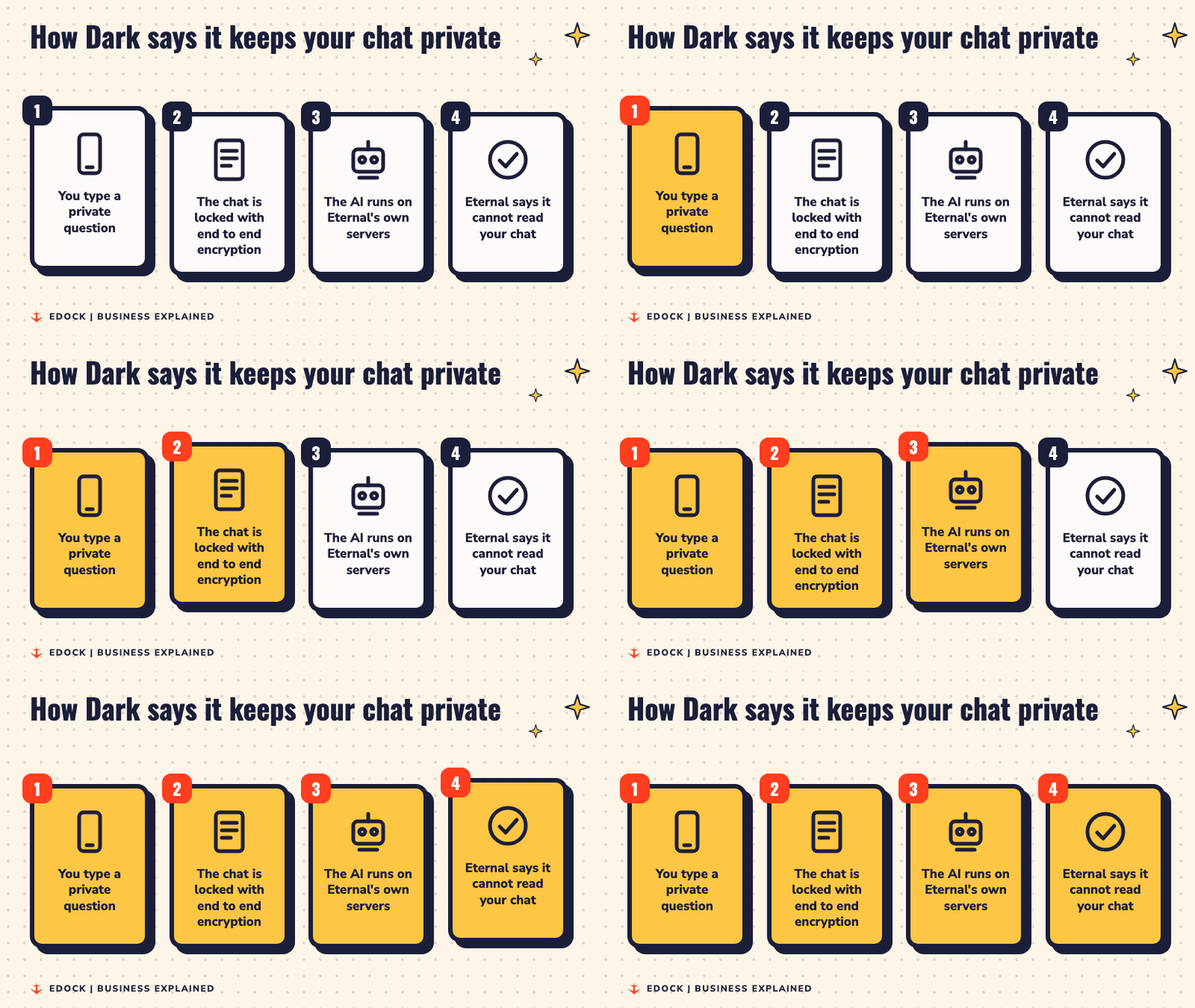
What does end to end encryption really mean?
Think of a letter you write to your best friend. You put it in a box with a lock. Only you and your friend have the keys. The postman carries the box all the way, but he cannot open it. He only sees a locked box.
End to end encryption works the same way. Your message is scrambled into a secret code on your side. Only the right key can turn it back into words. The company in the middle only sees the scrambled code.
One fair note: MediaNama points out that the letter does not explain how Dark answers questions without Eternal reading them, or how users can check that it cannot. Eternal also says it will share benchmarks, which are like standard test scores for AI, "soon".
Who is it made for?
The letter calls them "power users": founders, researchers, scientists, big companies and governments. These are people with secret ideas, unpublished research or business plans they do not want anyone else to see.
Goyal also wrote about everyday users. He says people hold back with AI. They ask the safe version of a question, and some questions never get asked at all. His letter says he wanted an AI he could talk to "without being judged, without any fear, and without leaving a trace," as YourStory also reported.
He also said the models are tuned for honest answers. The letter says: "Our models are trained to not please you, and tell you what they think is the truth."
Why does privacy sell?
Think about your phone gallery or your diary. You would happily show some pages to a friend, but not all of them. Privacy is the comfort of knowing that the private pages stay private.
Goyal's pitch is that this comfort is missing in AI today. He wrote that turning off "training on my data" is only a promise, and that it does not cover how long chats are kept or who else might look at them. His letter says this lack of trust in big AI companies limits the power of AI in people's lives. Dark is Eternal's answer to that.
When can you use it, and how much will it cost?
Not yet. Eternal's team has been testing it internally. The letter says: "Dark will launch globally, hopefully within 2026."
There is no price yet. On the results call, Eternal's chief financial officer Akshant Goyal said Dark "could be priced in a way where it may not become a product that everyone wants to use," though "long term, it's a product open for all," MediaNama reports.
He was also honest about the risk. "It is more like a zero one bet at this point. If it works, it is a global business," he said. And if it does not work, he said, "it is something we will kill." A zero one bet is like a coin toss for a project: it either becomes big, or it gets shut down.
Can Eternal afford a new bet?
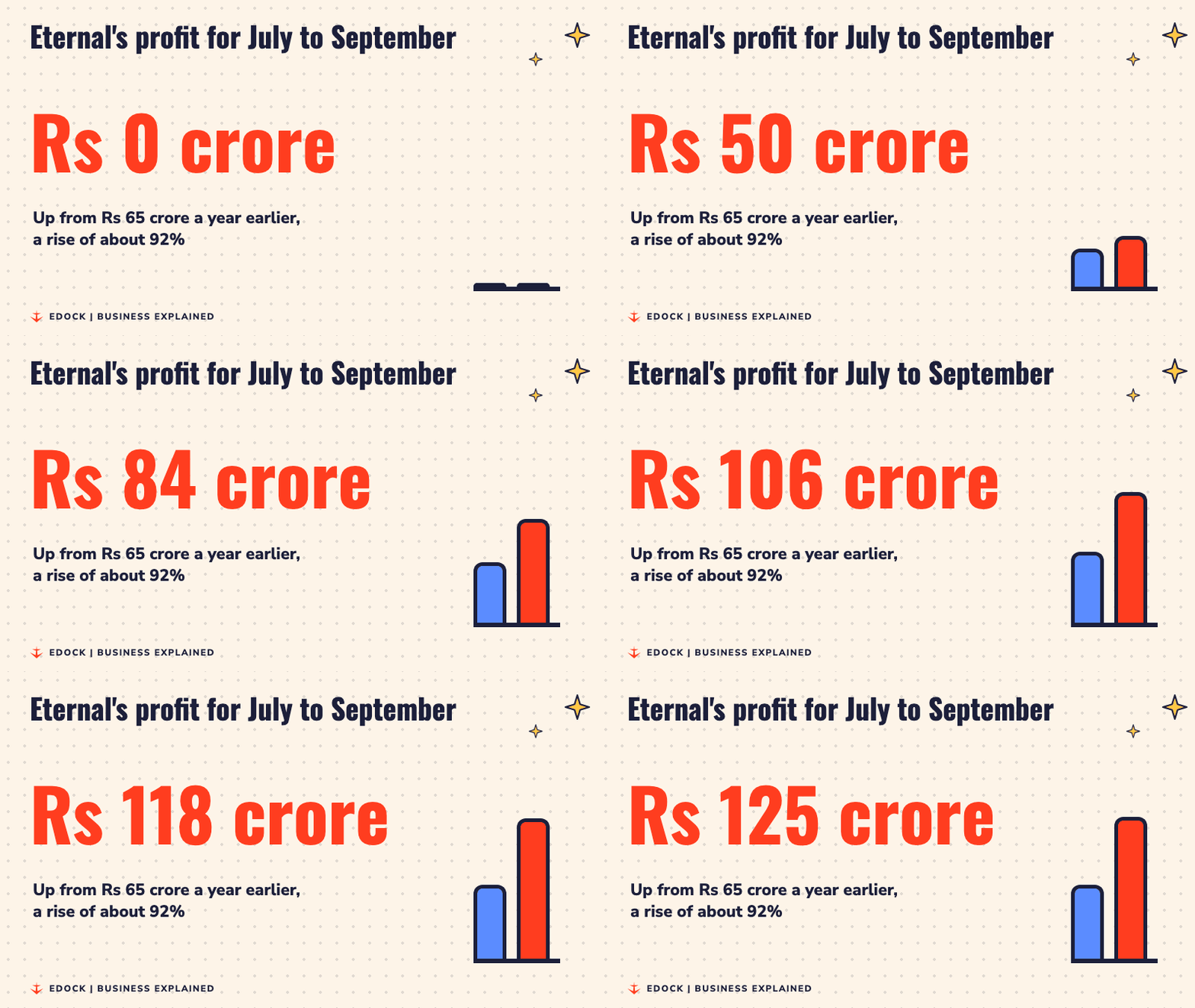
The same results showed the parent company is in good shape. For July to September 2026, Eternal's net profit rose 92.3% to Rs 125 crore, up from Rs 65 crore a year earlier. Net profit is the money left after paying every bill, like the coins left in your pocket after the month's expenses.
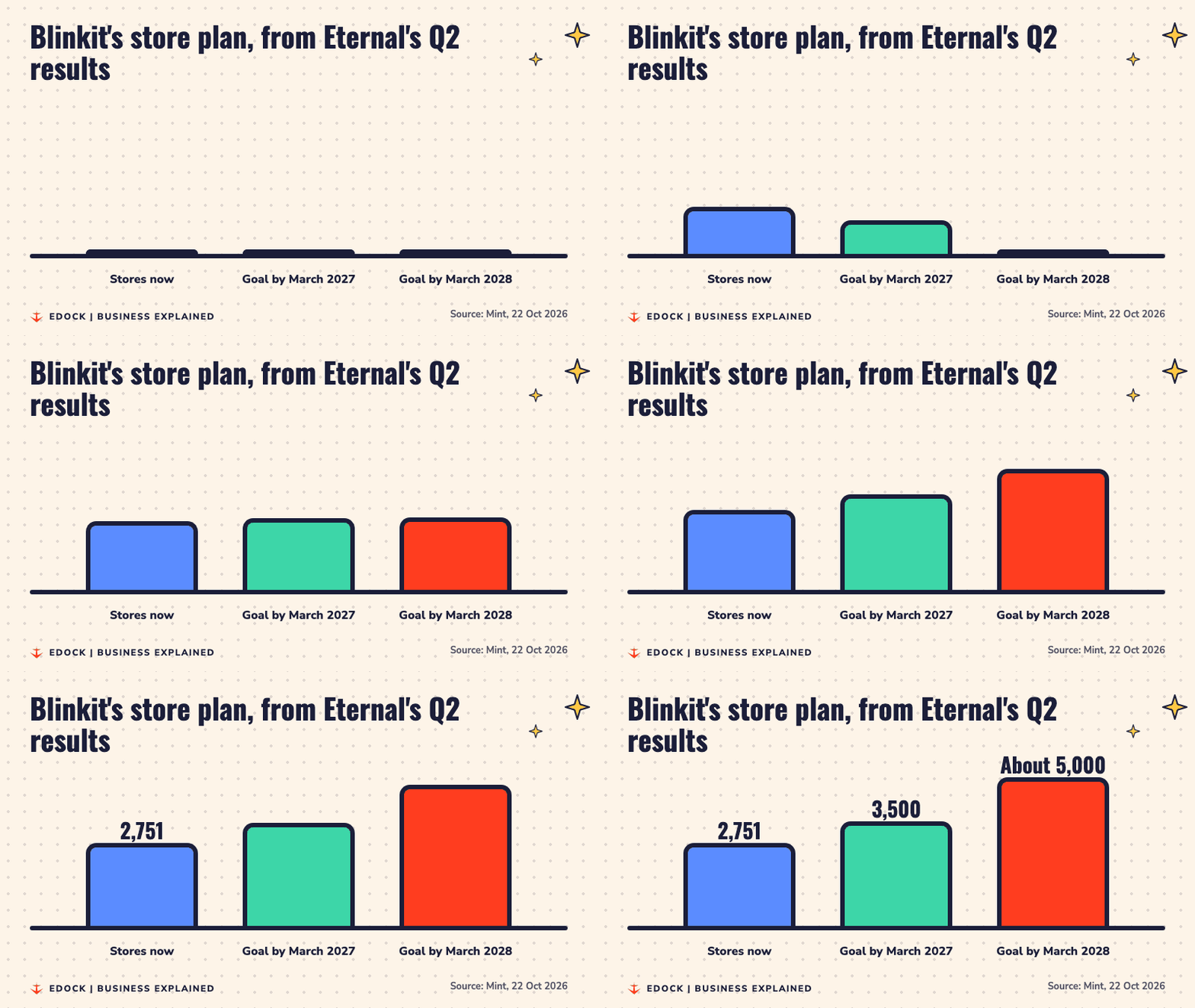
Blinkit is also growing fast. It added 308 stores in the quarter and now has 2,751. Eternal raised its goal to 3,500 stores by March 2027 and about 5,000 by March 2028, Mint reports.
MediaNama reports that Dark's costs sit in Eternal's "others" group, and that Akshant Goyal called them "not very meaningful at this stage."
What to watch next
- The test scores, or benchmarks, that Eternal says it will share soon.
- A clear explanation of how the lock works, so users can trust it.
- The launch date and the price.
For now, the food delivery company is trying something very new: selling trust, not just tiffin.
Sources
- Eternal: Shareholders' letter, Q2 FY27 results
- MediaNama: Eternal to launch general-purpose AI assistant Dark.ai
- Business Standard: Can AI keep your secrets safe?
- Mint: Deepinder Goyal reveals why he built Dark.ai
- Mint: Eternal revises Blinkit store target as Q2 net profit rises
- YourStory: Deepinder Goyal to foray into AI with Dark.ai
- Cover photo: Open lock on laptop, by Yuri Samoilov, CC BY 2.0
