Zoho skipped pay raises this year. Its founder says AI pushed costs up
Version 1 of 1 saved 14 Oct 2026, 8:31 am IST · Chain line 33
As it was first published
Zoho skipped pay raises this year. Its founder says AI pushed costs up
Server prices went up 4 times, marketing got cut, and staff numbers have stayed flat for 18 months. Here is the story in simple words.
Picture this. You have worked hard all year. Appraisal time comes, and you are waiting for your pay to go up. Then your company says: not this year.
That is what happened at Zoho, the Indian software company. Late on October 12, 2026 (early on October 13 in India), its co-founder Sridhar Vembu wrote a post on X. He said Zoho has told its employees it cannot give the usual pay increase this year. And he pointed at a surprising reason: AI.
Let us break it down, step by step.
First, what is Zoho?
Zoho makes software apps that other businesses use to run their work. Think of it as a big toolbox, but full of digital tools instead of hammers.
The company began in 1996 under a different name, AdventNet, and took the name Zoho in 2009. In 2023, it crossed 100 million users. It also has offices in small towns, like Tenkasi, not just in big cities.
What exactly did the founder say?
His post was short. Here are the main points, in simple words:
- AI has made Zoho's costs go up a lot.
- The servers Zoho needs for its data centres now cost 4 times more.
- Zoho is using more and more AI, so its AI bills are much higher.
- Zoho has cut its marketing budget.
- Employees will not get the usual yearly pay increase this year. He said sorry for this.
- Zoho will work hard to avoid mass layoffs.
- Zoho has not grown its number of employees for 18 months.
"The business outlook for software is uncertain and AI has raised costs dramatically." Sridhar Vembu, on X
Here is his full post.
Wait, what is a server?
A server is a very strong computer that works for many people at once. Servers live in huge rooms called data centres. When you open an app and it loads your files, a server somewhere is doing that job.
A company like Zoho needs lots of servers to run its apps for millions of people. So when servers get costlier, Zoho's bills go up.
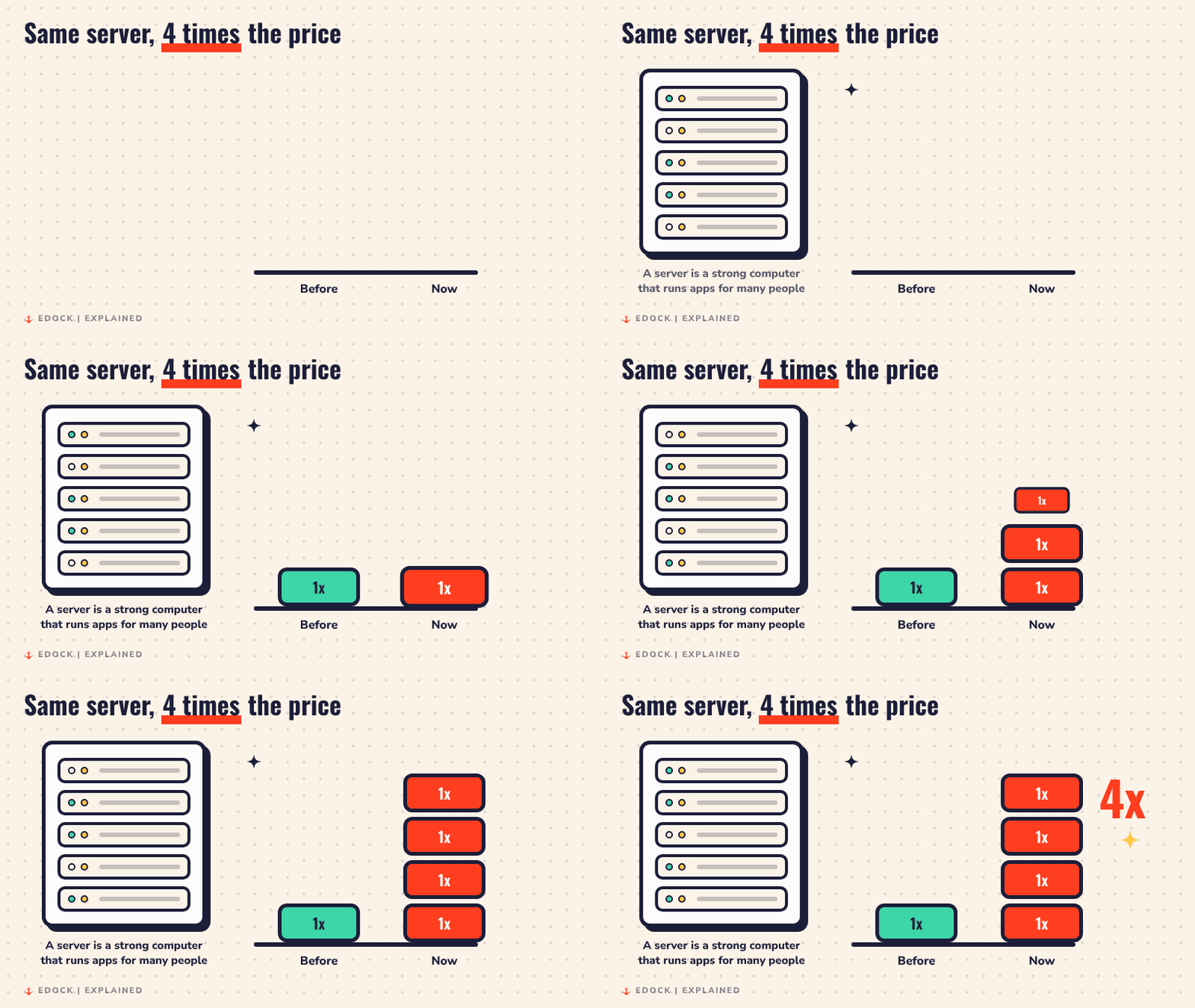
"4 times" is a big jump. Say a server cost ₹10 lakh before. At 4 times the price, the same server would cost ₹40 lakh now. (That is just an example. Zoho did not share its real prices.)
Why are servers getting so costly?
Vembu linked it to AI. Other reports show why. Servers need memory chips. These are the parts that help a computer hold information while it works, a bit like a notebook on your study desk.
AI computers need a huge number of these chips. In November 2025, Reuters reported that a research firm called Counterpoint expected prices of server memory chips to double by the end of 2026. When everyone wants the same thing at once, its price goes up. It is like samosas at a cricket match: when the whole stadium is hungry, the stall can charge more.
Why does AI cost so much to use?
Using AI is not free for a company. Every time an AI tool answers a question, powerful computers do a lot of work, and that work has a price.
Think of an auto-rickshaw meter. The longer you ride, the bigger the fare. Vembu wrote that AI use at Zoho is "increasing rapidly, leading to much higher expenses", and that Zoho is trying to control them.
Here is a short video from Mint about the news.
So where did Zoho cut back?
Think of a family budget. If the gas cylinder and vegetables suddenly cost more, the family cuts other things, like eating out. Zoho did something similar.
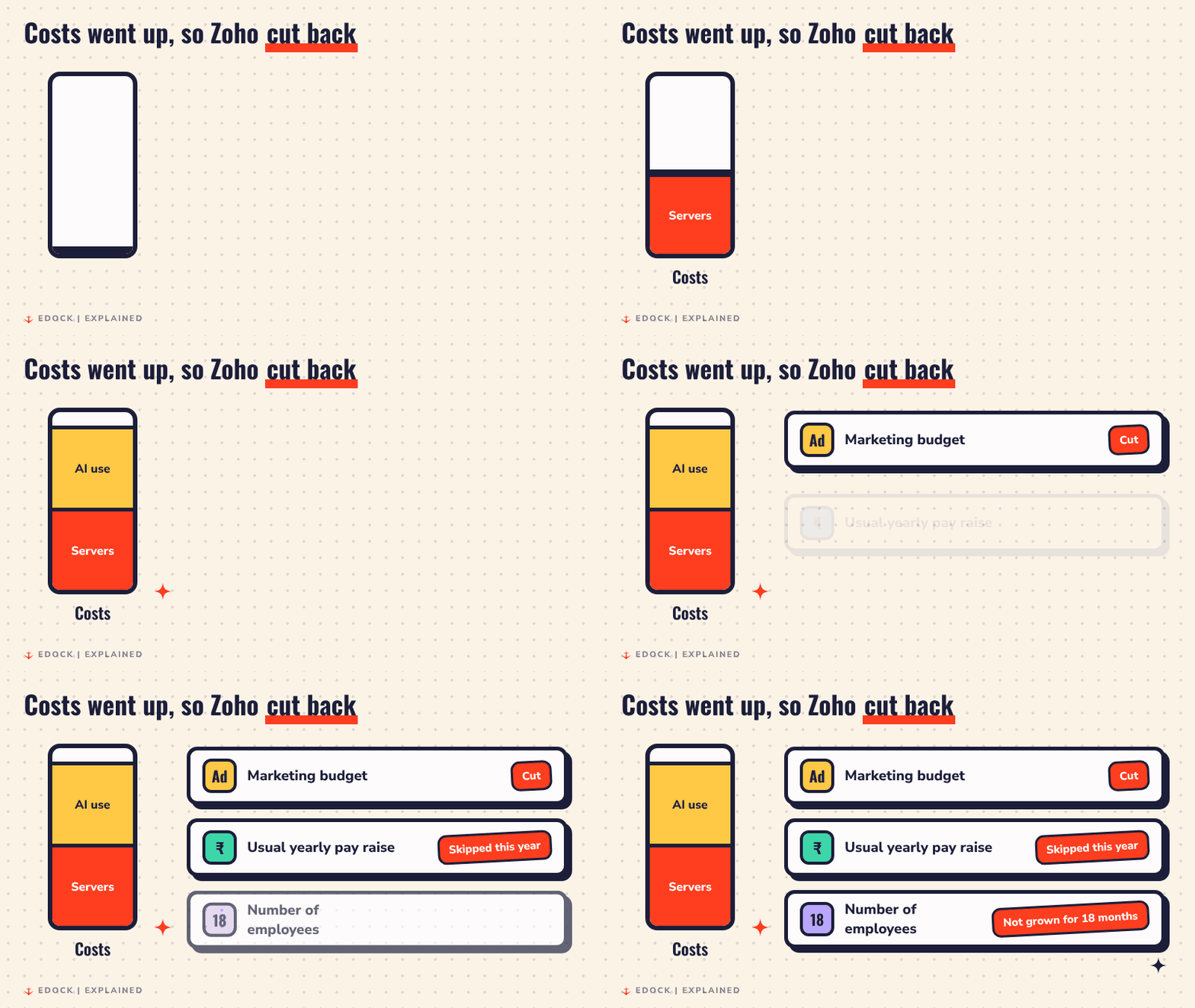
- Marketing budget: this is the money a company spends on ads to tell people about its products. Zoho has cut it.
- Pay raise: skipped for this year.
- Team size: Zoho has not grown its number of employees for 18 months. That is like a cricket team that keeps the same squad size season after season.
What does a skipped raise mean for an employee?
Most companies raise pay once a year. This is often called an appraisal or a hike.
Here is an example with made-up numbers. Say someone earns ₹30,000 a month. A 10% raise adds ₹3,000, so their pay becomes ₹33,000. With no raise, it stays at ₹30,000.
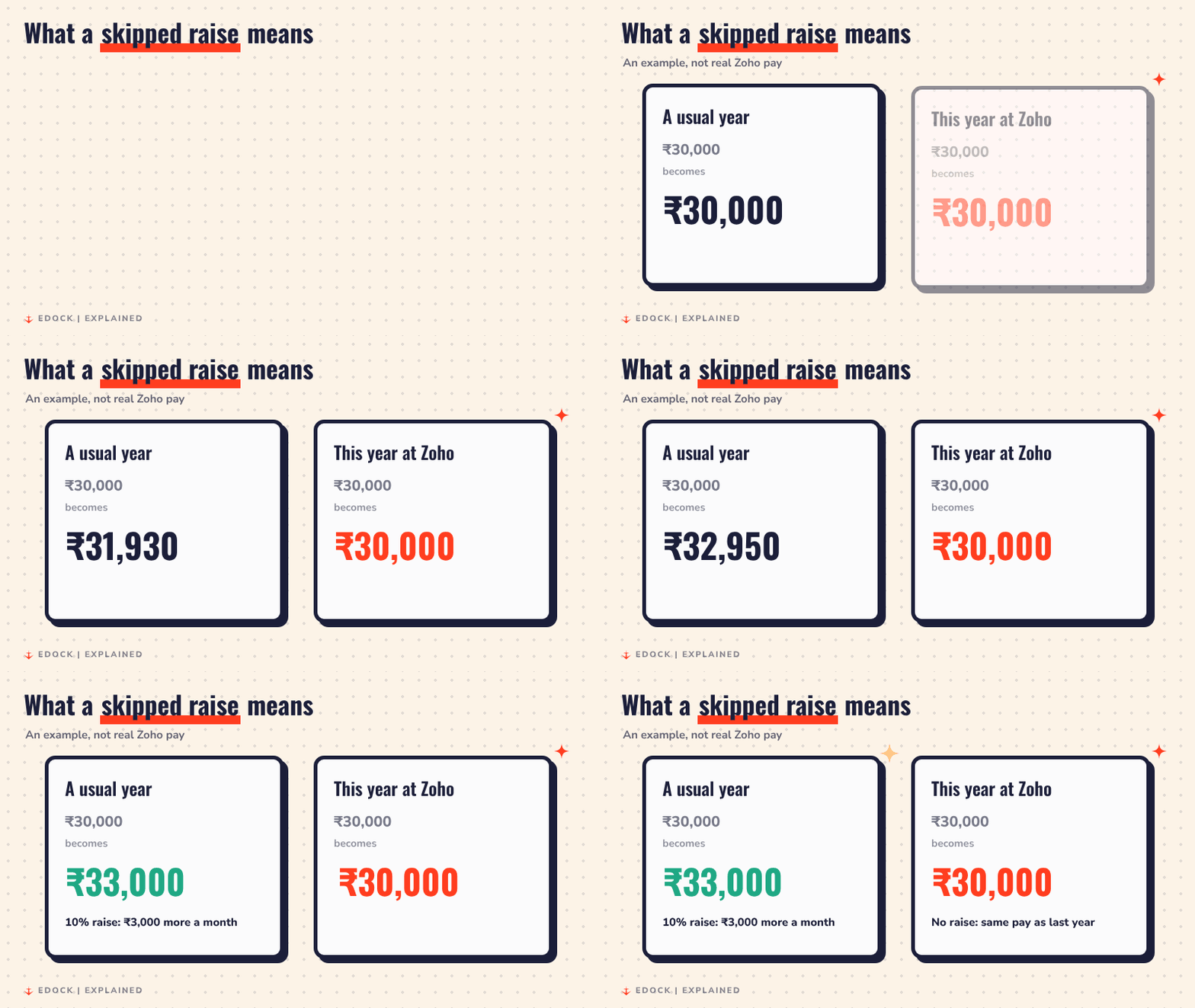
Zoho has not said how many employees are affected.
Is anyone losing their job?
Zoho has not announced any layoffs. A layoff is when a company asks people to leave because it wants to save money. Mass layoffs means many people at once.
Vembu wrote that Zoho "will work hard to avoid mass layoffs". People Matters also noted that he did not announce a layoff plan.
Why did he call the job outlook "grim"?
He wrote that "the outlook for software jobs in general is grim". Grim means gloomy or worrying. An outlook is what someone expects to happen next, like a weather forecast, but for jobs.
He also mentioned a "challenging geopolitical backdrop". That is a fancy way of saying that tension between countries makes business harder to plan.
This Firstpost video covers his warning.
What happens next?
Vembu said Zoho is "in the middle of reinventing" itself. To reinvent means to change the way you work in a big way. It is like a Test cricket player learning to bat for T20: same sport, very different game.
He said the next 3 to 5 years will show whether this change has worked. He ended his post with a simple line: "Please pray for us".
So the big lesson is simple. AI is not only changing what software can do. It is also changing what software companies spend, and that can reach all the way to an employee's payslip.
Sources
- Sridhar Vembu's post on X (October 12, 2026)
- Zoho freezes annual pay hikes, cuts marketing spend amid rising AI costs (The Tribune, October 13, 2026)
- No salary hikes at Zoho this year: Sridhar Vembu cites rising AI costs (People Matters, October 13, 2026)
- Zoho skips 2026 salary hikes as AI costs surge (Free Press Journal, October 13, 2026)
- About Zoho (Zoho)
- Nvidia shift to smartphone-style memory could double server-memory prices by end-2026 (Reuters via Yahoo Finance, November 19, 2025)
- Cover photos: Server Room, by Carl Lender, CC BY 2.0; Rear of rack at NERSC data center (closeup), by Derrick Coetzee, CC0 1.0

