Zetwerk is going public. Here is how this factory startup got so big
Its IPO opens on October 15. What Zetwerk does, who is selling, and where the money goes, in super easy words.

Picture this. A company that most people have never heard of brings in about ₹43 crore every single day, on average. (Its ₹15,913 crore of yearly revenue, divided by 365 days.) Its name is Zetwerk, and it is now getting ready to sell pieces of itself to the public.
On October 11, 2026, news came that Zetwerk has filed its final IPO papers, called the Red Herring Prospectus. Its IPO opens for the public on October 15 and closes on October 19. Let us break it down, step by step.
First, what does Zetwerk do?
Zetwerk is a Bengaluru company started in 2017 by Amrit Pratik Acharya and Srinath Ramakkrushnan. It runs a manufacturing platform that connects businesses with factories and suppliers. It works in areas like energy, electronics, aerospace, defence and machines that run by themselves.
Think of it like a smart middleman for making things. Say a big company needs 10,000 metal parts. Instead of hunting for the right factory on its own, it can go to Zetwerk, which links it with factories that can make them.
Zetwerk also runs its own factories. It has 26 manufacturing sites across India, the US, Spain and Germany. It makes products for power companies, renewable energy, consumer electronics and AI infrastructure.
What is an IPO, in simple words?
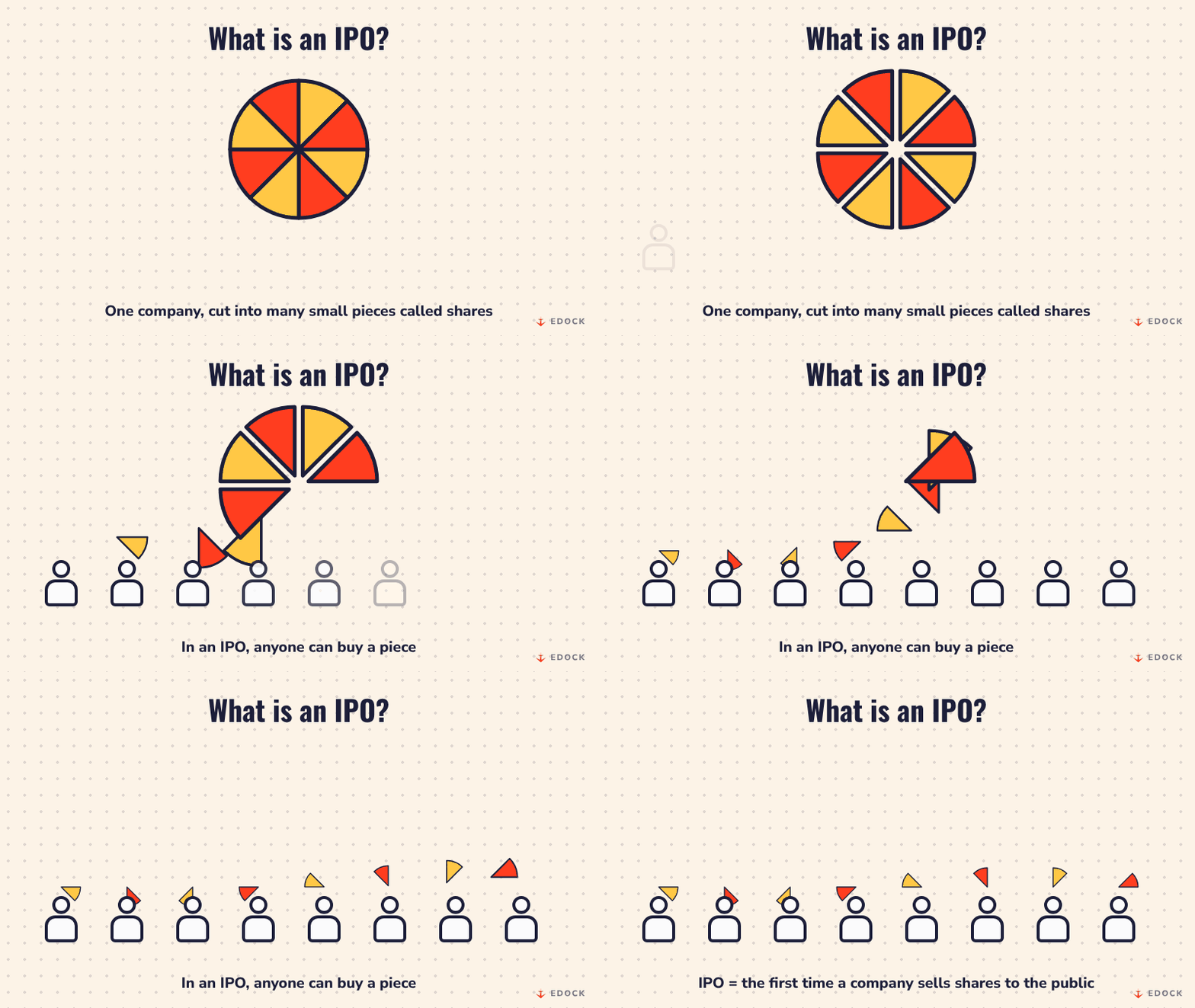
Imagine you run a samosa stall with two friends. The three of you own all of it. One day you want to open ten more stalls, but you need money. So you cut your business into many tiny pieces and sell some of them to anyone who wants one.
Those tiny pieces are called shares. An IPO, or Initial Public Offering, is the first time a company sells its shares to the public. After that, the shares can be bought and sold on the stock market every day.
The Red Herring Prospectus, or RHP, is the big rule book for the IPO. It tells buyers what the company does, how much money it makes and what it will do with the new money.
How big is this IPO?
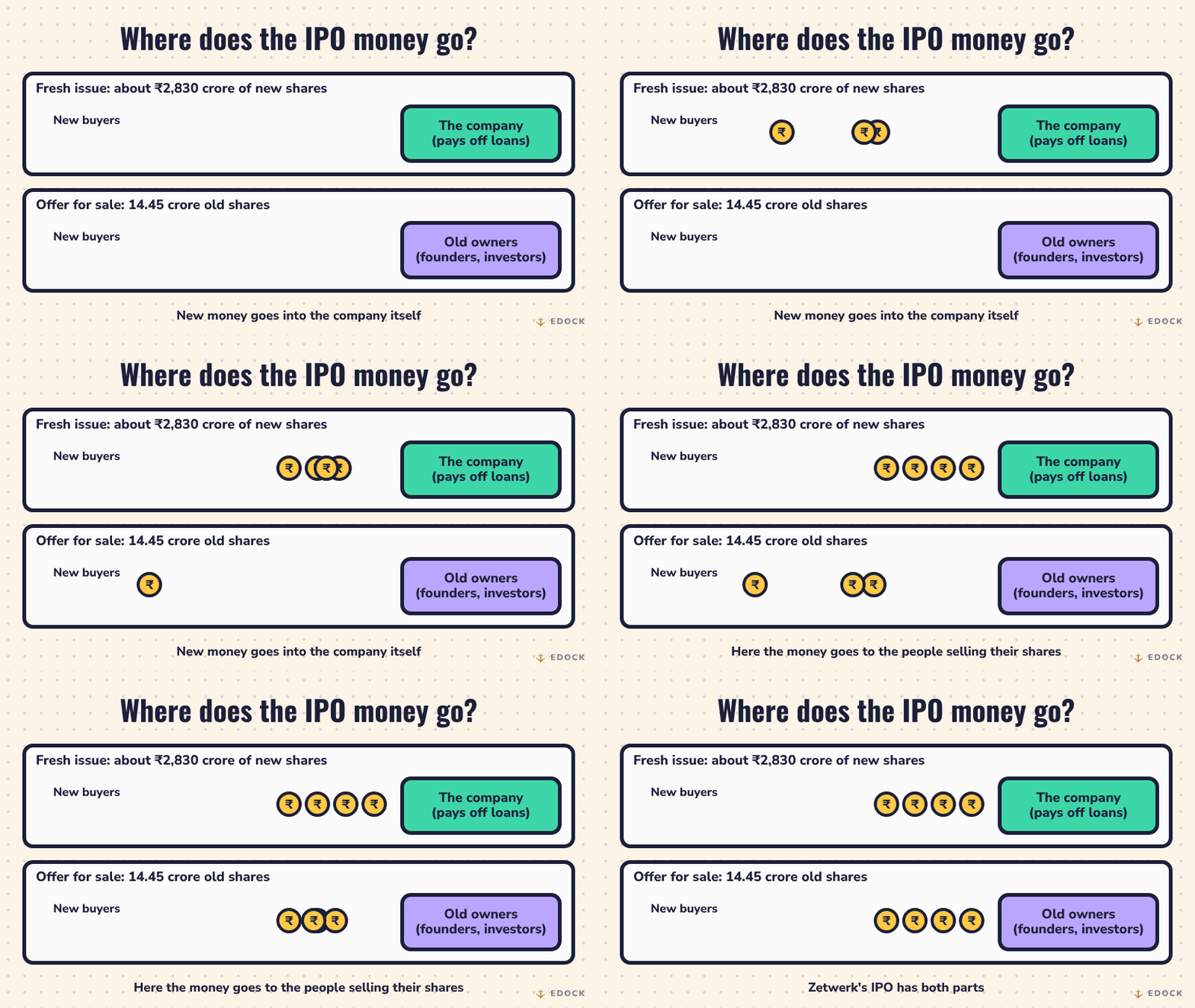
Zetwerk's IPO has two parts. Here they are.
- Fresh issue: Zetwerk will make new shares worth ₹2,830 crore and sell them. This money goes to the company itself.
- Offer for sale (OFS): People who already own Zetwerk will sell 14.45 crore of their old shares. This money goes to those sellers, not to the company.
Both numbers went up. In the August draft papers, the fresh issue was ₹2,600 crore and the OFS was 9.68 crore shares. So the fresh issue grew by ₹230 crore, and the OFS grew by about 49%.
Who is selling old shares?
The two founders will each sell 1.42 crore shares. A company linked to them, called Creovate Innovation, will sell up to 2.30 crore shares.
Early investors are selling too. These are firms that put money into Zetwerk when it was small. Lightspeed Venture Partners will sell 2.51 crore shares, and Peak XV Partners will sell 2.34 crore shares. Kae Capital, Kalysta Capital and Accel India are also selling some.
This is normal. Early investors are like friends who helped you start your samosa stall years ago. Selling some shares now lets them turn part of their piece into cash.
What will Zetwerk do with the new money?
Most of it will go to paying back loans. Zetwerk plans to use ₹1,300 crore to pay back money the company borrowed. Another ₹860 crore will pay back loans taken by nine of its smaller companies, called subsidiaries. A subsidiary is like a child company owned by the parent company.
Add those two together and you get ₹2,160 crore. That is more than three out of every four rupees from the fresh issue. The rest is for buying other businesses and for everyday company needs.
Why pay back loans? A loan is like borrowing pocket money from an elder sibling who charges you extra every month. The sooner you pay it back, the less extra you pay.
Is Zetwerk making money?
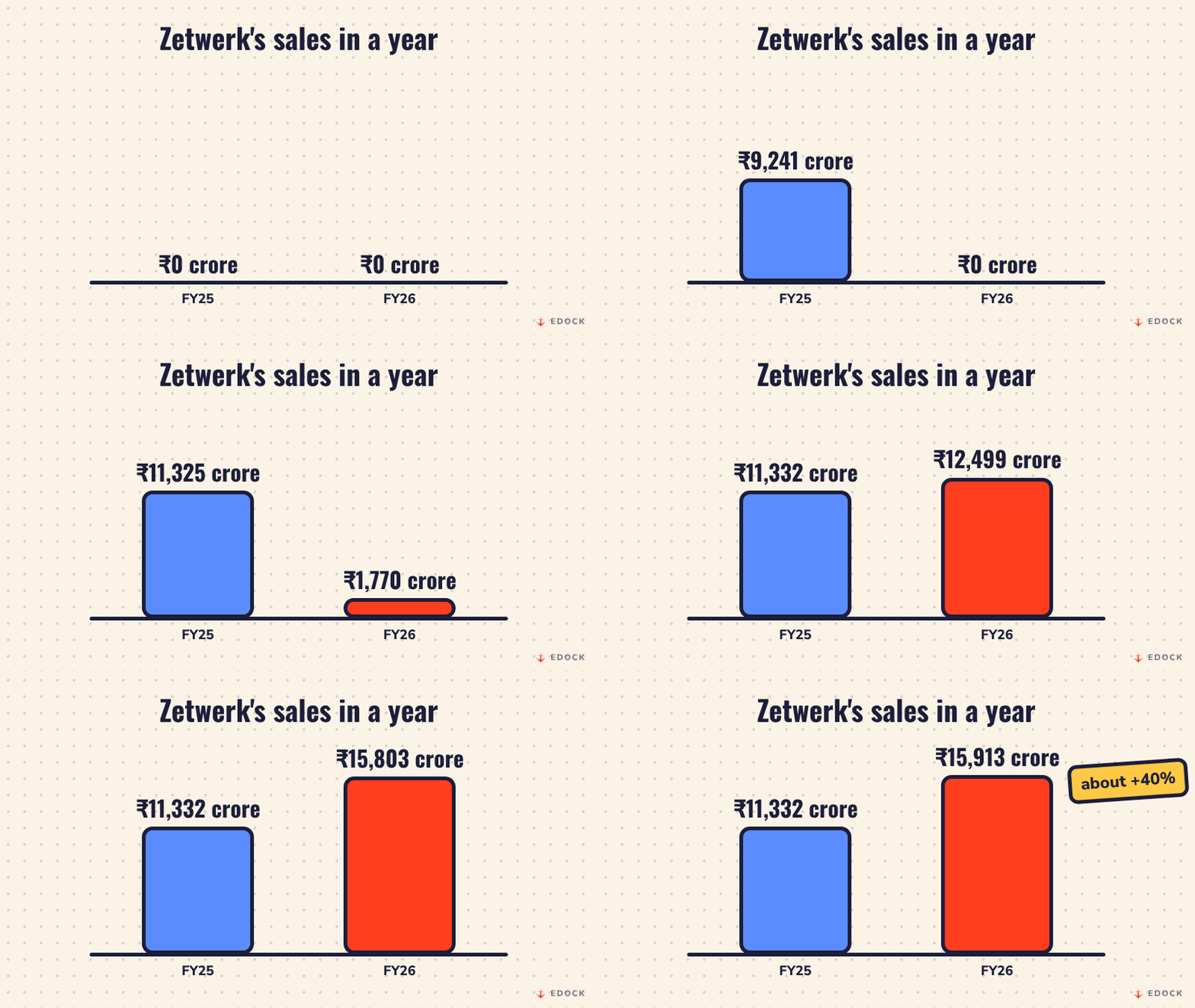
Here are the numbers. In the year that ended in March 2026 (called FY26), Zetwerk's revenue was ₹15,913 crore. A year before, in FY25, it was ₹11,332 crore. That is a jump of about 40% in one year.
Revenue means all the money a company gets from selling things, before it pays any costs. If your lemonade stall sells 100 glasses at ₹10, your revenue is ₹1,000, even if the lemons and sugar cost you ₹800.
What about profit? In April to June 2026, revenue grew 55% compared to the same three months a year before, reaching ₹4,118 crore. In that period, Zetwerk still made a loss of ₹64 crore. But a year earlier, that loss was ₹881 crore. So the loss shrank by about 93%.
Think of a cricket team that still loses, but by far fewer runs than before. It has not won yet, but it is getting much closer.
Why is everyone talking about IPOs right now?
Because 2026 is a very busy year for IPOs in India. Companies have raised over ₹1.1 lakh crore through 96 IPOs so far this year, including 35 in September alone. About a dozen more, including Zetwerk, plan to come to the market in October.
Zetwerk did not rush. It filed its papers in secret in March and got approval from the market regulator in July. The big investors called anchor investors get to put in their bids first, on October 14, one day before everyone else.
Why this story matters to you
Most startup stories you hear are about apps: food delivery, shopping, games. Zetwerk is different. It is about factories, metal, machines and power. It shows that a startup can grow huge by helping India make things, not just sell them.
When a company like this goes public, its numbers become open for everyone to read. That makes it a great live lesson in how real businesses work. This post is only to explain the news. It is not advice to buy or skip any share.
Sources
- Entrackr: Zetwerk raises fresh issue size to Rs 2,830 Cr, OFS component up 49% in RHP
- Entrackr: Zetwerk files UDRHP to raise Rs 2,600 Cr via fresh issue
- Business Standard: IPO rush continues, Jio, Zetwerk among cos set to tap primary market in Oct
- The Economic Times: Zetwerk weighs nearly Rs 5,000 crore IPO next week
- Cover photo: CNC Laser Cutting Machine in Operation at Martin Guitar Factory, by Henrysz, CC BY 4.0

You may republish this story under CC BY 4.0: credit Arshdeep Singh and link to this page.