Zerodha opens US stock investing on Kite, starting from just $1
The broker's beta lets Indians buy slices of US shares and ETFs. Here is how the money travels, what it costs and what the rules are.

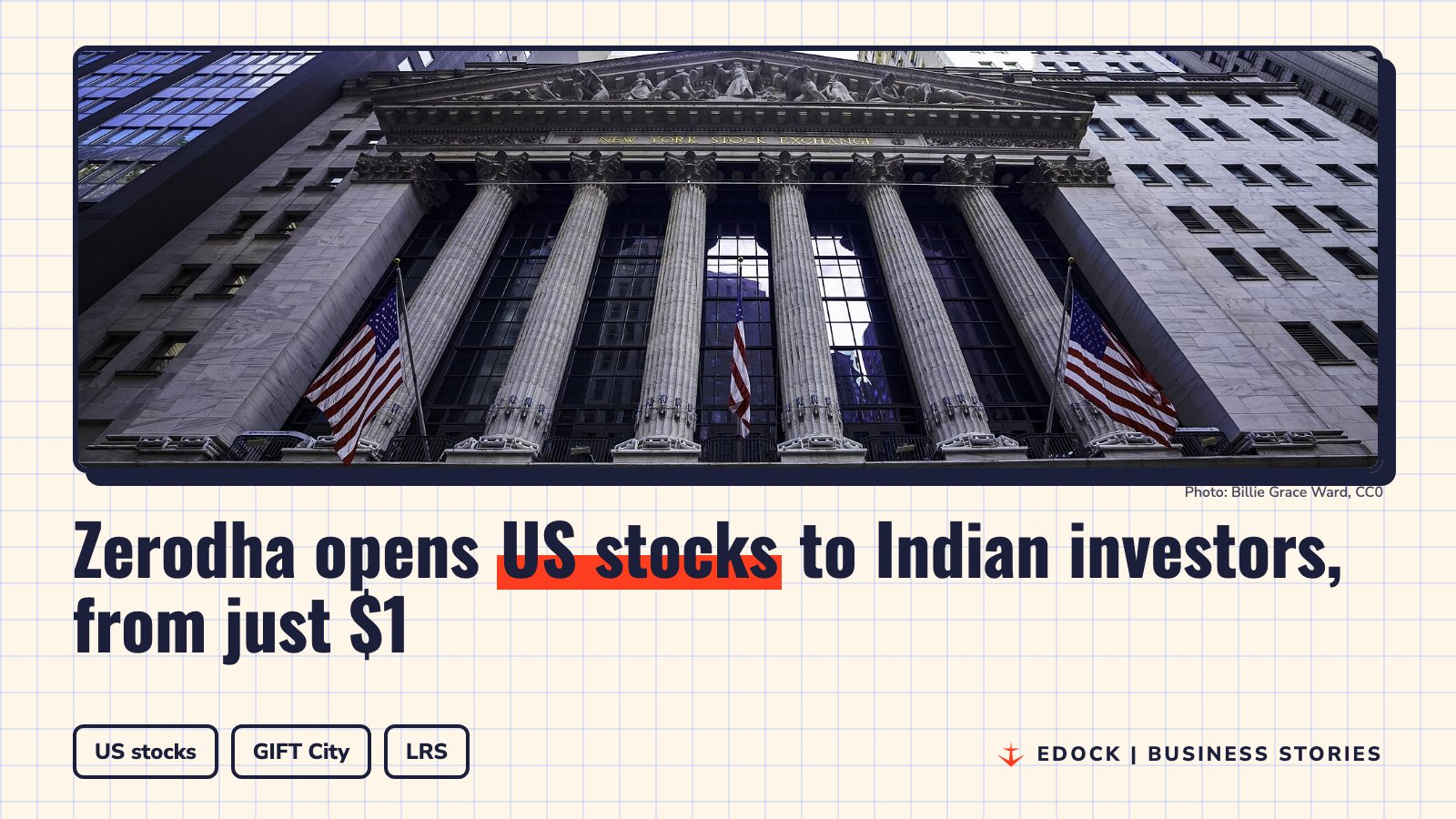
Picture this. With just one US dollar, a student in India can now own a tiny slice of a big American company, straight from the same app used for Indian shares. On 19 October 2026, Zerodha opened US stock investing in beta on Kite, its trading app. Beta means a test version: it works, but the company is still fixing things before everyone gets it.
Zerodha is a discount brokerage, which means it charges low fees. A broker is the shop through which people buy and sell shares. Until now, Zerodha customers could only buy Indian shares there. That has now changed.
What exactly did Zerodha launch?
Zerodha's own announcement says users get 4,000+ US-listed stocks and ETFs. Startup news site Inc42 counted it a little differently: up to 2,000 US-listed companies and around 1,000 ETFs.
An ETF, or exchange traded fund, is like a thali. Instead of ordering one dish, you get a plate with many small portions. One ETF holds many companies at once. Some ETFs follow famous US lists of companies, such as the S&P 500 and the Nasdaq-100, as Zerodha's post says.
The big hook is fractional shares. Some US shares cost hundreds of dollars each. With fractional shares, a person can buy a piece of one share, like buying one slice of pizza instead of the whole pizza. Zerodha says the minimum is as little as USD 1 in eligible stocks and ETFs.
Who can use it? Only individual accounts of people living in India. NRI accounts, minor accounts and company accounts are not allowed. Since it is a beta, Zerodha is switching accounts on in batches, so people join a queue.
How do rupees turn into a US share?
This is the interesting part. Money for Indian shares moves inside India. Money for US shares has to leave the country. So it travels a longer road.
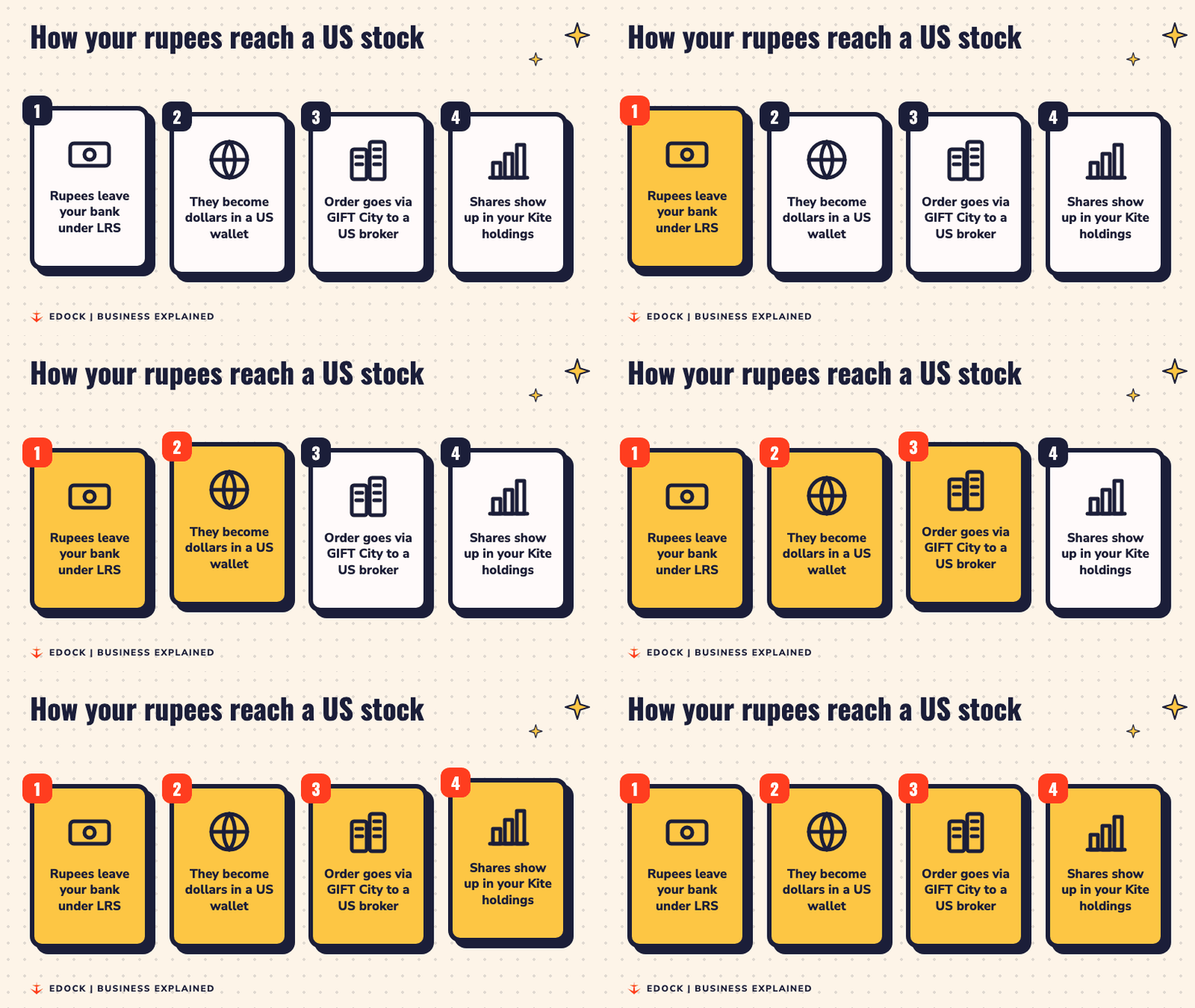
Step 1: The bank sends money abroad. Zerodha says adding funds is an outward remittance under the RBI's Liberalised Remittance Scheme (LRS). A remittance simply means sending money. LRS is the rule that lets a person in India send money out of the country for things like study, travel or investing. Banks check these transfers more carefully, so they are slower.
Step 2: Rupees become dollars. The money lands in a dollar wallet. Only netbanking from supported banks works. UPI, debit cards and credit cards are not supported, says Inc42. For now, Zerodha lists HDFC Bank, ICICI Bank, Axis Bank, Kotak Mahindra Bank and IDFC FIRST Bank.
Step 3: The order goes through GIFT City. GIFT City is home to India's International Financial Services Centre, a special money zone with its own regulator, called IFSCA. Business Today reports the service runs through India INX Global Access, a platform based at GIFT City. Zerodha's post says it has partnered with Viewtrade, a US broker-dealer.
Step 4: The shares appear in Kite. Bought shares show up under International Holdings. A toggle lets users see the value in dollars or rupees.
How much money can go, and how fast?
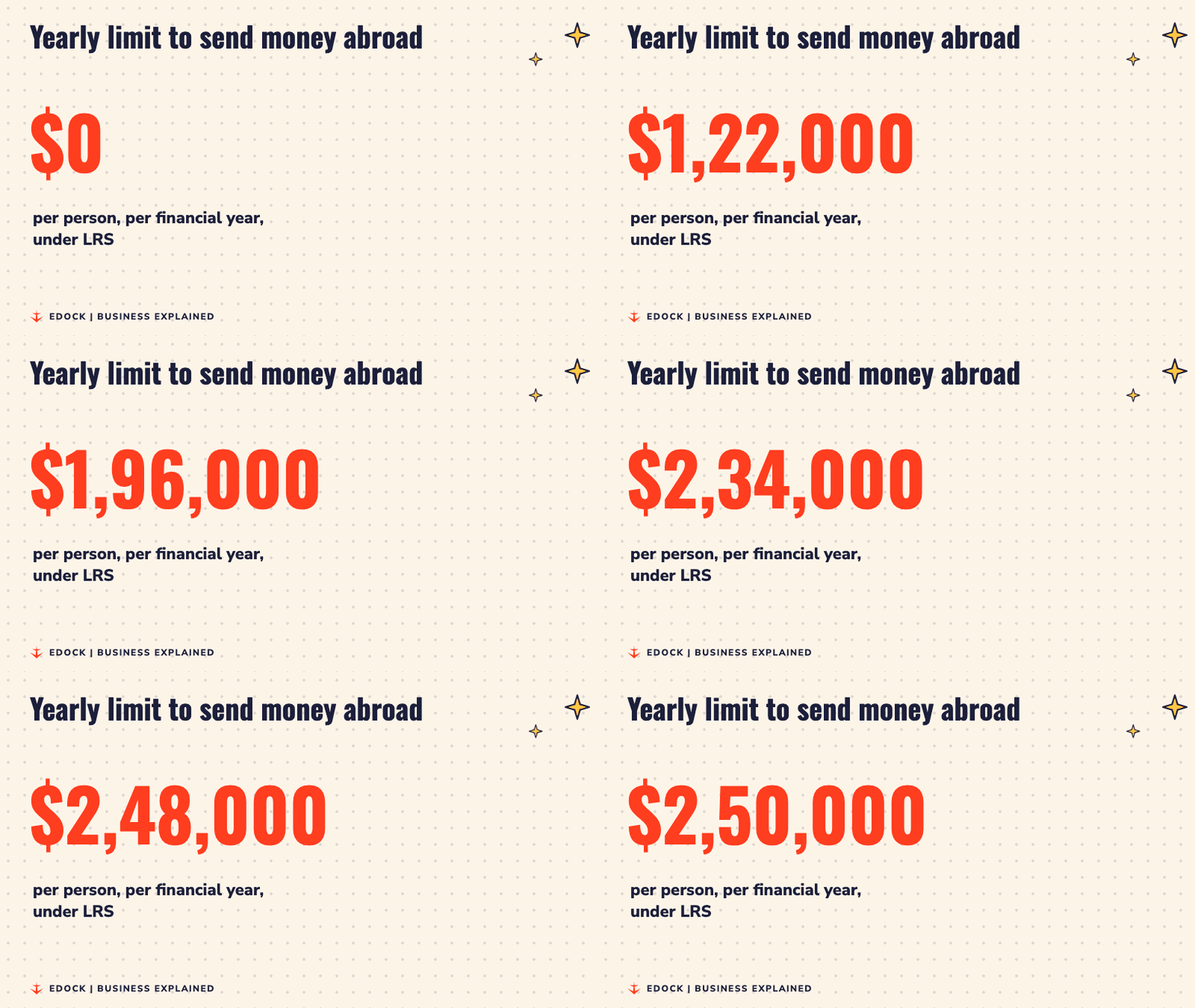
Under LRS, one person can send up to USD 2,50,000 per financial year. That limit covers all banks and all purposes together, says Zerodha.
The first transfer must be at least USD 50. After that, each transfer must be at least USD 100. Money sent before 2:30 PM may show up the same day or take up to 2 business days. After 2:30 PM, it can take up to 3 business days. So this is not like topping up a phone wallet in seconds.
There is also TCS, or tax collected at source. Zerodha says the bank keeps 20% of LRS money sent for investing once a person's total crosses Rs 10 lakh in a financial year. It is not an extra cost, the post explains: the person can claim it back while filing income tax returns.
What does it cost?
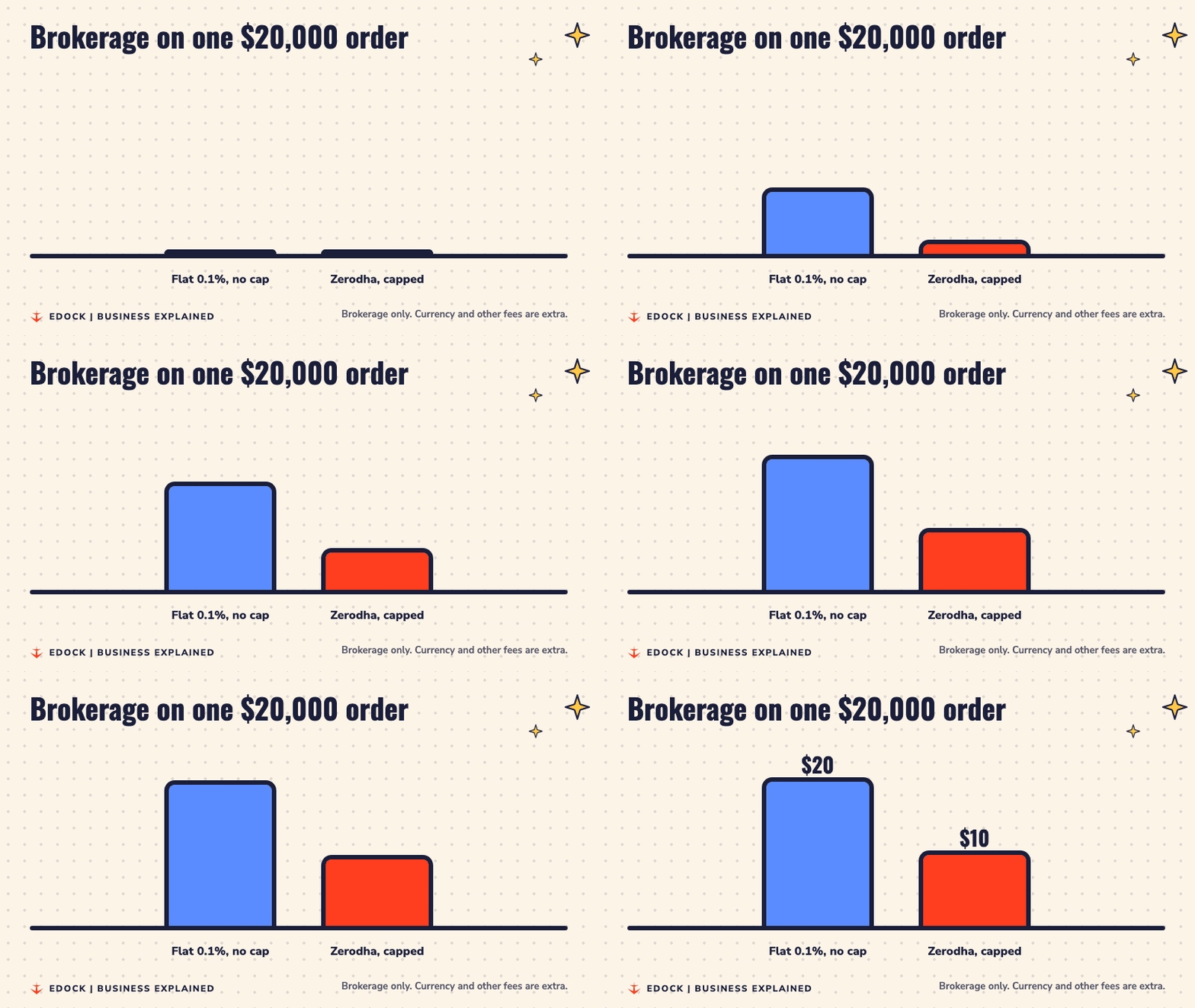
Every broker earns a small fee on each trade, called brokerage. Think of it as the delivery charge on a food order. Zerodha charges 0.1% of the trade value, with a minimum of $0.01 and a maximum of $10 per order.
That $10 cap matters for big orders. Business Today gives an example: a $20,000 order costs $10 in brokerage with Zerodha, compared with $20 if a flat 0.1% fee had no cap.
Brokerage is not the only charge. There is 18% GST on brokerage and an IFSCA turnover fee of 0.005%, plus US regulatory fees when selling. Changing rupees into dollars also costs money. Inc42 and Business Today say Zerodha's guide lists a bank markup of 0.5% to 1.2% over the RBI reference exchange rate. A markup is the small extra a shop adds on top of the base price.
What can and cannot be done?
- No futures and options, no short selling and no margin. Zerodha says these are not allowed for resident Indians investing under LRS.
- No applying for US IPOs through the platform, says Inc42.
- Dividends, the share of profit a company pays to its owners, arrive in dollars after US withholding tax, generally 25%.
- Crypto-linked and leveraged ETFs are not available for now.
The timing is a twist too. US markets open when India is having dinner. Zerodha's table shows the regular session runs from 7:00 PM to 1:30 AM Indian time until 30 October, and from 8:00 PM to 2:30 AM from 2 November. Orders placed outside these hours wait for the next open, like a match that only starts after sunset.
Why are all the brokers doing this now?
Zerodha is not alone. Inc42 reports that Zerodha, Groww, Upstox and Angel One got approval from IFSCA in June to offer US stocks from GIFT City. Then the race began:
- Groww started in September, with more than 10,000 US stocks and ETFs, working with US firm Alpaca Securities.
- Upstox also started in September, with more than 8,000 US stocks and over 2,000 ETFs.
- Angel One began rolling out to select users on 19 October, with a wider rollout planned by mid-November. It charges zero brokerage till December 2026, then 0.1% per trade with a minimum of $0.99.
Business Today notes Groww also lists 0.1% brokerage for US stocks, but with a minimum of $1 per order. INDmoney and HDFC Securities already offered US investing before this.
For brokers, this is a business move. Inc42 says brokers are adding products beyond Indian shares because more Indian investors want direct access to global markets, including big technology companies. A broker that offers more things in one app gives its users fewer reasons to go elsewhere, just as a tea stall that adds samosas keeps customers from walking to the next stall.
The simple takeaway
Buying a US share from India used to feel far away. Now it sits a few taps away inside an app many young Indians already use. But the road is longer than for Indian shares: money leaves India under LRS, turns into dollars, passes through GIFT City and lands with a US broker. Each stop has rules, waiting time and small fees. Knowing that road is the first lesson, whatever anyone decides to do with it.
Sources

You may republish this story under CC BY 4.0: credit Arshdeep Singh and link to this page.