Your online parcels may soon ride on 3,000 Tata electric trucks
Amazon and Tata Motors plan 3,000 electric trucks within three years, starting in Delhi and later on the 2,800 km highway route to Chennai.
Picture the next parcel you order online. Before it reaches your door, it rides inside a big truck from one warehouse to another, often across cities. Soon, many of those trucks may run on batteries instead of diesel.
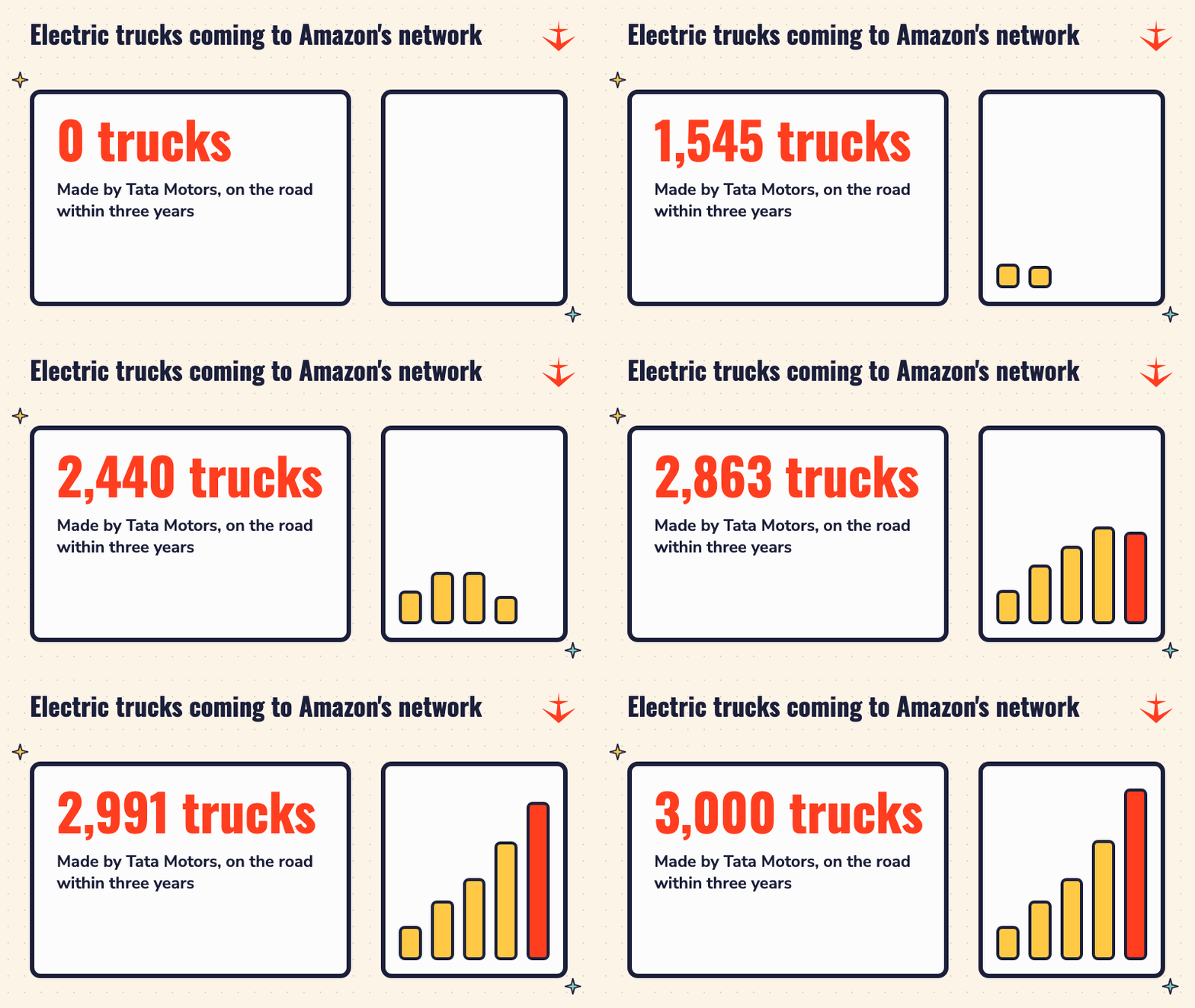
On Tuesday, 27 October 2026, Tata Motors and Amazon said they will put 3,000 electric trucks on Amazon's transport network in India. Heavy Industries Minister H D Kumaraswamy flagged off the first trucks in Delhi. A senior Amazon executive said all 3,000 trucks will be on the road within three years.
According to Amazon's own announcement, this will be the largest electric truck rollout by any e-commerce company in India.
What exactly did the two companies agree?
The deal is simple to explain. Tata Motors will make and supply the trucks. Amazon's carrier partners will own and run them. A carrier partner is a trucking firm that carries goods for Amazon. Think of a samosa stall owner who hires a local delivery boy instead of buying a scooter himself. Amazon gives the work, and the partner firms own the vehicles.
Tata Motors is also promising more than the trucks. Rajesh Kaul, who heads the truck business at Tata Motors, said the company will go "beyond vehicle deployment to provide charging infrastructure, servicing and operational support", as quoted by Business Standard. Amazon's announcement calls Tata Motors India's largest maker of commercial vehicles, which means vehicles used for business, like trucks and buses.
First mile, middle mile, last mile
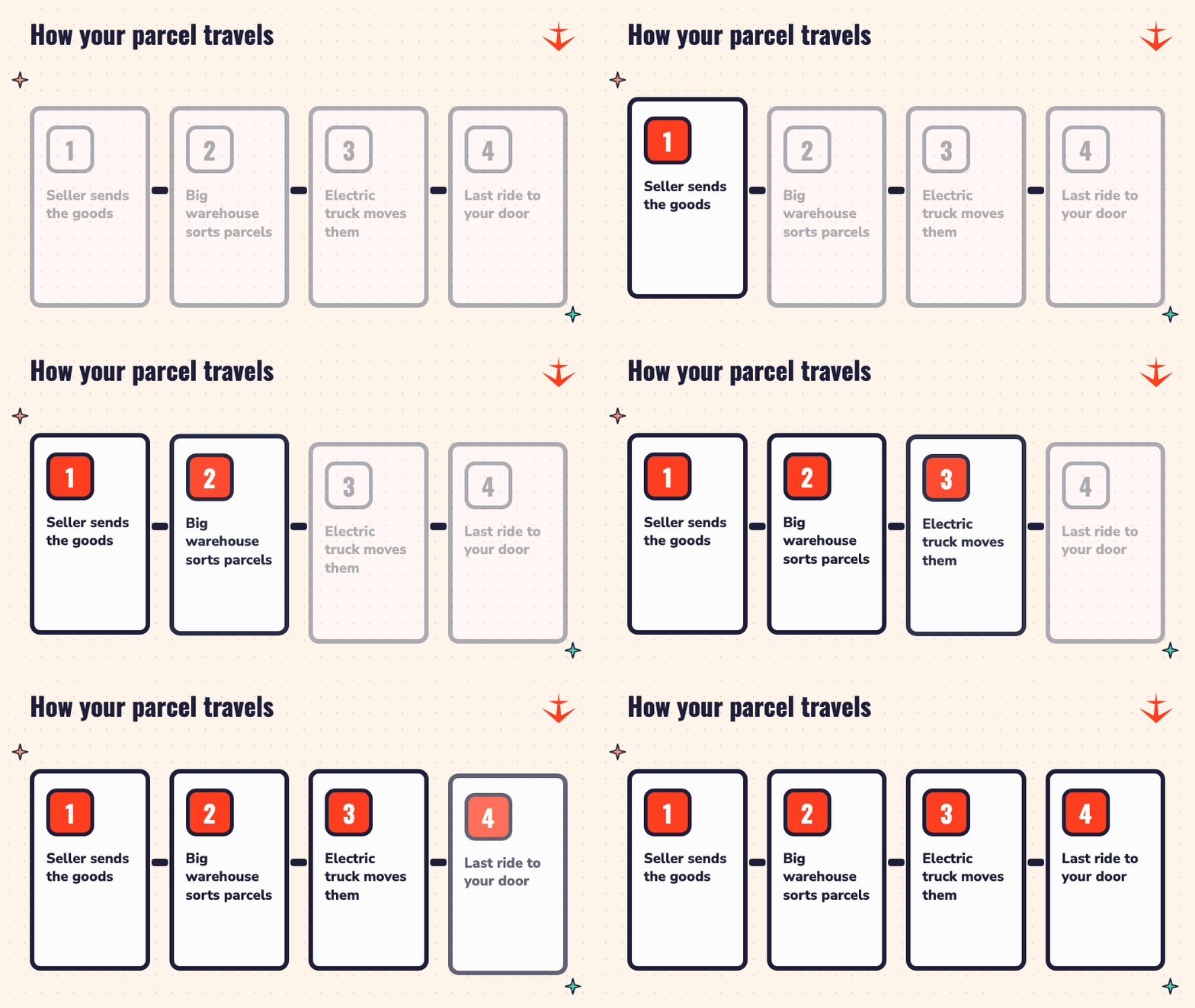
A parcel's trip has three parts. The first mile is when goods leave the seller. The last mile is the final ride to your home, often on a bike or a small van. The middle mile is everything in between: big trucks moving parcels from one warehouse to another, and from city to city.
Amazon has already been using electric vehicles for the last mile. This deal is its biggest step so far to take electric vehicles beyond last mile delivery. The new trucks are light and medium duty trucks, which means smaller and mid sized trucks, not the biggest ones that haul the heaviest loads.
Where will these trucks run?
The rollout starts in Delhi during the festive season. That is when online orders and shop deliveries reach their peak for the year, much like a chai stall on a cold winter morning.
In the next phase, the plan is to take the trucks onto national highways. The big goal is to make the 2,800 km Delhi to Bengaluru to Chennai route along NH48 electric. Amazon calls it India's longest freight corridor. Freight means goods carried for trade, and a corridor is a main route used again and again. This one passes through seven states and links six of the country's largest e-commerce regions.
Trucks on such long routes need places to charge. Amazon said charging points are being built with Yahhvi, a company that sets up charging for electric vehicles. Yahhvi has already built 10 charging yards for Amazon across India.
Meet the truck: the Tata Ultra E.7
The first trucks are the Tata Ultra E.7, built for city and regional deliveries. It supports fast charging and has regenerative braking. That means when the driver slows down, the truck turns some of that motion back into battery power, a bit like a bicycle dynamo that lights a lamp as you pedal. EVreporter adds that the truck has a crash tested cabin with safety systems for its high voltage parts.
This video gives a quick look at the truck and the Amazon plan:
Why trucks matter so much for clean air
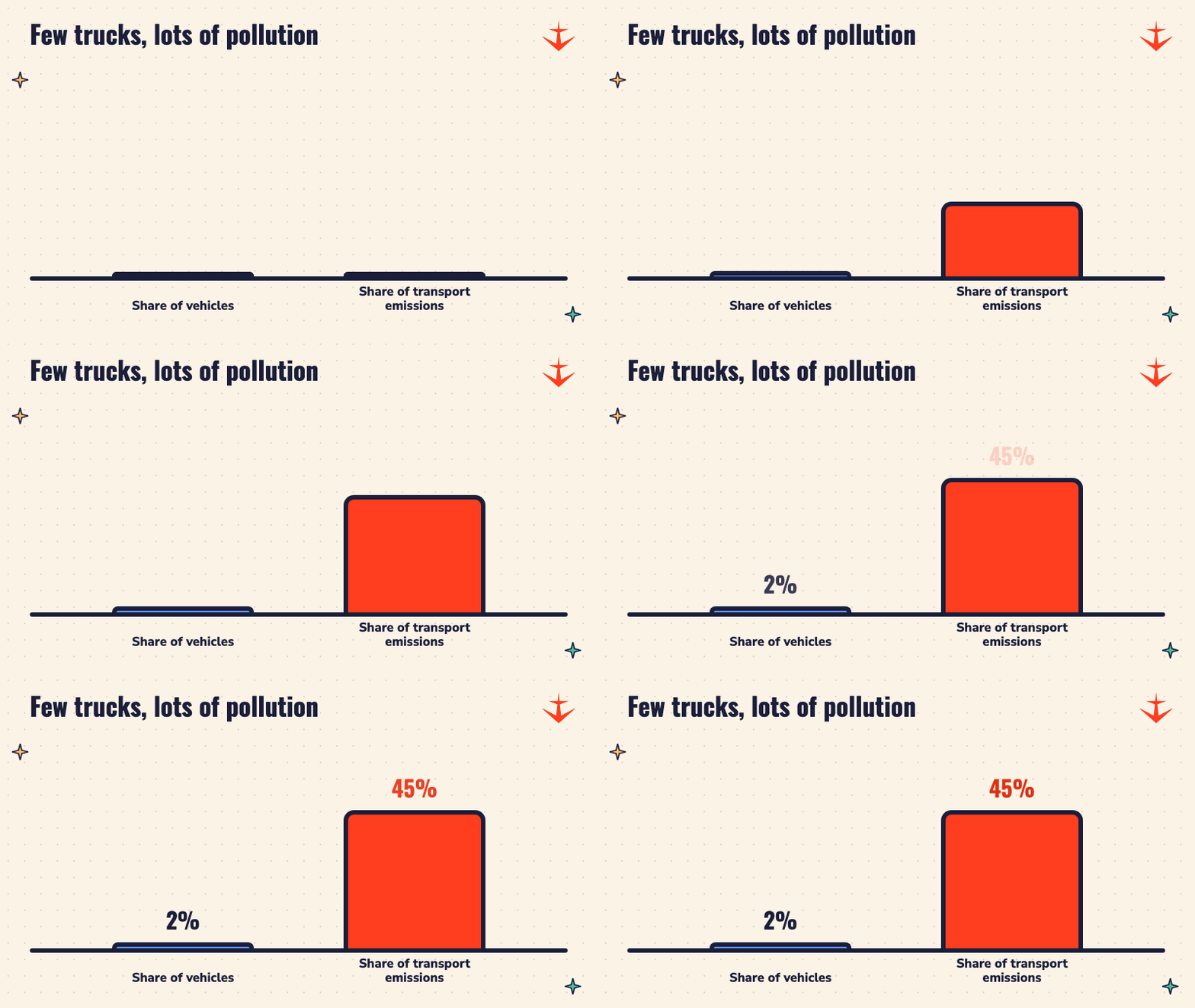
Trucks are a small part of the vehicles on Indian roads, but they do a lot of the work and a lot of the polluting. Freight trucks make up just 2% of the total vehicles on Indian roads, yet they cause 45% of the transport sector's emissions, Mongabay India reported. Emissions here means the harmful gases that come out of the exhaust pipe.
Trucks also carry most of what the country buys and sells. India moves 4.6 billion tons of freight a year, and trucks move 70 percent of India's freight, says a report by RMI, a clean energy research group. The same report says road freight accounts for more than 25 percent of India's yearly oil imports. So trucks that run on electricity instead of diesel could cut how much oil India has to buy from abroad.
Delhi has its own reason to care. The city's Transport Minister Pankaj Kumar Singh said that cleaning up logistics is a step towards "improving air quality in Delhi", as quoted in Amazon's announcement.
Will electric trucks be cheaper to run?
Here a business word helps: total cost of ownership. It is the full cost of a vehicle over its life. That includes the price to buy it, plus fuel, plus repairs. A phone that costs more but needs no new charger or repairs may cost less in the end. Trucks work the same way.
In Amazon's announcement, Kaul of Tata Motors said local manufacturing and a "compelling total cost of ownership" are making zero emission trucks "a practical business proposition" for fleet operators. Amazon says the Ultra E.7 has the potential for lower operating costs. The RMI report says the total cost of ownership for medium duty electric trucks, once they are made in large numbers, is lower than for diesel trucks. Neither company has shared how much money each truck will save.
A rule in Delhi gives early trucks a head start
Big cities often block heavy trucks during busy hours, called "No Entry" hours. Under Delhi's 2026 EV Policy, the first 1,000 privately owned medium duty electric trucks registered within three months of the policy's launch can enter the city at any time of day for 10 years. For a delivery firm, that is like getting a pass to skip the queue at a busy railway counter, every day, for a decade.
The minister also named government schemes such as PM E-DRIVE that back the move to electric vehicles. In his words, as reported by ET: "As India's economy expands, the demand for freight transportation will continue to increase."
How big is Amazon's electric fleet already?
Amazon says it has more than 15,000 electric vehicles running across over 500 cities in India. The company has a goal of net zero carbon emissions by 2040. Net zero means cutting pollution as much as possible and balancing out the rest.
Electric trucks are newer for the company. Amazon ran over 100 electric trucks with several makers during 2025, Autocar Professional reported. It has also planned around 1,000 Eicher electric trucks by 2028 for Amazon Now, its quick delivery service. So 3,000 Tata trucks would be a big jump.
This older video from Amazon News India is about an earlier pledge to add more electric vehicles to its India delivery fleet.
What this means for you
For shoppers, the parcel will look the same. The change is in how it travels. If the plan works, the trucks behind festive season orders will burn less diesel and put less smoke into city air. For the trucking firms that work with Amazon, it means learning to run, charge and service a new kind of truck. And for the wider industry, a 3,000 truck order from one buyer is a test of whether electric trucks can work at scale in India.
Sources
- The Economic Times: Tata Motors, Amazon partner to deploy 3,000 electric trucks
- ET Retail: Tata Motors, Amazon partner to deploy 3,000 electric trucks for ecommerce logistics
- About Amazon India: Amazon and Tata Motors to deploy 3,000 electric trucks
- Business Standard: Amazon plans 3,000 electric trucks with Tata Motors for India logistics
- EVreporter: Amazon and Tata Motors to deploy 3,000 electric trucks, starting with Tata Ultra E.7
- Autocar Professional: Amazon India to deploy 1,000 Eicher electric trucks
- RMI: Transforming trucking in India
- Mongabay India: On a bumpy road to net zero, trucks shift gear to reduce emissions
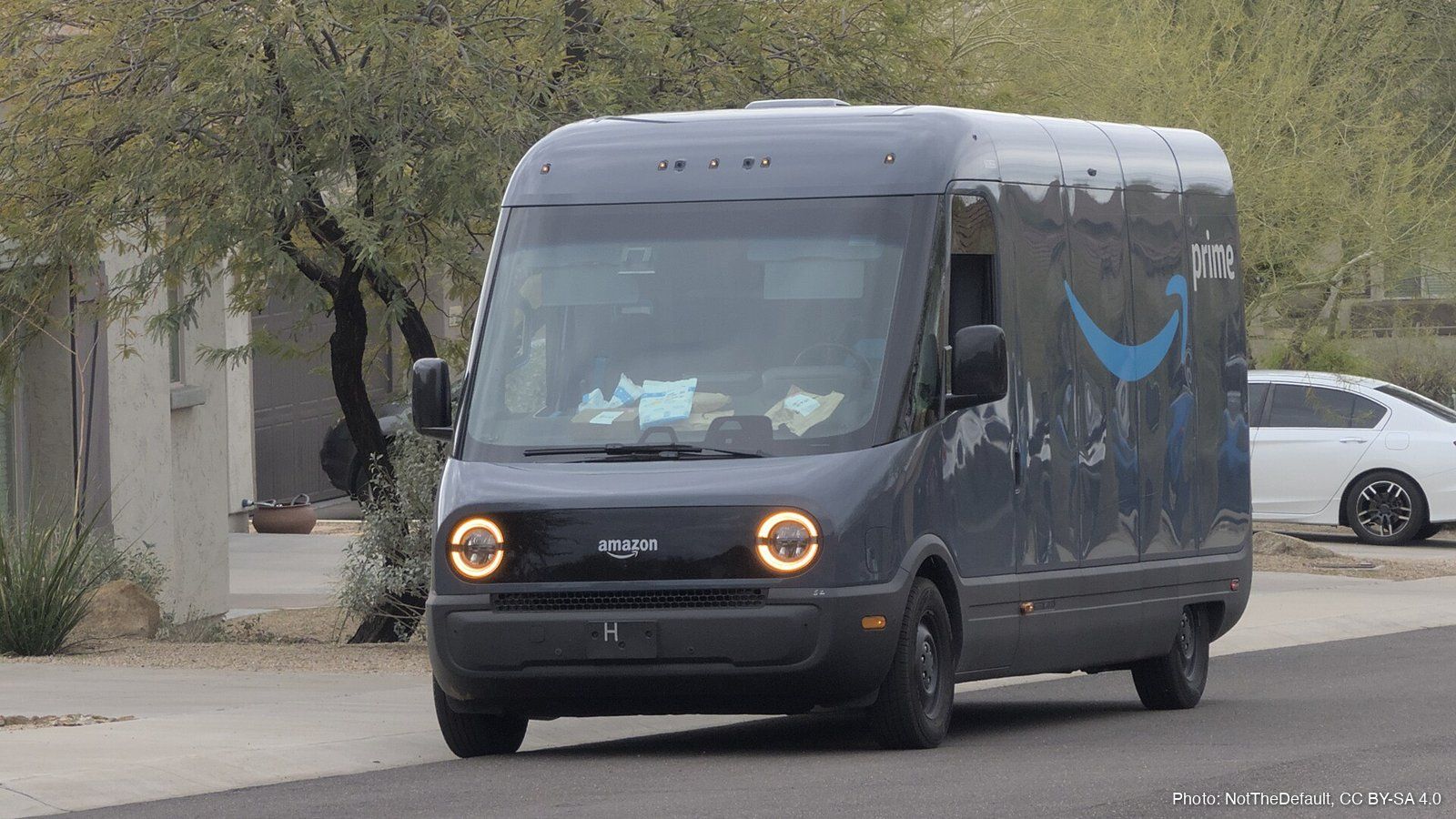
- Cover photo: Amazon electric delivery vehicle (a Rivian van in the US), by NotTheDefault, CC BY-SA 4.0

You may republish this story under CC BY 4.0: credit Manpreet Kaur and link to this page.