Year-old AI lab Flapping Airplanes raises $1 billion at a reported $6 billion value
The research lab has no product yet, but Index, Lux, Sequoia and Nvidia are backing its plan to build AI that learns from far less data.
Picture this. A company is barely one year old. It has no product to sell yet. And on Wednesday, 21 October 2026, it said investors have put in $1 billion. That company is an AI research lab called Flapping Airplanes, and it announced a $1 billion Series A round, reportedly at a $6 billion valuation.
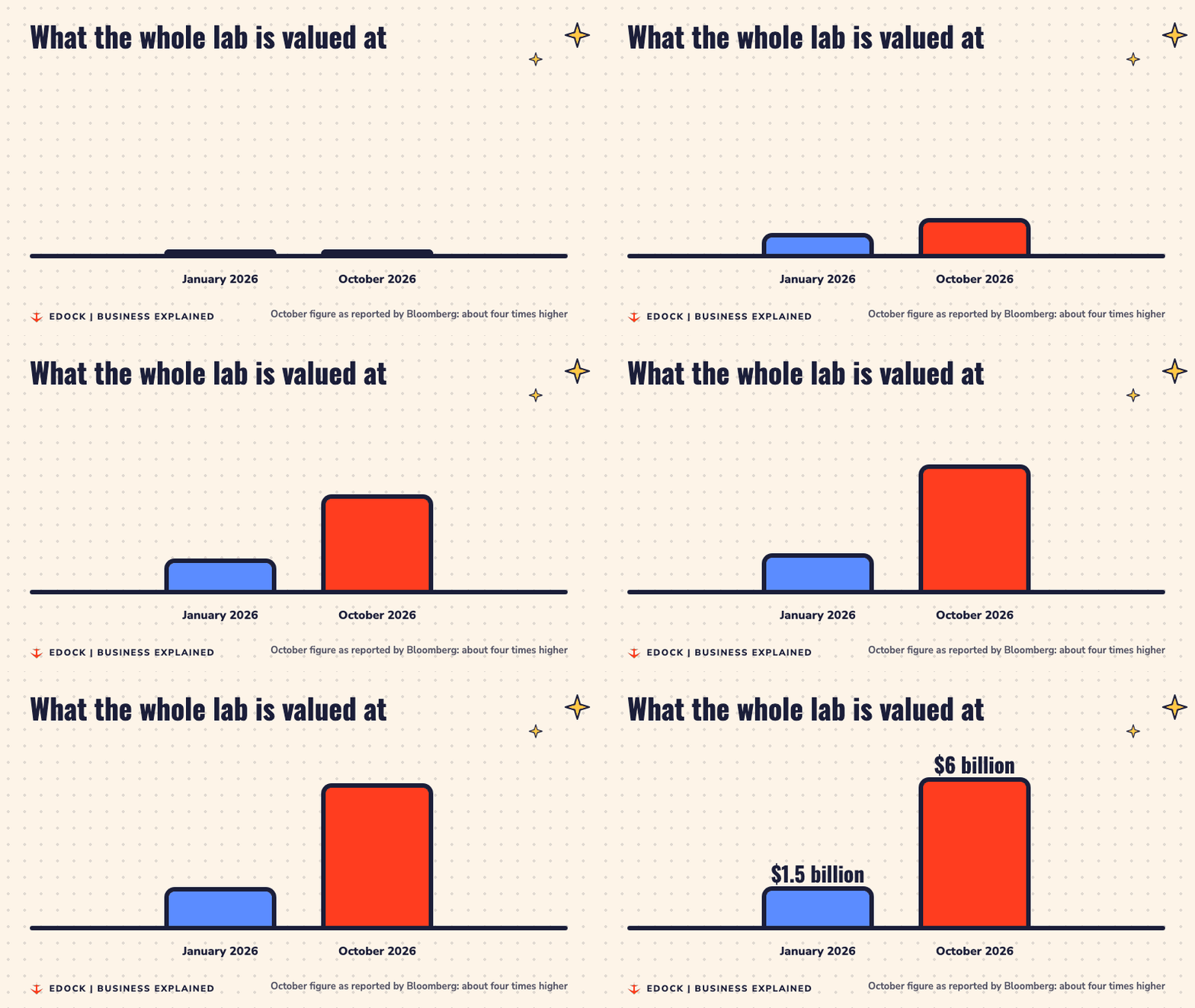
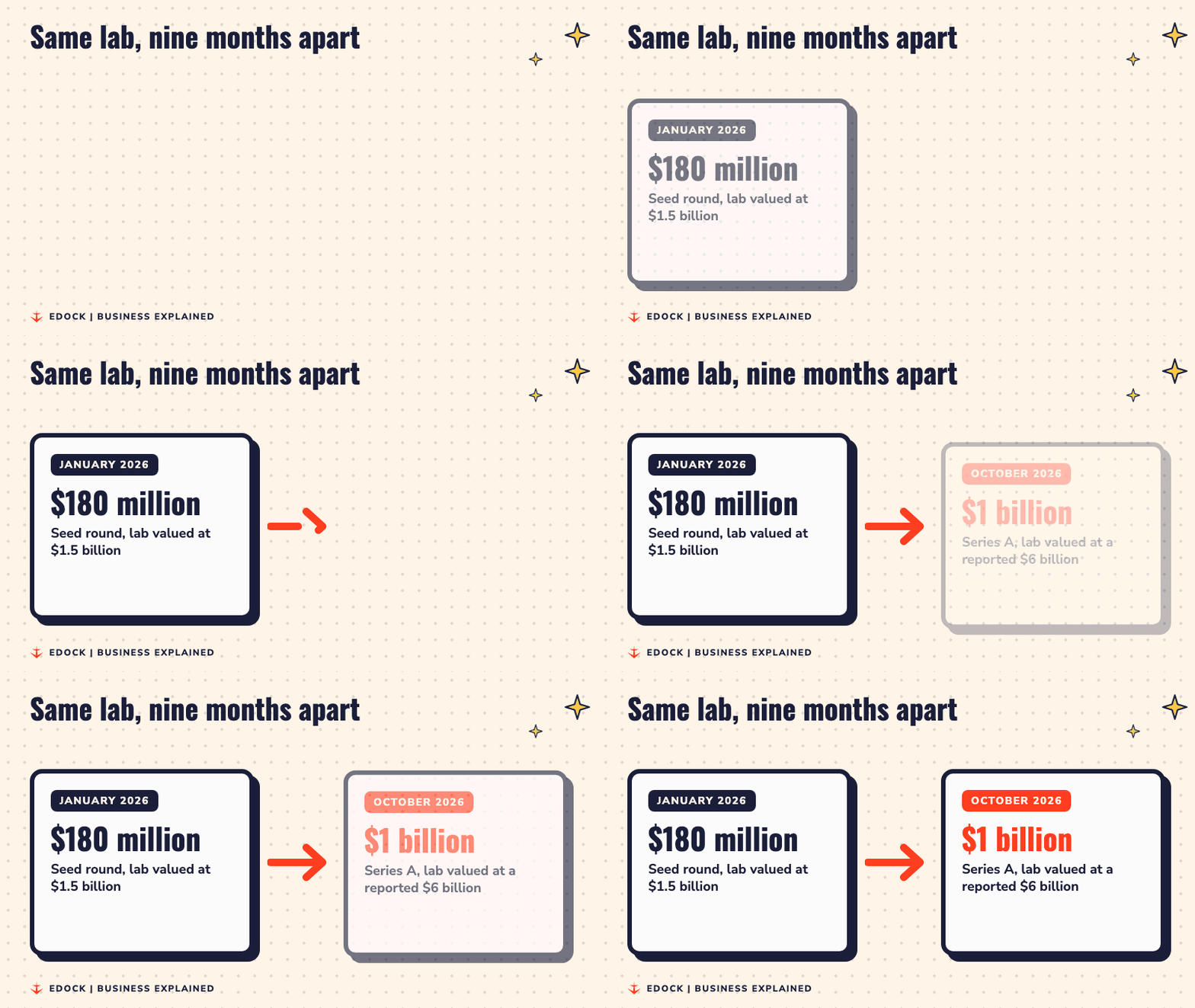
In rupees, $1 billion is many thousands of crores. But the bigger surprise is speed. Nine months ago, this same lab was valued at $1.5 billion. Now the reported number is four times higher.
So what does this lab do, who is backing it, and what do words like "valuation" and "Series A" really mean? Here is the story in simple words.
First, what does "raising money" mean?
Imagine you start a lemonade stall with your friends. You need a bigger table, more lemons and a cooler. You do not have the cash. So three friends give you money. In return, each friend gets a small slice of the stall. If the stall earns well later, their slice is worth more.
That is what "raising money" means for a startup. Investors give cash. The company gives them a small share of ownership. The investors hope that share grows in value over time.
A seed round is the first big money a startup raises, like the first few friends who chip in. A Series A is usually the next round, when bigger investors come in to help the company grow. Flapping Airplanes did both within one year.
And what is a "valuation"?
Valuation is the price tag on the whole company. Think of it like this. If a friend pays Rs 100 for one tenth of your lemonade stall, then the whole stall is being treated as worth Rs 1,000. That Rs 1,000 is the valuation. Nobody has sold the whole stall. It is simply the price everyone agreed on for that deal.
For Flapping Airplanes, the reported price tag is $6 billion. This figure was reported by Bloomberg and repeated by other outlets; the company itself announced the $1 billion amount and its lead investors.
How fast did this happen?
Very fast. The lab launched in January 2026 with $180 million in seed funding from Google Ventures (GV), Sequoia and Index. According to TechCrunch, that seed round valued the company at $1.5 billion.
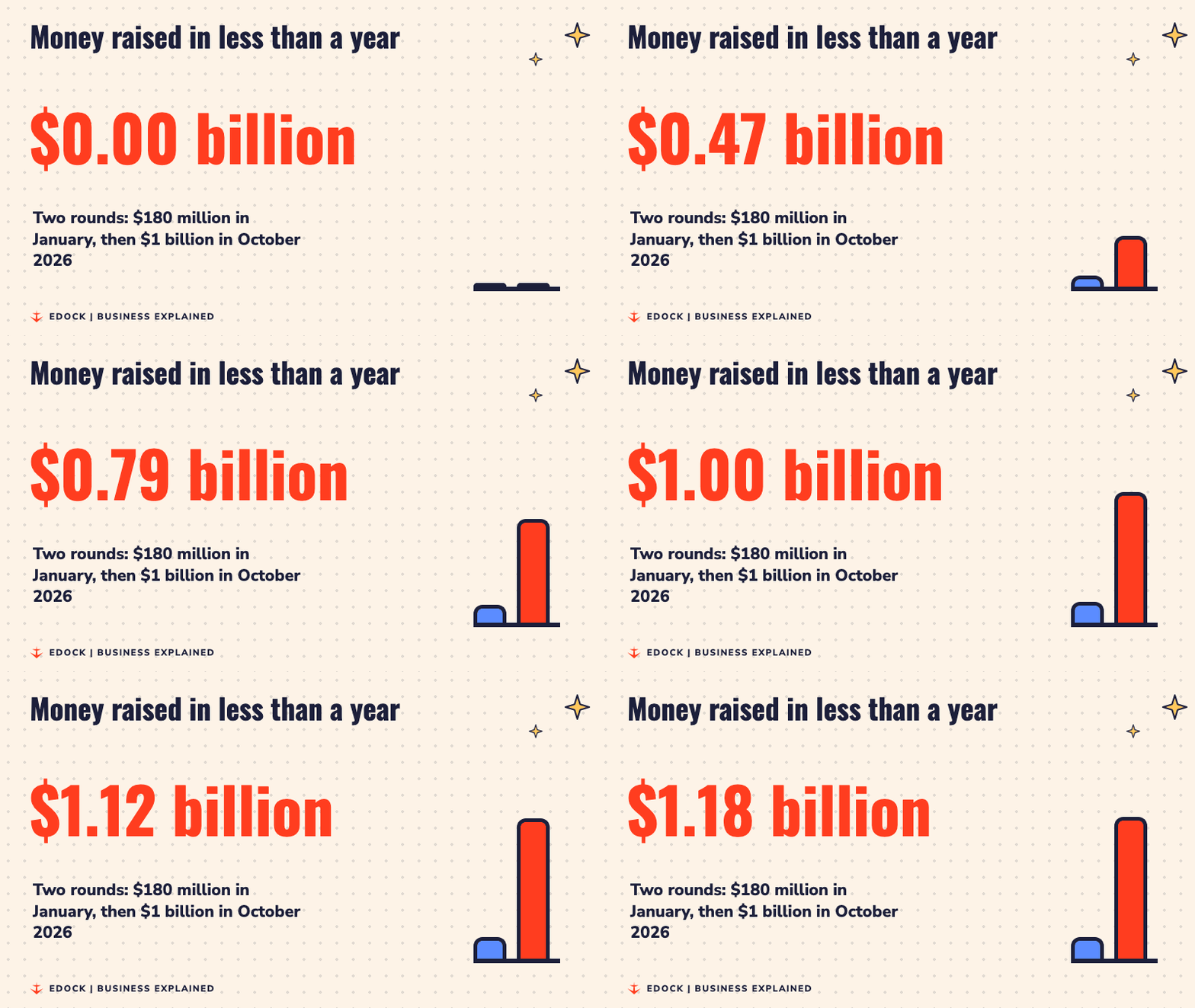
Now add the two rounds together. $180 million in January plus $1 billion in October gives $1.18 billion. That matches the total that SiliconReport says investors have now committed to the company.
Who is putting in the money?
The new round was co-led by two investment firms, Index and Lux. "Co-led" means they put in big amounts and helped set the terms of the deal, a bit like the two seniors who organise a class trip.
Old backers came back too. TechCrunch reports that Sequoia, GV and Kleiner Perkins also joined. Valor, Atreides, A* and the chip giant Nvidia are investors as well. SiliconReport adds that trading firms Jump Trading and XTX Ventures backed the round, based on a list the company posted on X. It also says Mark Xu, a partner at Index, is joining the company's board, the small group that guides big decisions.
Who started it?
Three young founders. According to TechCrunch, the lab was started by Aidan Smith and two brothers, Asher and Ben Spector.
- Ben Spector is the chief executive, SiliconReport says. He was a computer science PhD student at Stanford and, while at MIT, founded Prod, a student-run startup accelerator. An accelerator is like a coaching camp for new startups.
- Asher Spector did a PhD in statistics at Stanford.
- Aidan Smith is a former founder and Thiel fellow who worked at the brain implant company Neuralink during college.
A Sequoia partner, David Cahn, described the team as building "the young person's AGI lab", TechCrunch reports. AGI means artificial general intelligence: an AI that could handle almost any thinking task a person can.
So what is the lab actually building?
Today's big AI models learn by reading a huge share of everything humans have ever written. Flapping Airplanes wants AI that learns from far less data. In an interview with TechCrunch in February, Ben Spector pointed out that humans manage to learn with "an awful lot less" data than AI models do.
Think of a child who sees two or three cats and then knows what a cat is. Co-founder Aidan Smith told TechCrunch that today's models need "rivers and rivers of data" to pick up a new skill. The lab is betting it can close that gap.
Its main tool is what the founders call a "megakernel framework". Here is the simple version. AI runs on special chips called GPUs. A kernel is a small program that runs on a GPU. A megakernel packs many tasks into one single program, so the chip almost never sits idle.
Picture a chai stall. While the milk is boiling, a smart chai wala cuts ginger and washes cups. He never just stands and waits. The founders say their system does the same on a GPU: it runs a task that is mostly waiting for data next to a task that is mostly doing maths, according to TechCrunch.
The goal is AI that is cheaper to train and run. As Asher Spector told TechCrunch, "A model that's a million times more data efficient is probably a million times easier to put into the economy."
Why would anyone pay so much for a lab with no product?
This is the big question. The company has no product and no revenue yet, Dealroom notes. Revenue is the money a company earns from selling things. So investors are paying for an idea and a team, not for sales.
Dealroom gives some context. AI made up 64% of all venture funding around the world in the July to September quarter. Venture funding is money that investors put into young startups. Dealroom also says this deal is among the largest early-stage deep tech rounds on record in the US, in the top 1% by amount across 3,497 similar deals.
Dealroom also lists the risk plainly: with no product and no revenue, the high price tag leaves little room for the research to disappoint. In lemonade stall terms, the friends have paid a lot for a slice of a stall that has not sold its first glass yet.
What happens next?
The lab now has $1 billion to hire people and test its ideas. SiliconReport, citing Index, says the team is a couple dozen people working in person in San Francisco. That is a small team for such a large amount of money.
The founders' aim is AI that needs far less data and costs less to train and run. Whether the research gets there is still an open question. For now, the deal shows how much money investors are ready to put behind new ideas in AI.
Sources
- TechCrunch: Year-old AI lab Flapping Airplanes raises $1B at a $6B valuation (21 Oct 2026)
- SiliconReport: Flapping Airplanes raises $1B Series A at $6B valuation
- Dealroom: Flapping Airplanes raises $1B for AI research, hitting $6B valuation
- TechCrunch: Flapping Airplanes and the promise of research-driven AI (Jan 2026)
- TechCrunch: Interview with the Flapping Airplanes founders (Feb 2026)
- Cover photo: Graphics Card Upgrading, by Keijiro Takahashi, CC0

You may republish this story under CC BY 4.0: credit Manpreet Kaur and link to this page.