Why Meta wants up to $95 billion from new shares to build AI
Facebook's parent plans its biggest ever share sale, as AI data centres cost more than even a giant can pay from its own pocket.

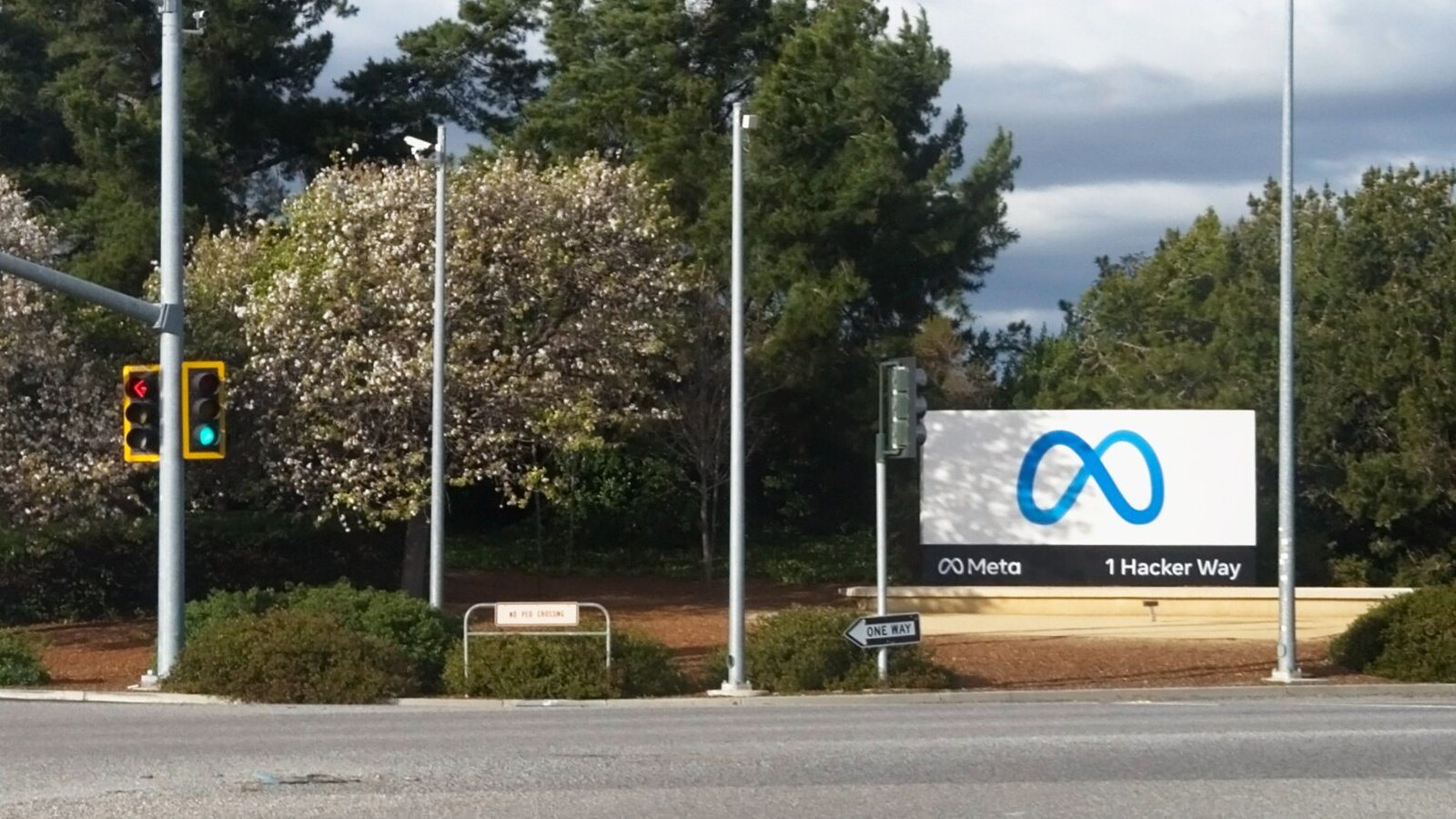
Meta owns Facebook, Instagram and WhatsApp. More than 3.6 billion people use its apps every single day. And yet, on Monday, 26 October 2026, this giant said it needs more money. A lot more. Meta announced a plan to raise up to $95 billion by selling new shares, to pay for its artificial intelligence (AI) build-out.
Mint called it Meta's largest-ever equity fundraising. Equity simply means a share of ownership in a company. So Meta is selling small pieces of itself to raise cash.
First, what does selling shares mean?
Picture a busy samosa stall. The owner wants to open ten more stalls, but the daily sales are not enough to pay for all of them at once. So the owner asks friends to put in money now. In return, each friend owns a small slice of the business. Each slice is a share. The friends now share in the profits, and the owner gets cash today without taking a loan.
Meta is doing the same thing, only with billions of dollars instead of a few thousand rupees. The buyers become part-owners of Meta. Meta gets money to build.
How the $95 billion is split
The plan comes in two parts, as Quartz reported from the company's own statement.
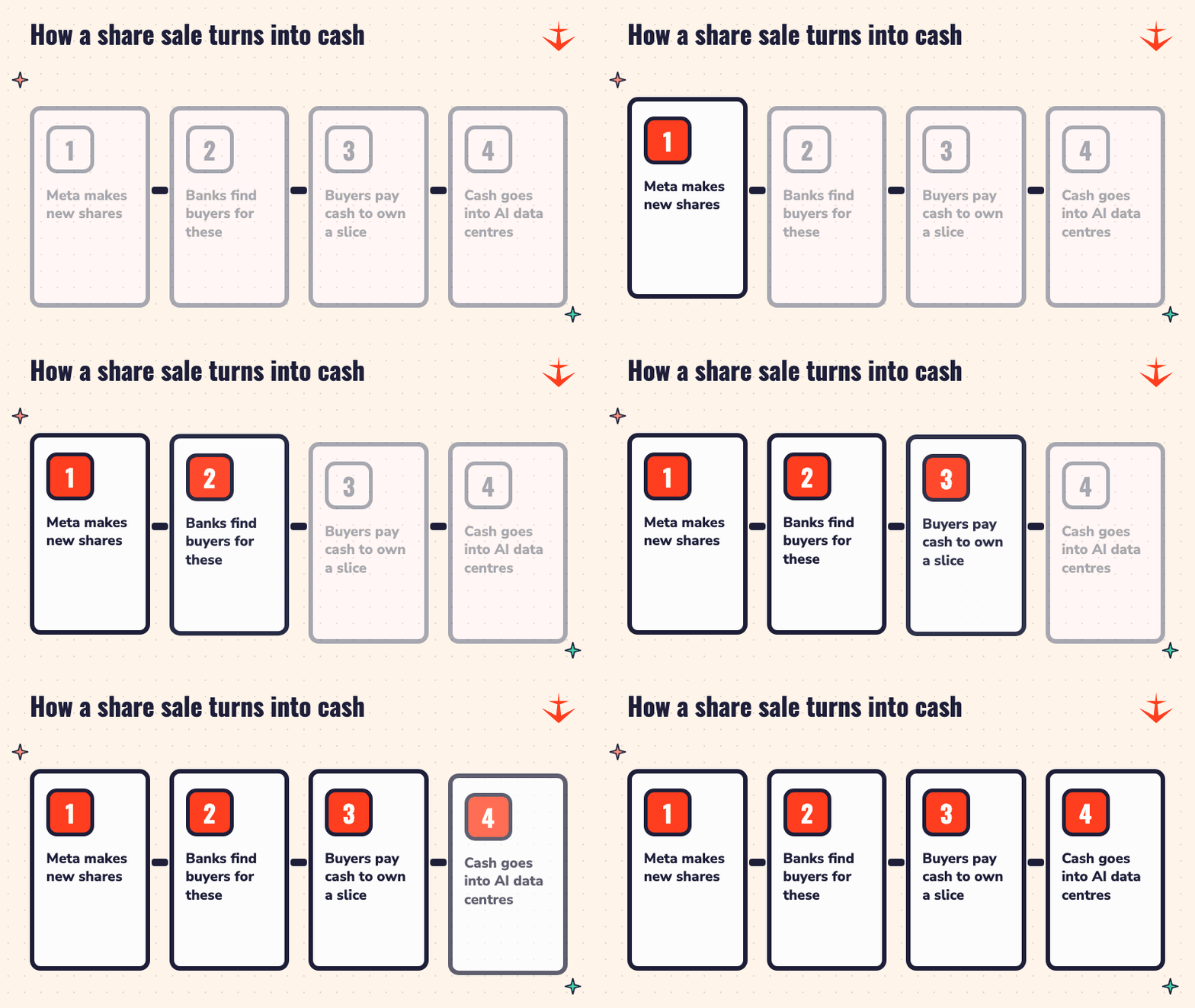
- Part one, starting now: about $35 billion. Of this, about $22.5 billion is ordinary Meta shares. The other $12.5 billion is a special kind of share called a preferred share. These turn into ordinary shares on about 15 August 2029.
- Part two, from early 2027: about $60 billion. This will be an "at-the-market" programme. That means Meta sells shares slowly, a little at a time, at whatever price the market is paying that day. Like selling samosas one plate at a time instead of all at once.

Part one is "underwritten". This means big banks, here Morgan Stanley and Goldman Sachs, promise to find buyers for the shares. Think of a trusted shopkeeper who buys your whole stock of mangoes and then sells them to customers himself.
There is a twist. For the $22.5 billion of ordinary shares, Meta will get the cash later, when it settles the deals with the two banks. This can happen on one or more dates up to 19 November 2027, as per Quartz.
Part two is not fixed yet. Meta said no agreement has been signed, and the size, timing and terms are still open. It will use a new kind of Meta share that carries no voting rights. A vote lets an owner have a say in big company decisions. These new shares give a slice of ownership, but no say. Mint, citing Reuters, wrote that these shares are expected to start trading in the first quarter of 2027.
Why does a rich company need outside money?
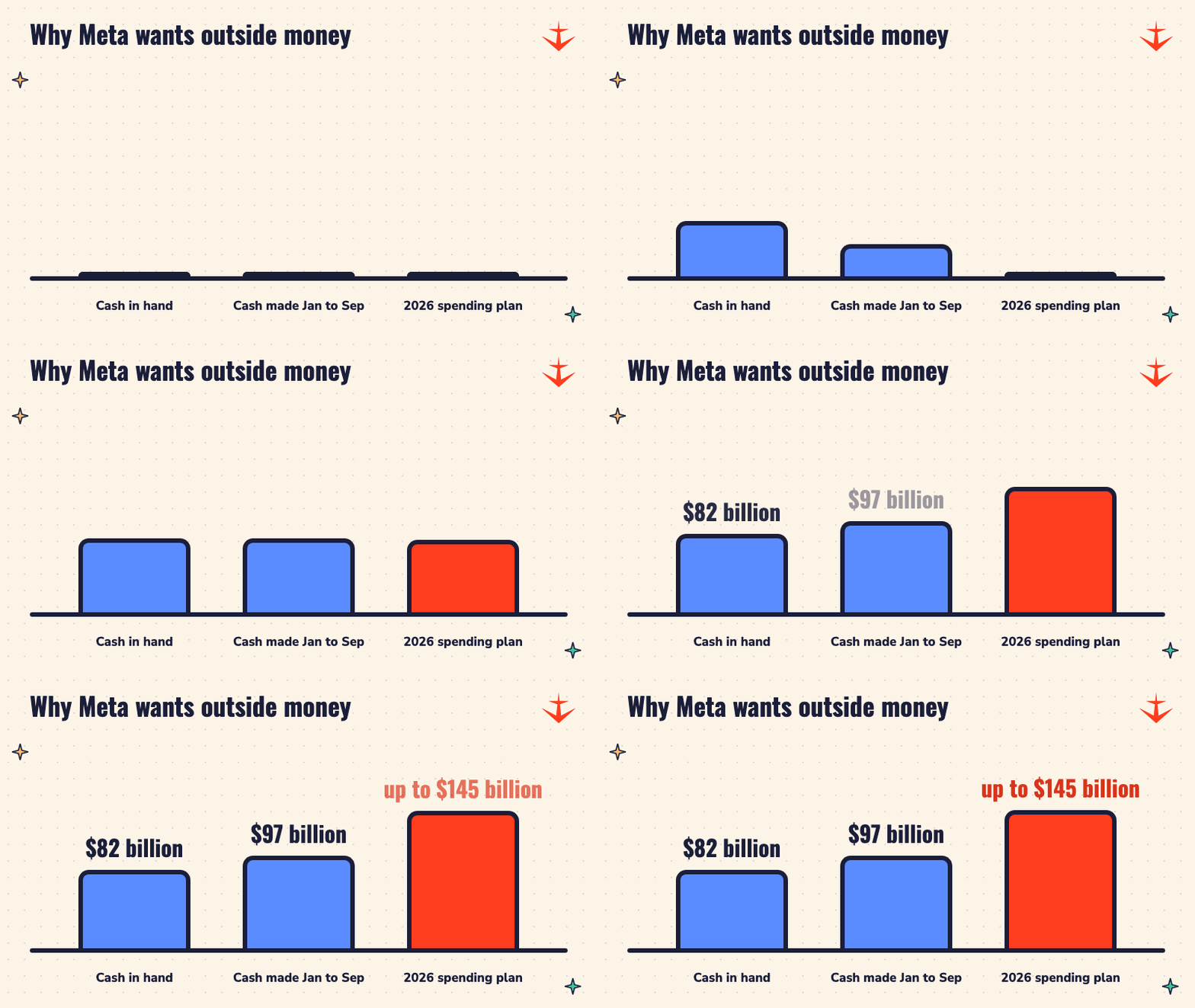
Meta is not short of cash in the usual sense. The company made about $97 billion of operating cash flow in the first nine months of 2026. Operating cash flow is the cash a business brings in from its daily work, after paying everyday costs like salaries. At the end of September, Meta also had about $82 billion of cash and easy-to-sell investments.
But AI is very hungry for money. Meta expects to spend $135 billion to $145 billion this year on capital expenditure. That is money spent on big long-term things like buildings, machines and computer chips, the way a dhaba owner buys a new tandoor that will last for years.
Most of this goes into data centres. A data centre is a giant building full of powerful computers that run apps and AI tools. SiliconANGLE reported that Meta is building four huge AI "superclusters", each expected to have more than 1 gigawatt of computing capacity. The largest one, a campus in Louisiana called Hyperion, is set to reach 5 gigawatts.
So Meta said it will pay for all this with a mix of four things: its own cash flow, investment-grade debt (loans from lenders who see the company as very safe), partnerships with other firms, and now, selling shares.
Why chip makers want a slice
Here is the most curious part. Nvidia, AMD and Broadcom have shown interest in buying up to $5 billion of the new Meta shares between them. These three companies make the chips that power AI computers. And Meta is one of their biggest customers.
The interest is not a promise. Meta said each of them may buy more, fewer or none of the shares.
Mint wrote that this adds to worries about a "circular flow of capital" in AI. In simple words, the chip makers give money to Meta, and Meta then spends money buying chips from them. It is a bit like a sweet shop lending pocket money to its best customer, who then spends it at the same sweet shop.
What does Meta say the money will do?
As per its statement, the plans will support Meta's apps, its AI helper Muse and its data centre business. Some numbers Meta shared to show how its business is doing:
- As of September 2026, 3.64 billion people used at least one Meta app daily.
- Its revenue for July to September 2026 was $64.6 billion, up 26% from a year earlier. Revenue is all the money a company takes in from sales, before costs.
- More than 10 million people in the US and Canada started using Muse within its early weeks.
- Meta owns data centres in 23 US states.
Analysts at William Blair, quoted by Mint, said the plan shows Meta's belief in AI and "the increasingly capital-intensive nature of pursuing that opportunity". Capital-intensive simply means the work needs a mountain of money up front.
Watch: the plan explained
This short news report covers Meta's stock sale plan.
This second report also covers the plan.
Why should a young reader care?
The AI apps on your phone, from chat helpers to smart photo tools, run on these giant computer buildings. Building them costs so much that even one of the richest companies on Earth is asking outsiders to chip in. Meta itself says it will use a mix of its own cash, loans, partners and share sales to pay the bill.
The samosa stall lesson holds: even the biggest stall sometimes needs friends to fund the next ten.
Sources
- Meta Investor Relations: Meta announces launch of share offerings (26 Oct 2026)
- Mint: Meta Platforms seeks to raise $95 billion through stock offering
- Quartz: Meta is raising up to $95 billion in equity to fund AI spending
- SiliconANGLE: Meta to sell up to $95B in stock to finance AI infrastructure build-out
- Cover photo: Entrance to Meta Platforms headquarters in Menlo Park, California, by LPS.1, CC0

You may republish this story under CC BY 4.0: credit Pranav Sharma and link to this page.