Why India says bulk Scotch may miss the UK trade deal's lower tariff
Diageo and Pernod Ricard face a customs probe over whether whisky concentrate shipped in tanks pays 75% or 150% duty under the India-UK deal.
Picture a big steel tank on a ship, full of Scotch whisky concentrate, sailing from Britain to India. When it reaches the port, one question decides a lot of money: does it pay an entry fee of 75% or 150%? On 23 October 2026, Mint reported that Indian authorities have told Diageo and Pernod Ricard, two of the world's biggest liquor companies, that the lower rate does not cover such bulk shipments.
This is not a story about drinking. It is a story about trade rules, border fees and how one line in a customs book can change the deal two countries signed.
First, what is a tariff?
A tariff, also called import duty, is an entry fee a country charges on goods coming in from abroad. Think of it like a fee at the gate of a school fair. A stall owner from outside pays it before selling anything inside.
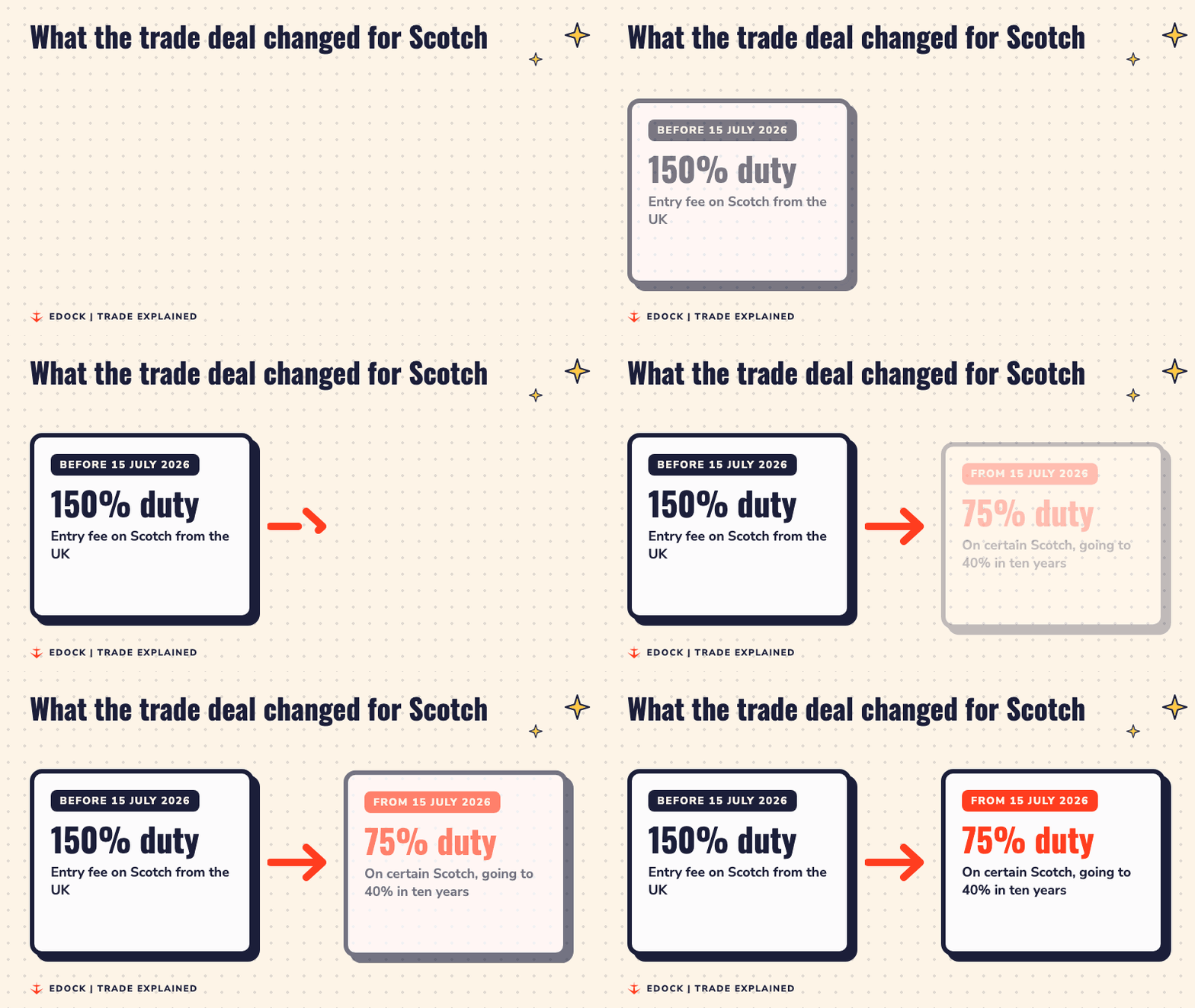
Here is a simple example to see the size of it. If a shipment is worth Rs 100 at the border, a 150% duty means a fee of Rs 150 on top. A 75% duty means a fee of Rs 75. That gap of Rs 75 on every Rs 100 is why the companies and the government both care so much.
What the India-UK trade deal promised
A trade deal, or free trade agreement, is a promise between two countries to cut these entry fees for each other. The India-UK deal came into force on 15 July. Under it, India cut the import tax on certain Scotch shipments from 150% to 75% straight away, and agreed to bring it down further to 40% over ten years.
Whisky was one of the hardest parts of the talks. The British government had said that "iconic UK products", including whiskies and gin, would gain from India's tariff changes. It also said the UK's whisky exports to India were worth more than 200 million pounds in 2022.
Bottled Scotch vs bulk Scotch
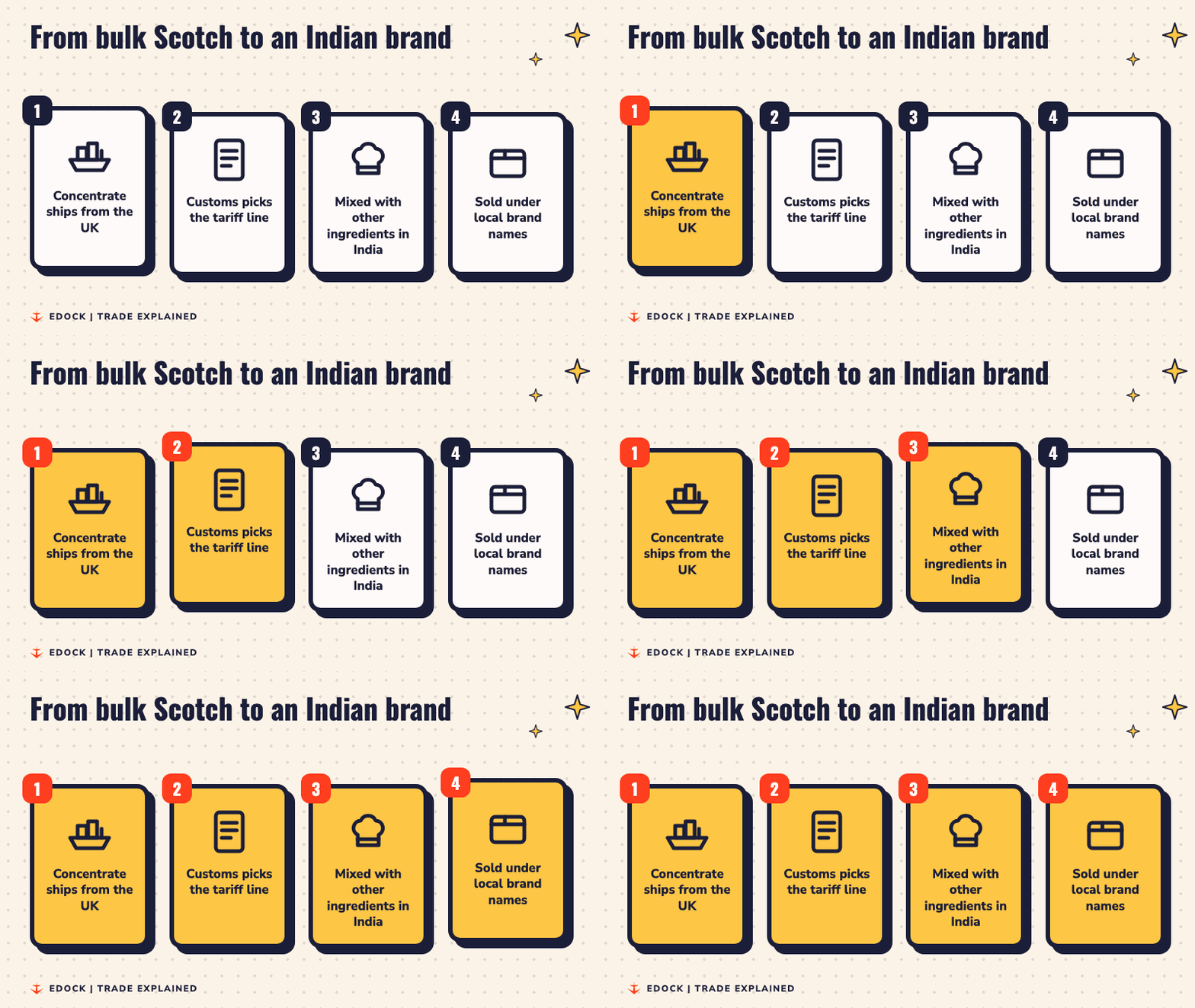
Not all Scotch comes to India in bottles. Diageo and Pernod Ricard also import bulk Scotch concentrates in containers. In India, they mix this with other ingredients to make well-known local brands such as Royal Stag and Blenders Pride.
Think of it like a chai stall that buys a strong tea concentrate in a big can, then mixes it with milk, water and sugar to serve many cups under its own stall name. The can and the cup are not the same product, even if the taste starts from the same thing.
Why one line in a customs book matters
Every product that crosses a border gets a code, called a tariff line or heading. It is like the label on a school locker: it tells customs officers which rule and which fee apply. Change the label, and the fee changes too.
According to Mint, authorities have privately told the companies that bulk Scotch concentrates must be classified under a heading that still carries the full 150% duty. Investigators are checking whether the firms put these goods under the wrong heading to get the lower rate.
This is linked to an idea called rules of origin and product rules in trade deals. A deal does not cut fees on everything. It lists exactly which products, under which codes, get the cheaper rate. It works like a "made in" tag plus a product list: if your item is not on the list, the discount does not apply.
What happened, step by step
The Directorate of Revenue Intelligence, India's agency that checks for customs and duty problems, searched offices of both firms this month. United Spirits, Diageo's Indian unit, said in a stock exchange filing that searches were "initiated at multiple locations" on Friday, 16 October, as part of what it called an industry-wide exercise.
Reuters first reported the probe on 19 October. Tax inspectors made a visit to Pernod Ricard's India headquarters near New Delhi, questioned executives about Scotch imports and reviewed documents on bulk shipments.
Both companies say they are working with the authorities. Pernod said it is cooperating with the Directorate and giving all the information asked for. Diageo said it has always followed local laws and has given all documents and clarifications.
What the industry says
The International Spirits and Wines Association of India, a trade group that speaks for both companies, wrote to the commerce minister. Its letter, as reported by Mint, said the issue "risks undermining, in practice, an important market-access benefit" agreed between India and the UK. It asked for an urgent clarification from the government.
In simple words, the group is saying: the deal promised a discount, but if this reading holds, the discount may not reach the goods that feed many popular brands.
Why this is a big deal for trade
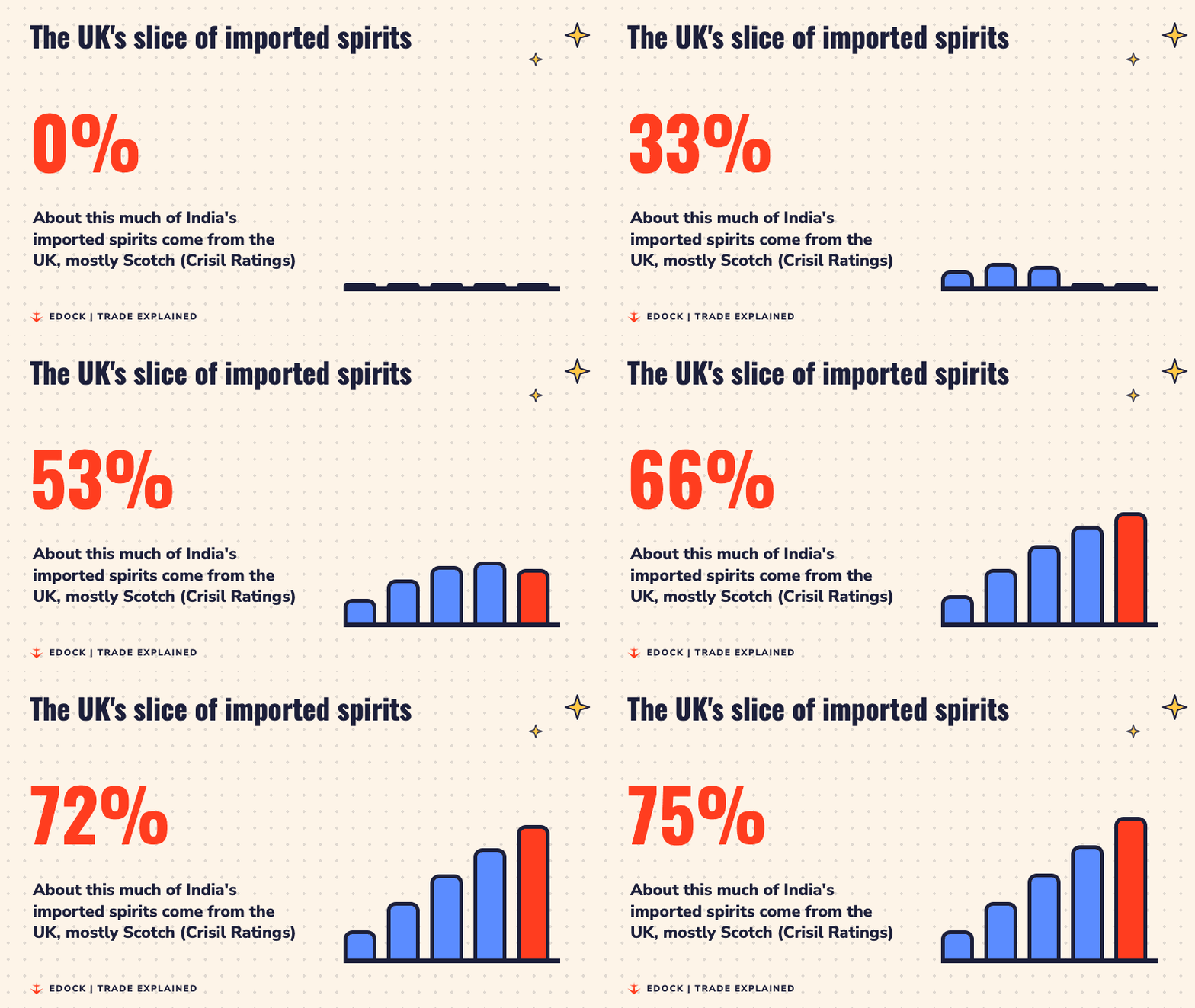
India's alcohol market is worth about $65 billion. Diageo and Pernod Ricard are the two biggest foreign players in it. Britain supplies almost 75% of India's imported spirits, mostly Scotch, according to Crisil Ratings.
Fights over customs codes are not new in India. Past tariff disputes have involved companies like Samsung, LG and Volkswagen, often with large back-tax demands raised years after the goods came in. A back-tax demand is like a shop owner asking for the rest of the money months after you left with the item, saying the price tag was wrong.
Pernod is separately facing a $314 million back-tax demand over claims that it undervalued some imports, which it denies. That is a different matter from this probe.
What happens next
The open question is simple: do bulk Scotch concentrates qualify for the 75% rate, or do they still pay 150%? The revenue directorate did not respond to Reuters' request for comment. No final ruling has been announced yet.
An official answer would settle things for the two biggest foreign liquor firms in India. It would also show whether a much-talked-about benefit of the India-UK deal really works for the bulk shipments behind many well-known whisky brands.
The lesson for young traders
For anyone who wants to work in export or import, this story has one clear lesson. A trade deal headline says "duty cut". The real money sits in the small print: which product, under which code, in which form. Bottled or bulk, finished or raw, the label at the border decides the fee.
Sources
- Mint: Why Diageo and Pernod are under probe (23 Oct 2026)
- The Economic Times (Reuters): India probing Pernod, Diageo Scotch imports under India-UK trade pact (19 Oct 2026)
- Business Today: Pernod, Diageo Scotch imports under tax scanner (20 Oct 2026)
- Just Drinks: India investigating Diageo and Pernod Ricard over bulk Scotch imports (20 Oct 2026)
- Mint on YouTube: India-UK Trade Deal officially kicks in
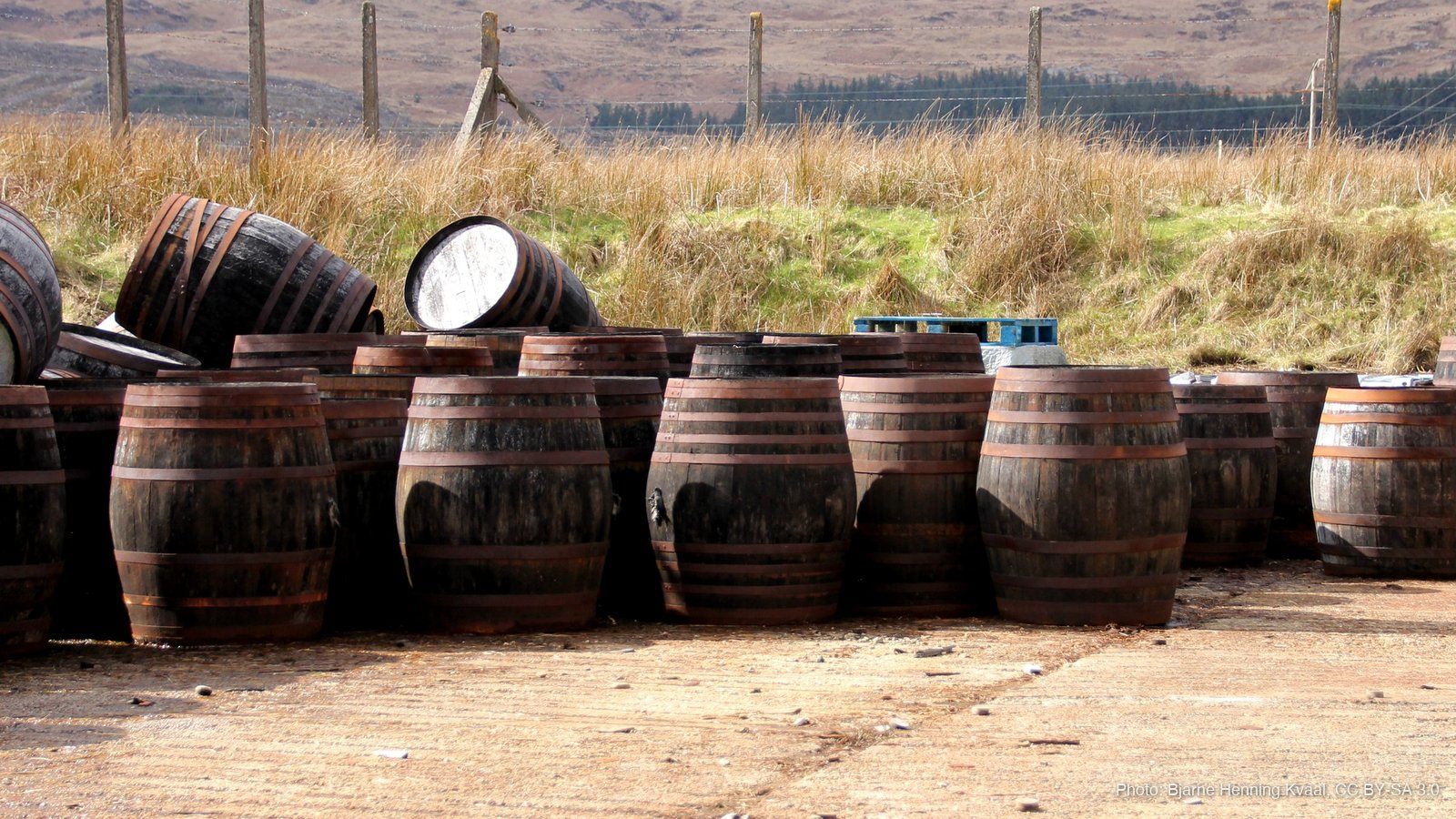
- Cover photo: Jura Distillery casks at warehouse, Isle of Jura, Scotland, by Bjarne Henning Kvaal, CC BY-SA 3.0

You may republish this story under CC BY 4.0: credit Manpreet Kaur and link to this page.