Why a fuel shortage far away gave Reliance a record Rs 29,550 crore profit
Diesel and jet fuel sold for far more than crude oil, and the world's largest refinery at Jamnagar earned on that gap.
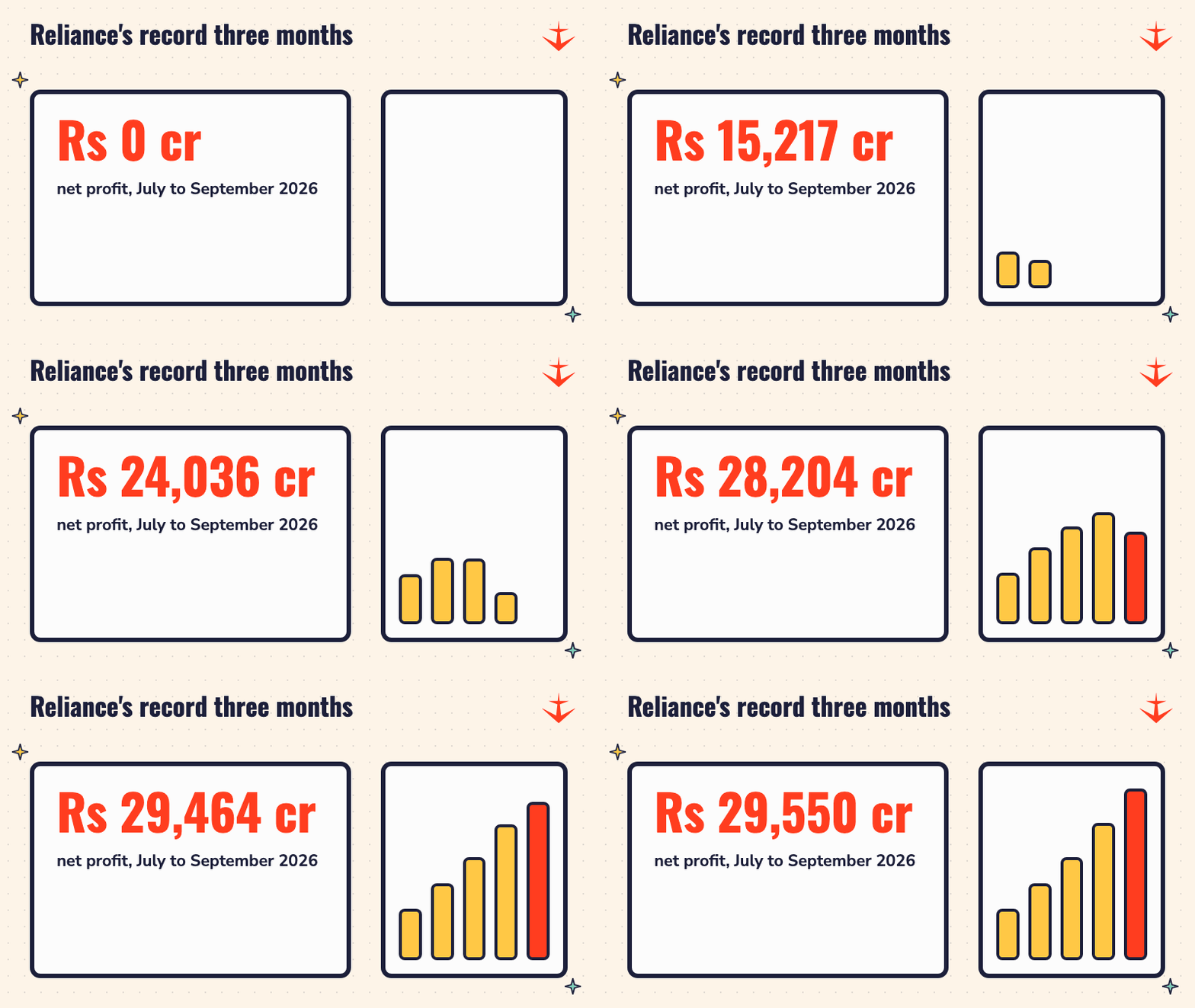
In just three months, Reliance Industries made a profit of Rs 29,550 crore. That is more than Rs 320 crore for every single day of the quarter. On 30 October 2026, the company said in its results post that this was a new high for July to September. A year earlier, the same quarter's profit was Rs 22,092 crore, so profit grew about 34%.
The surprise is where the money came from. It was not mainly Jio or the shops. It was the old business of turning crude oil into fuel, at a time when the world is short of fuel.
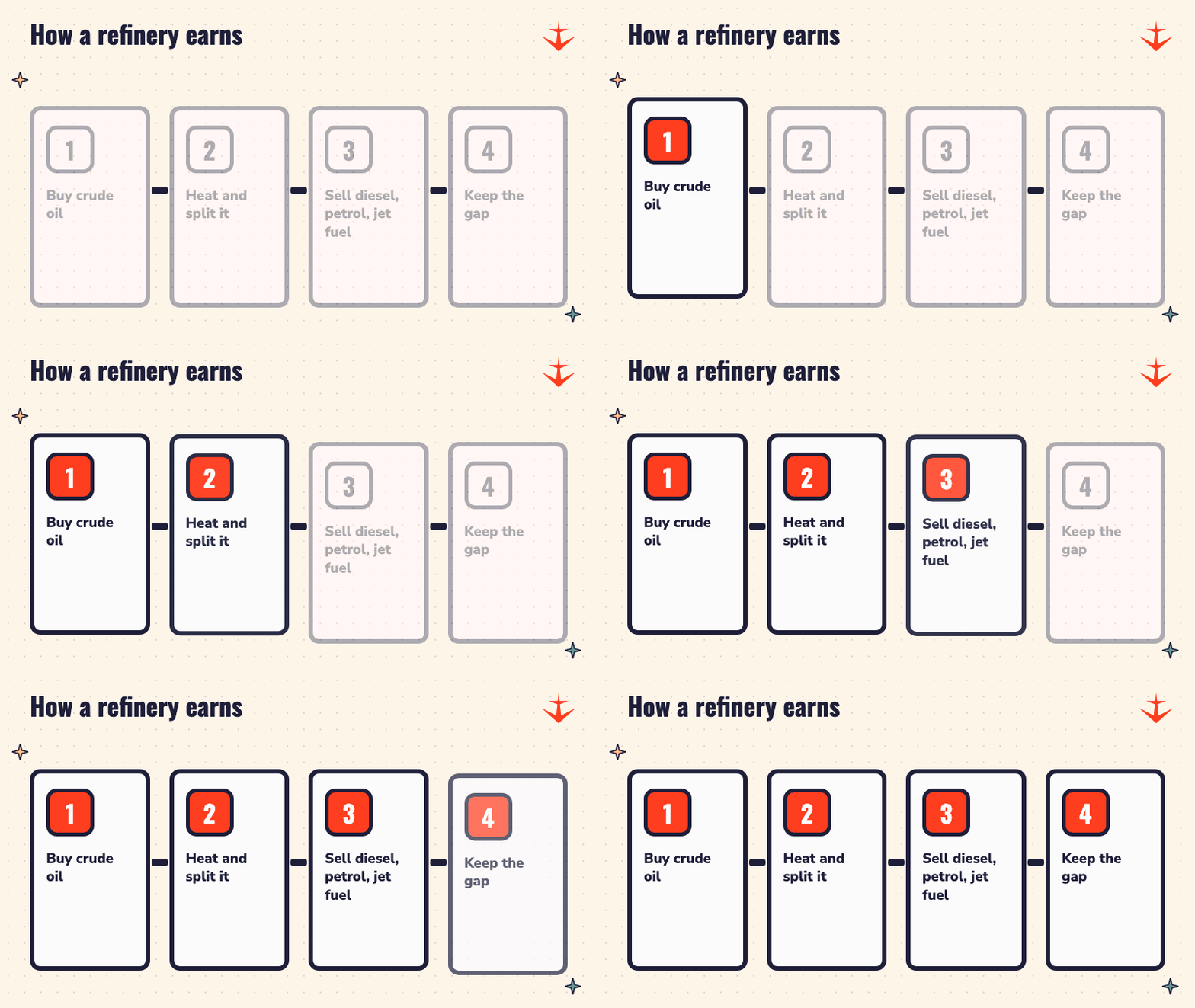
How does a refinery make money?
Think of a samosa stall. The owner buys potatoes, flour and oil. Then he sells samosas. His profit on each samosa is the selling price minus what the potatoes, flour and oil cost.
A refinery works the same way. It buys crude oil, the thick black oil that comes out of the ground. It heats and splits that oil into diesel, petrol, jet fuel and chemicals. Then it sells them. The gap between the price of the fuel and the price of the crude is called a "crack". The Mint newspaper explains that a crack is the difference between the price of crude oil and the price of the fuel made from it. A bigger crack means more money on every barrel, like a bigger profit on every samosa.
Reliance owns the Jamnagar refinery in Gujarat. Wikipedia lists it as the largest oil refinery in the world. It can process about 1.24 million barrels of crude a day.
Why did the gap get so big?
Wars in West Asia and Ukraine disrupted nearly a tenth of the world's refining capacity, Mint reports. Refining capacity means how much crude the world's refineries can turn into fuel. When some of them stop, there is less diesel, petrol and jet fuel to go around. Buyers then pay more for each litre.
Crude oil did get costlier. The Economic Times reports that crude prices rose 40.6% from a year earlier. But fuel prices rose even faster, by 50% to 78%. So the gap grew.
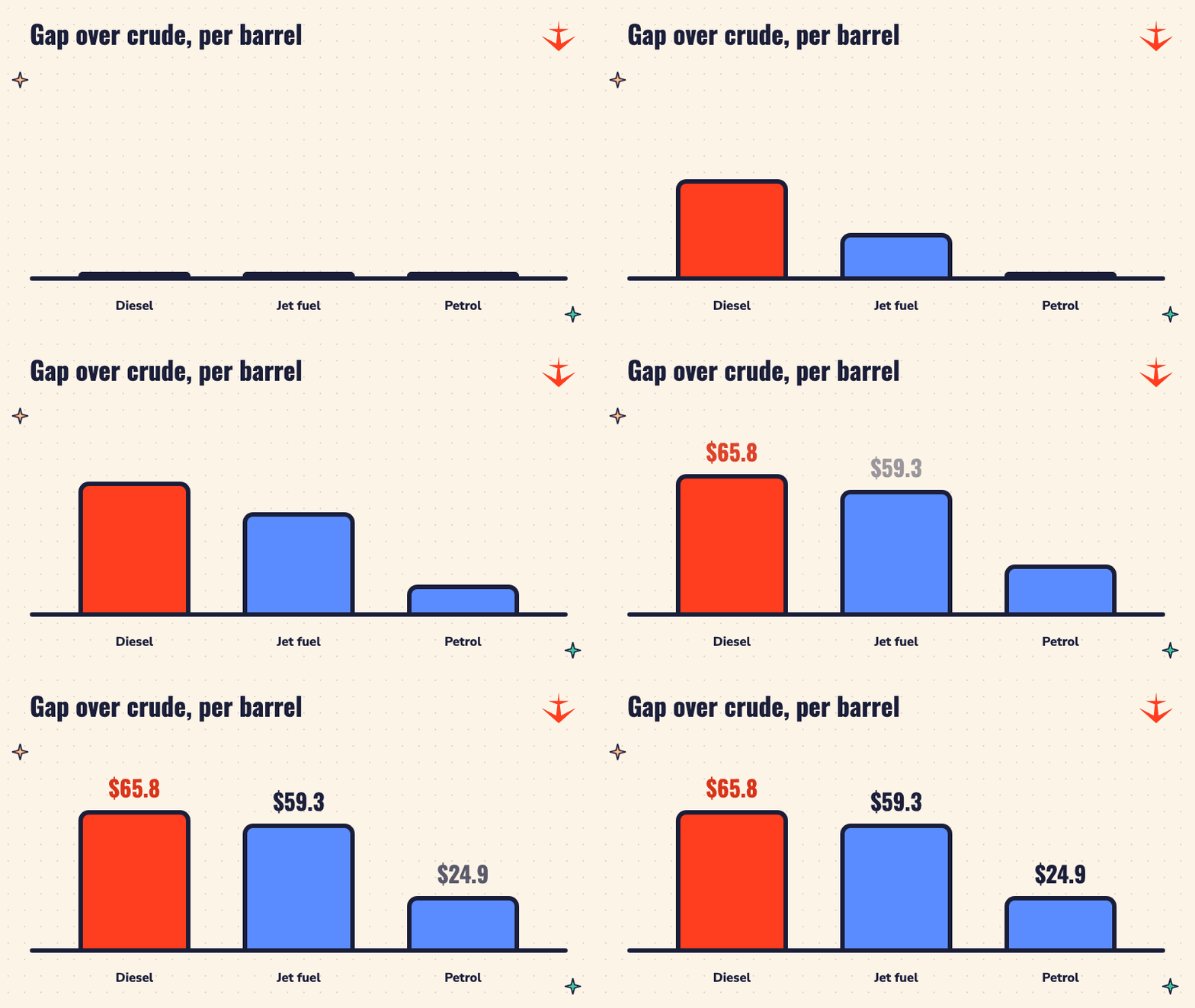
Here is how big the cracks became, per barrel, according to the same ET report:
- Diesel: up 252% to $65.8 a barrel.
- Jet fuel: up 268% to $59.3 a barrel.
- Petrol: nearly three times higher, at $24.9 a barrel.
So a barrel of diesel sold for close to $66 more than a barrel of crude oil.
How much did the fuel business earn?
Reliance calls this part of the company O2C, short for "oil to chemicals". It covers refining and the making of chemicals used in plastics and polyester. In the quarter, O2C earned a record Rs 25,203 crore before interest, tax and wear and tear on machines, Business Standard reports. That is up 68% from Rs 15,008 crore a year earlier. O2C sales rose 44% to about Rs 2.32 lakh crore.
Business Standard also found that O2C brought in a little over 80% of the extra revenue and extra earnings Reliance made this quarter, compared with a year ago. In plain words: for every Rs 10 of growth, about Rs 8 came from fuel and chemicals.
Chairman Mukesh Ambani said this in the company's release, as quoted by ET:
"Our O2C business delivered a particularly strong performance this quarter, led by tight fuel markets, improved downstream petrochemical deltas and firm domestic demand."
"Deltas" here means the gap between what a chemical sells for and what goes into making it. Business Standard calls these chemical margins.
Why is there a second profit number?
Some news reports say Rs 29,550 crore. Others say Rs 25,548 crore. Both are correct. They measure different things.
Rs 29,550 crore is the full profit of the whole Reliance group, the number the company itself put out. But Reliance does not own 100% of every business in its group. Other investors own a part of some of them. When their share is taken out, the profit that belongs to Reliance's own shareholders is Rs 25,548 crore, up 40.6% from Rs 18,165 crore, Business Standard reports. Think of a pizza shared with friends: the whole pizza is one number, your slices are another.
For the six months from April to September, Reliance's full profit was Rs 52,746 crore. Business Standard says that makes Reliance the first Indian company to cross Rs 50,000 crore of profit in half a year.
How did Reliance keep the crude coming?
The war made it harder to get crude from the Gulf. Freight rates, the cost of hiring ships, rose 15 to 20 times, Business Standard reports. Reliance said it bought crude from Latin America, North America and the Mediterranean region to keep the refinery running, ET reports.
Location helped too. Half of Reliance's refining capacity sits in a special economic zone at Jamnagar, Mint reports. A special economic zone is an area with its own tax and trade rules. Because of this, that part stayed outside the windfall tax, an extra tax the government put on refiners selling inside India.
What does this mean for fuel and plastics in India?
Reliance said it supplied diesel and petrol to its Jio-bp fuel stations, to factories and other industrial buyers, and to state-run oil companies that were facing shortages, ET reports. The company said this helped meet demand in India without imports. It did not say how much it supplied.
At the company's own pumps, things were harder. Reliance said earnings were held back by "under-recoveries" in the Jio-bp business, Business Standard reports. An under-recovery means selling fuel for less than it costs. It is like a stall selling samosas at the old price even after potatoes got costlier.
Chemicals also got costlier. Prices of most chemical products made from oil rose 25% to 35% from a year earlier, ET reports. These chemicals go into things like plastic, packaging and polyester fibre. Margins on the polyester chain hit a three-year high, Business Standard reports.
The other big units were quieter. Reliance Retail's profit fell 24.3% to Rs 2,611 crore, Business Standard reports, in the same week Jio Platforms listed on the stock market.
Watch: the quarter and the refinery
This Hindi news video covers Reliance's results for the quarter.
This video explains why the Jamnagar refinery matters to the world's fuel supply.
Here is the company's own post on the results.
Sources
- Reliance Industries on X: Q2 FY27 performance
- The Economic Times: oil to chemicals business powers record quarterly profit
- The Economic Times: Reliance looks to Latin America, North America and the Mediterranean for crude
- Business Standard: powered by fuel earnings, Reliance tops estimates
- Business Standard: O2C earnings jump 68%
- Mint: refining business powers quarterly earnings beat
- Wikipedia: Jamnagar refinery
- Cover photo: Jio-bp Fuel Filling Station Coimbatore, by Rupumped, CC BY-SA 3.0

You may republish this story under CC BY 4.0: credit Manpreet Kaur and link to this page.