Walmart opens its doors to AI shopping helpers while Amazon keeps them out
Version 1 of 1 saved 22 Oct 2026, 4:43 pm IST · Chain line 141
As it was first published
Walmart opens its doors to AI shopping helpers while Amazon keeps them out
On 21 October 2026 Walmart launched a gate for AI agents to shop for customers, with spending limits, a month after Amazon shut out Meta's Muse.
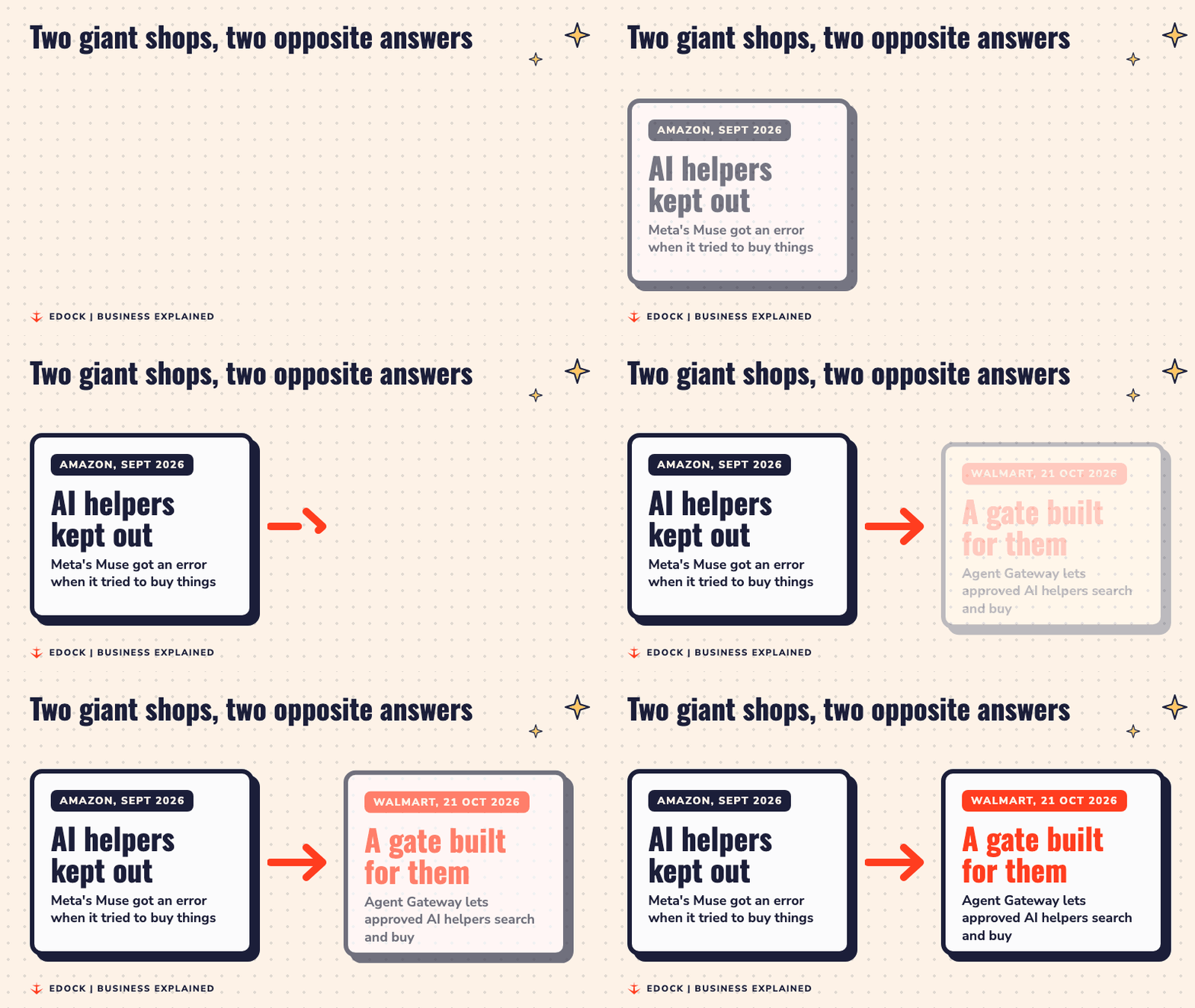
Picture this. You tell an AI app on your phone, "Buy my usual shampoo and a pack of biscuits." The app goes to a giant shop, finds the items and pays, while you sit in class. On Wednesday, 21 October 2026, Walmart, one of the biggest shops in the world, launched new tools to let AI helpers do exactly that for its customers.
The surprise is the timing. Just a month earlier, its biggest rival, Amazon, did the opposite. It started blocking AI helpers from buying things on its store. Two giant shops, one big question: should a robot be allowed to fill your cart?
First, what is an AI agent?
An AI agent is an AI app that does not just answer questions. It does tasks for you. Think of it like a trusted friend you hand your shopping list and some pocket money to. The friend walks to the shop, picks the items and pays.
Walmart says its new tools work with popular AI apps. The Economic Times reported that the plan covers helpers such as OpenAI's ChatGPT, Google's Gemini and Meta's Muse. They can connect to Walmart and its warehouse store chain, Sam's Club, to search for products and complete purchases.
The new front gate for robots
The first tool is called Agent Gateway. A gateway is simply an entry gate. Imagine a school with one gate for students and a separate, guarded gate for delivery vans. Agent Gateway is the guarded gate built just for approved AI helpers.
It runs on something called the Model Context Protocol, or MCP. A protocol is a shared set of rules, like the rules of cricket that let any two teams play the same game. The official MCP guide compares it to a USB-C port: one standard plug that lets AI apps connect to outside tools and data. MCP was first released as an open standard by Anthropic, the company that makes the Claude AI app.
Through this gate, an AI helper can search Walmart's online stock and buy things for its user, TechCrunch reported. Walmart also says the helper can shop for a customer's usual brands without the customer sharing personal details or past purchases directly with the AI app.
Agent Profiles: a leash with a limit
The second tool is called Agent Profiles, and it rolls out next month. Each AI helper a shopper uses gets its own profile inside the shopper's Walmart account. So the shopper can see what the AI bought, kept apart from what they bought themselves.
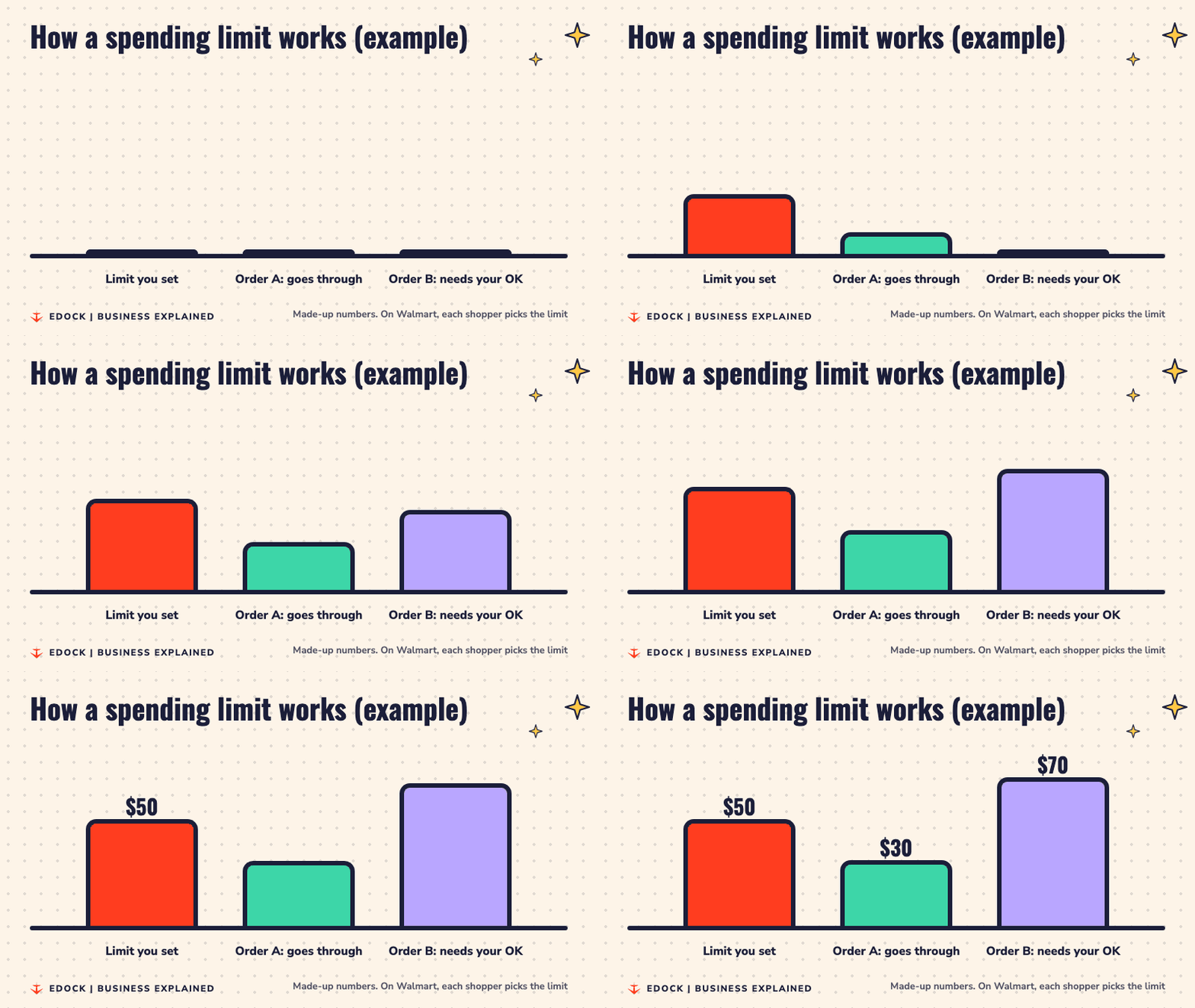
Shoppers also choose how much power to give. They can ask the AI to get approval for every single purchase. Or they can set a spending limit and let it buy freely below that amount. Walmart compares this to adding someone as an authorised user on your credit card, where you can see their spending and cap it.
Think of it like giving a younger cousin your card for the canteen, but telling the canteen uncle, "Nothing above 50 rupees without asking me." A shopper can also delete an Agent Profile at any time. And a paid Walmart+ membership is not needed; anyone with a Walmart account can use it.
House rules for robots
Walmart has also written special "terms" for AI agents. Terms are house rules, like a hostel's list of what guests can and cannot do. According to TechCrunch, the rules say:
- An AI helper cannot do more than what the shopper wants.
- It cannot see the customer's payment details.
- It can only use the information it needs for the task.
- Helpers that break the rules will be blocked from Walmart's site.
There is one more customer-friendly point. Walmart says its normal returns process still applies, even when an AI helper does not act as intended. So if your robot orders the wrong thing, you can send it back.
Walmart's president and CEO, John Furner, spoke about the plan at the Masters of Scale Summit in San Francisco on Wednesday, TechCrunch said. A Mizuho analyst, David Bellinger, wrote in a note that the tools gave confidence in this still "experimental" way of shopping, ET reported.
So why did Amazon say no?
Meta launched its personal AI agent, Muse, on 8 September. Within weeks, people trying to shop on Amazon through Muse saw a popup. It said that continued access by an unauthorised AI agent breaks Amazon's Conditions of Use.
Amazon gave its reasons to GeekWire. It said it never agreed to Muse using its store. It said the agent does not tell the site who it is when it browses. And it said Muse appears to capture and store customer login details, which could create privacy and security risks. Meta had earlier said Muse cannot see people's passwords or payment methods.
There is a practical worry too. If an AI helper places a wrong order, the shop has to clean up the mess with both an angry customer and an angry seller, TechCrunch noted.
Follow the money: ads
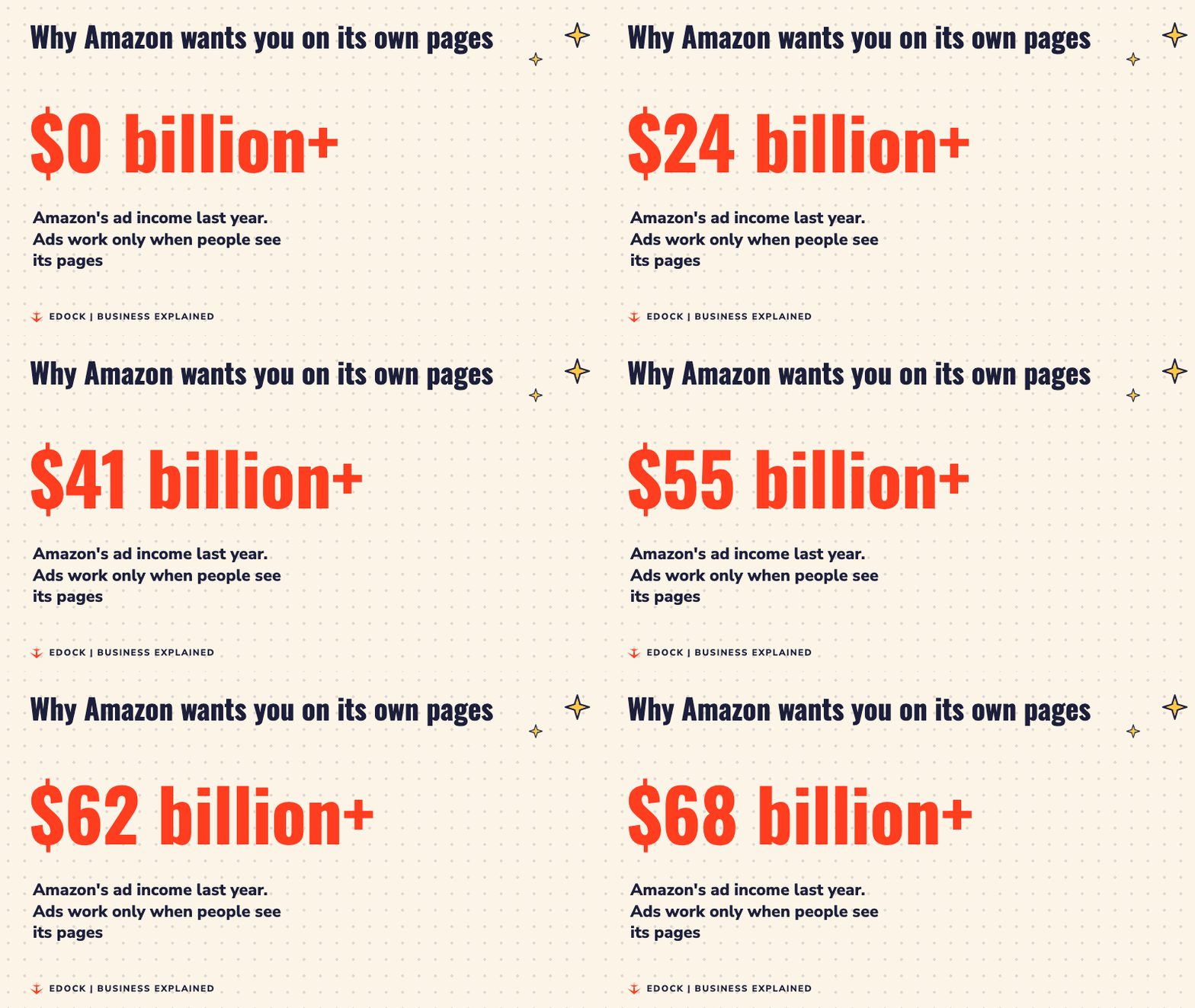
There is also a big business reason. Amazon earned more than $68 billion in ad revenue last year, GeekWire reported. Revenue is the total money a company takes in from sales, before costs.
Those ads are the "sponsored" products you see while scrolling a shop's pages. They work only when real people look at the pages. An AI helper that zips in, buys one item and leaves does not stop to look at ads. It is like a cinema that earns from samosa sales: if people skip the interval, the samosa stall suffers.
Why this matters to you
The AI apps named in Walmart's plan, like ChatGPT and Gemini, are apps you may already have on your phone. Now big shops are deciding whether these same apps can also spend money for people.
The two shops are making opposite bets. Walmart is betting that customers will want AI helpers, and that clear rules and limits will keep things safe. Amazon, for now, wants shoppers to come to its own store and see its pages. Which plan works better will shape how shopping with AI helpers grows from here.
One simple lesson works anywhere: if an app ever offers to shop for you, look for a spending limit and an easy way to say "ask me first."
Sources
- TechCrunch: While Amazon keeps AI agents out, Walmart rolls out the welcome mat (21 Oct 2026)
- The Economic Times: Walmart launches tools for AI agents to shop for customers
- GeekWire: Amazon cuts off Meta's Muse AI assistant from shopping
- TechCrunch: Meta's AI agent has been kept off Amazon.com
- Model Context Protocol: What is MCP
- Anthropic: Introducing the Model Context Protocol
- Cover photo: Shopping trolleys, by Matthew Paul Argall, CC BY 2.0; Supermarket, by Yuya Tamai, CC BY 2.0; NOIRLab HQ Server Racks, by NOIRLab/NSF/AURA/T. Slovinský, CC BY 4.0

