Volvo Cars will cut 2,500 roles after a surprise loss, and its shares crash 24%
Version 1 of 1 saved 25 Oct 2026, 4:32 am IST · Chain line 222
As it was first published
Volvo Cars will cut 2,500 roles after a surprise loss, and its shares crash 24%
The Swedish car maker swung to a loss in July to September as China sales fell and US tariffs hurt. Here is what operating loss and cash burn mean.
Picture a famous Swedish car brand, one that sells itself on safety, losing about a quarter of its stock market value in a single day. That happened on Friday, 23 October 2026. Volvo Cars said it will cut about 2,500 roles worldwide, 2,000 of them in Sweden, after a far worse quarter than expected. Its shares fell 24% to a record low the same day, Reuters reported.
Here is what went wrong, what the big business words mean, and why it matters even if you never plan to buy a Volvo.
First, who is Volvo Cars?
Volvo Cars is a Swedish maker of luxury cars, mostly SUVs, estate cars and sedans. It was founded in 1927 and is based in Gothenburg, Sweden. It is not the same company as Volvo the truck maker. Its biggest owner is China's Geely Holding, which owns about 78.7% of it, according to Wikipedia.
Volvo also sells cars in India. Recently, Volvo Cars India launched the EX90, a big electric SUV, at ₹1.26 crore (ex-showroom), Mint reported.
The quarter in plain numbers
A "quarter" is three months of a company's year. Here it means July to September 2026. Volvo's own report gives these numbers:
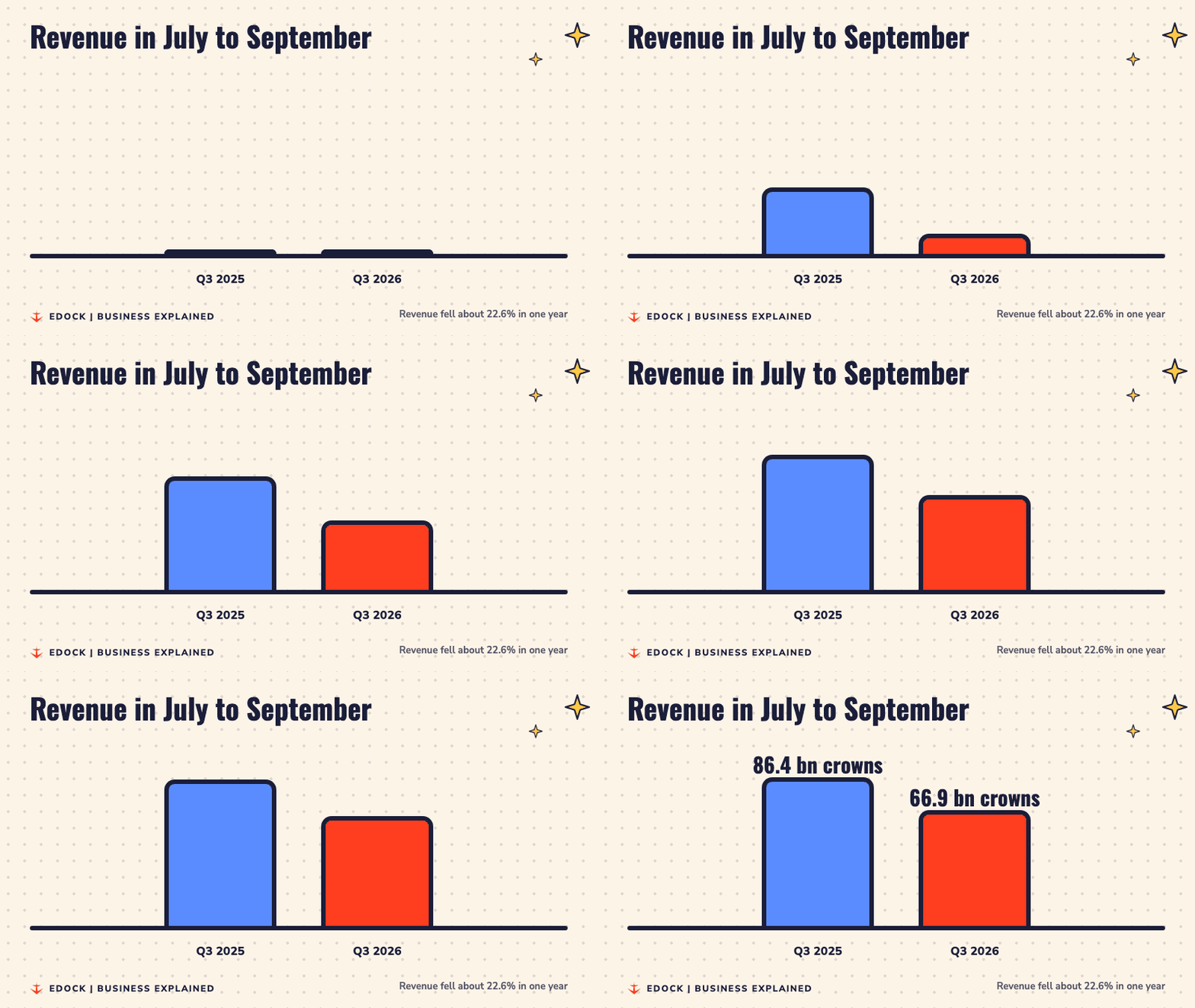
- Revenue (all the money that came in from selling cars) was 66.9 billion Swedish crowns, down from 86.4 billion crowns a year earlier. That is a fall of about 22.6%.
- Operating loss was 3.7 billion crowns, against a profit of 5.8 billion crowns in the same months of 2025. Reuters put the loss at about $373 million.
- Cash burn was 8.9 billion crowns, up from 4.3 billion crowns a year earlier.
What do "operating loss" and "cash burn" mean?
Think of a samosa stall. An operating loss means the money from selling samosas was smaller than the cost of running the stall: potatoes, oil, gas, rent and the helper's pay. Volvo's figure leaves out some one-off items and its share in partner companies, so it shows how the main car business itself did.
Cash burn is simpler. It is how much real money leaves the cash box in a period. If the stall owner starts the month with ₹10,000 and ends with ₹6,000, that is ₹4,000 burnt. Volvo burnt twice as much cash as a year ago.
Experts had expected a much smaller loss. Citi analysts said the market's average guess was a loss of only 724 million crowns, Reuters reported. When a company misses the guess by this much, investors rush to sell, and the share price falls hard.

Why is Volvo in trouble?
The company named two places: China and the US.
China. Volvo said it faced "hypercompetition" from new Chinese car brands and heavy pressure to cut prices. Its revenue in China fell by almost 50% from a year earlier. Imagine a famous old chai shop that suddenly has ten new shops around it, each selling good chai cheaper. Many customers walk to the new ones.
The US. Volvo said tariffs kept hurting it there. A tariff is a tax a country charges on goods brought in from abroad, so imported cars cost more. Volvo also said the US removed buyer incentives for electrified cars, which squeezed its margins (the slice of each sale it keeps as profit).
There was a home problem too. The new EX60 electric SUV is central to Volvo's comeback, and the company says it already has over 50,000 orders in Europe. But building it has been slow because of battery assembly issues. Only around 5,000 of the 40,000 planned for this year have been built so far, Reuters reported.
CEO Håkan Samuelsson admitted mistakes in a Reuters interview. He said Volvo should perhaps have seen earlier that it needed to be "more regional" in China and that tariffs would come.
How the 2,500 cuts will happen
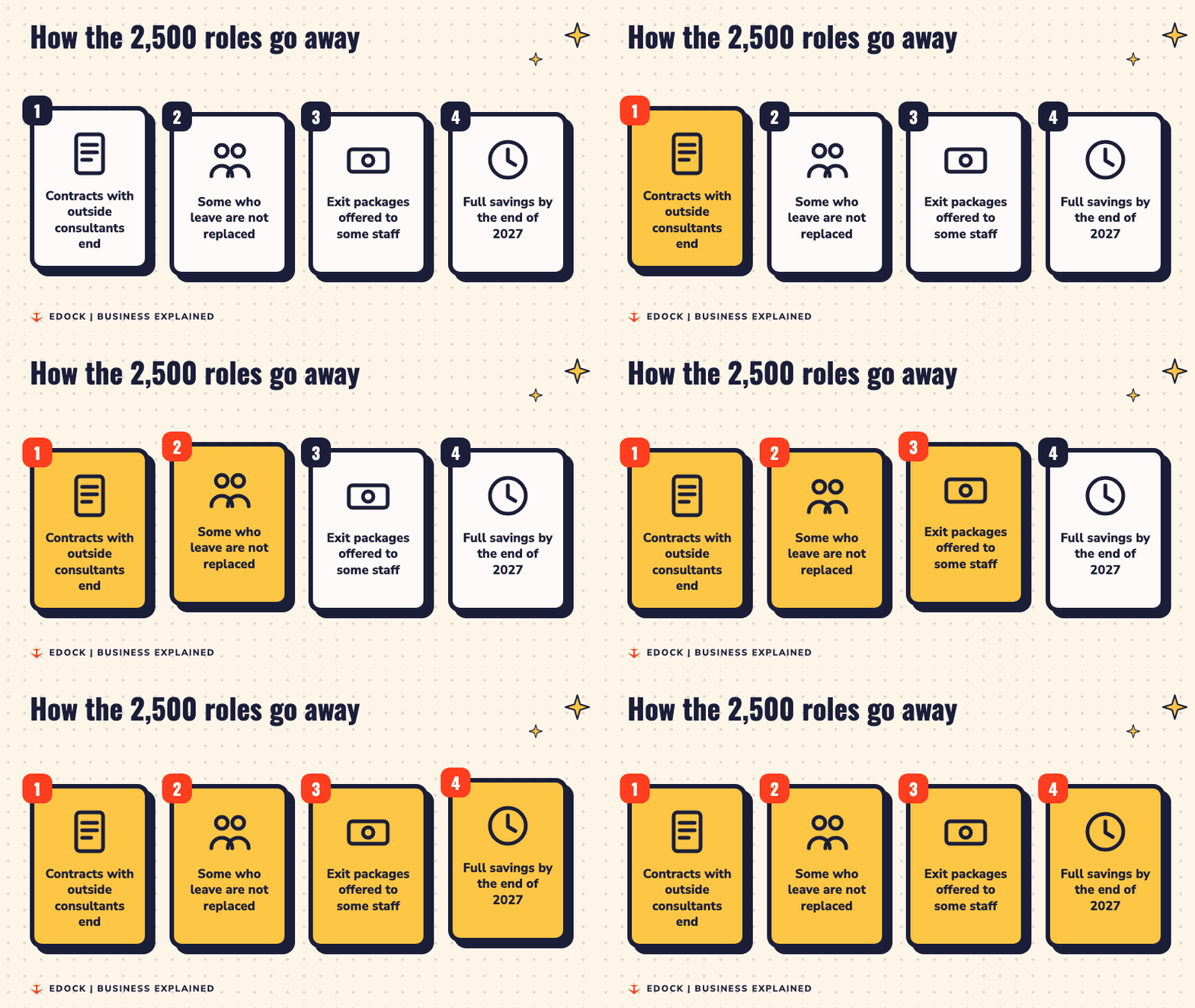
Volvo wants to save another 5 billion crowns in costs, on top of earlier savings. The cuts will happen in three ways, the company said:
- Ending consultant contracts. Consultants are outside experts hired for a project, like a tutor brought in for exam season. Volvo will stop paying many of them.
- Natural attrition. When people leave on their own or retire, nobody new is hired in their place.
- Targeted exit packages. Some staff are offered a sum of money to leave.
The cuts will touch about 6% of Volvo's workforce and come on top of 3,000 earlier cuts, Reuters reported. Samuelsson told Reuters they should be done by mid-2027 and did not rule out more steps. Volvo says the full savings will show by the end of 2027.
What is Volvo's plan to bounce back?
Volvo says it will launch 13 new cars by the end of 2030, with different cars for Europe, the US and China. Six of them will be designed for China, Reuters reported, and Volvo says its new China cars will come from closer work with Geely. It also plans to start making the XC60 at its US plant in Charleston in early 2027, so more of the cars it sells in the US are made there.
There is good news inside the bad. In July to September, 32% of the cars Volvo sold were fully electric, up from 22% a year earlier. In Europe, 45% of its sales were fully electric cars.
Volvo still has money in the bank. A Handelsbanken analyst told Reuters the company has over 30 billion crowns in cash, but warned it might need more money if this level of cash burn goes on for two more quarters.
A new boss is also coming. Klaus Zellmer, the former head of Skoda, will take over from Samuelsson next year. Samuelsson came back from retirement in 2025 on a two-year contract to fix the company.
Why should a young Indian reader care?
This story shows how fast a big, trusted brand can slip. A famous name does not protect a company when new rivals sell good products for less, when taxes on imports change, and when a key new product arrives late.
It also shows how the car world is changing. Chinese car makers are now strong enough to shake old European brands at home in China. Volvo is responding by making cars for each region, closer to where buyers live. For students and first-jobbers thinking about careers in cars, electric vehicles, batteries or software, these shifts decide where new roles grow and where they shrink.
And it is a clean lesson in business words: revenue is money in, a loss is when costs beat revenue, and cash burn is money leaving the box. Watch those three, and most company news becomes easy to read.
