Vedanta's profit jumps 151% as zinc and silver earn more
Higher metal prices, record zinc output and lower costs lifted the miner's July to September profit to Rs 6,202 crore and lowered its debt.

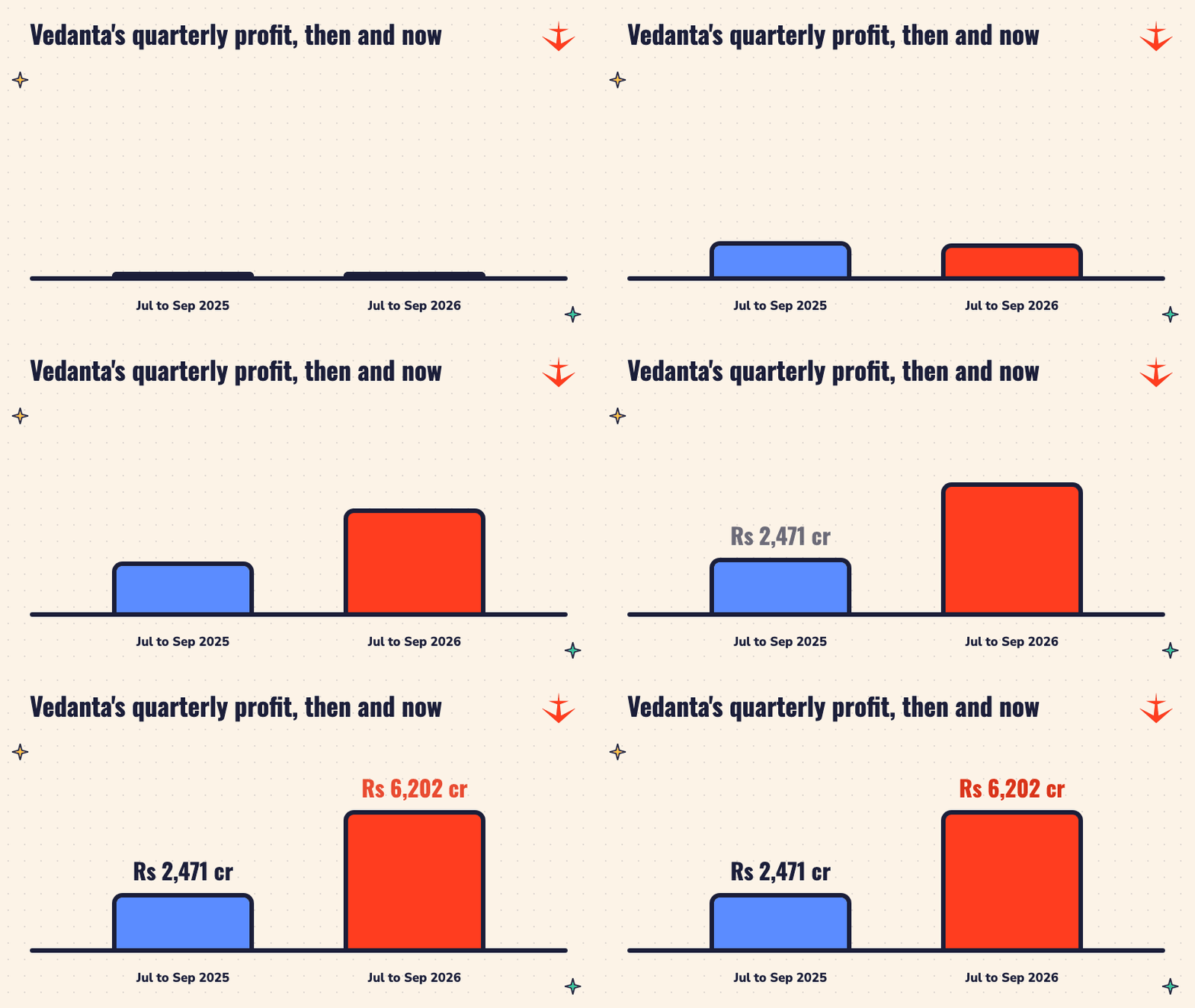
Picture a fruit seller in a year when mangoes are scarce. He sells only a few more mangoes than last summer, yet each one fetches a much higher price, so his cash box fills up fast. On Wednesday, 28 October 2026, the mining company Vedanta showed what this looks like at a giant scale. Its profit for July to September jumped 151% to Rs 6,202 crore, up from Rs 2,471 crore in the same three months a year earlier.
The reason is simple. The metals Vedanta digs up, mostly zinc, silver and copper, sold for more money, and it dug up a little more of them.
What did Vedanta report?
Listed companies in India share their numbers every three months, a block called a quarter. July to September is the second quarter, or Q2, of the money year that started in April. Here is Vedanta's Q2:
- Revenue (all the money that came in from selling things) rose 57% to Rs 25,812 crore, from Rs 16,445 crore a year ago.
- Profit after tax (what is left after paying for everything, including tax) was Rs 6,202 crore. That is 2.5 times last year's figure.
- EBITDA, the money a business earns from its daily work before paying interest, tax and the cost of wear and tear on its machines, reached a record Rs 9,938 crore, up 106% from a year ago.
Think of EBITDA like a samosa stall's daily takings minus the cost of oil, potatoes and the helper's pay. It shows how well the stall itself runs, before the owner pays back the loan on his cart.
The company said its EBITDA margin, leaving out the copper business, widened to 60% from 49% a year earlier. In plain words: out of every Rs 100 of sales, about Rs 60 was left over from the work itself.
Wait, is this the same Vedanta as before?
Not quite. Vedanta used to run aluminium smelters, power plants, oil fields and iron ore mines too. Its board made the split of these units effective from 1 May 2026. Aluminium, merchant power, oil and gas, and iron ore each became their own separate listed company. A split like this is called a demerger.
So the Vedanta of today is mainly a zinc, silver and copper company, with a chrome ore unit called FACOR and a cargo berth at the Vizag port. The Rs 6,202 crore figure is the profit for continuing operations, meaning only the businesses Vedanta still runs.
Why do metal prices matter so much?
Vedanta does not set the price of zinc or silver. The whole world does. Buyers and sellers across many countries settle on a price every day, and every mine gets roughly that price.
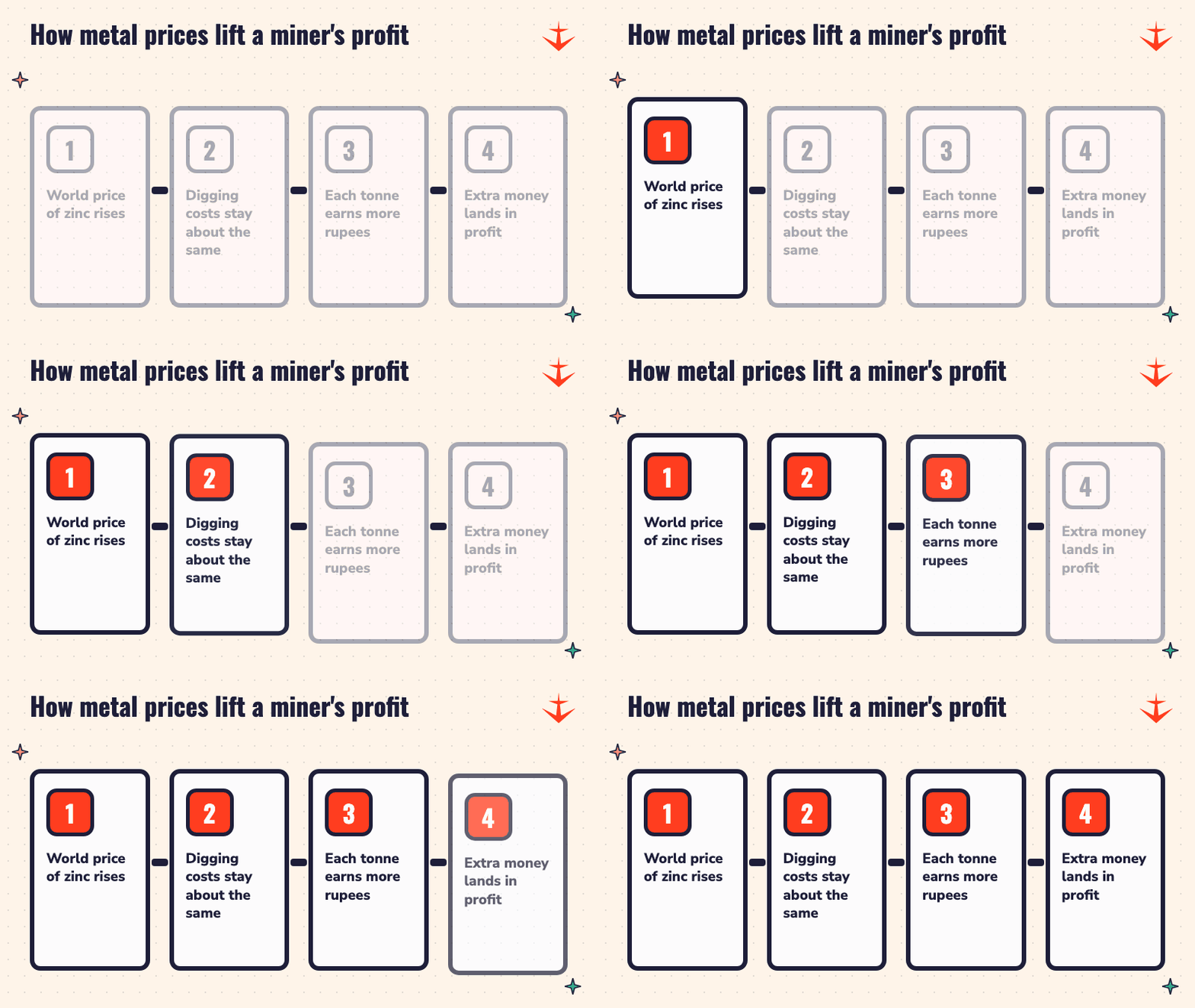
Now here is the magic part. Digging a tonne of zinc costs about the same whether zinc sells high or low. The miners, the trucks and the electricity cost what they cost. So when the selling price goes up, almost all the extra money drops straight into profit. When the price falls, profit shrinks just as fast. This is why mining profits swing so much, like a batter who scores big on a flat pitch and struggles on a turning one.
Vedanta itself said the jump came from higher commodity prices and favourable foreign exchange movements. A commodity is a raw material sold in bulk, like zinc, wheat or crude oil. Foreign exchange means the rupee and dollar rate. Metals are priced in dollars, so when one dollar buys more rupees, each tonne sold brings home more rupees.
Where do zinc, silver and copper go?
These metals hide inside everyday things.
- Zinc is widely used to stop rust. Steel or iron is dipped into hot, melted zinc to give it a coat. This is called galvanization, and it helps steel poles, wires and sheets last longer in the rain.
- Silver is not only for anklets and puja plates. It carries electricity better than any other metal, which makes it useful in electronics. Most silver is found as a by-product of zinc, lead and copper mining.
- Copper is used to carry heat and electricity, which is why it runs through wires, motors and fans.
The zinc and silver engine
The heart of Vedanta's earnings is its zinc business, run by Hindustan Zinc in Rajasthan. In this quarter it dug out a record 271 thousand tonnes of mined metal, up 5% from a year ago. Silver output rose 20% to 173 tonnes.
Silver comes out of the same rock as zinc and lead, almost like a bonus prize in a packet of chips. And silver has become a very big prize. When Hindustan Zinc shared its own results earlier this month, it said silver brought in about 45% of its profit for April to September.
Costs also fell. Making one tonne of zinc in India cost $703, down 29% from a year ago, the lowest since the company moved to underground mining. So Vedanta sold at higher prices while spending less per tonne. Like a mango seller whose transport got cheaper in the same season.
In this short TV interview, Hindustan Zinc talks about the July to September quarter:
Was there any bad news?
Yes, from abroad. Vedanta's copper business outside India sold only 6 thousand tonnes, down 74%, after the closure of the Strait of Hormuz, a narrow sea route in the Gulf. The company said work has resumed there. Copper sales in India were healthier, up 16% to 52 thousand tonnes.
There is also a risk that never goes away: the same metal prices that lifted profit this time can fall next time. The mango season does not last forever.
What did Vedanta do with the extra money?
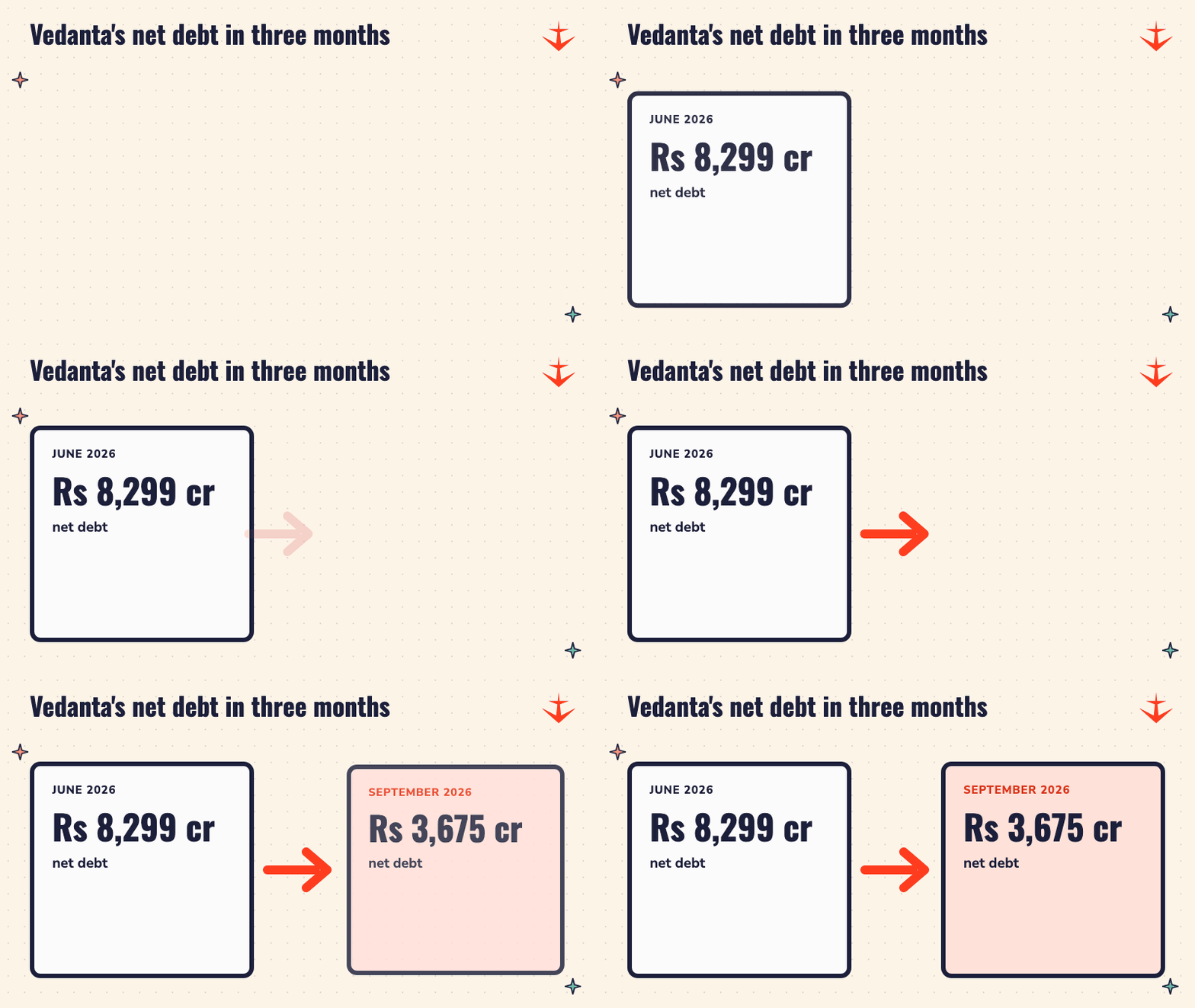
It paid back loans. Net debt is what a company owes minus the cash in hand. Vedanta's net debt fell by Rs 4,624 crore in just three months, from Rs 8,299 crore in June to Rs 3,675 crore at the end of September.
Imagine you owe a friend Rs 8,299 from pocket money. Three months later, after counting what is in your wallet, you owe only Rs 3,675. Your friend trusts you more. Vedanta's cash and cash equivalents also grew to Rs 26,622 crore from Rs 19,992 crore.
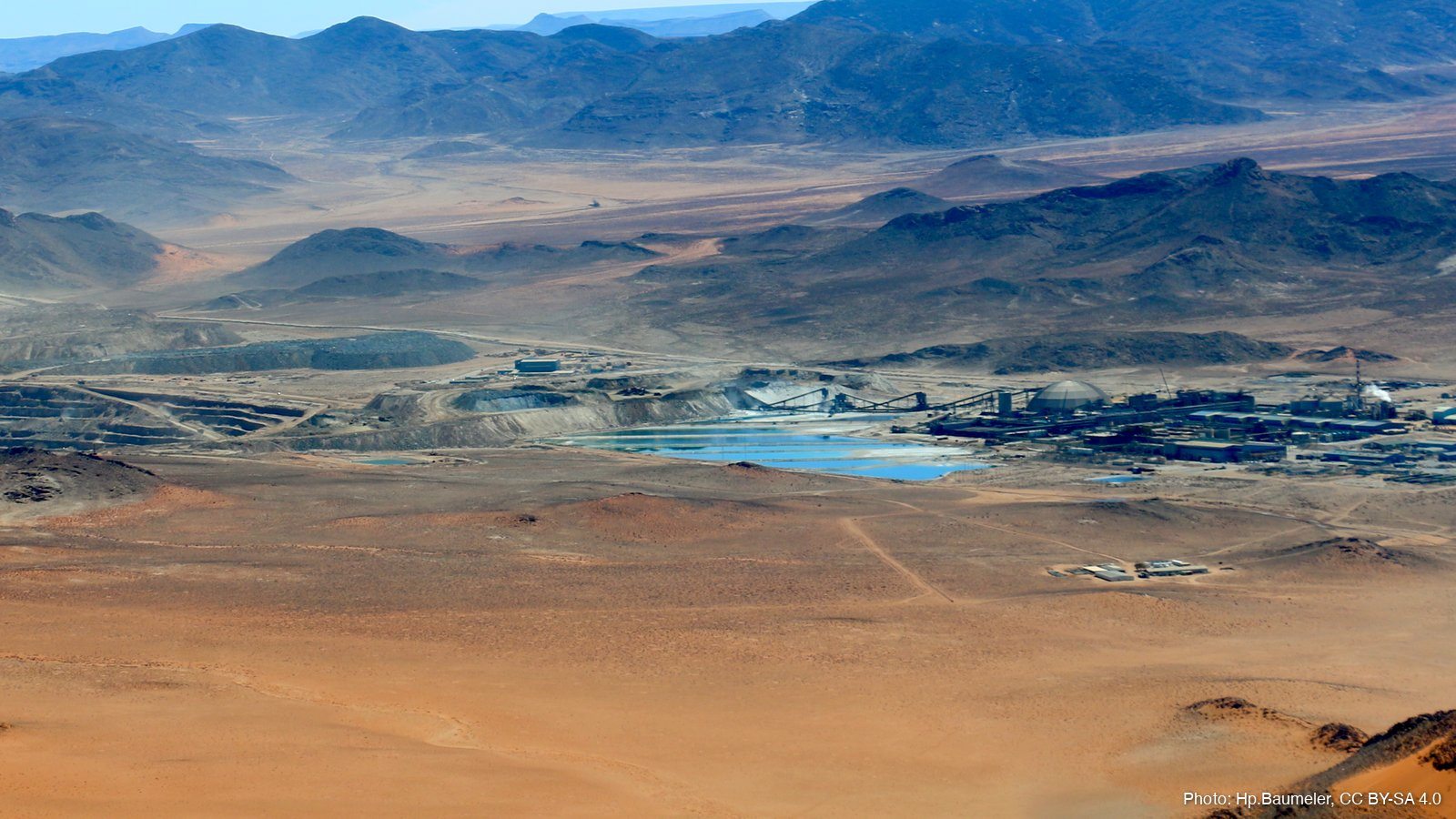
It is also spending on growth. Vedanta put Rs 1,135 crore into growth projects in the quarter, such as bigger mines. In South Africa, its Gamsberg Phase II project started up, adding 200,000 tonnes a year of zinc capacity. The same southern Africa zinc arm owns the Skorpion mine and refinery in Namibia, seen on the cover of this post. That site has been paused since 1 May 2020 because the walls of its open pit became unstable, and the company is working on a plan to restart the refinery.
Why should a young reader care?
Metal prices quietly touch your life. When zinc, copper and silver cost more, the companies that use them pay more too, from the maker of a steel roof sheet to the maker of a phone charger, and some of that can reach the prices you pay. A miner with more cash and less debt can keep investing in bigger mines, which can mean more work in mining towns.
The lesson is easy to remember. A miner's profit depends a lot on what the world will pay for the metal. This quarter, the world paid a lot.
This video (in Hindi) goes deep inside the zinc and silver mines near Udaipur:
Sources
- Business Standard: Vedanta Q2 net profit jumps 151% to Rs 6,202 crore
- The Economic Times: Metals thrust, strong engines power Vedanta's July to September
- DSIJ: Vedanta posts record Q2 FY27 profit as zinc strength and cash generation cut net debt
- The Machine Maker: Vedanta reports record Q2 FY27 profit
- ETV Bharat (PTI): Vedanta demerger to be effective from May 1
- Construction World: Hindustan Zinc Q2 net profit surges 142%
- Wikipedia: Galvanization
- Wikipedia: Silver
- Wikipedia: Copper
- Vedanta Zinc International: Skorpion Zinc
- Cover photo: Skorpion Zinc Mine, Namibia, by Hp.Baumeler, CC BY-SA 4.0

You may republish this story under CC BY 4.0: credit Arshdeep Singh and link to this page.