Varroc and France's Forsee Power team up to make EV battery packs in India
Varroc will buy 45% of Forsee Power India and run it, starting with packs for electric three-wheelers. Here is what the deal means.

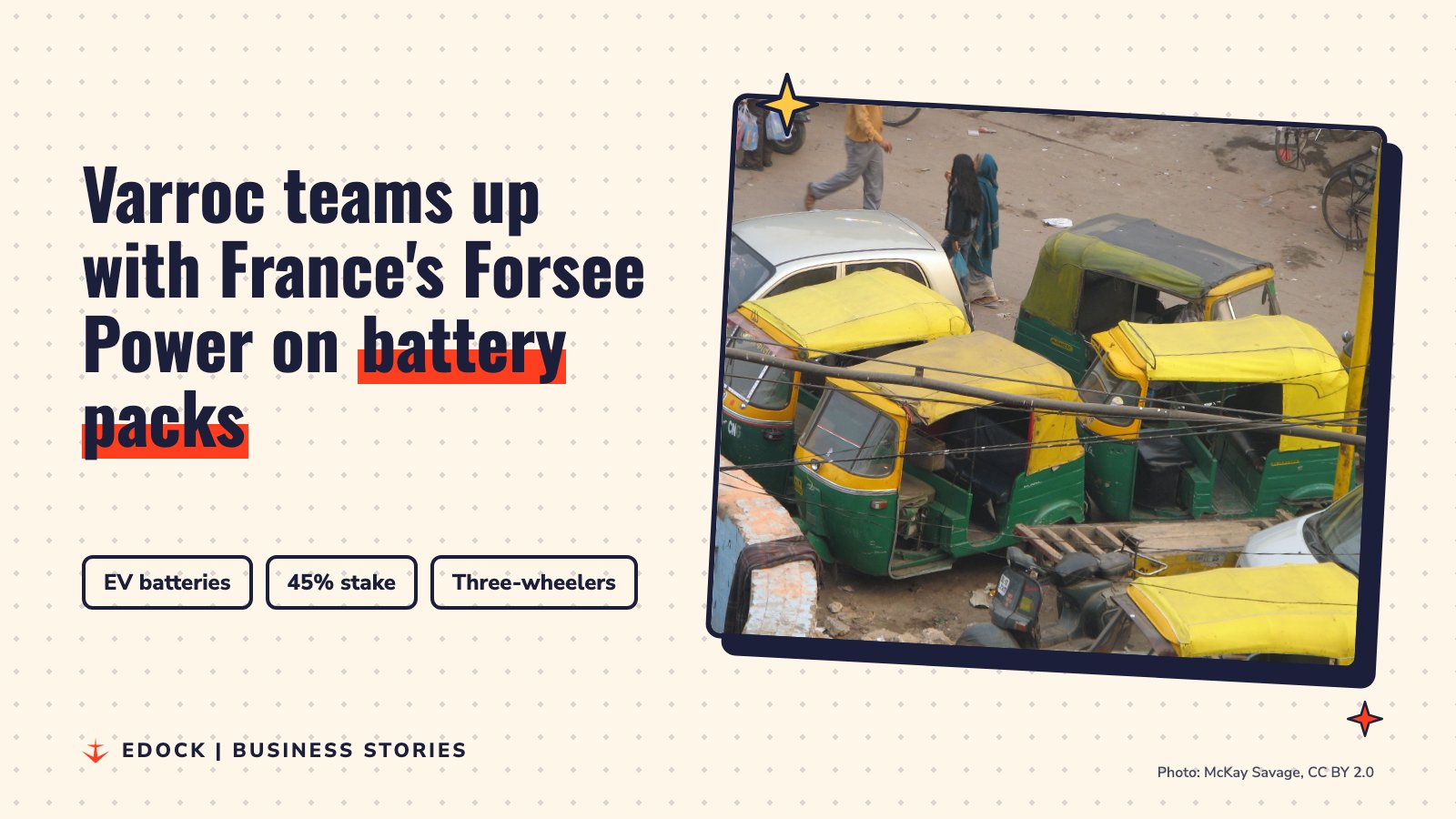
Picture the auto that takes you to college. More and more often, it runs on a big battery instead of CNG or diesel. Now picture the box of cells inside it. On 16 October 2026, an Indian car parts maker and a French battery company said they will build that box together.
The Indian company is Varroc Engineering. The French one is Forsee Power, a specialist in smart battery systems. Their first target is the humble three-wheeler.
So what exactly did they agree?
They plan a joint venture. That is a business two companies run together, like two friends who put money into one samosa stall and share the work and the profit.
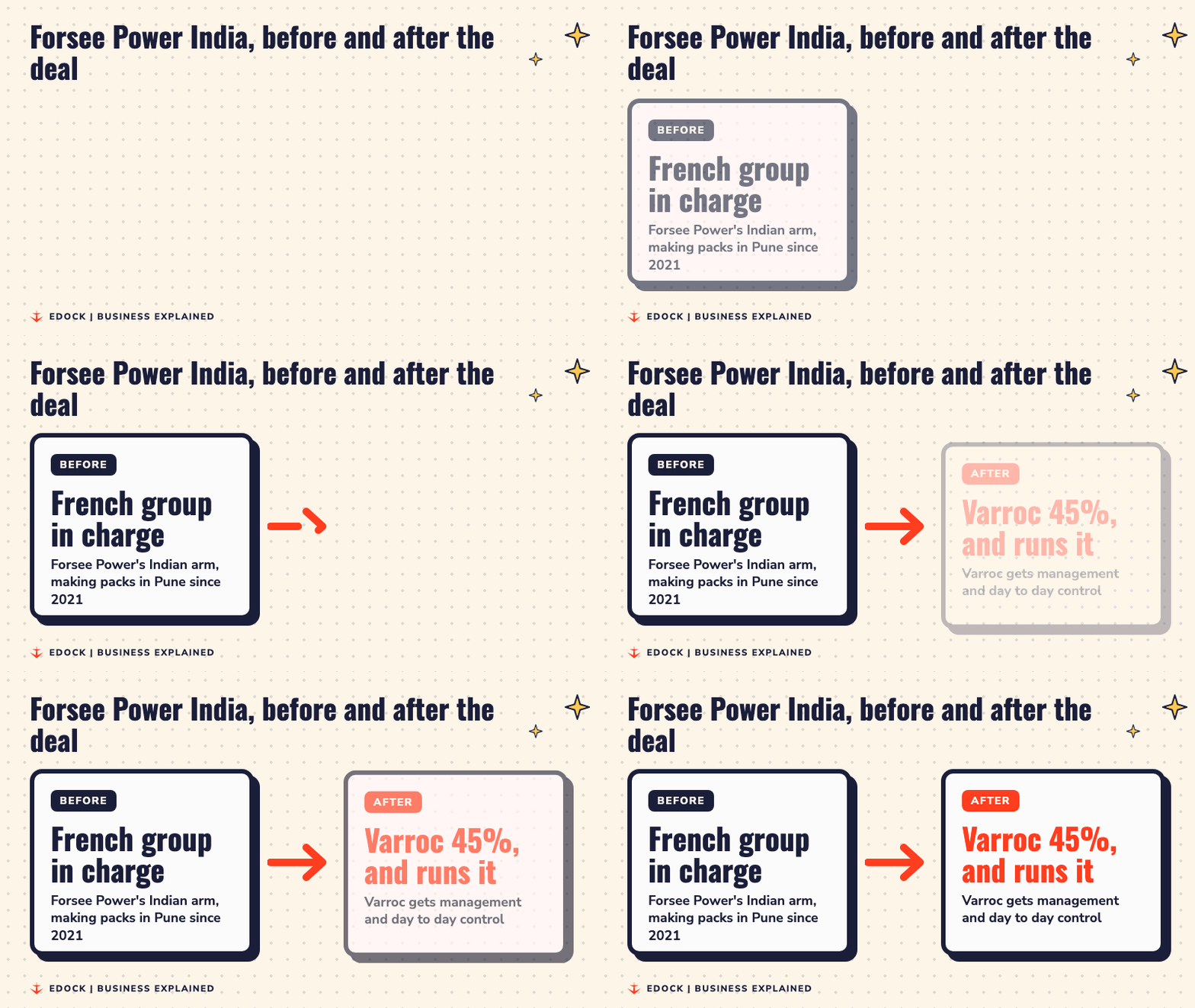
Here is how it works. Forsee Power already has an Indian unit called Forsee Power India. Varroc will buy a 45% equity stake in it. An equity stake is a slice of ownership. If the company were a pizza cut into 100 slices, Varroc would own 45 of them.
The surprising part comes next. Even with less than half the slices, Varroc will take management and operational control. In simple words, Varroc gets to run the shop day to day: who to hire, what to make, which customers to chase.
The money part, with a strange name
Varroc will also put in money through something called Optionally Convertible Redeemable Preference Shares. That is a mouthful, so break it into pieces:
- Preference shares: shares that get paid before regular shares, like a friend who lent money to the stall and gets repaid first.
- Redeemable: the company can pay the money back later.
- Optionally convertible: the holder may choose to turn them into normal shares instead.
The announcement did not give a price for the stake or for these shares. The deal also still needs regulatory and corporate approvals, so it is a plan, not a finished sale.
What is a battery pack, anyway?
Think of the TV remote. It runs on two small cells. An electric vehicle needs many cells joined together, plus a small electronic brain that checks heat and charge so nothing goes wrong. All of that, packed in one strong box, is a battery pack.
Forsee Power designs, assembles and supplies these energy systems built from cells. It works on buses, trucks, trains, off-road vehicles and light vehicles, and is active in Europe, Asia and North America. Its own short film shows what that looks like.
Why start with three-wheelers?
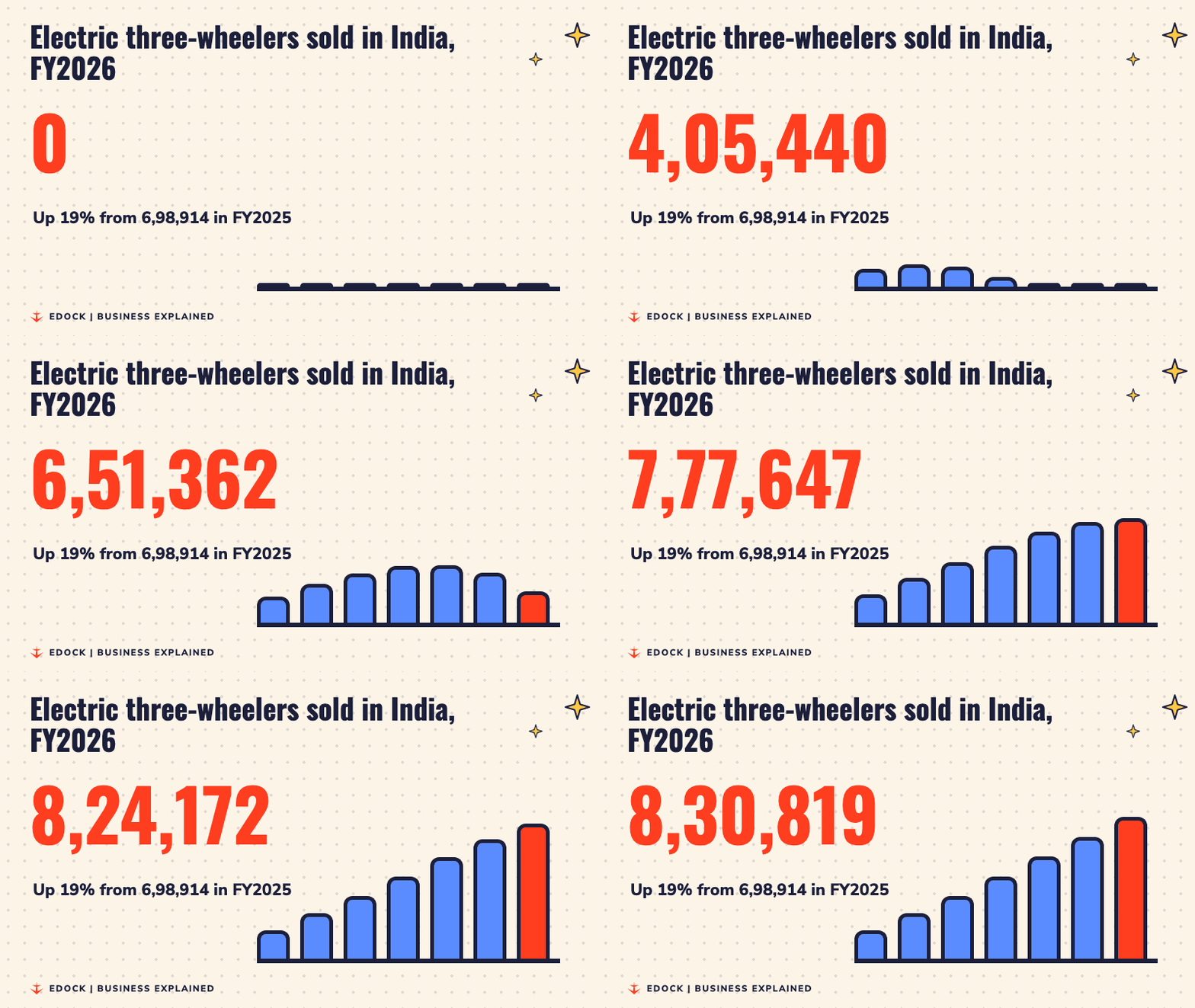
Because that is where India has gone electric the fastest. In the year to March 2026 (called FY2026), India sold a record 830,819 electric three-wheelers, up 19% from 698,914 the year before. That count comes from the government's Vahan vehicle registration records.
Even more striking: 61% of all three-wheelers sold that year were electric, up from 57%. So roughly six out of every ten new three-wheelers on the road now run on batteries.
The market is also crowded. The same report counts about 680 companies selling electric three-wheelers. The biggest, Mahindra Last Mile Mobility, sold 101,905 of them. Every one of those vehicles needs a battery pack, which is exactly the part this joint venture wants to sell.
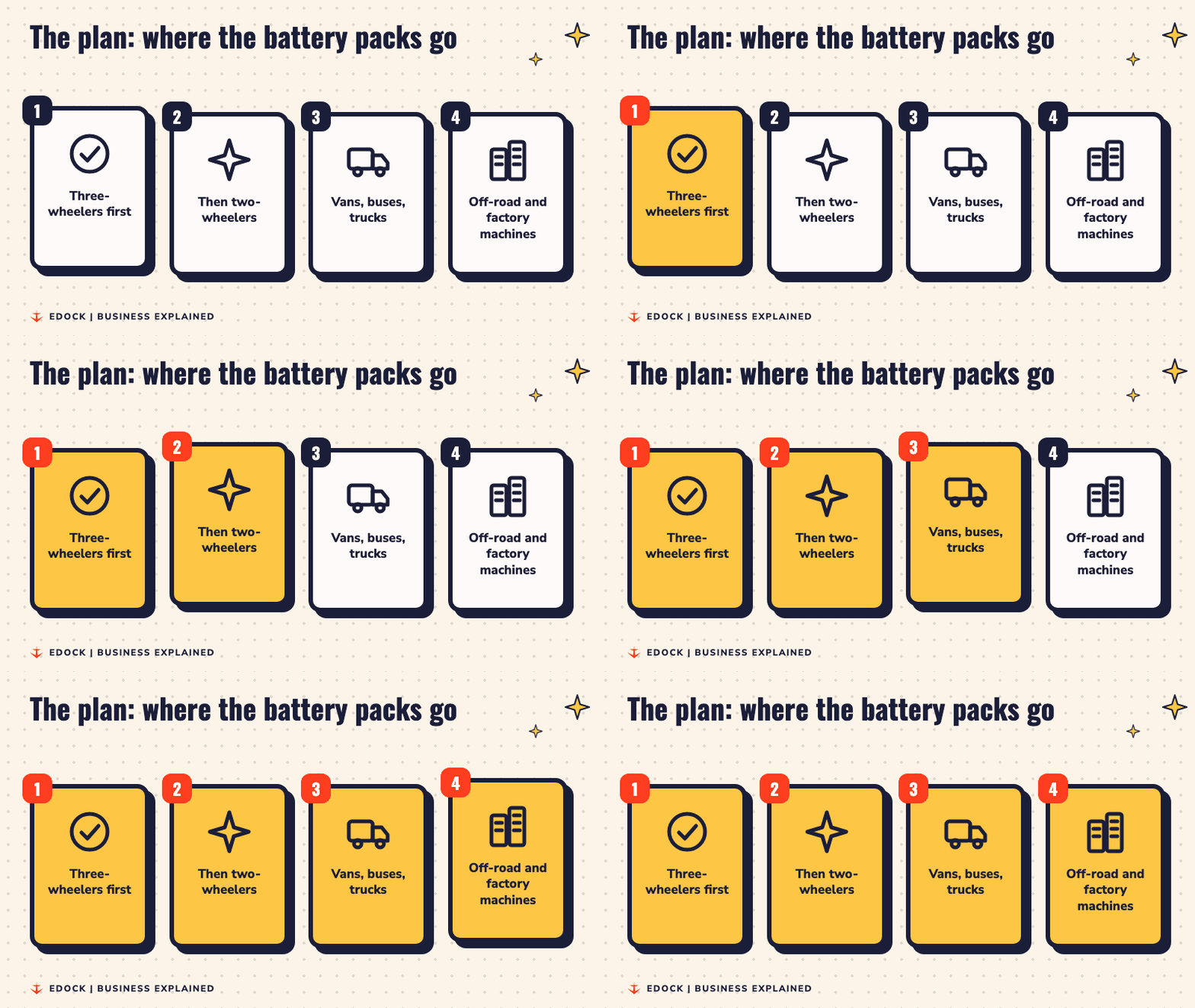
Forsee Power's boss, Christophe Gurtner, put it plainly in the joint statement: "Three-wheelers are our starting point".
And after autos?
The plan does not stop there. The two companies have a roadmap to make packs for two-wheelers, light commercial vehicles, buses, trucks, off-highway vehicles and industrial vehicles too.
What each side brings to the table
This is a classic "you have what I need" deal. Forsee Power India brings the battery know-how. Varroc brings automotive engineering, factories and OEM relationships.
An OEM, or original equipment maker, is the company whose name is on the vehicle, like the brand painted on the side of an auto. Parts makers such as Varroc sell to them. Having friends among OEMs is like a chai seller who already knows every office canteen manager in town: a new product is much easier to sell.
Varroc already makes lighting, body parts, electronics, EV parts and engine parts for two-wheelers, three-wheelers, cars and trucks. Its executive Arjun Jain said in the statement that the deal will increase what Varroc can supply for each electric vehicle across segments.
That is the key idea. Varroc makes engine parts too, and a battery vehicle has no petrol engine. Selling battery packs gives a parts maker something new to sell as more vehicles go electric.
Forsee Power is not new to India
The French company has been here for a while. Its factory in the Chakan industrial area near Pune began series production on 12 May 2021, making batteries for light electric vehicles. At that time it had 30 people working there and aimed for 1 GWh of production capacity in India by 2025.
Back then, the company said its first phase in India would cost around 10 million euros, or about Rs 82 crore. Autocar Professional also noted that Piaggio and Bosch were among its global customers.
What to watch next
Three things. First, whether the approvals come through. Second, which auto brands sign up to buy packs from the new company. Third, how fast it moves from three-wheelers to scooters and bikes. India sold 1.40 million electric two-wheelers in FY2026, a much bigger market.
For now, the story is simple. The next time an electric auto zips past the chai stall, there is a fair chance the box under its seat will be the kind of thing this Indian and French team wants to build.
Sources
- Forsee Power: Varroc and Forsee Power to form joint venture
- The Economic Times: Varroc Engineering to set up JV with French firm Forsee Power
- Autocar Professional: Varroc to take control of Forsee Power India in EV battery JV
- Autocar Professional: Electric three-wheeler sales pass 800,000 in FY2026
- Forsee Power: Series production starts in Pune (2021)
- Autocar Professional: Forsee Power to invest 10 million euros in India project (2021)
- Forsee Power on YouTube: Smart battery systems (2024 corporate video)
- Cover photo: India, Delhi, auto-rickshaws, by McKay Savage, CC BY 2.0
You may republish this story under CC BY 4.0: credit Arshdeep Singh and link to this page.