Urban Company's loss triples to Rs 182.5 crore as it plans a Rs 2,500 crore raise
Version 1 of 1 saved 16 Oct 2026, 8:07 pm IST · Chain line 40
As it was first published
Urban Company's loss triples to Rs 182.5 crore as it plans a Rs 2,500 crore raise
Revenue rose 41% in July to September, but heavy spending on InstaHelp tripled the loss. Here is what a QIP is and why the company wants more money.
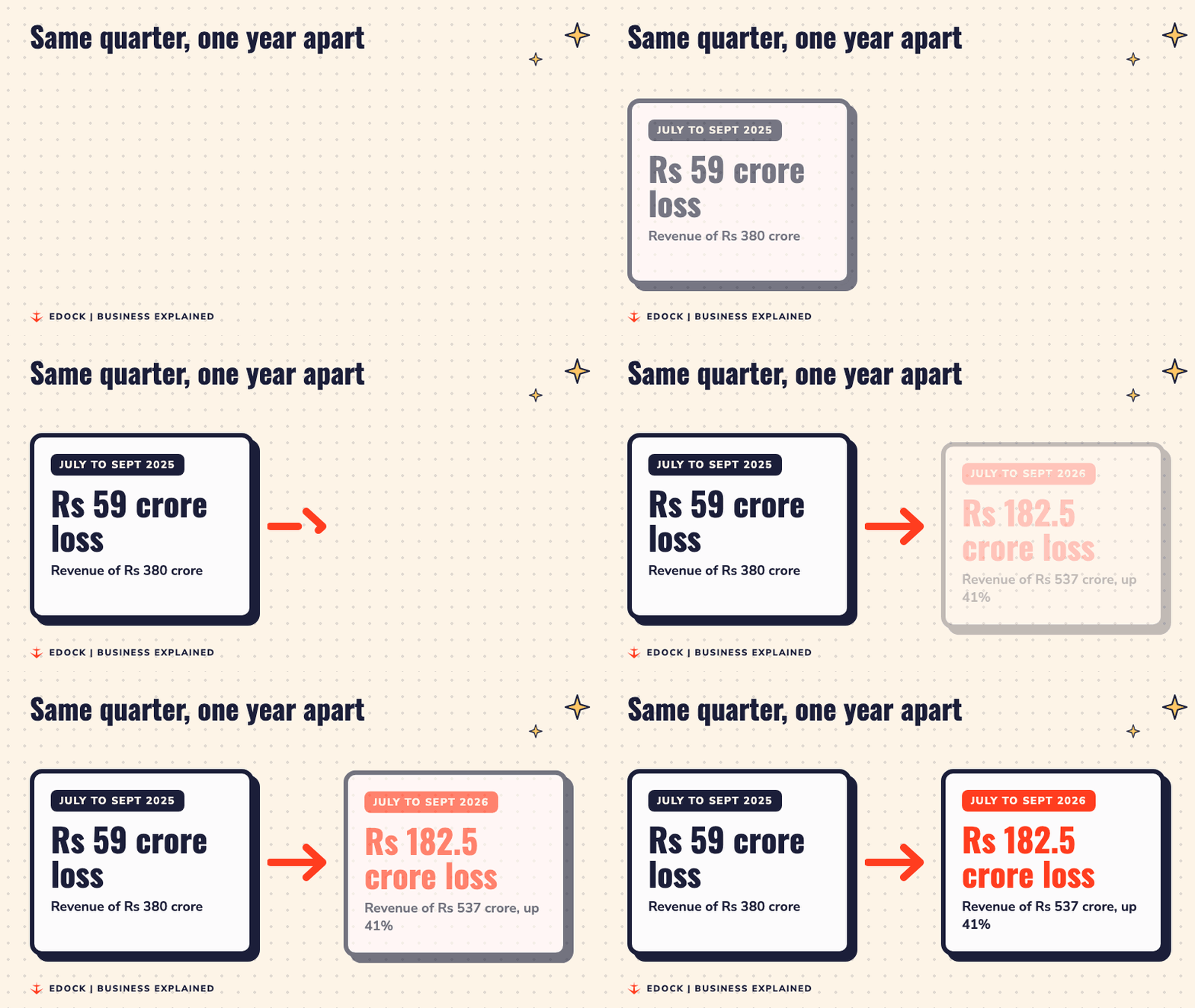
Picture this: a shop that sells more samosas than ever, yet ends the month with a much bigger hole in its pocket. That is roughly what happened at Urban Company, the app many families use to book a cleaner, a beautician or an AC repair person. On 16 October 2026, the company shared its results for July to September 2026. Revenue jumped 41%. The loss more than tripled. And on the same day, its board said yes to raising up to Rs 2,500 crore in fresh money.
First, the big numbers
Companies in India split their year into four parts called quarters. The financial year runs from April to March, so July to September 2026 is the second quarter of the year that ends in March 2027. People write it as "Q2 FY27".
In this quarter, Urban Company made Rs 537.29 crore from its operations, up 41% from Rs 380.03 crore in the same quarter a year earlier. Revenue simply means the money that comes in from selling services and products, before paying any bills.
But its net loss grew to Rs 182.5 crore, from Rs 59.3 crore a year ago. Net loss is what is left after every bill, tax and cost is paid, when the bills are bigger than the income. Compared with the April to June quarter, when the loss was Rs 92 crore, the loss almost doubled.
How can sales go up and the loss go up too?
Think of pocket money. If your pocket money goes up by Rs 100 but you start spending Rs 300 more on snacks, you end the month poorer, not richer.
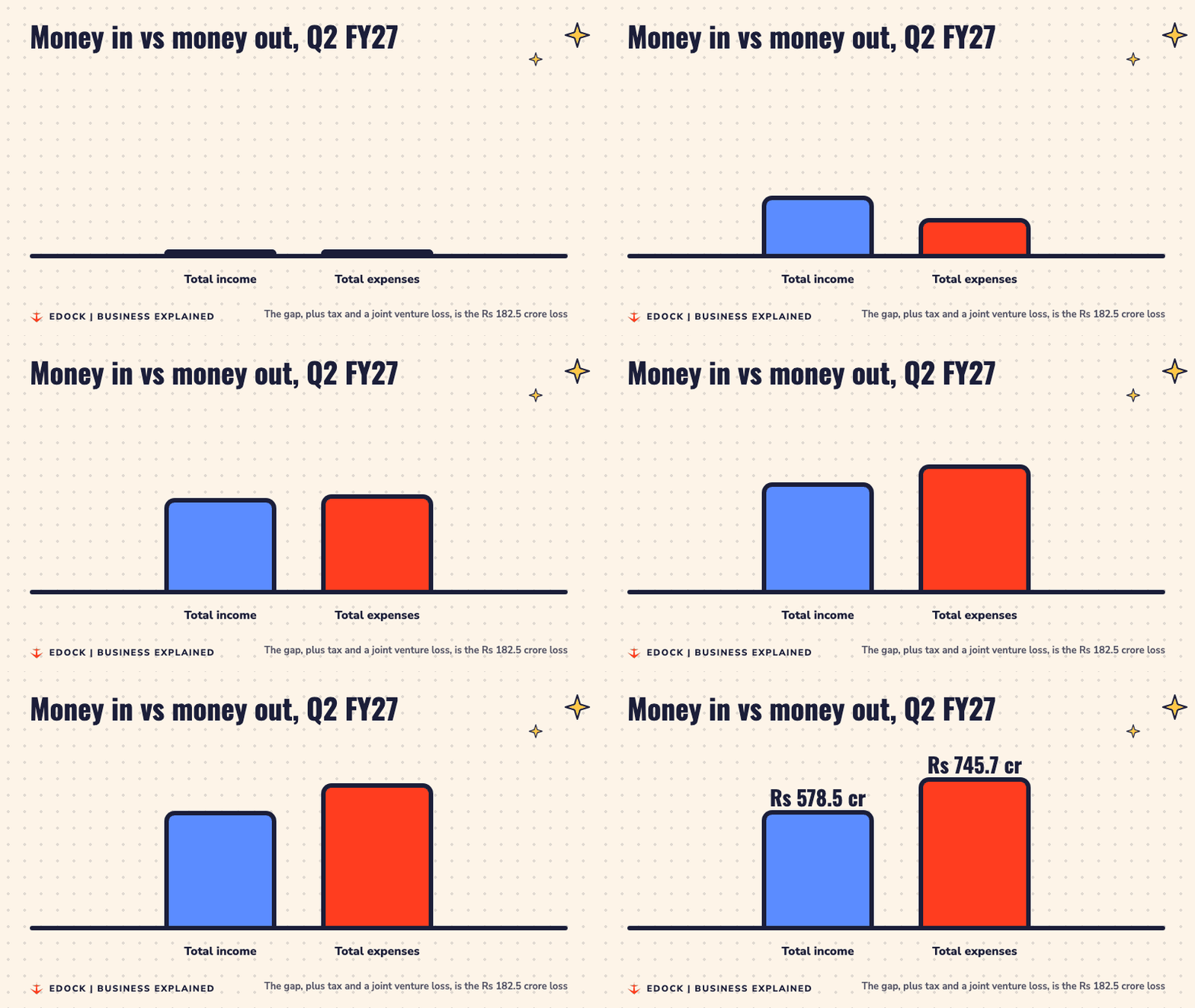
Urban Company's total income, including other income of Rs 41.2 crore such as interest on its savings, came to Rs 578.5 crore. Its total expenses rose 61.5% to Rs 745.7 crore. That leaves a gap of Rs 167.2 crore. Add a Rs 8.1 crore loss from a joint venture (a business it owns with a partner) and Rs 7.2 crore of tax, and the total is exactly Rs 182.5 crore.
Staff costs alone rose 60% to Rs 182 crore, from Rs 114 crore a year earlier.
Meet InstaHelp, the big spender
Most of the extra spending went into one new business: InstaHelp. It sends a house helper to your home in minutes for daily chores like sweeping, mopping and washing dishes. It is like a quick delivery app, but for help at home instead of groceries.
InstaHelp finished 6.2 million orders in the quarter, 63% more than in the quarter before. But it lost Rs 174 crore on an "adjusted EBITDA" basis.
That is a scary-looking word, so here is a simple version. EBITDA is roughly the money a business makes or loses from its everyday work, before counting interest, tax and the slow wearing out of things it owns. "Adjusted" means the company also leaves out a few one-time or non-cash items. It is a way to see if the daily shop is earning or burning money.
Here is the surprising part. InstaHelp earned only about Rs 20.37 crore in revenue, which works out to nearly Rs 33 per order. Yet it lost about Rs 279 on every order. That is a little better than the Rs 346 lost per order in the April to June quarter. The average order value also fell, from Rs 138 to Rs 114, because of tough competition and low starter prices for new users.
Why spend so much? The company called it a "deliberate" investment, according to Inc42. Rival apps such as Pronto are fighting for the same homes, and the race is to win customers first, a bit like a new chai stall giving free cups to pull people away from the old one.
The old business is actually doing fine
Take InstaHelp out, and the picture looks very different. The rest of Urban Company made an adjusted EBITDA of Rs 30 crore, up 213% from a year ago. So Rs 30 crore earned, minus Rs 174 crore spent on InstaHelp, gives the overall adjusted loss of Rs 144 crore.
A few other numbers from the quarter:
- Orders delivered more than doubled, up 103% to 15.1 million.
- Close to 10 million people used the app at least once in the past year, up 35%.
- The business outside India grew 66%, with the UAE and Singapore earning a profit.
- Native, its home products brand that sells things like water purifiers, grew revenue 40% to Rs 105 crore.
Service professionals on the app earned an average of Rs 30,708 a month in the first half of the year, around 10% more than a year earlier, for about 97 hours of work a month including travel time.
So what is a QIP?
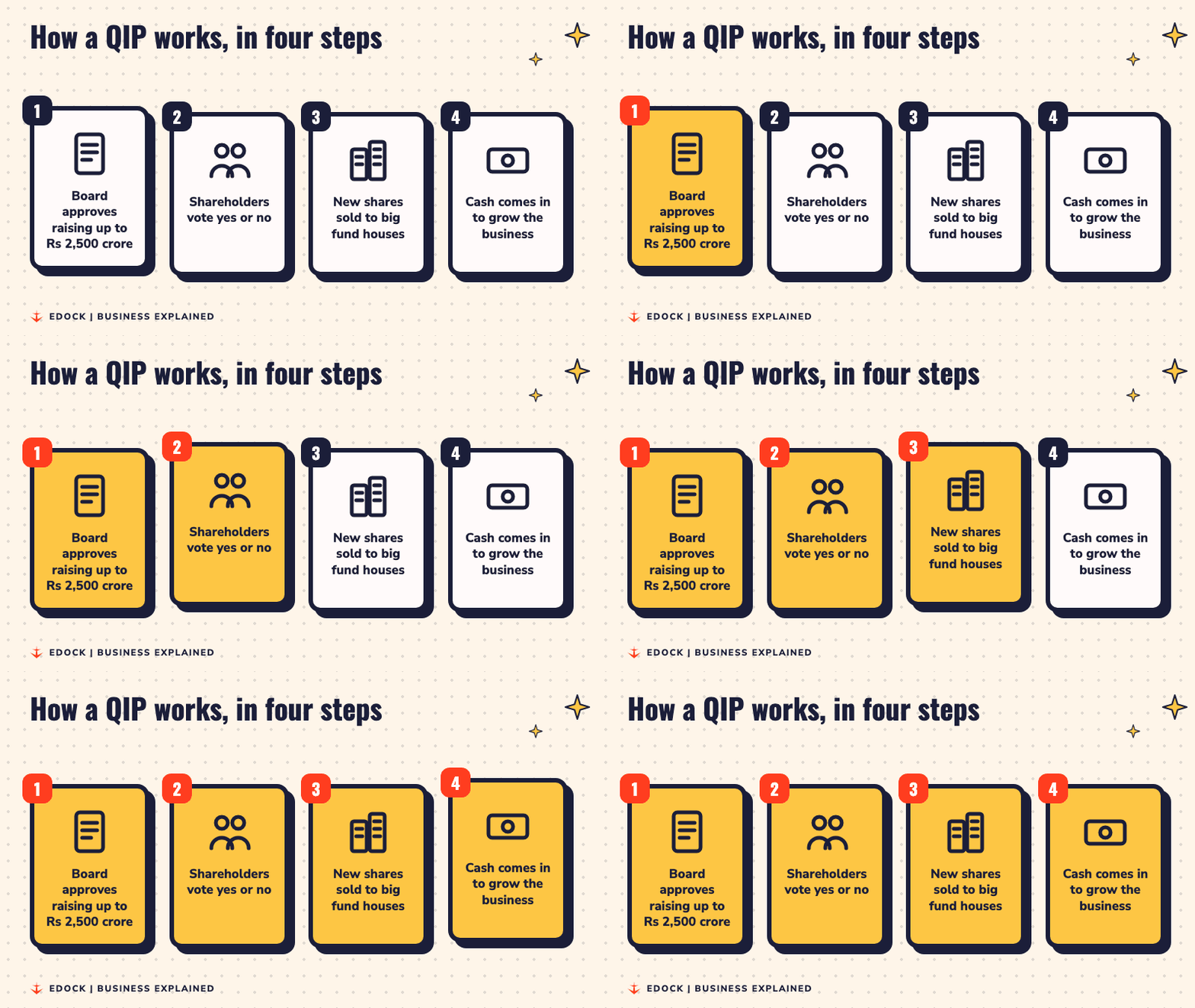
Now to the Rs 2,500 crore plan. The board approved raising the money through one or more routes, including a preferential allotment, a private placement or one or more QIPs. Shareholders still have to vote yes, and the price and exact shape of the deal are not fixed yet.
QIP stands for qualified institutional placement. Here is the simple version. A company that is already listed on the stock market prints new shares and sells them only to big, professional investors, such as mutual funds, insurance companies and banks. It does not need a long public sale like an IPO, so the money comes in faster.
Imagine a cricket club that needs money for new nets. Instead of selling raffle tickets to the whole town, it goes straight to five rich members who each buy a big chunk. The catch: when new shares are made, every old shareholder now owns a slightly smaller slice of the same cake.
Why raise money now?
Urban Company already had Rs 1,901 crore in cash and treasury investments at the end of September. Treasury investments are safe places where a company parks spare cash, like a fixed deposit.
In its letter to shareholders, the company said the raise is "about flexibility". It wants to keep investing in all three of its businesses, become the leader in InstaHelp, and buy other companies when the chance is right.
Urban Company listed on the stock market only about a year ago. Inc42 notes that it now joins other new tech companies like Swiggy, Ather Energy and Ola Electric that have tried to raise fresh money from the market soon after their IPOs.
The board also gave early approval to look at selling home air conditioners under the Native brand. The company says it already services millions of AC units every year, so it knows what customers complain about.
What did the stock market think?
Investors did not panic. On Friday, the stock closed 2.47% higher at Rs 158.12, giving the whole company a value of about Rs 24,385 crore.
The company has also set itself a target. It says it is on track to reach adjusted EBITDA breakeven, meaning no loss and no profit, by October to December 2027 (Q3 FY28), and to make Rs 1,000 crore of adjusted EBITDA by FY31.
The big lesson
Growing fast and making money are two different things. Urban Company is choosing to spend heavily now on InstaHelp, hoping that once enough homes use it every day, each order will cost less to deliver. The falling loss per order is a small sign that this might be working. The next few quarters will show whether the bet pays off.
Sources
- Urban Company Q2 results: loss widens to Rs 182 crore, revenue rises 41%, The Economic Times
- Urban Company Q2 loss widens over 3X YoY, revenue up 41%, Inc42
- Urban Company board clears plans to raise up to Rs 2,500 Cr, Inc42
- Urban Company approves Rs 2,500 Cr fundraise, Entrackr
- Urban Company's InstaHelp reports Rs 174 Cr adjusted EBITDA loss in Q2 FY27, Entrackr
- Cover photo: Cleaning a coffee table at home with cleaning supplies and worn furniture, by Shixart1985, CC BY 2.0
