Up to 83% of India's new fashion sales by 2030 could go to brands, chains and apps
A Redseer report says big names already rule online shoe sales, while the clothes market is still wide open for new labels.

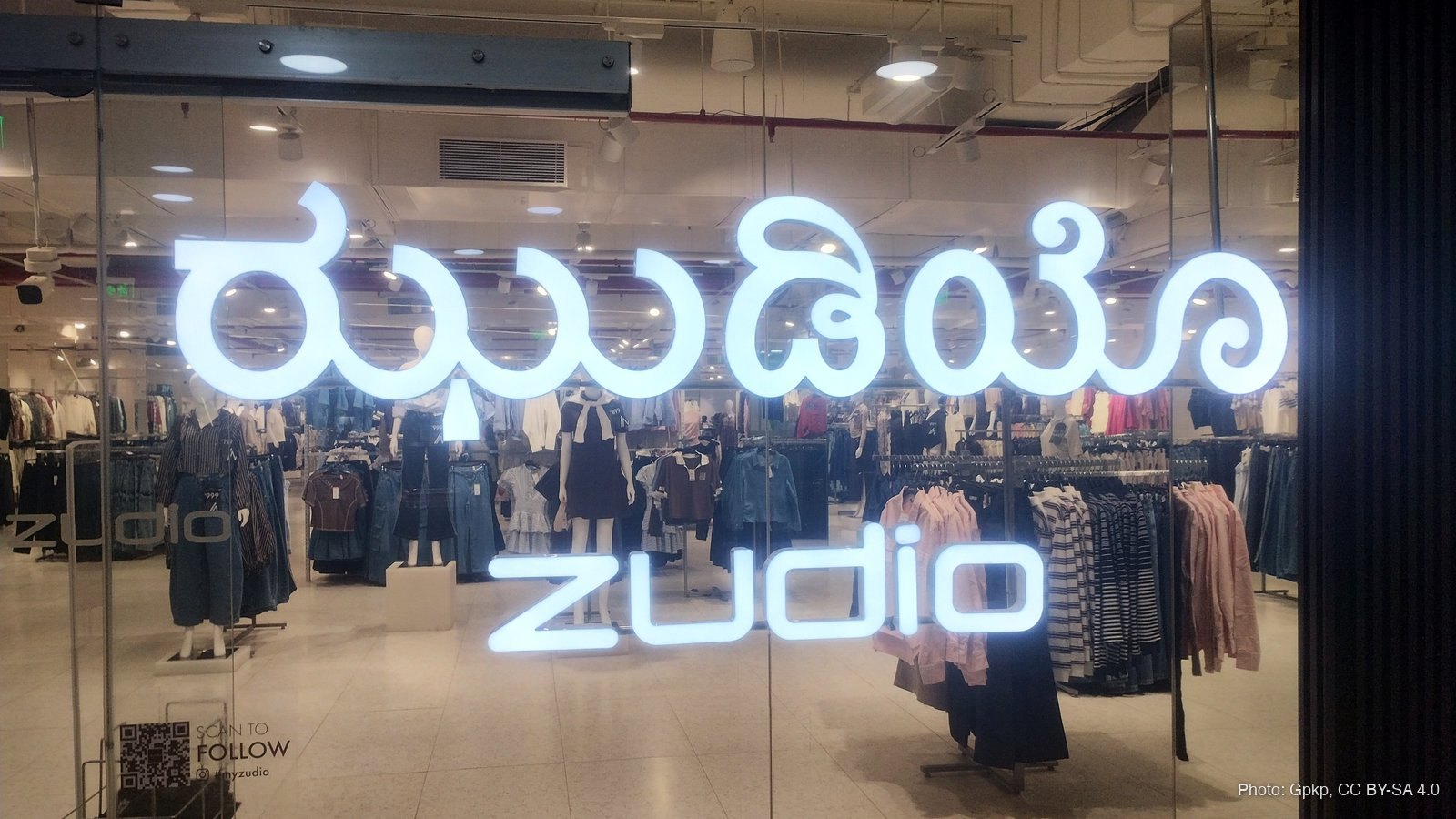
Picture every new rupee Indians will spend on clothes and shoes over the next five years. Now picture most of it skipping the small local shop and going to a brand store, a big chain or a shopping app instead. That is the picture painted by a new report from Redseer Strategy Consultants, shared on 25 October 2026.
The report says organised retail channels could take 73 to 83% of the new fashion GMV in India between 2026 and 2030. That is a lot of words in one line, so let us break it down, one piece at a time.
First, two words: GMV and "organised"
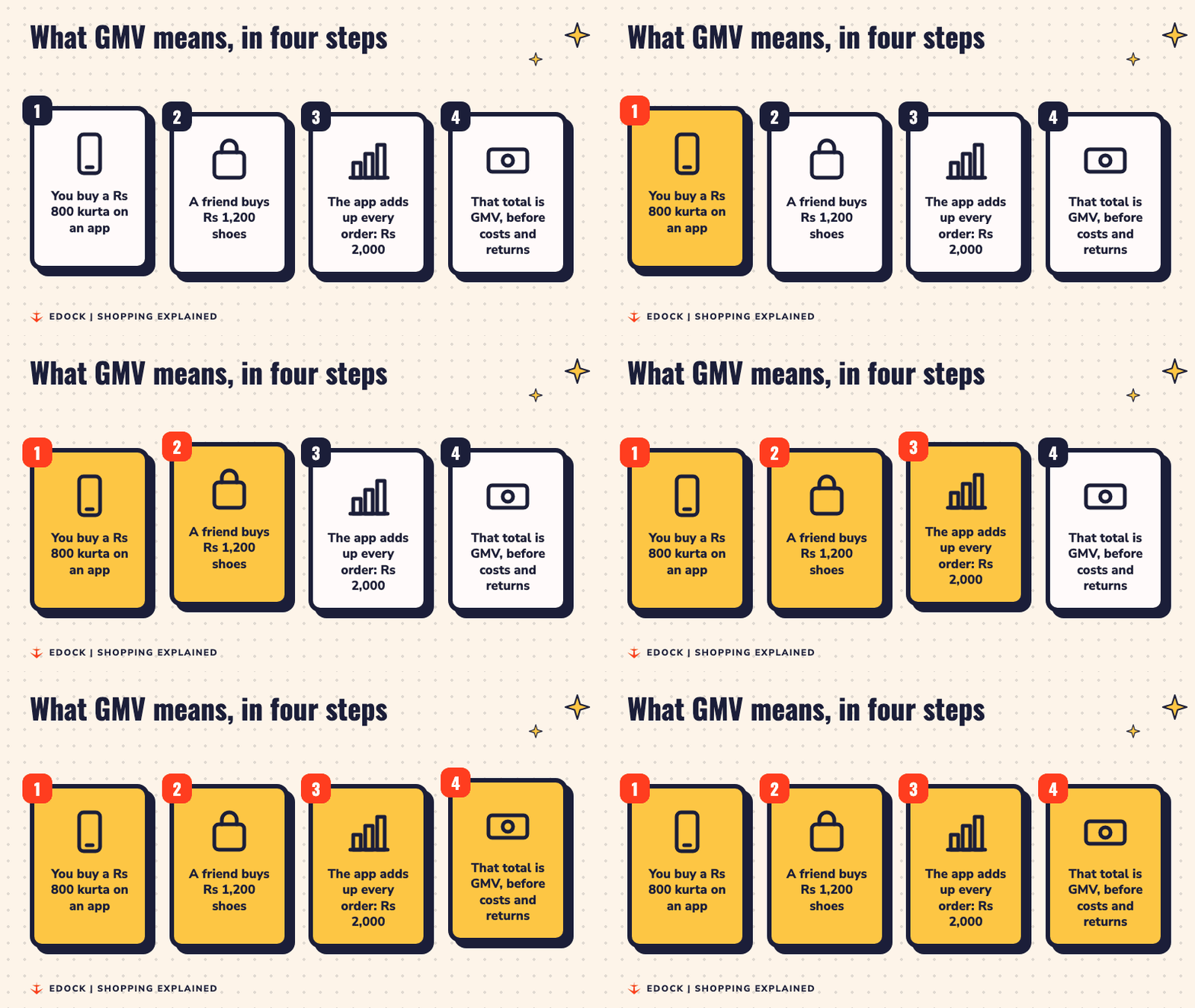
GMV means gross merchandise value. It is the total price of everything sold, added up before any costs, discounts or returns are taken out. Think of a samosa stall. If it sells 200 samosas at Rs 15 each in a day, its GMV for the day is Rs 3,000, even though the oil, the potatoes and the rent still have to be paid out of that.
Organised retail means selling through brands, big store chains and online platforms, with proper bills, fixed prices and a name you can recognise. Unorganised retail is the neighbourhood tailor, the roadside stall or the small family shop with no brand name on the tag.
The word "incremental" matters too. It means the extra sales that will be added on top of today's sales. So the report is not saying local shops will vanish. It is saying that most of the growth from here could go to the organised side.
How big is India's clothes market today?
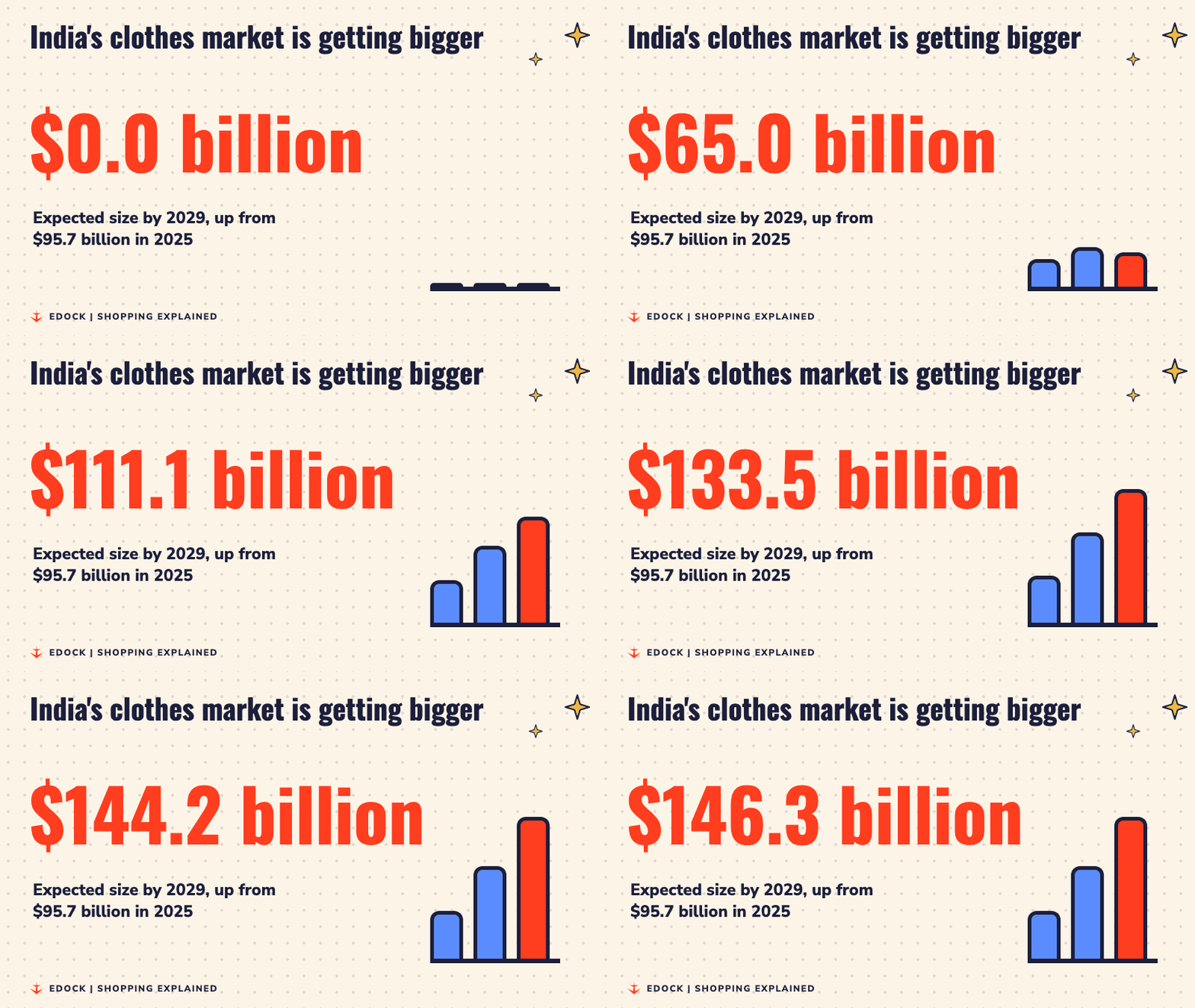
A separate study by the Clothing Manufacturers Association of India and research firm 1Lattice gives a sense of size. It says India's clothes market was worth $95.7 billion (about Rs 8 lakh crore) in 2025 and could reach $146.3 billion (about Rs 12 lakh crore) by 2029, growing about 9% a year.
Here is a surprising fact from that same study: in 2025, 83% of clothes sales, or $79.4 billion, still happened in physical stores. Only 17%, or $16.3 billion, happened online. So even in the age of apps, most Indians still walk into a shop to buy a shirt.
Online shopping as a whole is growing fast, though. Redseer expects India's online retail market to cross $90 billion in 2026, and fashion is already the biggest category in Indian e-commerce.
Big names rule shoes, but not clothes
The most interesting part of the report is how different clothes and shoes are. Redseer looked at four marketplaces: Myntra, Ajio, Amazon and Flipkart. In April to June 2026, the top 10 brands made up about 12% of clothes GMV on these apps. In footwear, the top 10 brands made up about 45%.
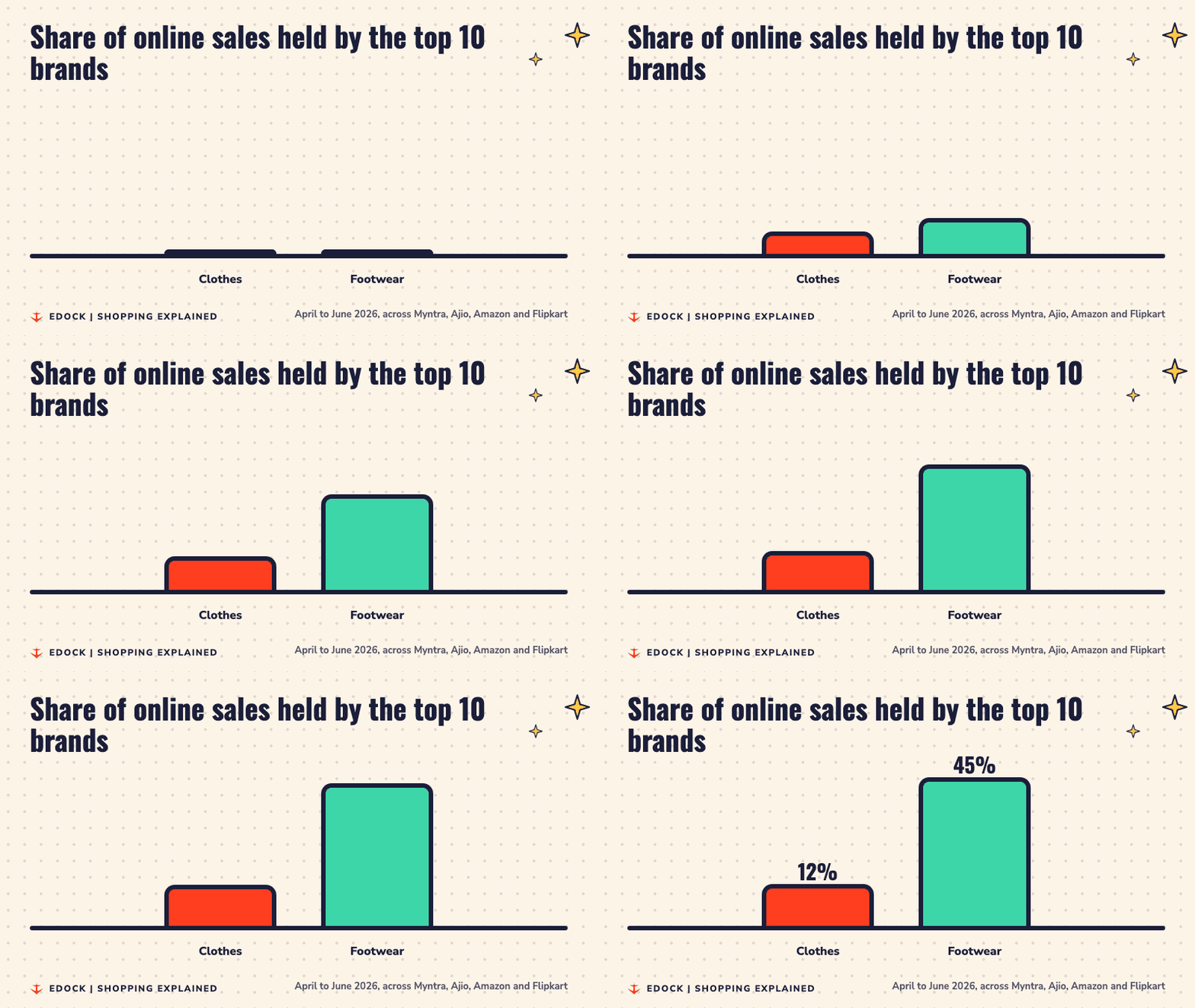
Zoom out to the top 40 brands and the gap stays wide: 27% of clothes GMV against 69% of footwear GMV. In simple words, the shoe market is like a cricket league where a few big teams win almost every match. The clothes market is like a street tournament with hundreds of small teams, where a new team can still win.
That is why Redseer thinks new-age brands could take about 82% of classified online clothes GMV by 2030. New-age brands are newer labels, and here they also include some private labels, which are a store's own brand, like a supermarket selling biscuits under its own name. In footwear, their share is expected to be only around 31%, so the old, established shoe brands are likely to keep most of the market.
Redseer has said in its own research that over 800 homegrown digital-first brands have launched since 2019. That shows how many new players are already trying.
Branded clothes are taking over the app
The report also expects branded products to make up 62 to 66% of online fashion GMV by 2030, up from 52 to 56% in 2026. And fashion-focused apps, along with "value" shopping apps that sell cheaper goods, are expected to bring in 65 to 70% of the new online fashion GMV in that period.
Clothes and shoes together could make up 82 to 86% of all online fashion GMV by 2030.
Cheap and premium grow, the middle shrinks
Price is changing too. In clothes, items priced between Rs 500 and Rs 2,000 are expected to lose 5.1 percentage points of their share of GMV between 2026 and 2030. The growth is expected at both ends: the low-price items and the high-price items.
Shoes are moving one way only. Redseer expects spending to shift towards shoes priced above Rs 2,000. Think of it like a friend who still buys cheap T-shirts but now saves up for one good pair of sneakers.
Nikhil Dalal, a partner at Redseer, said brands will need to know where demand is growing, which price points are picking up and how competition differs from one category to another.
Clothes at your door the next day
Speed is the last big idea. Redseer estimates that 60 to 64% of online fashion GMV could be delivered within a day by 2030. Innerwear, basic casual clothes and some activewear suit fast delivery best. For other items, it depends on things like fit and how often people send them back.
Growth is already strong. Online clothes and shoes GMV across Myntra, Ajio, Amazon and Flipkart grew about 17 to 19% in April to June 2026, compared with the same months a year earlier.
Why this matters for you
If you are a student or in your first job, you are exactly the shopper these brands want. The report hints at more choice from new labels, more cheap and more premium options, and faster delivery. It also means small local shops that do not go online or build a brand may get a smaller slice of the new spending. For anyone dreaming of starting a clothing label, the numbers suggest clothes are still an open field, while shoes belong mostly to the big names.
Sources
- Storyboard18: Organised channels to drive up to 83% of India's incremental fashion GMV by 2030
- BW Businessworld: Top 10 brands control 45% of online footwear GMV, 12% in apparel
- Fortune India: India's apparel market to hit $146 billion by 2029
- YourStory: Online retail market to cross $90 billion in 2026
- Redseer: Fashion Forward, winning in India's fast-growth apparel market
- Cover photo: Zudio store at Gopalan Arcade Mall, Rajarajeshwari Nagar (2026), by Gpkp, CC BY-SA 4.0

You may republish this story under CC BY 4.0: credit Pranav Sharma and link to this page.