Uber gives all 30,000 of its staff an AI helper called ChatGPT Work
Version 1 of 1 saved 23 Oct 2026, 12:59 am IST · Chain line 152
As it was first published
Uber gives all 30,000 of its staff an AI helper called ChatGPT Work
After a 1,000 person trial where 80% of users were not engineers, Uber is rolling out OpenAI's office agent to its whole global team.
Picture an office where every single person, from the finance team to the product team, gets the same AI helper on day one. Not just the coders. Everyone. That is what Uber just did.
On Thursday, 22 October 2026, Uber and OpenAI announced a bigger partnership. Uber told TechCrunch that its entire global workforce, some 30,000 people, will now use a tool called ChatGPT Work. Another tech news site, TechBuzz, also reported that Uber is moving past its earlier pilot to give every employee access.
So what is this tool, how did Uber test it, and what does it tell a student or a first-jobber about offices today? Here it is, step by step.
First, what is ChatGPT Work?
Most people know ChatGPT as a chat box. You type a question, it types an answer. ChatGPT Work is a step further. OpenAI unveiled it on 9 July 2026 as an agent inside ChatGPT.
An agent is a helper that does not just tell you what to do. It goes and does some of the steps for you. Think of the difference between a friend who tells you the recipe for chai and a friend who actually boils the water, adds the tea leaves and pours it into your cup. The second friend is the agent.
According to the Reuters report carried by BNN Bloomberg, ChatGPT Work runs on OpenAI's model GPT-5.6. It can collect information from a person's apps, files and work steps to create finished documents, spreadsheets, presentations and reports.
It links to the places where office work already lives. The Next Web lists Slack, Microsoft Teams, Google Drive, SharePoint, email, calendars and project trackers. OpenAI says it can stay with a project for hours. People can follow its progress, answer its questions, change direction and approve important actions as it goes.

What is an "enterprise" software deal?
The word enterprise simply means "for big companies". An enterprise software deal is when a company buys a tool for its staff in one go, instead of each person paying on their own.
Think of a school that buys one calculator plan for every student in the building. Each child does not go to the shop alone. The school picks one plan, sets the rules, and every student gets the same calculator. Uber has done something like this with ChatGPT Work for its staff.
How much is Uber paying? Nobody outside knows. Uber did not disclose how much it is spending on this rollout.
It started with a small test
Uber did not jump in all at once. Earlier this year, it ran a pilot. A pilot is a small trial run, like a samosa stall testing a new flavour with 20 regular customers before putting it on the full menu.
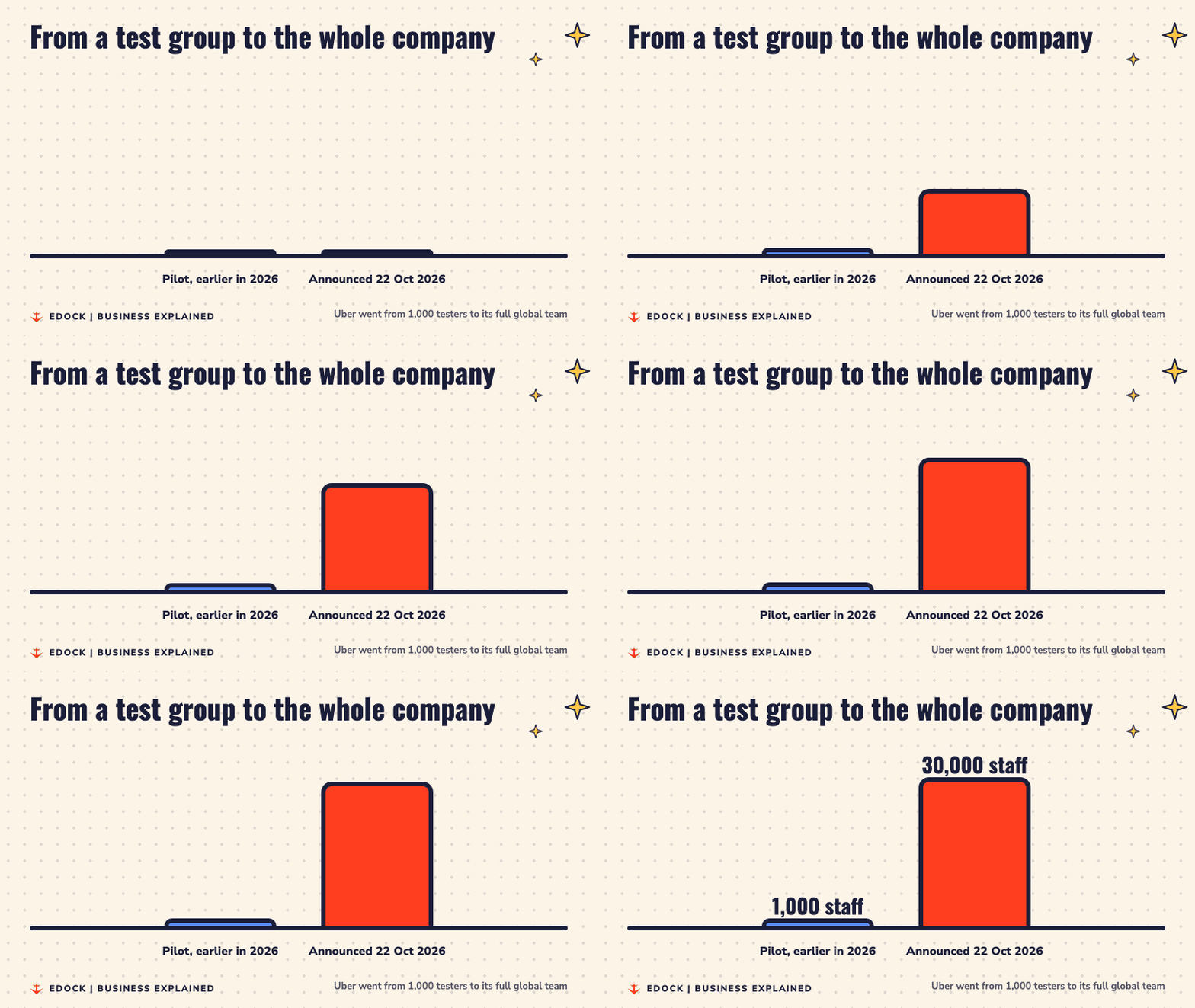
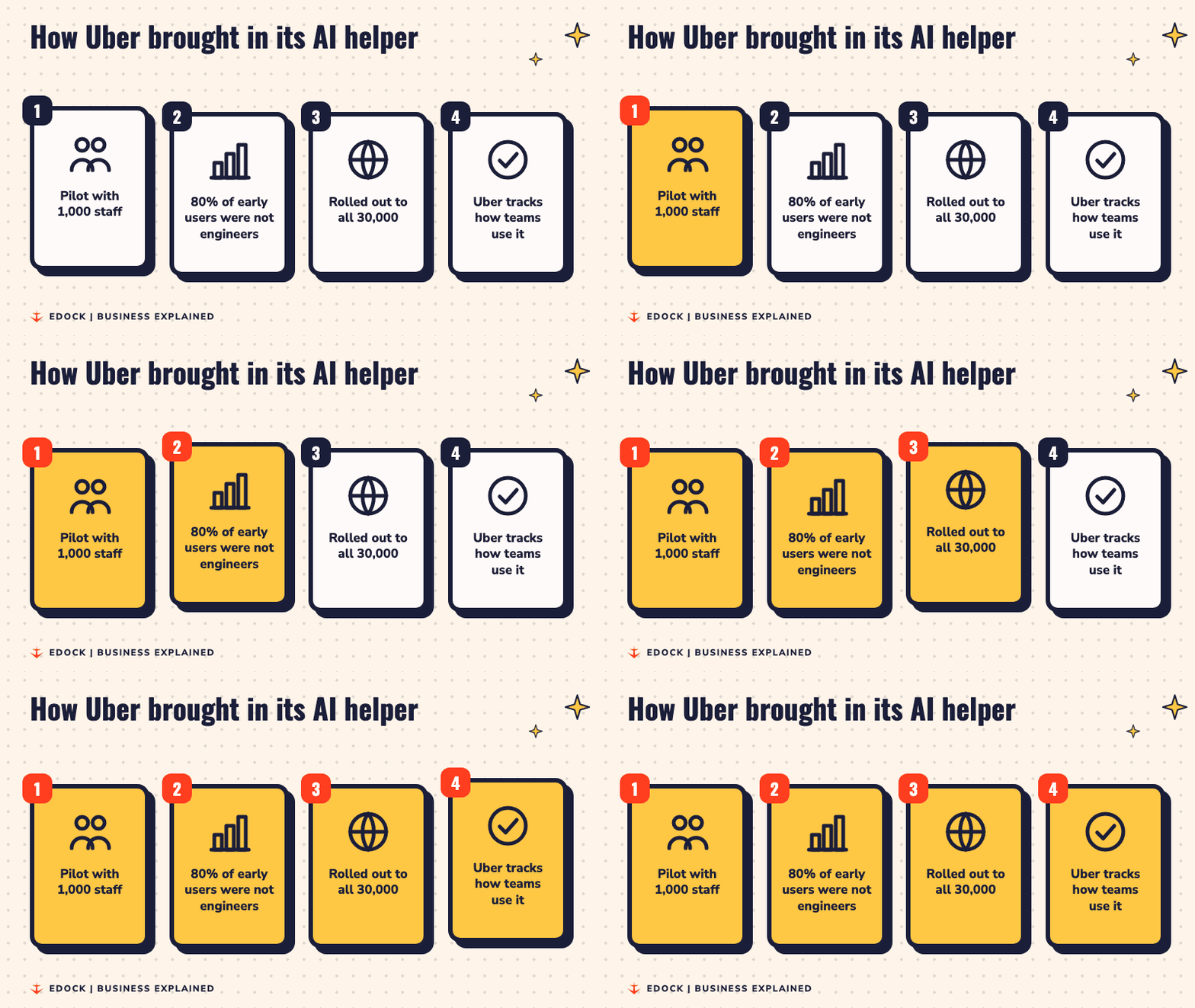
Uber's pilot gave ChatGPT Work to 1,000 employees from teams like finance, operations and product. Now it is going from 1,000 people to about 30,000. That is 30 times as many users.
The surprise: most early users were not coders
You might guess that a tech company's AI tool would mostly be used by engineers. The pilot showed something else. Sumanth Sukumar, Uber's vice president of engineering, told TechCrunch that about 80% of the early adopters were non-engineers.
So what did they use it for? Sukumar listed three kinds of tasks:
- Studying complex data from Uber's operations to spot trends and suggest next steps.
- Changing training material to suit different markets and languages. This is called localising, like rewriting a cricket coaching guide so it makes sense to players in another country.
- Building personal, interactive dashboards to manage daily work. A dashboard is one screen that shows all your key numbers together, like the scoreboard at a cricket match.
In his words, staff used it for "a wide range of tasks".
Uber has not fixed one way to use it
Here is an honest twist. Uber is giving the tool to everyone, but it has not settled on exactly how employees will use it. Sukumar said the plan is to make strong AI tools available across Uber "while giving teams room to experiment".
He gave one example from earlier this year. Uber paired 30 AI engineers with teams across the company and gave them two weeks to automate key parts of their work. Uber calls these groups "AI pods". Sukumar said they showed how much can be done when technical skill is mixed with a deep understanding of a particular role.
Uber also says it will keep watch. It plans to look at how employees use the tool, what work steps they build and how it helps them, and then use what it learns to guide how it uses AI across the business. TechCrunch adds that OpenAI worked closely with Uber to fit the tool into its systems.
Uber already works with OpenAI
This is not the first time the two companies have teamed up. On its own page about Uber, OpenAI says Uber uses its models to power AI assistants and voice features for drivers and riders. One of these is Uber Assistant, which helps drivers understand where and when to earn.
The same page gives a sense of Uber's size: 40 million trips a day, 10 million drivers and couriers, and more than 15,000 cities in over 70 countries. The new deal is different, though. It is about the tool that Uber's own office staff use every day, not the app that riders see.
Why OpenAI cares so much
OpenAI was once known mostly for its chat app for ordinary users. TechCrunch notes that it has moved quickly to grow its business with companies, as it competes with its main rival, Anthropic. When OpenAI launched ChatGPT Work in July, Reuters pointed out that it came months after Anthropic pushed its own agent, Claude Cowork, to companies. A customer with 30,000 staff is a big name to win in that race.
What this means for a first-job office worker
The sources do not say this tool replaced anyone's role, and Uber has not said how every team will use it. What they do show is simple:
- At Uber, the AI helper is not only for coders. Most early users worked in areas like finance, operations and product.
- The tasks were everyday office work: reading data, adapting training material and building dashboards.
- Uber wants teams to try things and will measure what works.
For a student heading into a first office role, this is a real example: at Uber, every employee, coder or not, now has access to an AI agent at work.
Sources
- TechCrunch: Uber puts all 30,000 employees on ChatGPT Work
- TechBuzz: Uber rolls out ChatGPT Work to all 30,000 employees
- BNN Bloomberg (Reuters): OpenAI launches ChatGPT Work
- The Next Web: OpenAI launches ChatGPT Work
- OpenAI: Uber uses OpenAI to help people earn smarter and book faster
- Cover photo: Helloquence-61189, by helloquence, CC0
