Tonbo Imaging's IPO gets bids for 7.77 times its shares by day 2
Version 1 of 1 saved 17 Oct 2026, 2:03 pm IST · Chain line 66
As it was first published
Tonbo Imaging's IPO gets bids for 7.77 times its shares by day 2
A Bengaluru maker of heat-seeing cameras drew huge demand on 16 October. Here is what it makes and how IPO bidding works.
Picture a samosa stall that makes 100 samosas for the day. By evening, people have asked for 777. That is roughly what happened to Tonbo Imaging on 16 October 2026. By 5 pm on the second day of its share sale, buyers had placed bids for 7.77 times the shares on offer.
Tonbo is not a food brand or an app. It makes cameras that can "see" heat. Here is the story, in simple words.
First, what is an IPO?
IPO means Initial Public Offering. It is the first time a company sells its shares to the general public. A share is a tiny piece of a company. If a company were one big pizza, a share would be one small slice.
After an IPO, the shares trade on a stock exchange such as the National Stock Exchange. Anyone with a trading account can buy or sell them there, like swapping cricket cards in a school playground.
So who is Tonbo Imaging?
Tonbo is a Bengaluru company, set up in 2003, that designs electronic and camera systems for the armed forces. Its products include thermal imaging cameras, sights for guns, handheld thermal binoculars and parts that help missiles find their target.
A thermal camera does not need light. Every warm thing, like a person, a dog or a car engine, gives off heat. The camera turns that heat into a picture. So it can spot someone hiding in total darkness or in smoke.
According to the company, it is India's largest maker of thermal imaging systems for government and defence buyers, measured by sales value. An industry report by Frost and Sullivan also names it India's biggest exporter of these systems, with a 94% share of the country's thermal imaging exports by volume.
A person familiar with Tonbo's defence work put it simply to BusinessLine: "We don't make the weapon; we make the eyes and the brains of the weapon."
Not only for the army
Tonbo is also testing its cameras outside the battlefield. A BusinessLine report says the company is in an advanced pilot project with Indian Railways, according to people familiar with it. The idea is to warn train drivers about elephants crossing the tracks in Assam. A person close to the company described an elephant as "one big thermal signature".
The same report says Tonbo is exploring driver help systems for cars, trucks and mining machines, so vehicles can spot dangers beyond their headlights.
How the bidding works
Tonbo's IPO opened on 15 October and closes on 19 October. The price band is Rs 665 to Rs 700 per share. A price band is like an auction with a floor and a ceiling: buyers bid anywhere inside that range.
Shares are sold in lots, a fixed bundle you must buy together, like a pack of six eggs. Here, one lot is 21 shares. At Rs 700 a share, one lot costs Rs 14,700 (21 x 700 = 14,700).
The shares are kept in buckets for different kinds of buyers. Out of the shares for the public, half go to big institutions such as mutual funds and insurers (called QIB buyers), 15% go to wealthy individuals bidding larger amounts (called NIIs), and 35% go to regular retail buyers, people like a parent or an older cousin who invests a little. A tiny batch of up to 14,000 shares is kept for Tonbo's own staff.
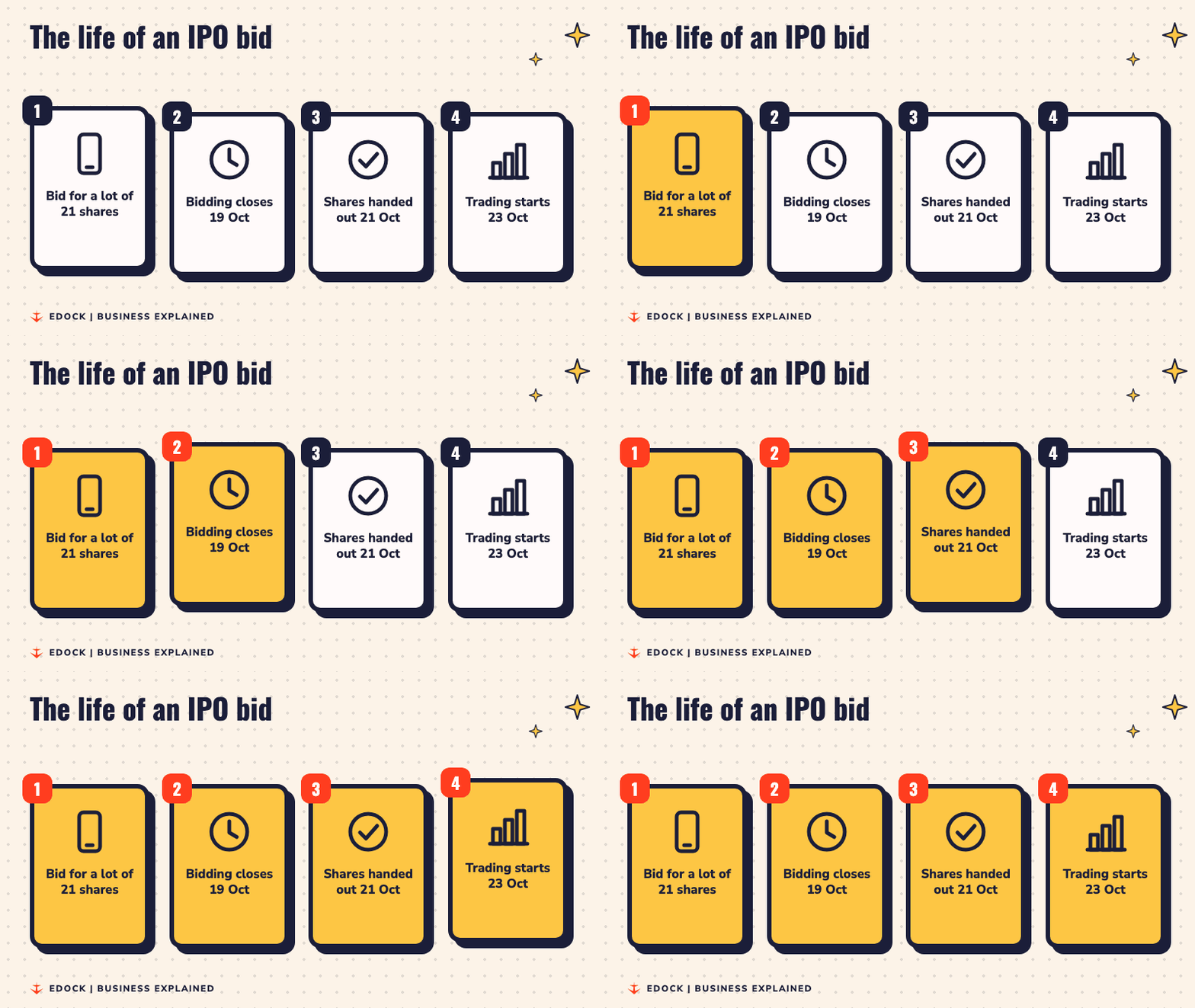
After bidding closes, the shares are handed out on 21 October, and the stock is expected to start trading on 23 October.
What does "7.77 times" mean?
When a bucket gets more bids than it has shares, it is "booked" more than once. If 100 shares are on offer and people bid for 777, that is 7.77 times. It is like a cricket stadium with 100 seats and 777 fans at the gate. Most fans go home without a seat.
The demand grew fast. Tonbo was fully booked within a few hours of opening on 15 October. By the end of day 1, bids stood at 4 times the shares on offer. By 5 pm on day 2, it hit 7.77 times. That is almost double the day 1 number (4 x 2 = 8).

Who wanted it the most?
By 5 pm on 16 October, the bucket for wealthy individuals was the busiest at 14.34 times. Retail buyers came next at 7.11 times, and big institutions at 3.95 times. Tonbo's own staff bid for 13.09 times their small batch.
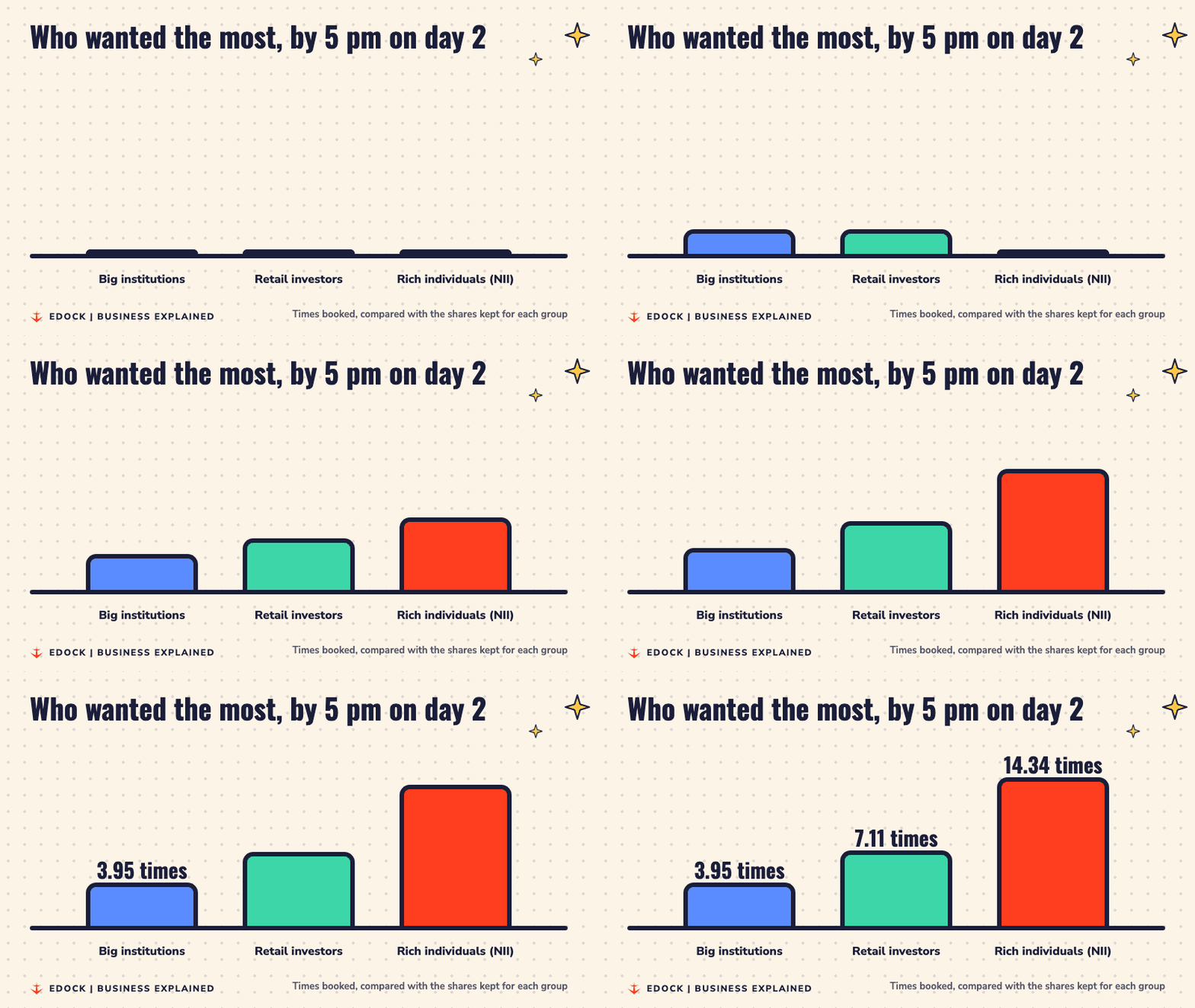
These numbers are not final. Bidding stays open until 19 October, so the totals can still change.
A twist: Tonbo gets no money from this
Usually a company sells new shares in an IPO to raise cash. Tonbo's IPO is different. It is fully an "offer for sale", or OFS. That means existing owners, including the founders and early investors, are selling about 1.21 crore of their own shares. The money goes to them, not to the company.
Think of it like a friend selling part of their share in a lemonade stall to new partners. The stall does not get richer. Only the seller gets the cash. The full sale is worth about eight hundred and fifty crore rupees at the top of the price band.
How is the business doing?
The last year was not easy. In the year that ended in March 2026, Tonbo's revenue fell 22.7% to Rs 362.6 crore, down from Rs 469.1 crore a year earlier. Revenue is all the money that comes in from sales. Profit, the money left after paying all costs, fell 30% to Rs 50.9 crore, from Rs 72.8 crore.
In the three months from April to June 2026, Tonbo made a loss of Rs 17.7 crore on revenue of Rs 36 crore. A loss means it spent more than it earned in that period.
Moneycontrol noted that the loss may partly reflect higher raw material costs and more finished goods sitting unsold in storage. On the brighter side, people familiar with the company told BusinessLine it has a signed order book of about Rs 290 crore. An order book is the list of orders a company has won but not yet delivered, like advance bookings at a tailor.
Big lesson for young readers
Huge demand in an IPO shows that many people are excited. It does not promise anything about what the share price does later. Prices can rise or fall after listing. Anyone thinking of investing should read the company's offer papers and understand the risks first.
To see how shares get handed out when demand is this high, this short explainer helps.
Sources
- Financial Express: Tonbo Imaging IPO, day 2 demand by category
- Financial Express: Tonbo fully booked on day 1
- Moneycontrol: Tonbo Imaging IPO set to hit Dalal Street
- Moneycontrol: Tonbo Imaging India IPO details
- BusinessLine: Tonbo takes battlefield technology to civilian uses
- Cover photo: Photographing Vixen Geyser with a FLIR (thermal imaging) camera, by Jacob W. Frank, public domain
