Titan's luxury brand Zoya, where one piece can cost ₹2.5 crore, wants ₹500 crore in sales
Zoya grows about 30% a year as rich Indians buy more design-led jewellery. Here is how it differs from a normal gold shop.

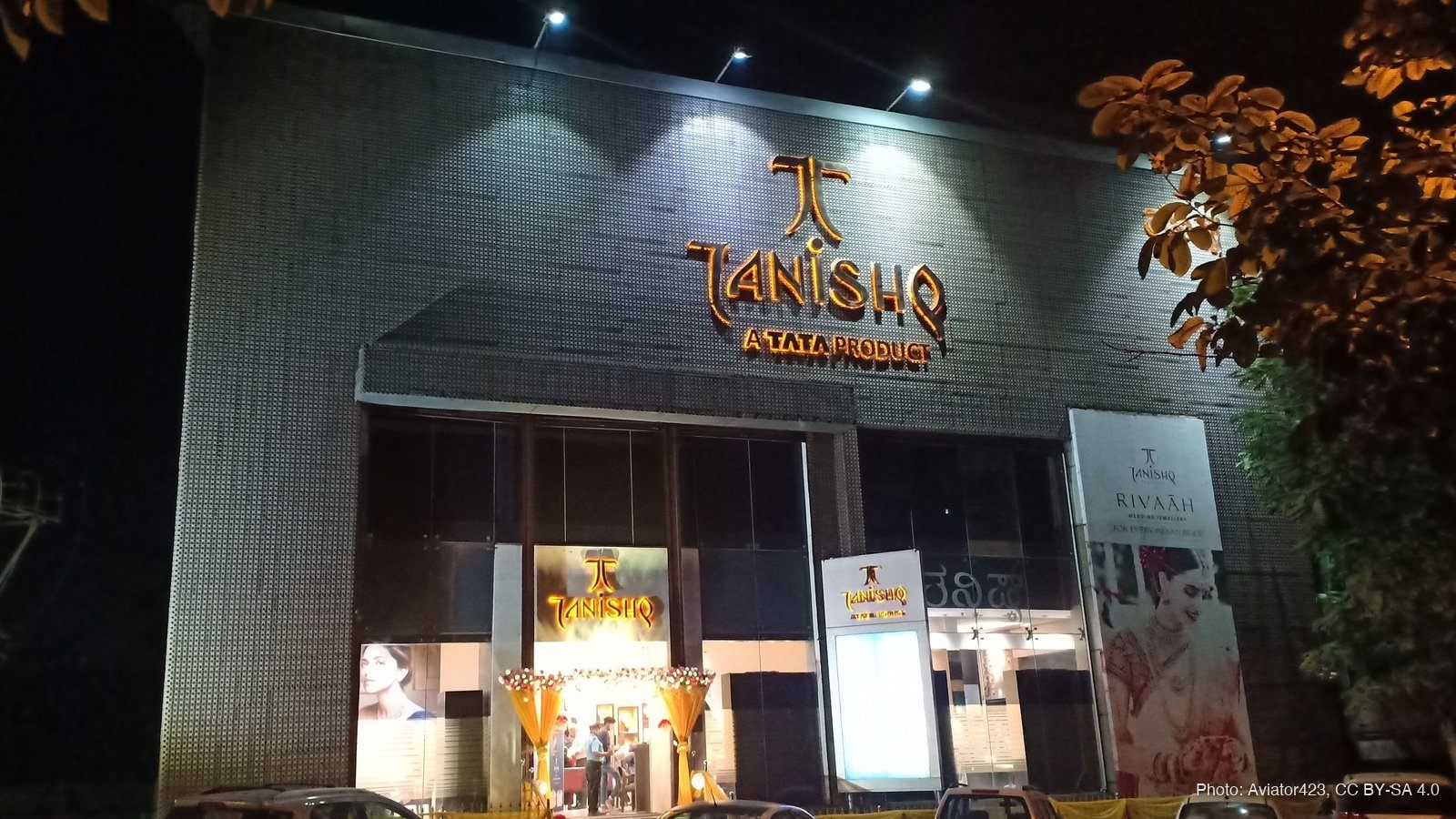
Picture a single necklace that costs ₹2.5 crore. That is the price of just one piece of jewellery. It is the top end of Zoya, the luxury jewellery brand of Tata group company Titan. On 23 October 2026, The Economic Times reported that Zoya wants to reach ₹500 crore in revenue by FY27.
Revenue is simply all the money a company takes in from selling things, before it pays any bills. Think of a samosa stall: if it sells 100 samosas at ₹20 each, its revenue for the day is ₹2,000, even before paying for oil, flour and rent.
Who owns Zoya?
Zoya belongs to Titan Company, which is part of the Tata Group. Titan started in 1984 making watches, as a joint venture with a Tamil Nadu government body called TIDCO. A joint venture is like two friends putting money together to open one shop. Titan moved into jewellery in 1994 with Tanishq, and today more than 80% of its revenue comes from jewellery.
Zoya is the small, fancy sister in this family. It was launched in 2009, and its name means "alive". Titan's jewellery business today has four main brands: Tanishq, Mia, Zoya and beYon.
What makes Zoya different from a normal gold shop
When most Indian families buy jewellery, they think about gold and diamonds. Many buy for a wedding or a festival, and some see gold as a way to save money. Zoya plays a different game.
Its pieces are fine jewellery built around coloured gemstones, with a lot of focus on design and handwork. Prices start a little under ₹1 lakh and go all the way up to ₹2.5 crore for one piece, as per the ET report. ET says the brand targets women who see jewellery as a way to show their own style.
In a 2023 interview with PTI, CK Venkatraman, then managing director of Titan, said each Zoya creation takes 9 to 12 months to make. That is close to a full school year for one necklace.
The ₹500 crore goal, explained
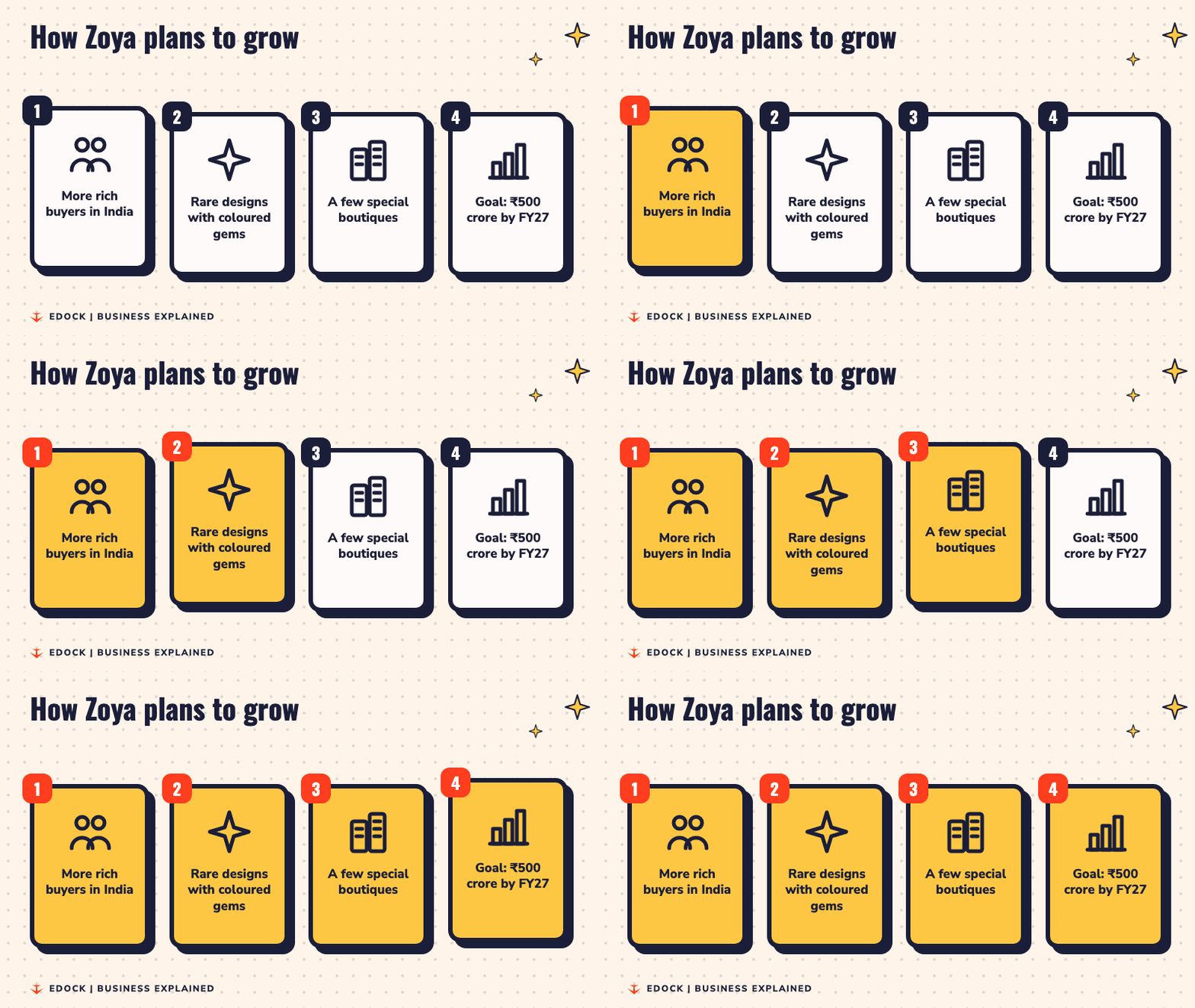
Arun Narayan, CEO of Titan's jewellery division, told ET that Zoya is growing at a compound annual growth rate of 30%. Compound growth means each year's growth is added on top of the last year's bigger number. It is like pocket money that rises 30% every year: ₹100 becomes ₹130, and then ₹169 the next year, not just ₹160.
To see how big the jump is, look back. In February 2023, Zoya was a ₹200 crore brand with seven showrooms and seven galleries. Going from ₹200 crore to ₹500 crore means making 2.5 times as much money.

FY27 means the financial year 2026 to 2027, which in India runs from 1 April 2026 to 31 March 2027. So the goal is for this very year.
Why rich buyers want more of this
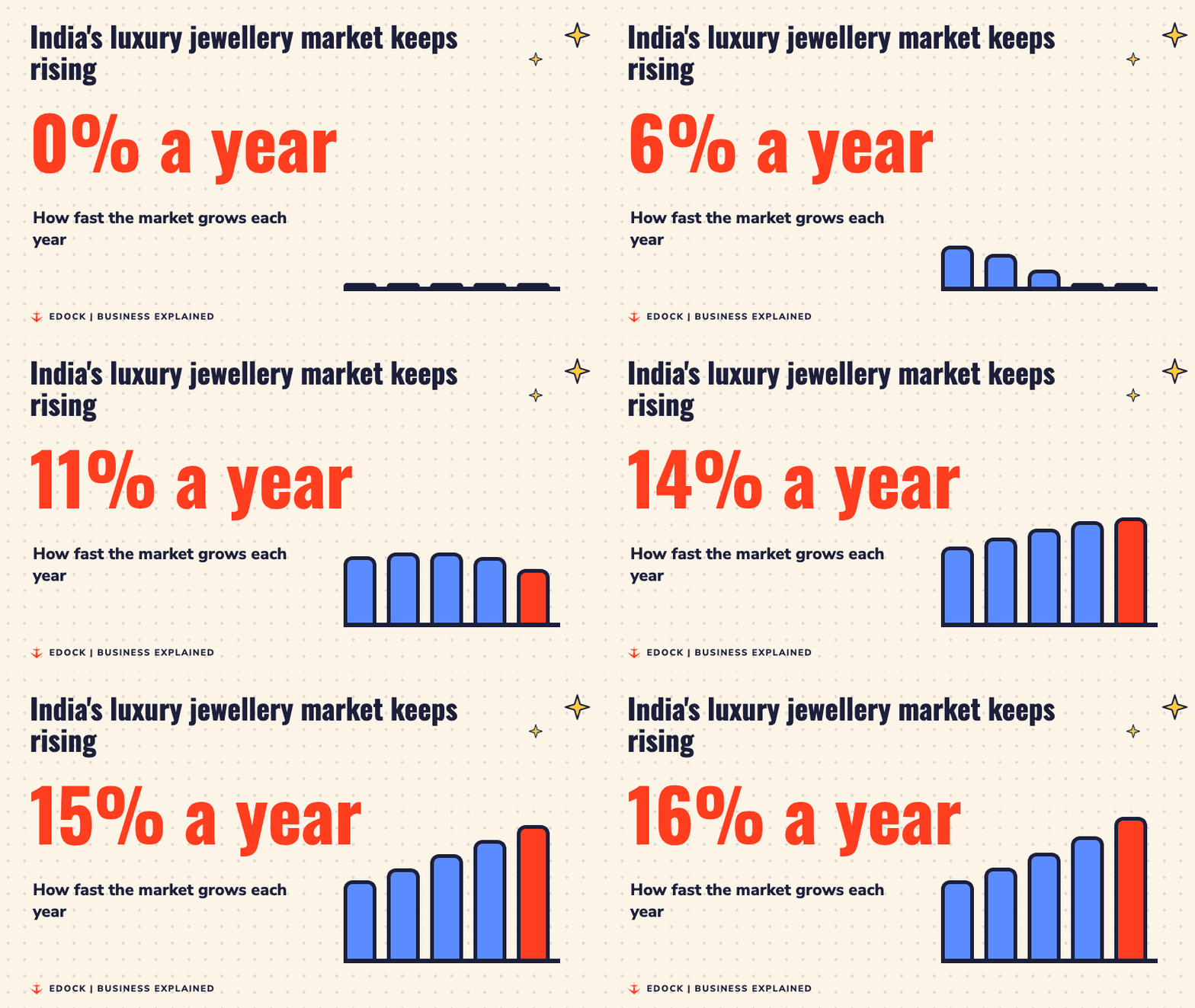
The plan rests on one group: HNIs, or high net worth individuals. That is a fancy name for people with a lot of money to spend. As per the ET report, India's luxury jewellery market is growing at about 16% a year.
The report also says buying habits are changing. Buyers are not only shopping for weddings and festivals. Many now buy jewellery for themselves, or to mark a personal milestone.
Titan's wider jewellery numbers show a similar mood. In July to September 2026, its jewellery business grew around 21% from a year earlier. The number of buyers grew only in the mid single digits, but the average bill grew by double digits. In simple words, a few more people came in, and each of them spent a lot more.
Few stores, on purpose
Here is the twist. Most companies grow by opening as many shops as they can. Zoya does the opposite. In 2023, Venkatraman said Zoya would add at least eight more boutiques by FY27, each costing close to ₹40 crore, which adds up to over ₹320 crore. He also said the brand was profitable.
He compared it to the Taj hotels: the group runs many hotels, but only a few are palace hotels. In the same way, Titan has over 1,000 Titan stores, while Zoya keeps a small, special set of boutiques. If everyone had one, it would not feel rare.
The ET report points out the hard part: Zoya has to grow bigger without losing that feeling of being special. Luxury labels cannot simply sell more and more pieces the way mass brands do.
For comparison, all of Titan's Tanishq, Mia, Zoya and beYon stores together came to 875 at the end of September 2026. Back in 2023, Zoya had just seven showrooms and seven galleries.
Meanwhile, at the other end of the market
Not every jeweller is chasing the top end. Online and store jeweller BlueStone reported that its revenue rose 45% to ₹745 crore in July to September 2026. It said high gold prices had upset its cheaper range, so it redesigned its entry level pieces. It now has 379 stores across 146 cities.
So the same rising gold price is pushing brands in two directions. BlueStone is reworking its cheaper pieces for new buyers. Zoya is going the other way, with rare stones and slow handwork for buyers who can spend lakhs or crores.
What to take away
Zoya shows that a big company can run a small, slow, very costly brand next to its mass brands. Whether Zoya hits ₹500 crore by March 2027 will depend on how many rich buyers keep coming, and on whether it can stay rare while it grows.
Sources
- The Economic Times: Zoya eyes ₹500 crore revenue by FY27
- DT Next (PTI): Titan to more than double Zoya store count and top line by FY27
- Indiantelevision: Titan consumer businesses grow 25 per cent in Q2 FY27
- Inc42: BlueStone Q2 results
- Wikipedia: Titan Company
- Cover photo: Tanishq showroom at Balmatta Road in Mangalore, by Aviator423, CC BY-SA 4.0

You may republish this story under CC BY 4.0: credit Pranav Sharma and link to this page.