This Indian TV brand sold ₹100 crore in 13 months. Now it has raised $12 million
Version 1 of 1 saved 12 Oct 2026, 6:15 pm IST · Chain line 17
As it was first published
This Indian TV brand sold ₹100 crore in 13 months. Now it has raised $12 million
Bengaluru brand Lumio, started by former Xiaomi and Flipkart leaders, is taking on Samsung, LG and Sony in your living room.
Look at the TV in your living room. Maybe it says Samsung, LG, Sony or Xiaomi on it. Now a young Indian brand called Lumio wants a spot on that wall.
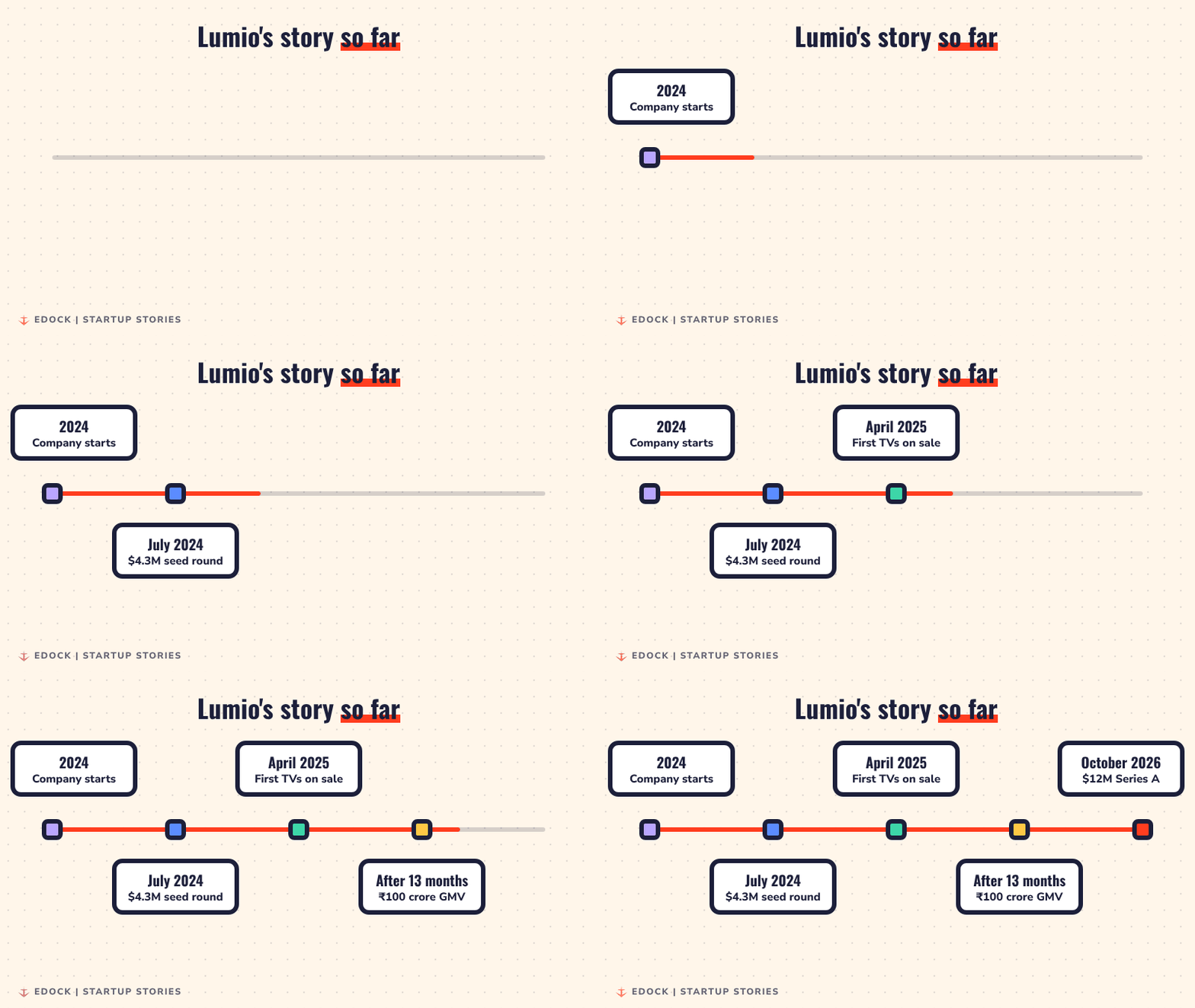
Lumio launched its first TVs only in April 2025. Within 13 months of sales, it had sold ₹100 crore worth of products. And on October 7, 2026, it said it had raised $12 million from investors to grow even bigger.
How did a brand this new move so fast? Let us find out.
Who is behind Lumio?
Lumio is a Bengaluru company. It was started in 2024 by Raghu Reddy and Kailash Sankaranarayanan.
Both founders know the gadget world well. Raghu Reddy was a top business leader at Xiaomi India, where he helped build its TV business. Kailash Sankaranarayanan worked at Flipkart, and before that in marketing at TI Cycles and Hindustan Unilever.
So this is a bit like two senior cricket players leaving big teams to start their own club. They already know how the game is played.
Lumio sells three kinds of products: Vision smart TVs, Arc projectors and Aura speakers.
What is a Series A?
Startups raise money in steps, a bit like levels in a video game. The first small step is called a seed round, because it plants the idea. The next bigger step is called Series A.
Lumio's seed round came in July 2024, when it raised $4.3 million. Now its Series A brings $12 million.
The new round was led by Blume Ventures, an investment firm. Two firms that had already invested, Stellaris Venture Partners and 3one4 Capital, put in money again.
₹100 crore of what, exactly?
The ₹100 crore is Lumio's GMV, short for gross merchandise value. It sounds hard, but it is simple.
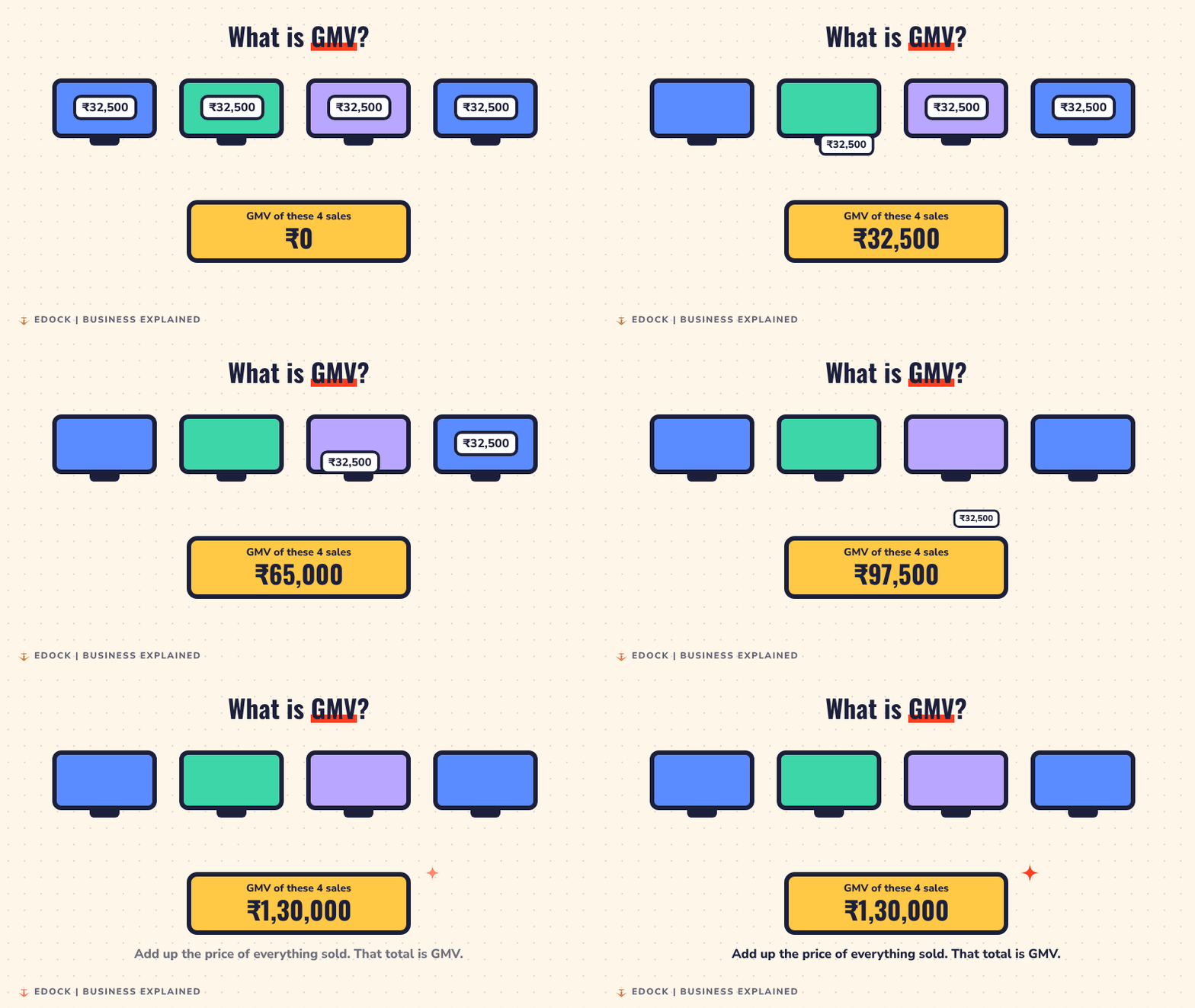
Imagine a samosa stall sells 100 samosas at ₹20 each. The GMV is ₹2,000. But some money goes back for returns and discounts, so the stall keeps a bit less. What it keeps is called revenue.
Lumio's investor Blume says the company made about ₹60 crore in net revenue in its first year. GMV and revenue are not the same thing, so it helps to know which one you are looking at.
Lumio says its products are now in more than 35,000 homes across more than 5,000 pin codes. It did this without its own shops and without TV ads.
Not the cheapest TV in the shop
Many new brands try to win by being the cheapest. Lumio did the opposite.
Blume says the average selling price of a Lumio product is about ₹32,500. That is the typical price a buyer pays. It is about 1.6 times the average for the category. In simple words, Lumio buyers pay more than people usually pay for this kind of product.
For example, the 2026 Vision 7 smart TV in 43 inches is listed at ₹31,999. The new Arc 7 projector, which went on sale on October 8, 2026, costs ₹34,999.
Lumio says its TVs are built to be fast. It uses a strong chip so apps open quickly, plus plenty of memory so the TV does not slow down. Its own app, called TLDR, helps you find something to watch. A new feature called Project Neo, still being tested, even lets you ask for a film over WhatsApp or Instagram, in English, Hindi, Tamil and other Indian languages.
Where do Indians buy their TVs?
Here is the big reason Lumio wants more money. Blume estimates that Indians spend about ₹60,000 crore a year on TVs. Only about ₹12,000 crore of that is spent online.

That means only one in every five rupees is spent online. The other four are spent in shops and showrooms, where people can see the screen before they buy.
Lumio does not have its own shops yet. So it now plans to open a physical retail presence, so buyers can see and try products first. It will also spend on research, new kinds of products, software and after-sales service.
After-sales service means help after you buy, like repairs. Lumio says it already has more than 300 service centres.
Can a new brand beat the giants?
That is the big test. Lumio is up against Samsung, LG, Sony and Xiaomi, the big famous names.
Blume partner Sajith Pai believes the market is changing. He said India's "30-35 million affluent households are reimagining their living rooms, and no longer default to legacy brands."
Affluent means well-off. Legacy brands are the old, famous names. So he is saying that many families with money to spend no longer pick a TV just because the brand is famous.
Co-founder Kailash Sankaranarayanan said, "In about a year and a half, we have shown we can build products Indian households want, across more than one category."
Whether Lumio can grow from 35,000 homes to many more will depend on one simple thing: whether families walking into a shop pick it over the names they already know.
Sources
- Lumio raises $12 Mn to scale consumer electronics portfolio, Inc42
- Consumer electronics brand Lumio raises $12 million in Series A funding, Indian Startup News
- Lumio raises USD 12 Mn in Series A funding, Entrepreneur India
- Lumio Arc 7 (2026) holds the ₹34,999 price, Smartprix
- Cover photo: Dedicated home theater, by Geoff Sloan, CC BY 2.0
