This Bengaluru startup cooks super-pure chemicals. It just raised ₹238 crore
Scimplify works out tricky chemical recipes in its labs and has partner factories make them. Hitachi Ventures just led its new round.
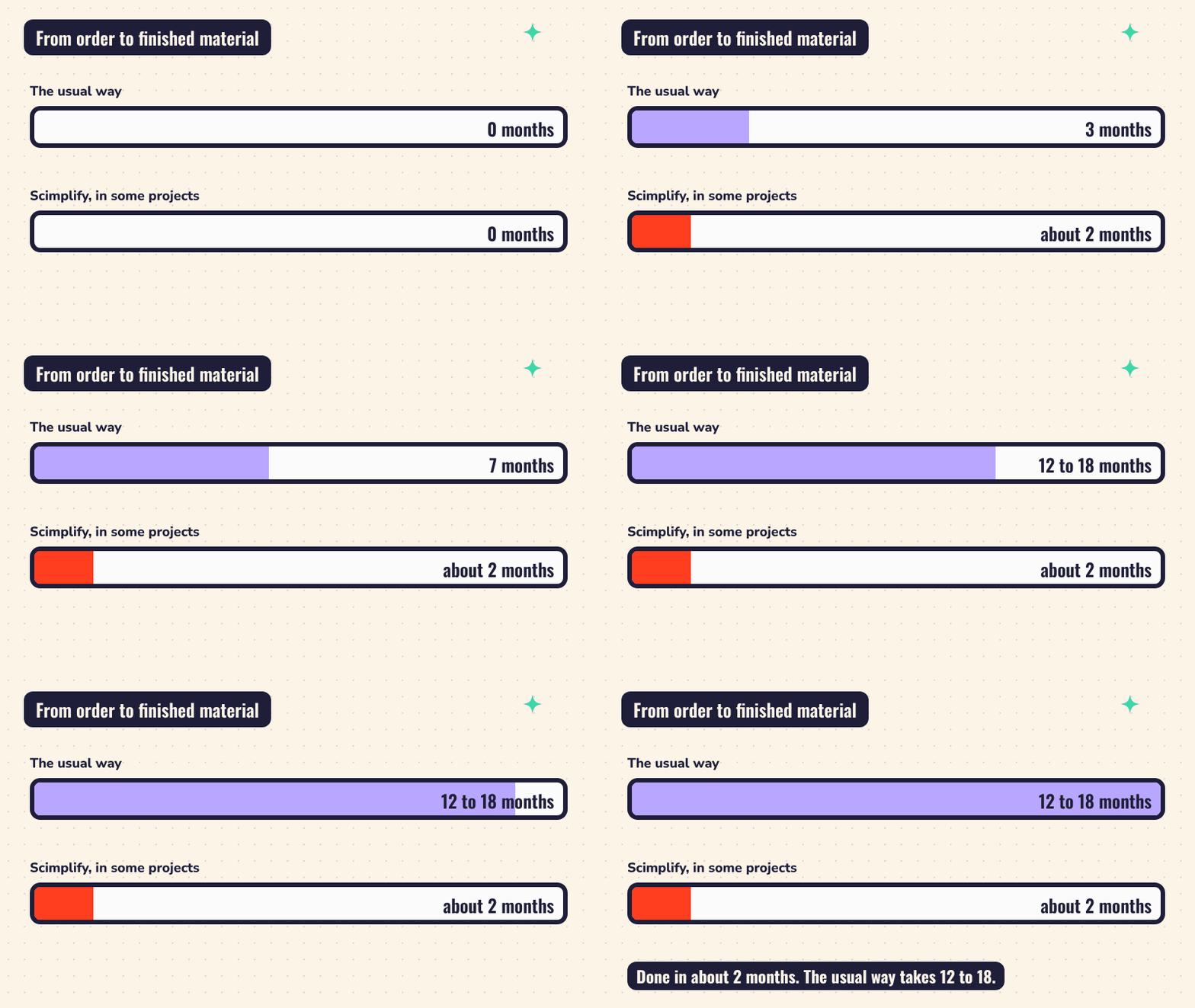
Picture this. A big company needs a special material for its products. It must be very pure, with almost nothing else mixed in. Getting a new material like this ready usually takes 12 to 18 months. A Bengaluru startup called Scimplify says that in some projects, it has done it in about two months.
On October 14, 2026, Scimplify said it raised $25 million, which is around ₹238 crore. The round was led by Hitachi Ventures, the investing arm of Japan's Hitachi Group.
So what does this company do, and why are investors excited? Let's break it down.
First, what are specialty chemicals?
Some chemicals are like rice. Everyone needs a lot of them, and they are made in huge amounts. Others are like a special masala mix that only a few kitchens can get right. These are called specialty chemicals. They are made in smaller amounts for one special job.
Scimplify makes these. It also makes very pure advanced materials for things like semiconductors, defence and energy. Semiconductors is the grown up word for computer chips, the tiny brains inside phones and laptops.
It also does research and manufacturing for crop chemicals, medicine ingredients and fragrances. Some of its customers are big names, like Japanese electronics maker TDK, German chemicals company BASF, and Hitachi.
How does Scimplify work?
Think of a chef who invents recipes but does not run a big kitchen. The chef works out the perfect recipe, then hands it to partner kitchens that cook it in giant pots.
Scimplify works in a similar way. Its scientists work out the "recipe" for a chemical in its labs in Bengaluru and Hyderabad. Then partner factories make it in large amounts. Scimplify works with a network of more than 500 factories, and its own team keeps an eye on the work.
It also has its own AI software, called Scinode. It helps find the best way to make a material, picks the right factory, and keeps track of quality and government rules.

Turning scrap into something useful
One cool project: Scimplify is making products from the metal tungsten, using scrap. For one US metals company, it worked out a way to get tungsten back from industrial scrap and used catalysts. A catalyst is a helper material that speeds up a chemical reaction.
It is also working on rare earth materials. For many of these materials, the world depends heavily on China and a few other countries. Scimplify wants to help buyers find another place to get them.
It is like a street with only one samosa shop. If that shop shuts for a week, nobody gets samosas. A second shop keeps everyone safer.
The numbers, made simple
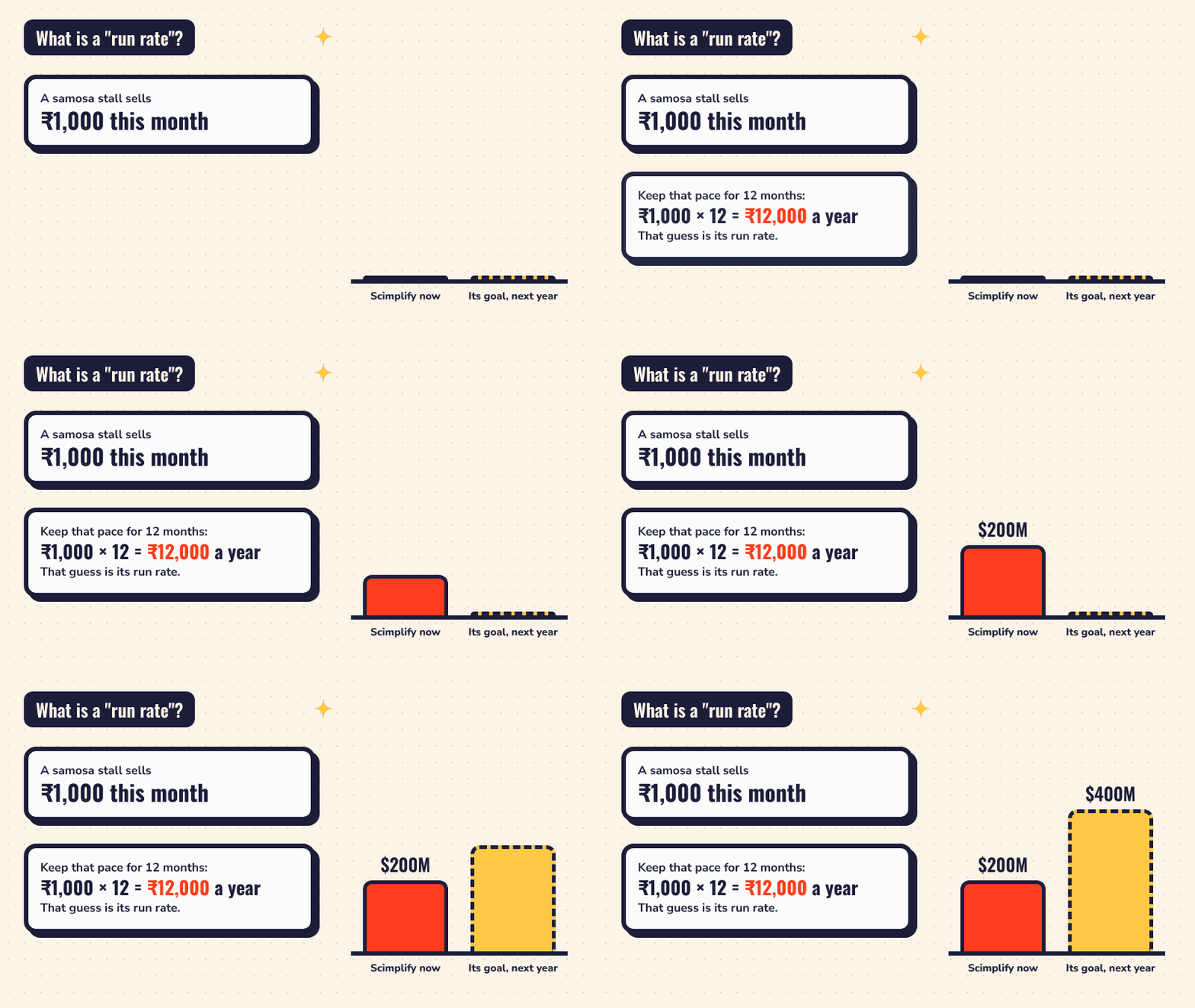
First, a business word. Revenue is the money a company gets from selling things. A run rate is a quick guess of a full year's revenue, based on how fast sales are coming in right now.
Scimplify's yearly run rate is about $200 million. That is three times what it was a year ago. Its goal is to reach a $400 million run rate over the next year.
A few more numbers, all from TechCrunch's report:
- In the US, its run rate grew six times, from $10 million to about $60 million in a year.
- More than half of its sales now come from customers outside India. About 18 months ago, it was less than 5%.
- It has more than 1,000 customers and has sent products to more than 40 countries.
- It has about 340 employees, and around 70 of them are scientists.
- About 90% of its manufacturing happens in India.
Is it making money? Scimplify says it has been EBITDA positive for the past two months. EBITDA is a way to check if the day to day business earns more than it spends, before counting things like loan interest, tax and the wear of machines. Think of a lemonade stand that earns more than it spends on lemons, sugar and cups, even before paying back the loan for its table. Scimplify says it expects to make a full profit, after tax, this month.
Who put in the money?
Hitachi Ventures led the round. Two companies that were already Scimplify's customers, Henkel and Teknor Apex, also joined as new investors. Teknor Apex will also help Scimplify make things in the US.
Imagine your regular customers love your samosas so much that they buy a small share of your stall. That says a lot.
Scimplify's older investors, Accel India, Bertelsmann India Investments, Omnivore and 3one4 Capital, put in money again too. In all, Scimplify has now raised $80 million in equity. Equity means investors give money and get a small piece of the company in return. Its last big round was $40 million in March 2025.
What will it do with the money?
- About $7.5 million goes to growing in the US.
- About $2 million goes to building Scinode.
- The rest goes to making more materials for chips, defence, energy and AI.
Over the next year, Scimplify plans to add factories to its network in the US and Japan.
Here is a video from Scimplify's own YouTube channel about the future of making chemicals:
Why this story matters
When people think of Indian startups, they often think of apps for food, shopping or payments. Scimplify is a different kind of startup. It does not sell an app. It sells science, worked out in Indian labs, to buyers around the world.
And for young people who love chemistry class, that is a fun thought. The lab can be a place where big companies are built too.
Sources
- Entrackr: Scimplify raises $25 Mn in strategic round led by Hitachi Ventures
- Inc42: Scimplify bags $25 Mn to scale its semiconductor chemicals business
- TechCrunch: Scimplify raises $25M to challenge China's grip on critical materials with AI
- TechCrunch: Scimplify raises $40M to help manufacturers access specialty chemicals
- Cover photos: Vials, by CSIRO, CC BY 3.0; Laboratory equipment of modern chemistry classroom, by Belikov Maxim, CC BY 4.0


You may republish this story under CC BY 4.0: credit Manpreet Kaur and link to this page.