This Bengaluru school makes students build real businesses. It just raised ₹110 crore
Mesa School of Business planned a first class of 60 in 2023. Now it has over 550 students and fresh money to teach for the AI era.

Picture a college where your homework is not an essay. Your homework is a real business, with real customers and real money coming in.
That college exists in Bengaluru. It is called Mesa School of Business. On October 13, 2026, it said it has raised ₹110 crore to grow and to teach for the age of AI.
Only three years ago, it was a brand new school planning its very first class. Here is the story, step by step.
What kind of school is this?
Mesa was started in 2023 by Ankit Agarwal and Varun Limaye. It is a business school for people who want to work in startups, or start one.
Students live on campus. The big idea is "learning by doing". Today, Mesa runs three main programmes:
- A one-year postgraduate programme in startup leadership. Postgraduate means it is for people who already have a college degree.
- A four-year undergraduate programme, which is a first college degree, in business and entrepreneurship.
- Forge, a one-year programme for fresh graduates.
Its co-founder Ankit Agarwal says that at Mesa, "every student builds a real business with real revenue, uses AI on live problems". Revenue simply means the money a business earns from selling things.
Here is a short film about the school from Elevation Capital, one of its investors:
From 60 students to over 550
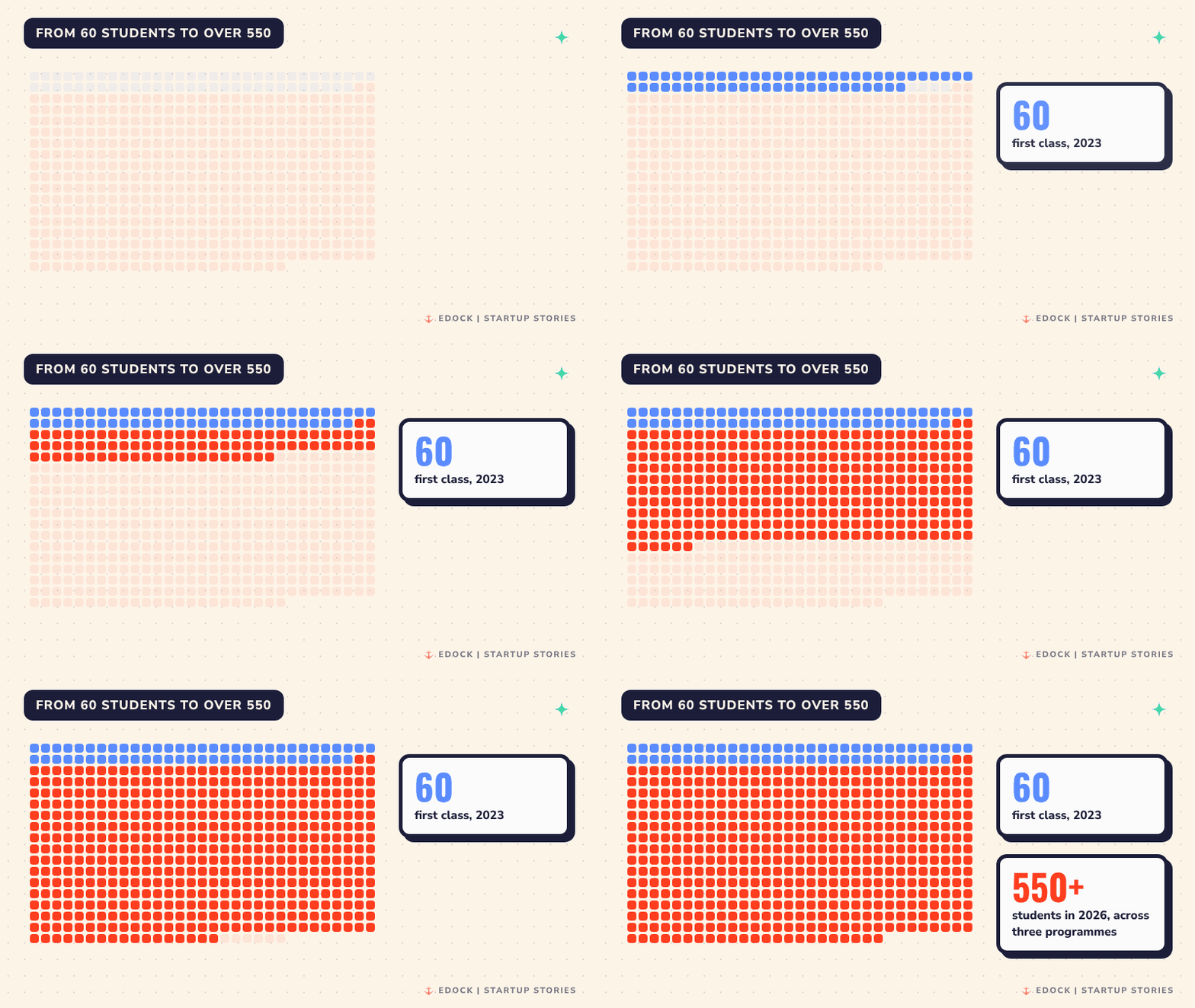
When Mesa first raised money in April 2023, it got ₹34 crore and planned a first class of just 60 students.
Now it has over 550 students across its three programmes. More than 100 startup founders have taught on its campus, and students have worked on more than 200 projects with real startups.
Where do the ₹110 crore come from?
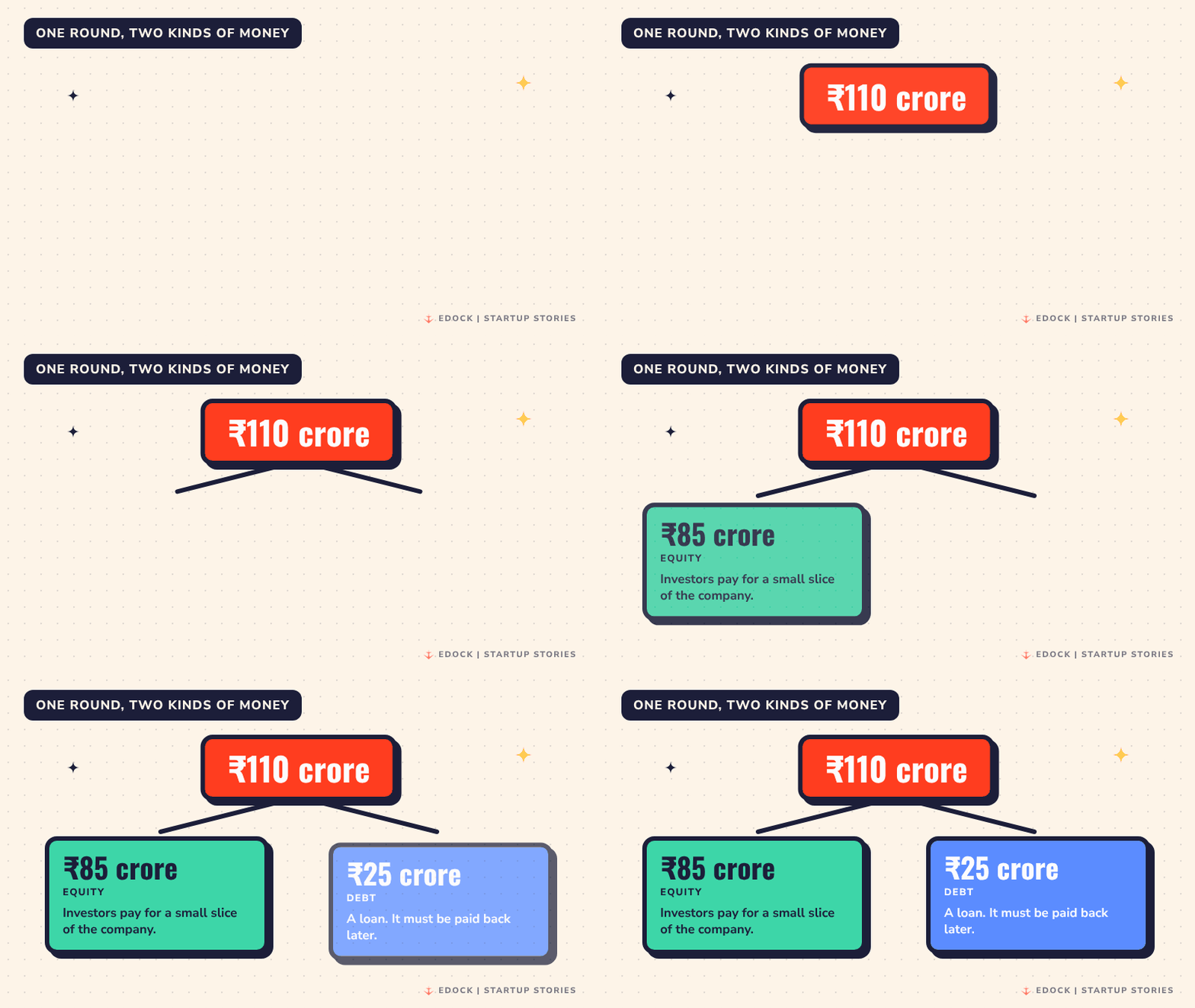
The ₹110 crore is not one big cheque. It comes in two very different kinds of money.
About eighty-five crore rupees is equity. Equity means investors pay money and get a small slice of the company in return. Think of a lemonade stall. A friend gives you ₹100 for new lemons, and in return owns a part of your stall forever. This money came from Dharana Capital and Elevation Capital. Elevation also backed Mesa back in 2023.
₹25 crore is debt. Debt is a loan. The company must pay it back later, usually with extra money called interest, but nobody gets a slice of the company. This loan came from InnoVen Capital and Alteria Capital.
After this round, Mesa is valued at three hundred and eighty-five crore rupees. Valuation is the price tag on the whole company, based on what investors just paid for their slice.
Some famous founders also back Mesa, says Entrackr. They include Kunal Shah of CRED, Vidit Aatrey of Meesho and Vijay Shekhar Sharma of Paytm.
What happens to students after Mesa?
Here are the numbers Mesa shared with the news:
- Students from its first two postgraduate classes got an average CTC of ₹26 lakh. CTC means "cost to company". It is the total yearly pay package, including extras, not just the money that lands in your bank account each month.
- The top 25% of those students got an average of ₹36.5 lakh.
- Students joined startups such as Zomato, Zepto, Urban Company, Scapia and Comet. 58% of them work closely with a founder.
- Nearly 20% of its graduates have started their own companies.
Mesa also has a Startup Lab, where student startups get help. More than 50 student startups are there. Together they have raised over ₹25 crore in funding and grants. One of them, Mumbai Pav Co., has raised ₹9 crore. Two student founders have even appeared on Shark Tank India.
Mesa's own video walks through these results:
How much does it cost?
This is not a cheap school. In 2023, the fee for the first one-year programme was ₹14.95 lakh.
Today, Mesa's programme page lists a fee of ₹25.35 lakh to almost ₹28 lakh for the one-year postgraduate programme, depending on when you apply. GST and housing are extra, and housing starts at ₹2.5 lakh a year. To apply, you need a college degree and at least one year of work.
So the price has gone up a lot. At the top end, it is now close to double the 2023 fee.
Why the AI talk?
Mesa says the new money will go into three things: an AI-first way of teaching its programmes, new programmes, and more tie-ups with startups.
Its investors explain why. Mukul Arora of Elevation Capital said, "Higher education in India needs to be rebuilt for the AI era, not patched." Vamsi Duvvuri of Dharana Capital said that "students feel unprepared for new-age roles, and companies can't find job-ready talent."
Co-founder Varun Limaye put it plainly: "AI will take over much of back-office work." Back-office work means the jobs behind the scenes, like data entry and paperwork, that customers never see.
Quick recap
- Mesa School of Business in Bengaluru raised ₹110 crore on October 13, 2026.
- About eighty-five crore rupees is equity (investors get a slice) and ₹25 crore is debt (a loan).
- It is now valued at three hundred and eighty-five crore rupees.
- It grew from a planned first class of 60 to over 550 students in three years.
- Its one-year postgraduate programme now costs ₹25.35 lakh to almost ₹28 lakh, plus extras.
Words to know
- Equity: money given in return for a slice of the company.
- Debt: a loan that must be paid back.
- Valuation: the price tag on the whole company.
- CTC: cost to company, the full yearly pay package.
- Revenue: money a business earns from selling things.
Sources
- Mesa School of Business raises ₹110 crore to expand its portfolio of programmes for the AI era (PRNewswire via PTI and The Wire, October 13, 2026)
- Mesa School of Business raises Rs 110 Cr in equity and debt (Entrackr, October 13, 2026)
- Mesa School raises INR 34 crore to open a startup-focused business school (Inc42, April 20, 2023)
- PGP in Startup Leadership and Entrepreneurship: fees and eligibility (Mesa School of Business)
- Cover photo: Ohio University Lecture Hall, by Garden Sprite, CC0 1.0
You may republish this story under CC BY 4.0: credit Arshdeep Singh and link to this page.