This Bengaluru app sells used stuff. It just raised ₹25 crore
Version 1 of 1 saved 14 Oct 2026, 12:47 pm IST · Chain line 31
As it was first published
This Bengaluru app sells used stuff. It just raised ₹25 crore
Circle checks old phones, furniture and sneakers before they reach a new owner. Here is how it works, in super easy words.
Here is a fun number. In about one year, people in Bengaluru sold around ₹25 crore worth of used things on an app called Circle. The app deals in things like old phones, cameras, furniture and sneakers.
And now, investors have given Circle another ₹25 crore to grow. The news came out on October 14, 2026. Same number, two very different things. Let us see what each one means, and how this app wants to make selling old stuff easier.
What is Circle?
Circle is a young company from Bengaluru. It was started in 2025 by Chirag Kataruka and Ankit Misra.
It runs a marketplace for pre-owned goods. A marketplace is like a weekly bazaar. The bazaar does not grow the vegetables. It just gives buyers and sellers one place to meet. Circle is a bazaar on your phone, for things people have already used.
Circle does not own the things on its app. A normal person sells, and another normal person buys. Circle sits in the middle and handles the hard parts: checking the item, moving it, and moving the money.
People sell many kinds of things on it. Inc42 lists smartphones, gaming consoles, cameras, furniture, watches, handbags and sneakers.
Why is buying used stuff so scary?
Think about buying a second-hand phone from a stranger online. You might worry about a few things.
- Is the phone in the photo the same one I will get?
- What if it breaks the next day?
- What if I pay and the person never shows up?
These worries are real. When Circle raised its first small round of money, news site Entrackr wrote that it wanted to fix scams, uncertainty and coordination problems in this kind of trade. Coordination is a big word for a simple pain: agreeing on a time, a place and a price with someone you do not know.
So how does Circle work?
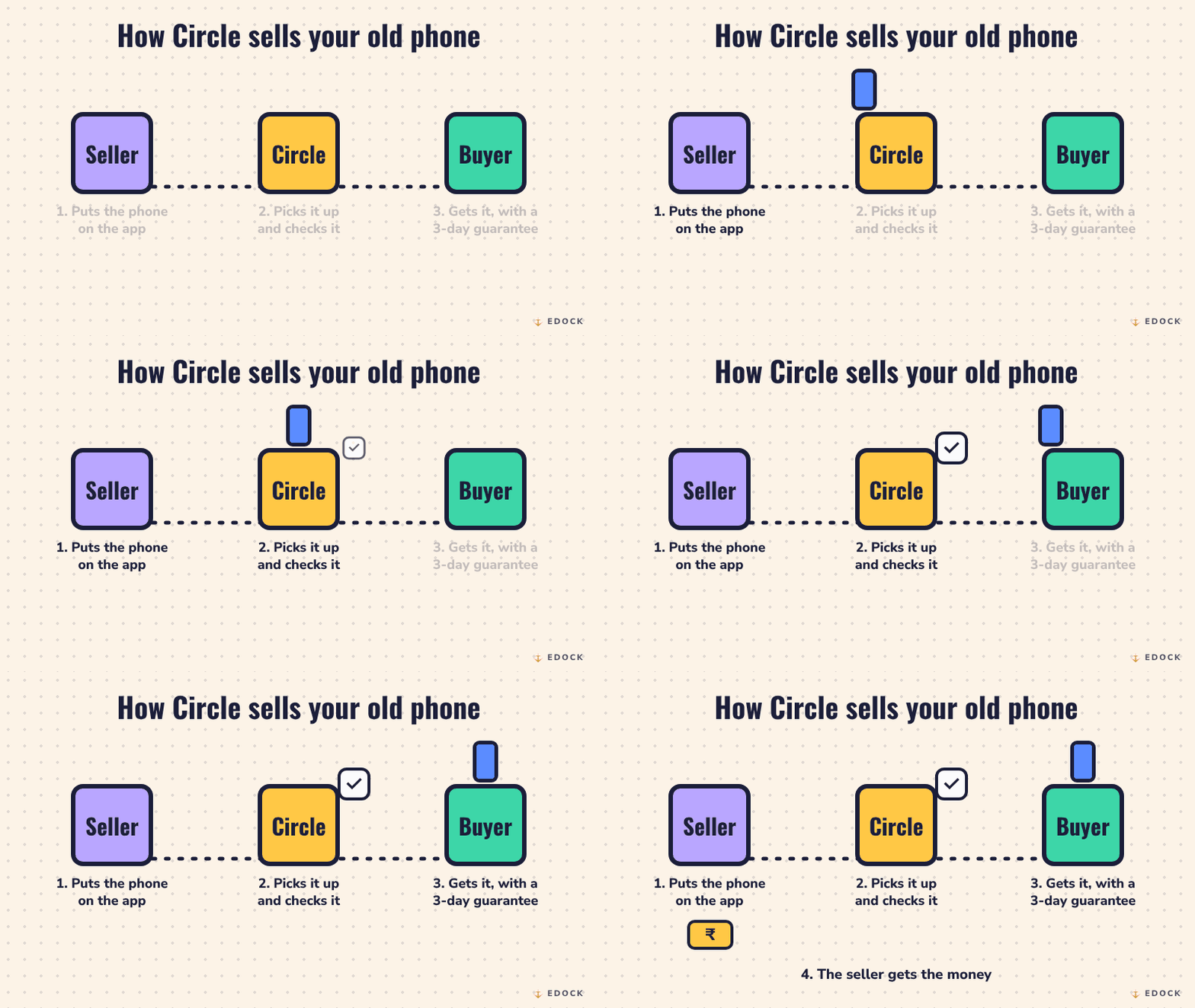
Here are the steps, one by one.
- The seller lists the item. You take photos of your old phone and put it on the app.
- Circle picks it up. You do not have to meet anyone.
- Circle checks it. It uses AI tools plus real people to make sure the item is what the listing says.
- The buyer gets it. The buyer also gets a three-day guarantee, a few days of extra safety after the item arrives.
- The seller gets paid. Circle takes care of the payout.
It is a bit like a trusted friend who carries your cricket bat to the buyer, checks the money, and then hands it over. Nobody has to trust a stranger directly.
Circle also says speed is a big win. It says sellers usually find a buyer within three days. On classifieds websites, it says, this can take weeks or even months.
The two ₹25 crores, explained
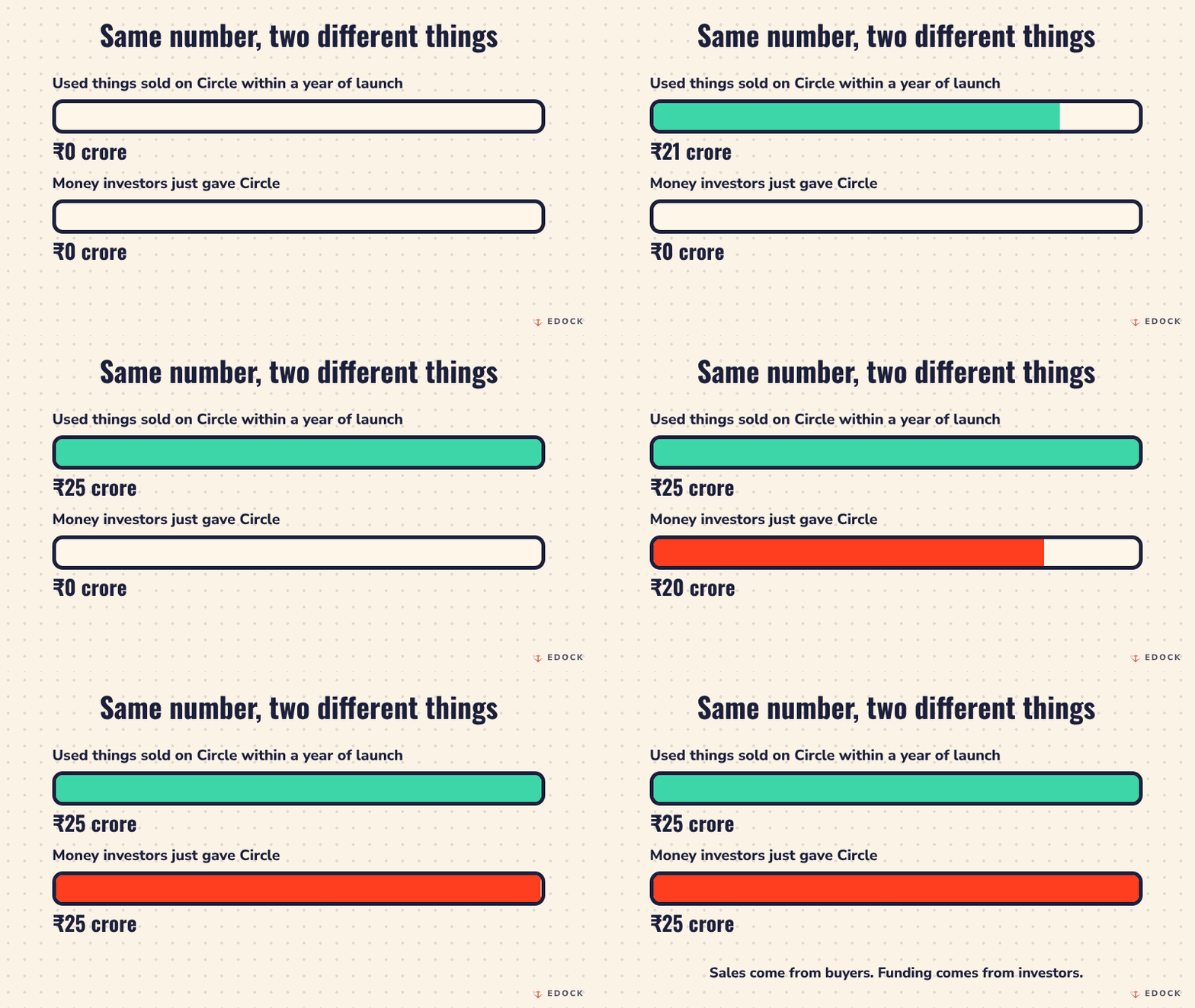
The first ₹25 crore is sales. Circle says that within a year of launch, it helped people sell around ₹25 crore worth of used goods in Bengaluru. This is the value of all the things that changed hands. Buyers paid it for the items they got.
The second ₹25 crore is funding. Funding is money investors give a company so it can grow faster. In return, they own a small piece of it. Picture a friend giving you money to set up a bigger samosa stall, and getting a share of every future plate sold.
This round is called a seed round. A seed round is one of the first rounds of money a startup raises, just like a seed is the start of a tree. It was led by Nexus Venture Partners, an investment firm. Old investors Titan Capital and Myntra cofounder Raveen Sastry put in money again. Ajith Pai, the COO of delivery company Delhivery, also joined as an angel investor, which means a single person investing their own money.
From ₹3.4 crore to ₹25 crore
This is not Circle's first round. In November 2025, it raised ₹3.4 crore in a pre-seed round led by Titan Capital. Pre-seed means even earlier than seed, the very first small cheque.
Back then, the app had a soft launch in August 2025 and had about 17,000 users, all in Bengaluru. A soft launch is like a test match before the big tournament. You open quietly, learn, and fix things.
Now Circle says its app has had over 10 lakh visitors and 1 lakh listings in the city. A listing is one item put up for sale. And the new round is more than seven times bigger than the first one.
How big is the used goods world in India?
Bigger than you might think. Indian Retailer, quoting market research, said India's pre-owned goods market is worth about ₹1.6 lakh crore. It also said more than 70 million Indians buy or sell used things every month.
There is also a word for this business: recommerce. It just means selling things again. A research firm called ResearchAndMarkets expects India's recommerce market to grow from $5.91 billion in 2026 to $8.61 billion by 2030.
Circle is not alone. It shares the space with OLX India, Quikr, Cashify and FreeUp. Each of these works a bit differently. OLX and Quikr are classifieds, which are like a big notice board. Cashify focuses on electronics.
What will Circle do with the money?
Circle has a few plans for the new ₹25 crore, according to Inc42.
- Go beyond Bengaluru. So far, it has worked only in one city.
- Sharpen its AI tools. These help with fair prices, finding items and checking them.
- Grow its delivery network and Trust Hubs. Trust Hubs are the places where items get checked and sent out.
Inc42 also points out the big test ahead. Circle checks, carries and pays without owning any of the items. Now that plan has to work outside its first city too.
Why should you care?
Think about a student who just moved to a new city for college. They need a chair, a lamp, maybe a cheaper phone. Or a young worker moving out who wants to sell an old cycle. Used things can save a lot of pocket money, if you can trust the deal.
That trust is exactly what Circle is selling. If it works in more cities, buying used could start to feel as normal as ordering something new.
Sources
- Inc42: Circle raises ₹25 Cr to expand its pre-owned goods marketplace beyond Bengaluru
- Entrackr: Circle raises Rs 3.4 Cr in pre-seed round led by Titan Capital
- Indian Retailer: Circle bags Rs 3.4 Cr in pre-seed round led by Titan Capital
- YouTube: Re-commerce in India, Circle Store x I Will Circle Back
- Cover photos: Used furniture stall, Pool Market, Cornwall (1) and (2), by Mutney, CC0 1.0

