The US wants its trade with India to cross $500 billion in three years
Version 1 of 1 saved 21 Oct 2026, 3:03 pm IST · Chain line 115
As it was first published
The US wants its trade with India to cross $500 billion in three years
Trade between the two countries is at a record of over $240 billion. Here is what bilateral trade means, what moves each way, and where the trade deal stands.
Picture two shops on the same street. One sells phones, medicines and jewellery to the other. The second sells fuel, plane parts and tech to the first. Now picture the total money moving between them doubling in just three years. That is the target the United States has just set for its trade with India.
In a speech in Mumbai, reported by The Economic Times on 21 October 2026, US Ambassador to India Sergio Gor said trade between the two countries has reached a record of over $240 billion. He said the aim is to push it past $500 billion in the next three years.
What does "bilateral trade" mean?
"Bilateral" just means "two sides". Bilateral trade is everything India sells to the US plus everything India buys from the US, added together.
Think of it like a cricket score for a partnership. One batter scores runs, the other batter scores runs, and the partnership total is both added up. Trade works the same way. Sales in one direction plus sales in the other direction give the total.
Things India sells to the US are called exports. Things India buys from the US are called imports. Both count towards the $240 billion figure.
How big is the jump?
Going from $240 billion to $500 billion means trade has to more than double. Imagine your weekly pocket money is Rs 240 and someone promises it will become Rs 500. That is more than twice as much.
To reach that in three years, trade would need to grow by roughly 28% every single year. That is a big ask for any two countries.
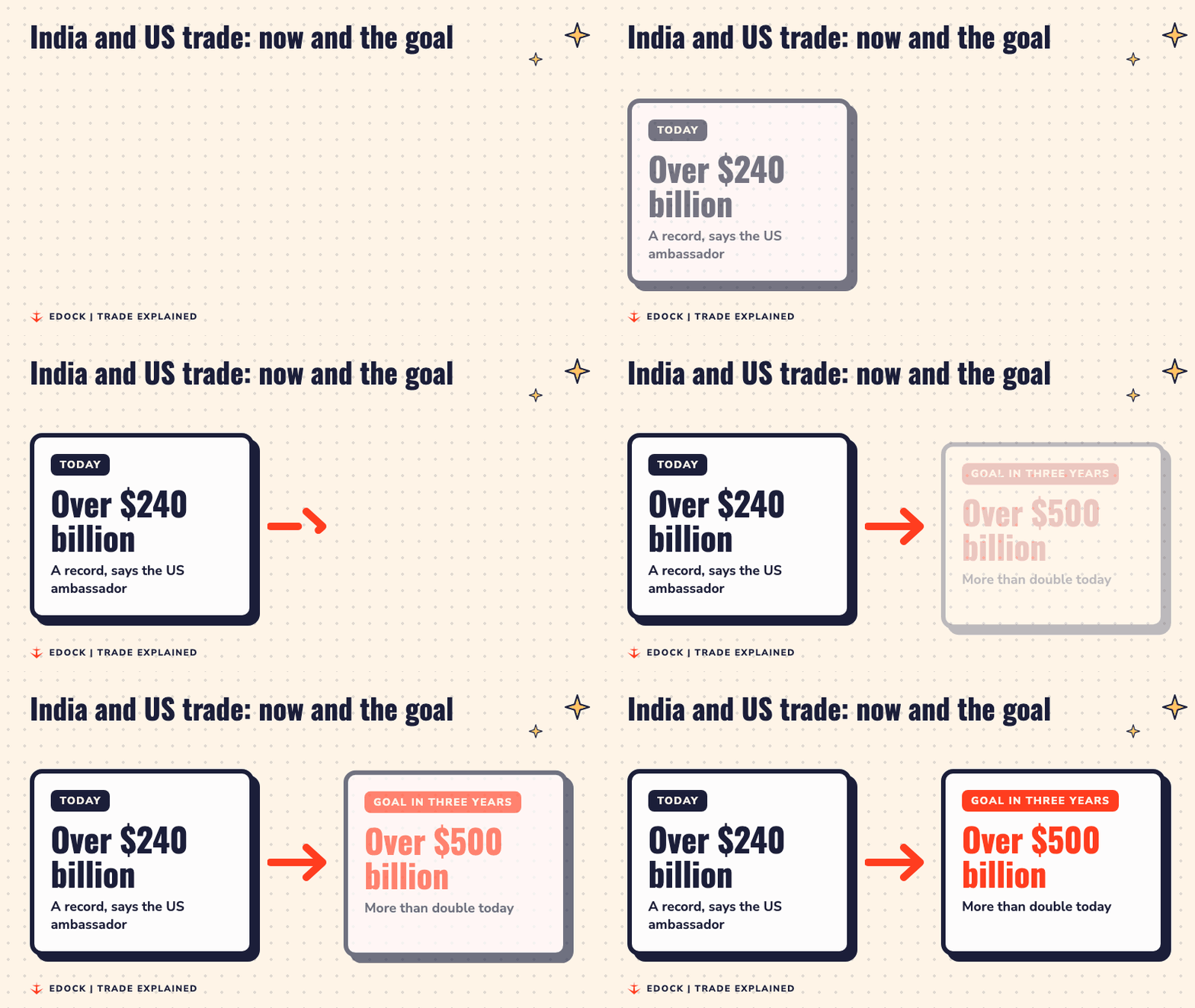
This is not a brand new idea either. In August 2026, Gor spoke of the same $500 billion goal by 2030, and said trade had grown from $20 billion to $240 billion over two decades. A week before the Mumbai speech, he told Business Today the leaders of both countries had set the goal of hitting $500 billion in the next three years.
What does India sell to the US?
The US is India's biggest customer. In the first seven months of the last financial year, from April to October 2025, India's exports to the US came to $52.12 billion, more than to any other country.
The main things India sent were:
- Engineering goods, meaning things like machines and metal parts
- Medicines, also called pharmaceuticals
- Electronics
- Gems and jewellery
For the full year 2025-26, official data quoted by The Economic Times shows India's goods exports to the US stood at $87.31 billion, while imports were $53.45 billion.
And what does India buy from the US?
India buys a lot less from the US than it sells. Using the numbers above, the gap is $87.31 billion minus $53.45 billion, which is $33.86 billion in India's favour. When a country sells more than it buys from someone, that gap is called a trade surplus.
Under a plan both sides shared in February 2026, India said it would buy $500 billion of US goods over five years. The list included oil, gas, coking coal (a coal used to make steel), aircraft and aircraft parts, precious metals and technology products. The tech list includes graphics chips often used for AI, and other goods used in data centres.
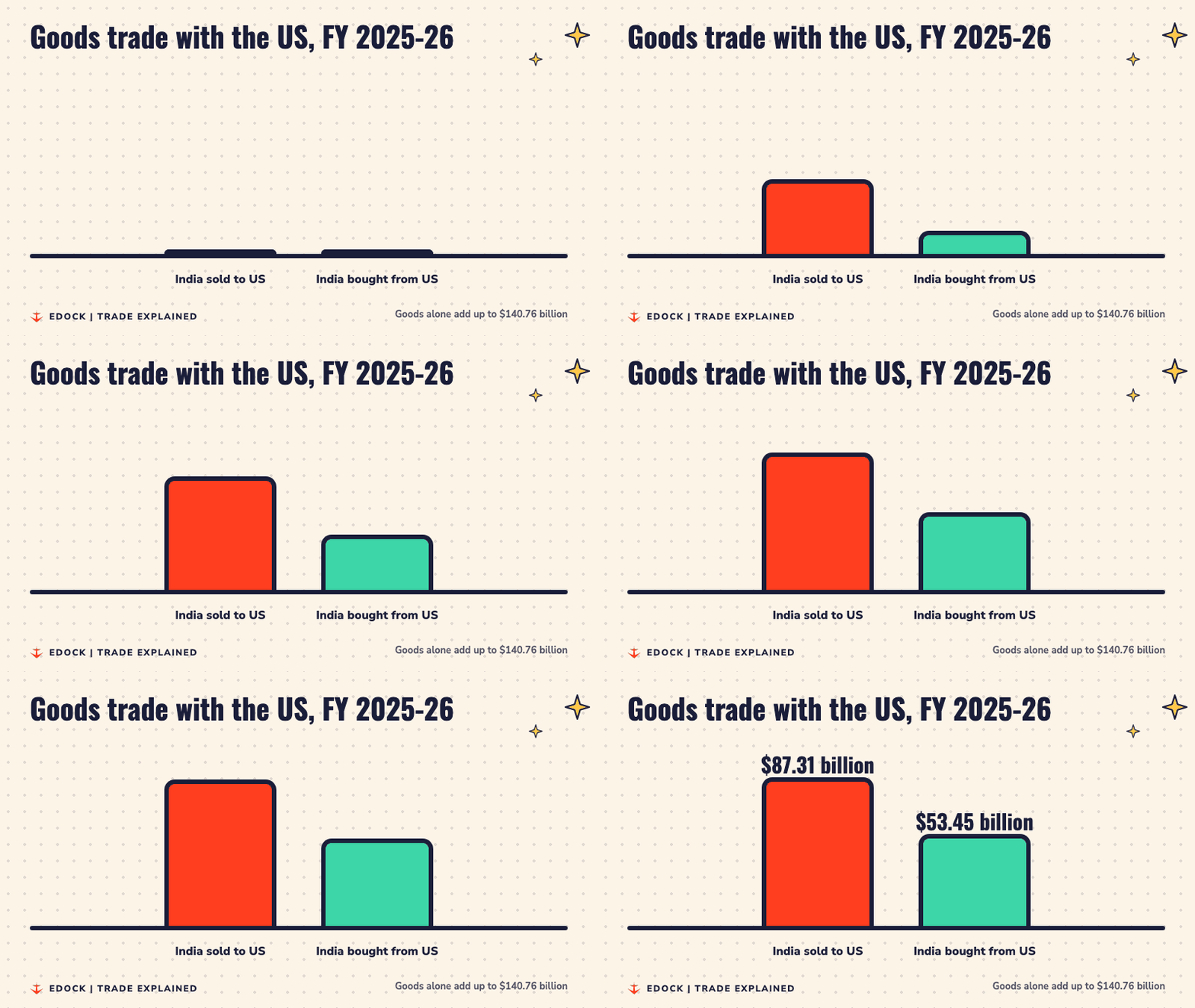
Add the two goods numbers and you get $140.76 billion. The ambassador's $240 billion figure is bigger, and the report does not break down what else is counted in it.
What is a trade deal, in simple words?
Every time goods cross a border, the buying country can charge a tax on them. This tax is called a tariff. If a pair of shoes made in India costs more in the US because of a tariff, fewer people may buy it.
A trade deal is an agreement where two countries promise to lower these taxes and remove other hurdles, like extra paperwork or tough rules. It is a bit like two neighbouring tea stalls agreeing not to charge each other extra for milk and sugar.
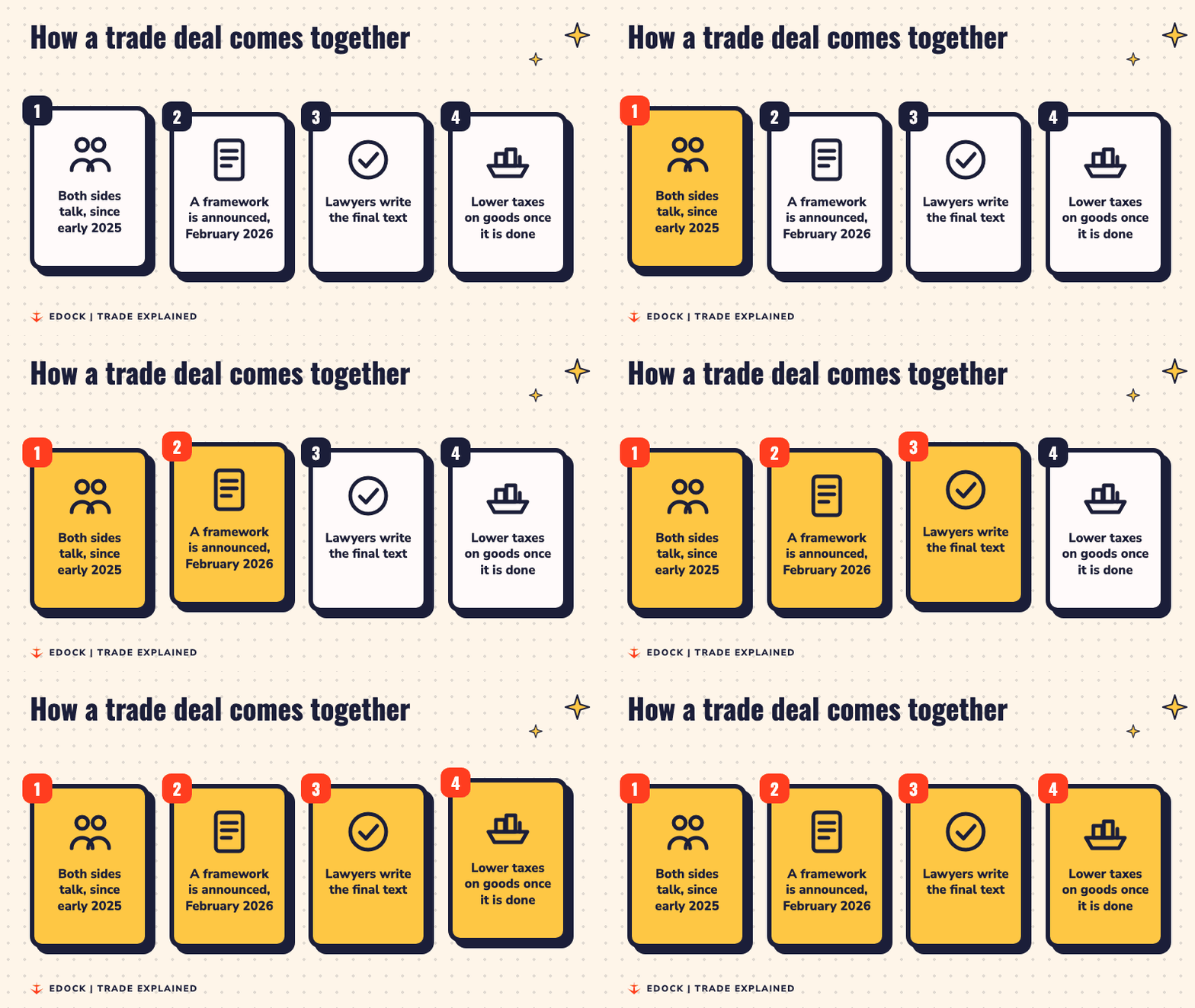
India and the US have been talking about such a deal since early 2025. The pact is meant to cut tariff friction, remove non-tariff barriers and improve market access.
What is in the plan so far?
On 6 February 2026, the two countries issued a joint statement setting out a framework, or outline, for an interim (first stage) agreement. Here is what it covered:
- India will remove or cut tariffs on all US industrial goods and many US food and farm products.
- The US will apply an 18% tariff on some Indian goods, including clothes, leather and footwear, plastic and rubber, chemicals, home decor and handmade products.
- The US will remove tariffs on items like generic medicines, gems, diamonds and aircraft parts once the deal is finished.
- Both sides will set "rules of origin", which decide which country a product truly comes from.
According to India's Commerce Ministry, the plan covers textiles, leather, engineering goods and medicines, and several tariff cuts depend on the deal being completed. The final terms and the timeline have not been announced yet.
Where do the talks stand now?
On 15 October 2026, Gor said the deal was "very close". Business Today reported that India's Commerce Minister Piyush Goyal said the first part of the agreement was in legal drafting. That is the stage where lawyers turn promises into a signed document.
Gor also said a court ruling in the US on tariffs meant parts of the deal had to be reworked. That is one reason it has taken about a year and a half.
Which areas will push trade up?
In Mumbai, Gor named the next big areas for business between the two countries: semiconductors (computer chips), critical minerals, energy and defence. He also said more than 500 major American companies operate in Mumbai, from tech names like Google and IBM to drug makers like Pfizer and banks like Citi.
Why should young Indians care?
When trade between two countries grows, more goods travel by ship and plane. Factories that make medicines, phones and clothes may get bigger orders from American buyers. Ports, shipping firms and exporters all get busier.
Lower tariffs can also change prices. A lower tax on Indian goods in the US can make them cheaper for American shoppers. On the other side, India cutting tariffs on US goods can change what some imported items cost here.
For now, $500 billion is a target, not a promise. Whether it is reached depends on the final deal and how fast both sides buy and sell more from each other.
Sources
- The Economic Times: US targets $500 bn bilateral trade with India in three years
- Business Today: US envoy Sergio Gor says India US trade deal will happen
- Deccan Herald: Will take Indo US trade to $500 billion by 2030
- Business Today: India exports most to US in first seven months of FY26
- Khaleej Times: US and India unveil interim trade framework
- KPMG: US and India reach framework for interim trade agreement
- Cover photo: International Container Transshipment Terminal, Kochi, by BgbwikiV4, CC BY 4.0
