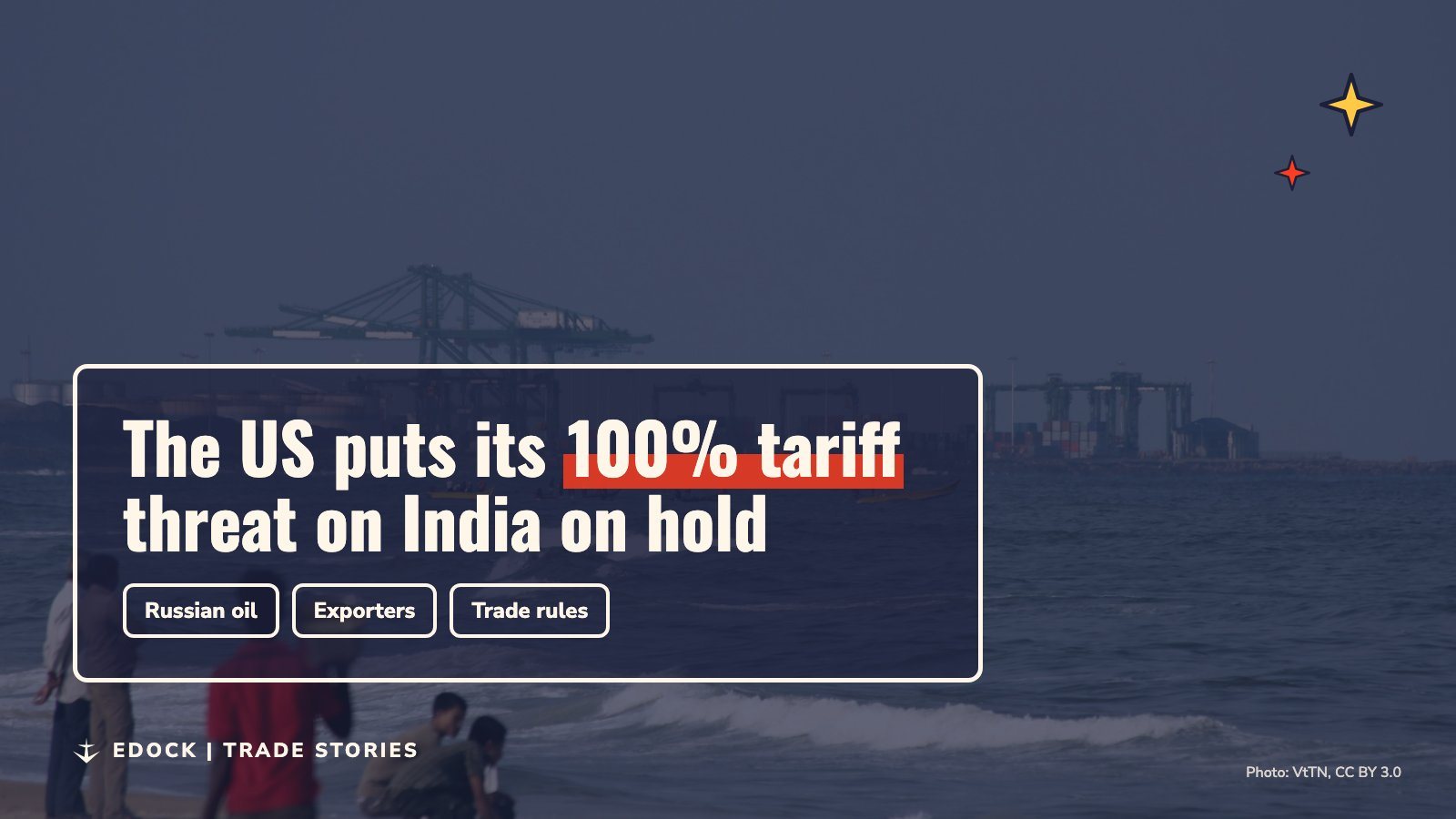
The US puts its 100% tariff threat on India on hold. Exporters stay careful
A US waiver on October 16 removed the risk of extra duty over Russian oil, but the law stays. Here is what a tariff is and why exporters keep other markets.

Picture a T-shirt maker in Tiruppur packing boxes of winter clothes for shops in America. Until this weekend, there was a risk that boxes like these could face an extra US tax as big as the price of the shirts inside. On 16 October 2026, that risk was put on hold. In an executive order dated October 16, the US waived extra duties of up to 100% that could have hit goods from big buyers of Russian oil, including India.
Indian exporters are relieved. But many of them are not changing their long-term plans. Here is the story in simple words.
First, what is a tariff?
A tariff is a tax on goods when they cross a border. If an Indian company sends shoes to the US, the American company bringing them in pays this tax to the US government. When the tax goes up, the shoes cost more in American shops, and buyers may look for cheaper shoes from some other country.
A 100% extra tariff is huge. Think of a $10 shirt. With a 100% extra duty, the importer would pay $10 more in tax at the border, on top of any duty already charged. The shirt suddenly costs at least double to bring in.
Why was India's trade with America tied to oil from Russia?
This is the tricky part. The threat was not about anything India sells to the US. It was about what India buys from a third country. Trade experts call this kind of penalty a "secondary" tariff: country A punishes country B for doing business with country C.
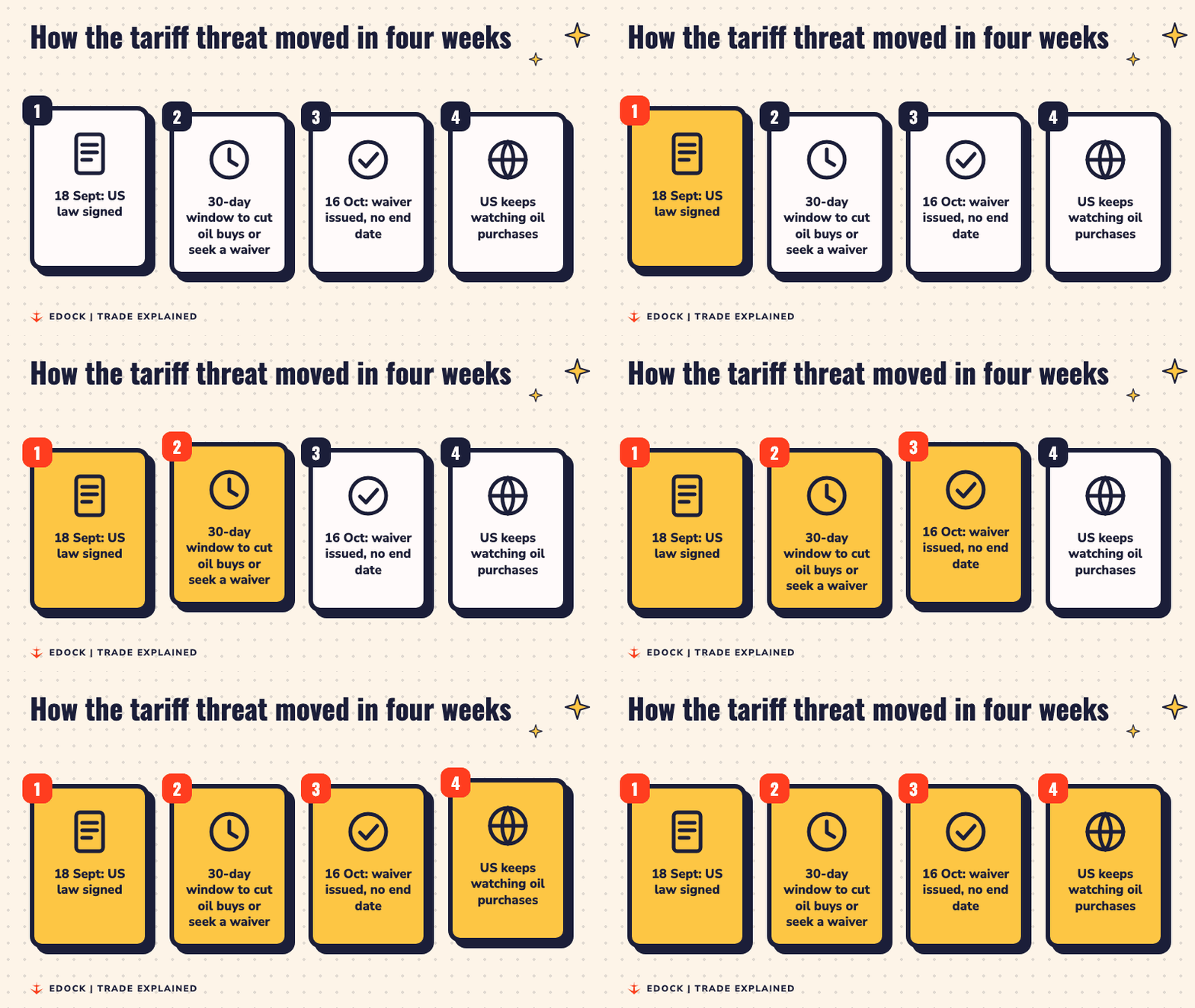
The rule came from a new US law called the Lindsey O. Graham Sanctioning Russia and Iran Act of 2026, or SRIA for short. It became law on September 18. According to businessline, it provides for a 100% increase in duty on goods from the five largest importers of Russian crude oil and natural gas, if they knowingly make new purchases from October 18. It also provides for a 500% increase in duties on goods from Russia itself.
The law gave big buyers of Russian energy, including India, a 30-day window to cut their purchases or seek a waiver from the US President. A waiver is like a teacher saying "this rule will not apply to you for now".
What exactly changed on October 16?
The order used a waiver option in the law called Section 115, which allows these duties to be waived. The waiver has no fixed end date. But the law itself stays. As businessline notes, the decision does not cancel SRIA or remove the President's power to use it.
The US Trade Representative, the US office that handles trade, will keep monitoring purchases of Russian energy. So the threat is paused, not gone. Think of a cricket match stopped for rain: the game can restart.
Why does this matter so much to exporters right now?
Timing. The weeks before Christmas are the big shipping season for American shops. Colin Shah of Kama Jewelry, a former chairman of the Gem and Jewellery Export Promotion Council, told The Economic Times that Christmas-related exports usually continue until December 15. He said that with the waiver, the tariff uncertainties are over for the next few months.
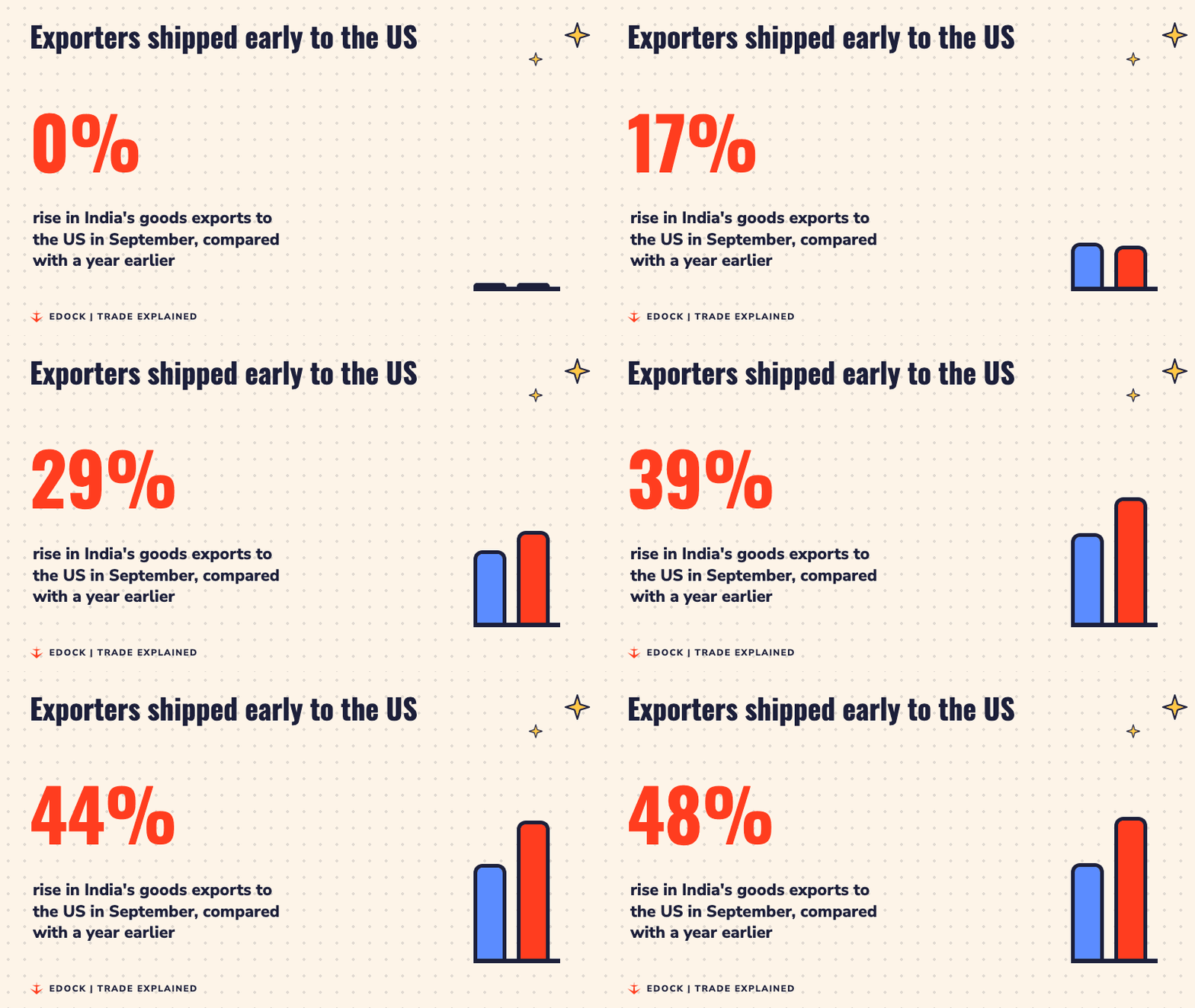
Exporters had already been rushing goods out. Indian goods exports to the US rose 48% in September compared with a year earlier, as businesses tried to ship orders before any new tariff could kick in. Sending goods early like this is called frontloading. It is like finishing homework before the power cut you know is coming.
The Federation of Indian Export Organisations (FIEO) said the step averts a major risk to India's exports. Its director general Ajay Sahai said it should help buyer confidence and orders, especially in sectors that employ many people, such as textiles, leather, gems and jewellery, and engineering goods.
So why are exporters still careful?
Because a rule that can come back makes long plans hard. Ajay Sahai also said the waiver remains reviewable, which leaves some doubt over future contracts, and that small exporters need tariff predictability for the long term. Industry body FICCI made a similar point: a waiver that can be changed at short notice does not give the steady picture businesses need to plan.
Many exporters learnt this lesson from the high US tariffs last year. R Gopalakrishnan, chairman of the Tiruppur knitwear exporter Royal Classic Mills, told The Economic Times that the US share of his company's sales fell from eighty five per cent to 40% in just 15 months, and that the company has no plans to reverse that yet. In his words, "we must not put all our eggs in one basket".
Selling to many countries instead of one is called diversification. It is like a samosa stall that also sells chai and vada pav, so one slow item does not ruin the day. Even so, he said the US is still his firm's largest market, followed by Australia, Canada, the EU and the UK.
What did the trade think tank GTRI warn?
The Global Trade Research Initiative (GTRI), a trade research group, said the waiver could be withdrawn at any time. Its founder Ajay Srivastava said India should protect its energy security, buy oil on commercial terms, and not treat temporary tariff relief as a reason for permanent trade concessions. A concession here means giving something up in a deal, like a lower tax on the other side's goods.
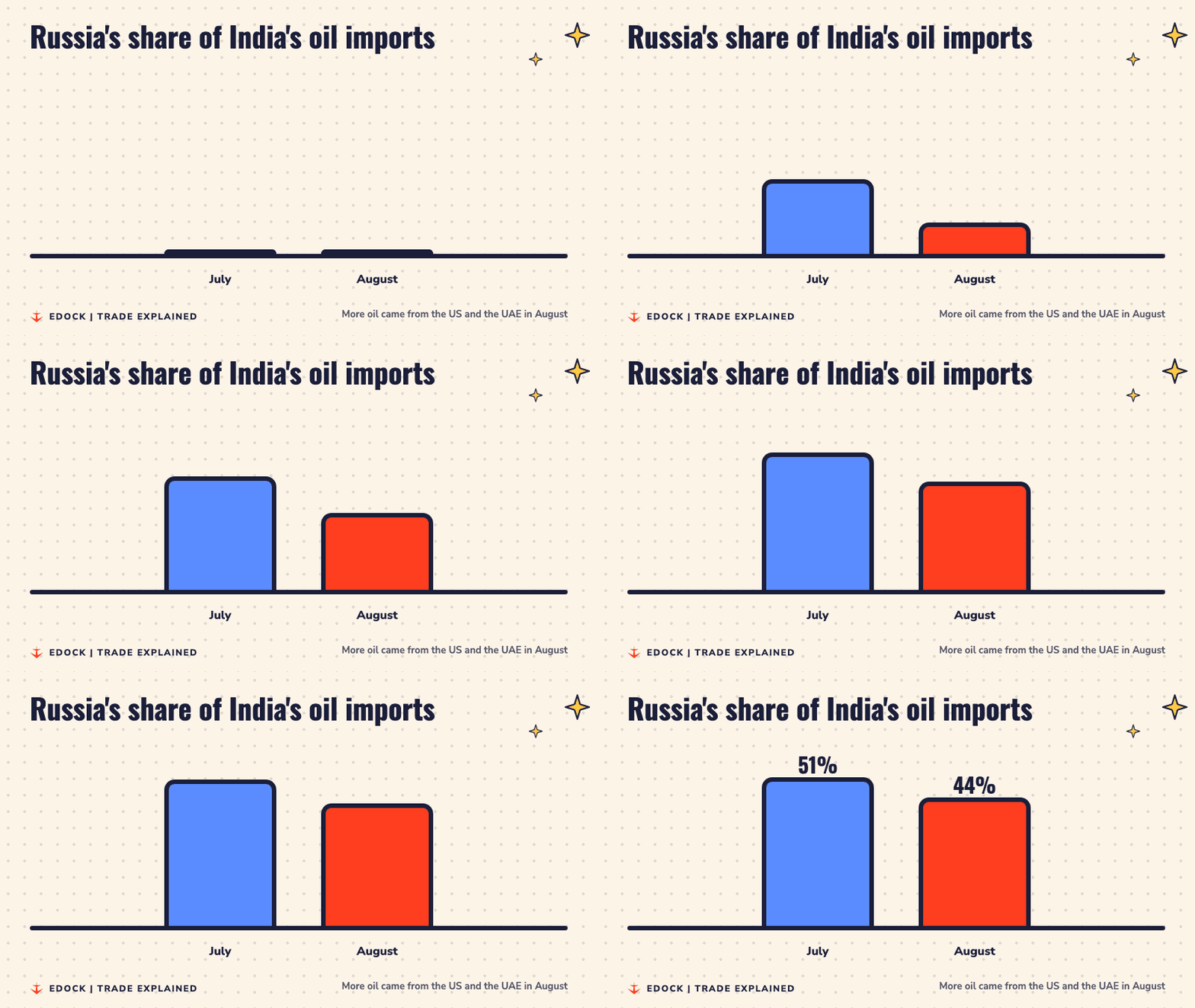
GTRI also pointed to a shift in where India's oil comes from. Russia's share of India's oil imports fell from 51% in July to 44% in August, as purchases moved towards the US and the UAE.
Oil matters a lot here. India imports more than 88% of its crude oil needs, and global crude prices are above $110 a barrel, according to the Financial Express. The waiver gives Indian refiners more room to choose suppliers on price, without the added fear of a tariff on India's exports.
Is this the only tariff risk left?
No. The Financial Express reports a separate US probe under Section 301 of its Trade Act, which could lead to another round of tariffs. A 10% Section 301 tariff linked to "forced labour" already applies to exports to the US from India and about five dozen other countries.
Meanwhile, India and the US are still working on a trade deal. Commerce Minister Piyush Goyal said the first part of the deal was in the final stages of legal drafting, according to the same report.
The short version
- A US law threatened an extra 100% duty on goods from big buyers of Russian oil, from October 18.
- On October 16, the US waived it, with no end date, but it can be taken back.
- Exporters can ship Christmas orders with less worry, but many will keep selling to more countries.
Sources
- Christmas cheer, but caution remains: exporters welcome US tariff relief, The Economic Times
- The 100% Russian oil tariff waiver and the GTRI warning, The Economic Times
- US Russia sanction waiver a relief for India's exporters: experts, The Economic Times
- India gets tariff reprieve, but the threat lingers, businessline
- US waives tariffs on buying Russian oil, Financial Express
- US waiver gives India room to retain cheaper Russian oil, Financial Express
- Cover photo: Chennai Port Container terminal, by VtTN, CC BY 3.0

You may republish this story under CC BY 4.0: credit Arshdeep Singh and link to this page.