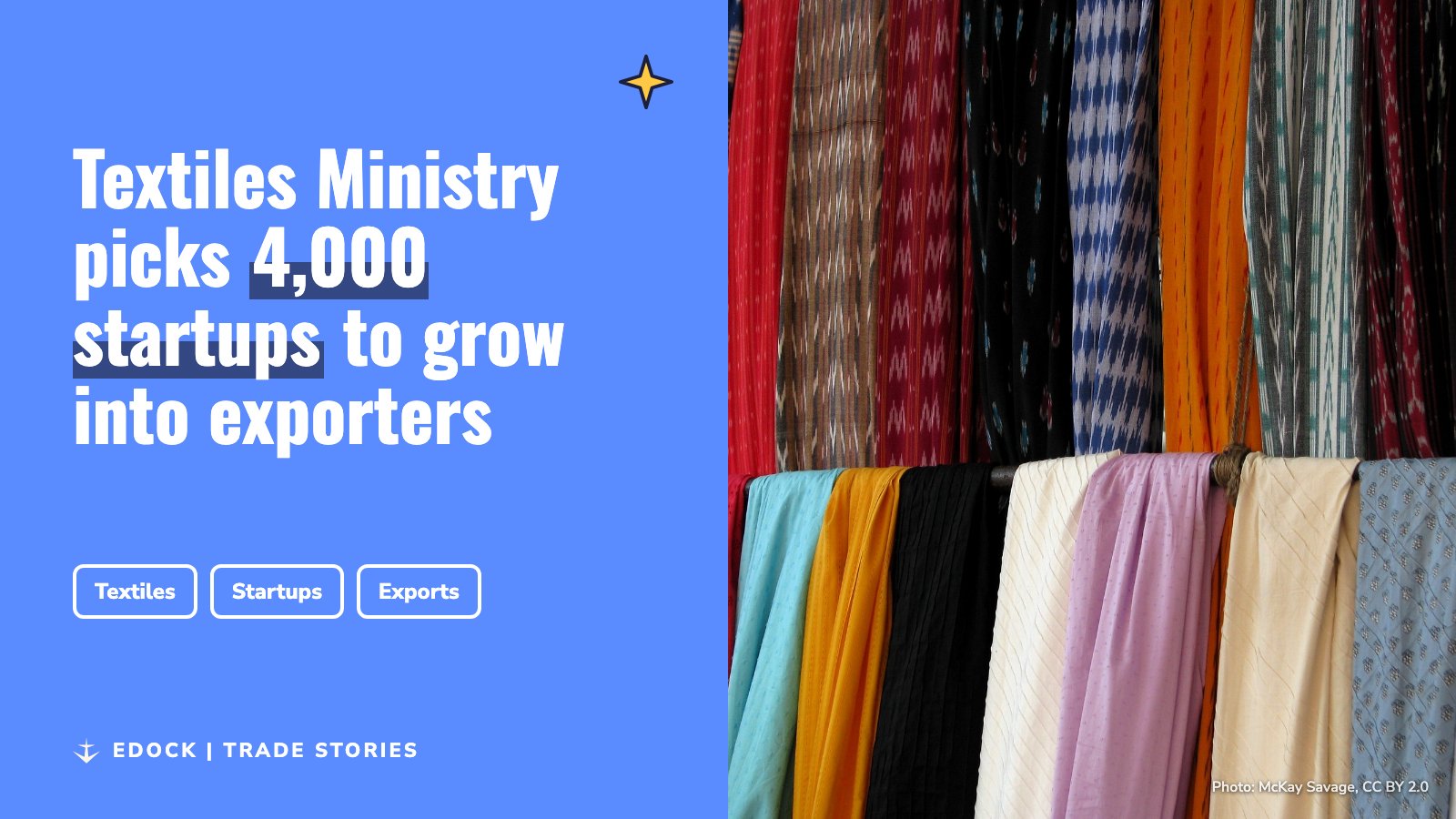
Textiles Ministry picks over 4,000 startups to grow into exporters
Small fabric, fashion and craft brands, even social media ones, could get help to sell abroad within three to four years.

Picture a small label that sells hand block printed kurtas through Instagram from a two room studio. Today, its buyers are in Jaipur, Pune and Guwahati. The government now wants labels like this to sell in Paris, Dubai and Tokyo too.
On 19 October 2026, The Economic Times reported that the Textiles Ministry has identified more than 4,000 textile-based startups that it wants to help grow and become export ready in the next three to four years. Here is what that means, who can be part of it, and where India's cloth trade stands today.
First, what is an export?
An export is anything made in one country and sold to a buyer in another country. If a towel factory in Tamil Nadu sells towels to a shop in London, that is an export for India. The money comes back to India, usually in dollars or euros.
An exporter is the business that does this selling. Becoming one is harder than it sounds. A small brand has to make the same quality again and again, in big numbers, meet the rules of the buyer's country, pack and ship goods across the sea, and wait to get paid. It is a bit like a home cook who sells tiffins to five neighbours suddenly getting an order for 5,000 plates.
What exactly is the ministry planning?
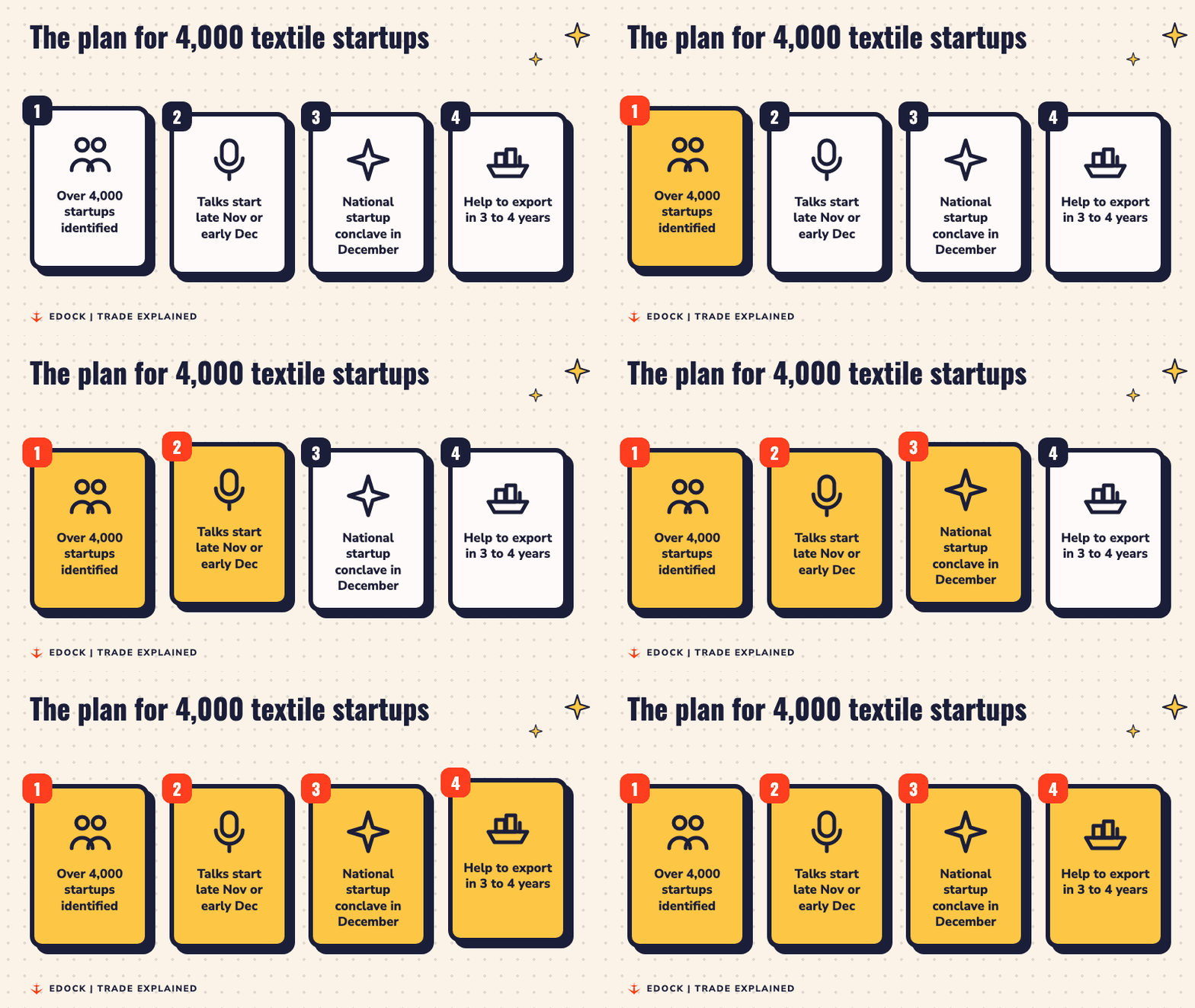
According to the ET report, which quotes an official, the idea has three parts:
- Bring them together. The ministry wants to group these businesses so that, together, they can push demand and reach even the most remote parts of the country.
- Talk to them first. Consultations with the startups are expected to begin in late November or early December. The aim is to find out what help they need to move from small operations to large, export focused businesses.
- Meet in one place. A national startup conclave is planned for December, to bring textile entrepreneurs under one roof.
From these talks, the ministry plans to spot the businesses with the potential to enter export markets within three to four years. So the support itself is not fixed yet. The first step is listening.
Which startups can join?
This is the part young founders will like. The ministry plans to engage with startups and small businesses across the textile sector, and that includes social media-led ventures. There is one condition: the business must be registered, especially under the framework of the Department for Promotion of Industry and Internal Trade, or DPIIT.
DPIIT is the government department that gives official startup recognition in India. Think of it as getting your name on the school's official team list. Only players on the list can play in the tournament, even if you are brilliant in your gully.
What help already exists?
Textile startups can already use schemes under the government's Startup India initiative. Two are named in the report: the Fund of Funds for Startups and the Credit Guarantee Scheme for Startups.
A fund of funds does not put money straight into startups. It invests in other venture capital funds, and those funds then back startups. It is like giving money to a few trusted cricket coaches, who then pick and train the young players. The Union Cabinet has approved a second version, Startup India Fund of Funds 2.0, with Rs 10,000 crore.
A credit guarantee helps with loans. The government promises the bank that it will cover part of the loss if a startup cannot repay. That makes banks less nervous about lending to a young company with no long track record.
How big is India's cloth trade right now?
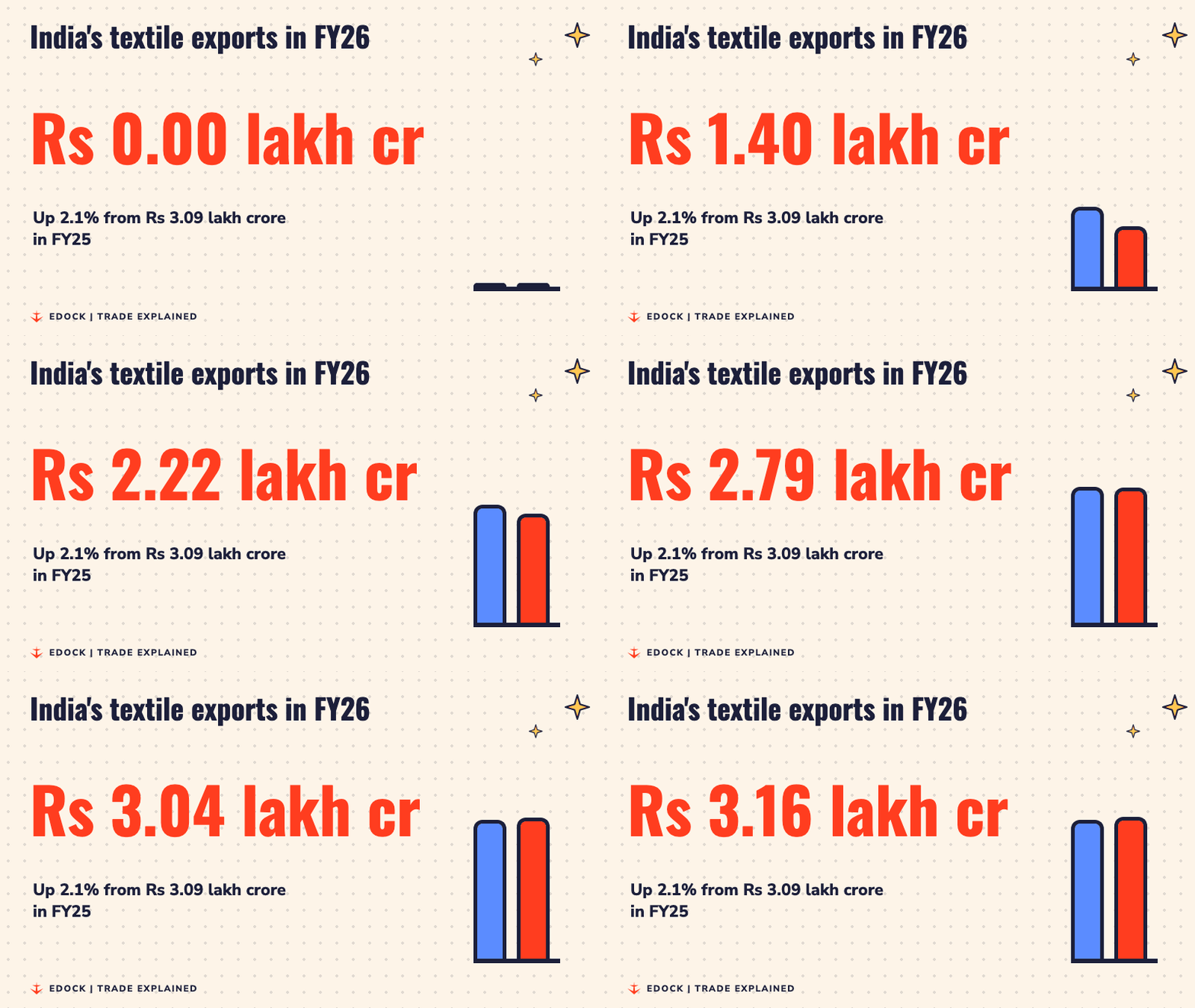
Quite big. India's textile exports grew 2.1% in FY26, the money year that ended in March 2026, to Rs 3.16 lakh crore, up from Rs 3.09 lakh crore in FY25. Ready-made garments were the biggest part, at Rs 1.39 lakh crore.
The newest numbers are mixed. In September 2026 alone, textile and apparel exports rose 17.5% to $3.1 billion, compared with $2.6 billion a year earlier. But for the full six months from April to September 2026, the total rose only slightly, to $18.2 billion from $17.7 billion.
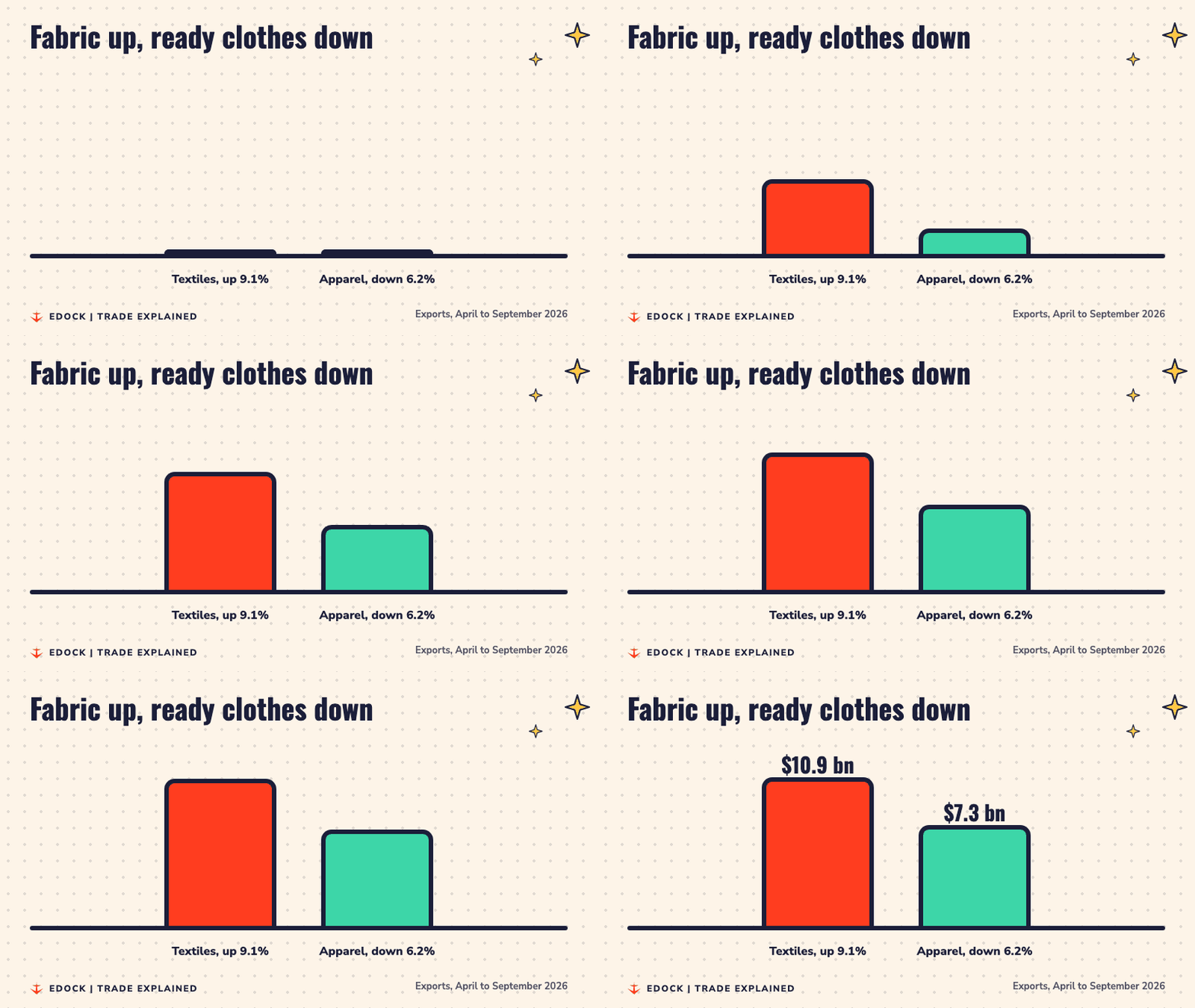
Why so slow? Two groups pulled in opposite directions. Textiles, which means yarn, fabric and things like bedsheets, grew 9.1% to $10.9 billion. Apparel, which means ready clothes, fell 6.2% to $7.3 billion. Add the two and you get the $18.2 billion total.
Handicrafts, not counting handmade carpets, did best of all, jumping 32.54% to $1.13 billion in the six months. That matters here, because many small craft and fabric brands sit in exactly this space.
Why does the government care so much?
Because textiles are about people. The textile and garment sector is the largest employer in India after farming, giving work to 45 million people and supporting the living of more than 100 million, most of them women and rural workers.
India also has a big target: to more than double textile and garment exports to $100 billion by 2030, by making better use of free trade agreements. A free trade agreement, or FTA, is a deal between countries to cut the tax charged on each other's goods at the border.
Those deals open a lot of room. Textiles Minister Giriraj Singh has said India's 15 FTA partners offer a textiles market of $198 billion, while India sells only $11.5 billion there today. That is about one dollar of sales for every 17 dollars on offer.
The European Union is a good example. It now charges duties of up to 12% on Indian textiles and garments, while Bangladesh pays nothing. The India and EU deal is set to begin in early 2027, which should remove that gap for many products.
More hands, more skills
Startups are one half of the push. Workers are the other. The government is also considering a Rs 25,000 crore skilling plan called Samarth 2.0 over five years, waiting for Cabinet approval. The first Samarth scheme spent Rs 740 crore in the five years up to March 2026. So the new plan would be more than 30 times bigger.
What to watch next
The dates to remember are late November or early December, when the talks with startups are expected to start, and December, when the national startup conclave is planned. Only after those talks will it become clear what kind of help the 4,000 startups actually get.
For anyone dreaming of a fabric, fashion or craft brand, the message is simple. The government is looking for small textile businesses that could grow into exporters, and a social media shop with official DPIIT recognition can be one of them.
Sources
- Textiles Ministry identifies 4,000 startups for export growth support, The Economic Times, 19 Oct 2026
- India textile exports jump 17.5%, but apparel shipments lag, Apparel Views
- India's textile exports edge up 2.1% in FY26, Mint
- Govt plans Rs 25,000 crore skilling push to sharpen textile export edge, Mint
- Government approves Startup India Fund of Funds 2.0, News18
- Cover photo: India, Chennai, Colours, material for sale, by McKay Savage, CC BY 2.0

You may republish this story under CC BY 4.0: credit Pranav Sharma and link to this page.