Tesla dropped the name Full Self-Driving in Europe. Here is why
Version 1 of 1 saved 11 Oct 2026, 5:56 pm IST · Chain line 1
As it was first published
Tesla dropped the name Full Self-Driving in Europe. Here is why
Germany said the old name was misleading, so Tesla now calls it Tesla Assisted Driving in Europe. Here is what that means, in simple words.
Picture this. You pay for a car feature called Full Self-Driving. The name makes it sound like you can sit back and scroll reels while the car takes you home. But the rules say you must keep your eyes on the road and your hands ready at all times.
That gap between the name and the reality just cost Tesla its famous label in Europe. On October 9, 2026, Reuters reported that Tesla had started calling the feature Tesla Assisted Driving on its European websites.
Let us unpack what happened, and why one name matters so much.
What exactly changed?
Tesla's pages for Slovakia, Germany, Spain and the Netherlands now lead to the new name, Reuters said. In the US, nothing changed. There, Tesla still sells Full Self-Driving (Supervised) for $99 a month, as The Next Web reported.
So it is the same software with a new name tag, but only in Europe.
Why did Germany object?
On October 6, 2026, Germany's Federal Ministry of Transport put out a statement, Electrek reported. It said the old name was misleading, because the system does not take over the full job of driving. The driver must stay alert and is still fully responsible.
Tesla offered the new name during talks with Germany's transport minister in September, according to the ministry.
Think of it like a snack packet that says "100% fruit" on the front, but the back says it is mostly sugar. The front label sets what you expect. If the label promises more than the product does, people can get the wrong idea.
The six levels of a self-driving car
Engineers sort car automation into levels, from 0 to 5. Here is a simple version, based on a guide from the Queensland government in Australia:
- Level 0: You do all the driving. The car may beep a warning.
- Level 1: The car helps with one thing, like keeping speed.
- Level 2: The car helps with steering and speed together, but you still drive and must watch all the time.
- Level 3: The car drives itself in some cases, like a traffic jam, but may ask you to take over.
- Level 4: The car drives itself in limited areas, like a local driverless taxi.
- Level 5: The car drives itself everywhere, in all conditions.
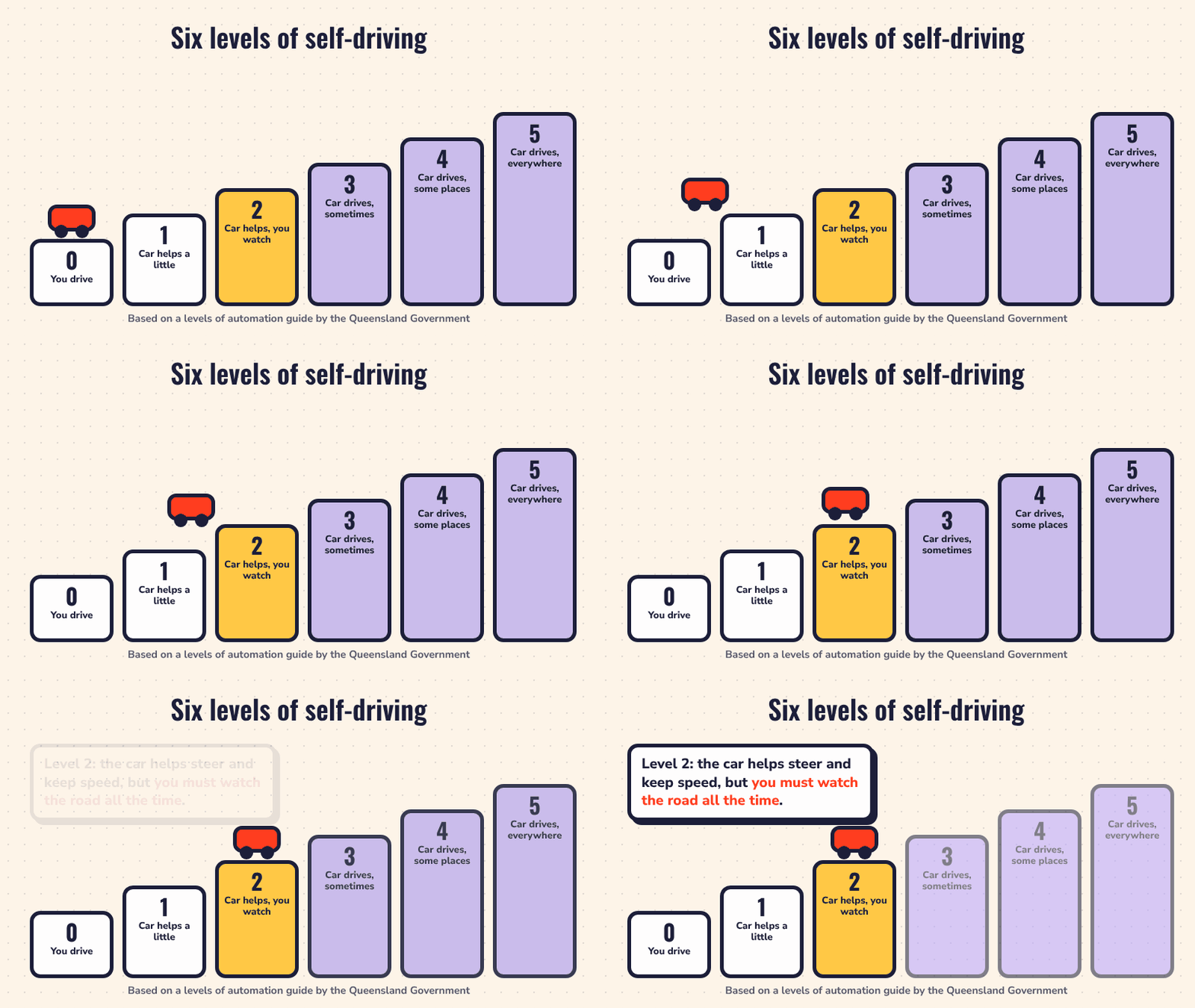
When the Netherlands approved the system in April 2026, Electrek described it as a Level 2 driver assist system that needs constant human supervision. The Dutch road authority RDW said such systems "are NOT autonomous or self-driving."
In cricket terms, Level 2 is like a helpful fielder who stops some balls for you. But you are still the captain. If the match goes wrong, it is on you.
Other countries had worries too
Germany was not alone. Reuters reported that Italian authorities said the name and ads "could lead users to believe that the vehicle is equipped with unsupervised automatic driving" features, meaning Level 3. Sweden's consumer protection authorities also asked the country's transport agency to check if the marketing gave a false impression.
The speed question
The name was not the only issue. Speed matters too. Germany says the system may go up to 10% over the speed limit, and will back that rule in Europe, Electrek reported. Reuters had reported that the version approved in the Netherlands allows up to 50% over the limit the car detects.
What does that mean on a real road? On a road with a 50 km/h limit, 10% over is 55 km/h. 50% over is 75 km/h. That is a big difference, which is why France and Sweden have raised speeding concerns, according to The Next Web.
Musk said thank you
Germany's transport minister also said he wants Tesla drivers across Europe to be able to use the system as soon as possible. Tesla boss Elon Musk replied on X on October 7, 2026, with a short "Danke Schön," which means "thank you" in German.
How close is Tesla to all of Europe?
Europe works a bit like a group project with 27 members. Each country can allow the system on its own roads. But to allow it across the whole European Union, there must be a vote.
Right now, eight EU countries allow it: the Netherlands, Lithuania, Estonia, Denmark, Belgium, Slovenia, Czechia and Croatia, Electrek reported. Slovakia's transport minister said Slovakia would be ninth within days, according to The Next Web.
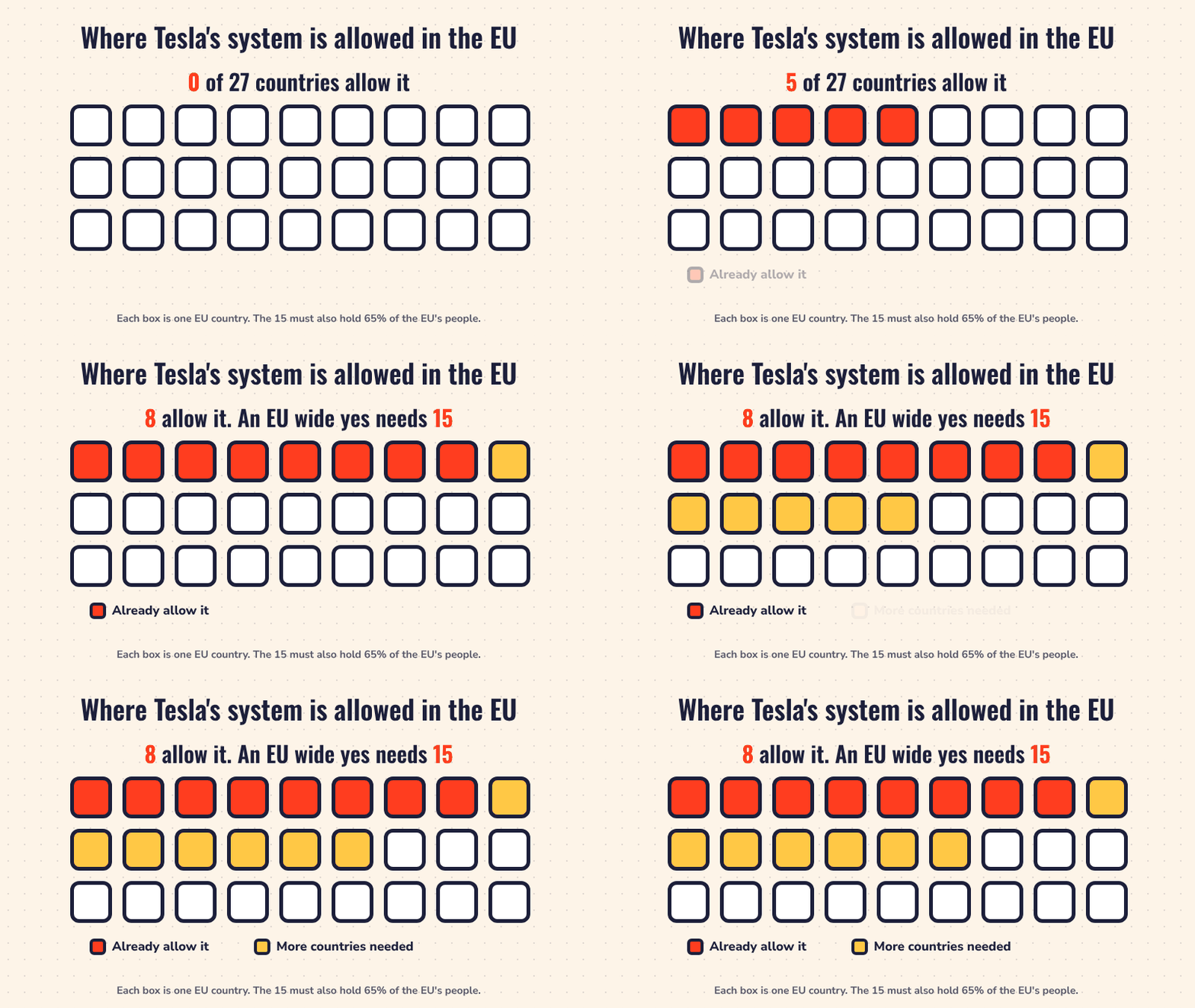
For an EU wide yes, Tesla needs 15 of the 27 countries, and those countries must hold 65% of the EU's population. A committee was due to vote on October 6, but it did not, The Next Web reported. December is now the earliest date, and France is doing more testing, Reuters said.
Here is a video from the YouTube channel Ben Goes Electric about the first approval in the Netherlands.
Is the change only skin deep?
Some critics think so. Electrek found that the new German page is mostly a translation of the American one, with the name swapped. It still says the system is "7x safer" than human drivers. The Next Web noted that independent researchers called that safety figure invalid in June.
The name has had trouble in the US too. Electrek reported that a California judge ruled last December that the name was "unambiguously false and counterfactual."
Why this matters to you
A name is the first thing a buyer sees, and it shapes what people think a car can do. Europe's message to Tesla is simple: the label on the box should match what is inside it.
For now, in Europe, the driver is still the captain. The car is just a very smart helper.
Sources
- Reuters via The Star: Tesla renames Full Self-Driving to Assisted Driving in Europe (October 9, 2026)
- Electrek: Tesla drops Full Self-Driving name in Europe after Germany pushback (October 9, 2026)
- The Next Web: Tesla renames Full Self-Driving to Tesla Assisted Driving across Europe (October 9, 2026)
- Electrek: Tesla gets FSD Supervised approved in the Netherlands (April 10, 2026)
- Queensland Government: Levels of automation
- Cover photo: Upgraded Tesla Model 3, 2023, Interior, by Mpelas199, CC0
