TCS added 4,258 people in three months. What it means for freshers
Version 1 of 1 saved 11 Oct 2026, 9:31 am IST · Chain line 7
As it was first published
TCS added 4,258 people in three months. What it means for freshers
TCS shared its July to September numbers. Here is what they say about jobs, fresher offers and AI, in simple words.
Picture an office ID card. Now picture almost 6 lakh of them. That is how many people work at TCS, short for Tata Consultancy Services. On 8 October 2026, TCS shared its report card for July, August and September, and it showed something job seekers care about: the company ended September with 4,258 more people than it had in June.
So what does that mean for students and freshers? Here it is, step by step.
First, what is a quarter?
Big companies share their results every three months. Each three month block is called a quarter, like one term in school. July to September 2026 is the second quarter of TCS's money year, so people call it Q2.
Think of it as a report card that comes four times a year. Everyone checks it: investors, workers and people hoping to get hired.
How many people work at TCS?
On 30 September 2026, TCS had 5,98,056 employees. That is almost 6 lakh people. The number of people who work at a company is called its headcount.
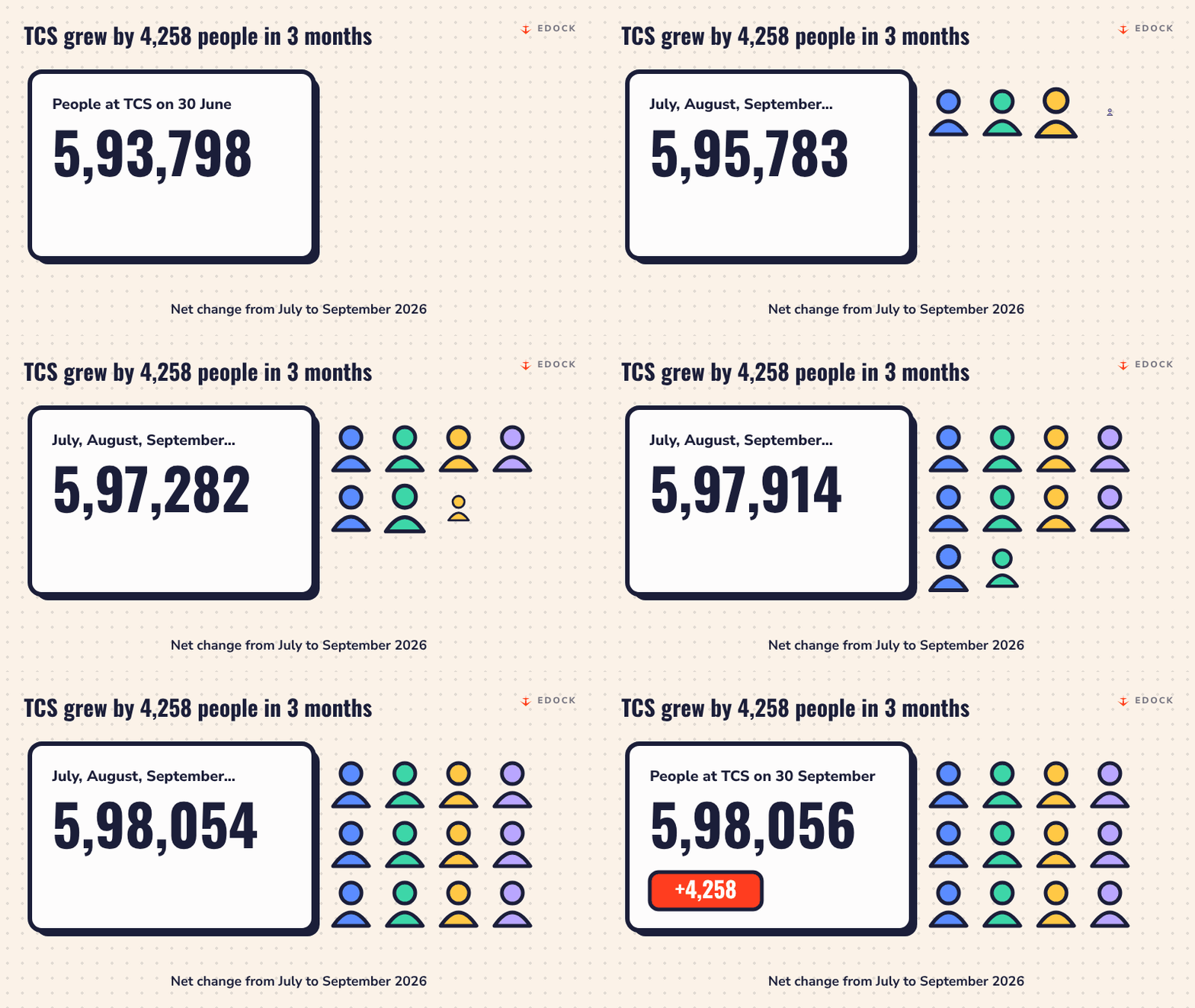
The 4,258 is a net number. Net means what is left after you subtract. Say you get 100 rupees of pocket money and spend 60 on chai and samosas. Your net is 40. In the same way, TCS took the people who joined, subtracted the people who left, and the gap was 4,258.
This was the third quarter in a row that the headcount went up, after a year of restructuring (changing how teams are set up). In the three months before this, from April to June, TCS added 9,279 people. Put the two together and that is 13,537 more people in six months.
What is attrition?
Attrition means people leaving a company. Imagine a class of 100 students. If 13 move to other schools during the year, the class has about 13 percent attrition.
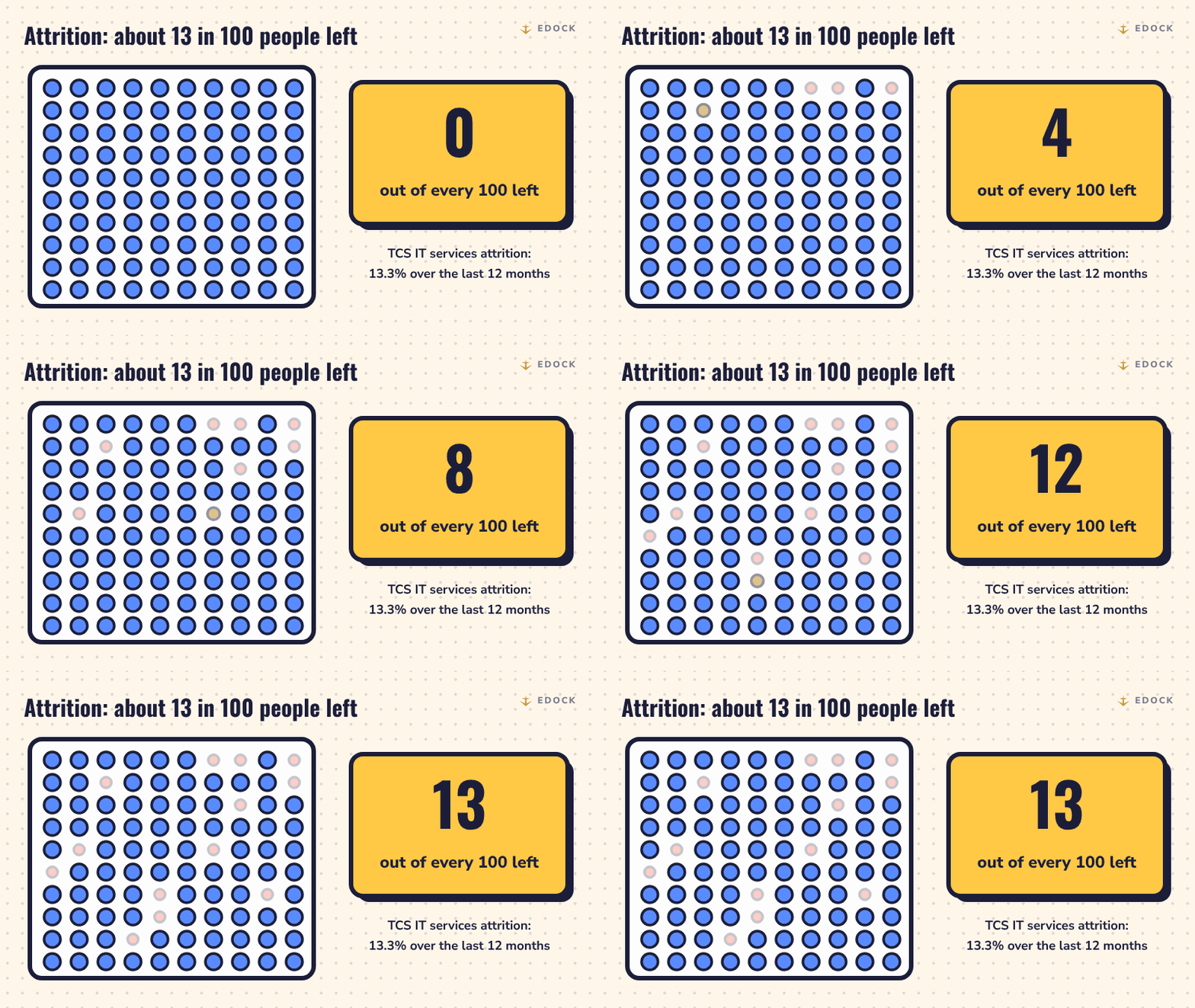
At TCS's IT services business, attrition over the last 12 months was 13.3 percent, a little lower than 13.6 percent in the quarter before. So roughly 13 out of every 100 people left during the year. When fewer people leave, a company needs to hire fewer people just to fill empty chairs.
What about freshers?
A fresher is someone joining their very first job, usually straight out of college.
At the start of this money year, TCS gave out 25,000 offers to freshers, and around 14,000 freshers had joined by the end of June. That is more than half of the offers in just three months.
But here is the twist. In the year before, TCS hired over 44,000 freshers. So this year's 25,000 offers are only a little more than half of that.
In April 2026, TCS boss K Krithivasan told the news agency PTI: "We have made 25,000 offers for freshers in FY27. Clarity on demand will lead to more hiring." In simple words: if clients ask for more work, TCS will hire more freshers.
The same report says a fresher needs about 9 months of training before working on real client projects. Someone with experience can start right away. That is like a new cricket player spending time in the nets before getting a match.
Learning is also going up. TCS employees spent 17.1 million hours learning in the quarter, 17 percent more than the quarter before.
Where does AI fit in?
This is the part everyone is talking about. TCS said its annualised AI revenue reached 3.1 billion dollars, crossing 10 percent of its total revenue.
Two words to unpack. Revenue is all the money customers pay a company, before costs. Annualised means "if this speed continues for a full year". If a lemonade stall earns 100 rupees in one month, its annualised revenue is 1,200 rupees.
So more than 1 in every 10 rupees TCS earns is now linked to AI work. CEO K Krithivasan said: "Together with our clients, we are building repeatable value platforms that will industrialise AI at scale." Put simply, TCS wants to build AI tools once and use them again and again for many clients, like a factory instead of a handmade shop.
The money side, in one minute
- Revenue: 73,188 crore rupees for the quarter, up from 65,799 crore rupees a year earlier. That is about 11 percent more.
- Profit: 13,884 crore rupees. Profit is what is left after paying all the costs.
- New deals: TCS signed deals worth 9.6 billion dollars in total. This is called total contract value, the full value of all the work clients signed up for, even if it gets paid over many years.
Two of those deals stand out. Best Buy, a big American electronics shop chain, agreed to hand its tech centre in India to TCS, which will turn it into an AI centre. And a TCS company will buy Porsche's consulting unit, MHP, once regulators approve, as part of a five year partnership with the car maker.
Want to hear the bosses explain the numbers? Here is CNBC-TV18's live coverage from results day.
So, what does this mean for you?
A few simple takeaways:
- Hiring is growing, slowly. TCS has added people three quarters in a row. That is good news, but the jump is small for a company with almost 6 lakh people.
- Fresher offers are fewer than before. 25,000 this year compared with over 44,000 the year before. More depends on how much work clients give.
- AI skills matter more. More than a tenth of TCS's revenue now comes from AI work, and its people are spending more hours learning.
Next time someone at the chai stall says "IT jobs are gone" or "IT is booming", the real answer sits somewhere in the middle. The numbers say TCS is growing, carefully, while it bets on AI.
Sources
- Storyboard18, TCS adds 4,258 employees in Q2 as headcount recovery continues, 8 October 2026
- Outlook Business, TCS Q2 results: profit, revenue, dividend, AI, workforce and deals, 8 October 2026
- Business Today, TCS Q2 FY27 results, 8 October 2026
- Business Today, TCS fresher hiring hits 25,000 in FY27, more depends on demand, 13 April 2026
- CNBC-TV18 on YouTube, TCS Q2FY27 Results LIVE, 8 October 2026