Tata Motors' truck business swings to a ₹1,257 crore profit as sales jump
Version 1 of 1 saved 23 Oct 2026, 6:43 pm IST · Chain line 178
As it was first published
Tata Motors' truck business swings to a ₹1,257 crore profit as sales jump
Truck and bus sales rose 42% in July to September 2026. Here is why there are two profit numbers, and what the Iveco deal is about.
Picture a parcel you ordered online last week. Before it reached your door, it almost surely rode on a truck. Now picture the company that builds a big share of those trucks. One year ago, it ended a quarter in the red. This time, it made a profit of more than ₹1,200 crore.
That company is Tata Motors. On Friday, 23 October 2026, it shared its results for July to September 2026. Its truck and bus business swung to a consolidated net profit of ₹1,257 crore, against a loss of ₹867 crore in the same three months a year earlier.
But some headlines said ₹2,138 crore. So which one is right? Both are. Here is why, in simple words.
First, which Tata Motors is this?
Tata Motors used to make both cars and trucks under one roof. Now the two sides are split. The company called Tata Motors Ltd is the Tata Group's demerged commercial vehicles business. "Demerged" means it was cut away from the car side and now runs as its own company.
A commercial vehicle is a vehicle used to earn money: a truck carrying cement, a mini truck delivering vegetables, a bus taking people to work. Think of it like the difference between a family scooter and a delivery rider's scooter. One is for personal use. The other is a tool for a business.
What does "swing to profit" mean?
Imagine a samosa stall. Last summer, it spent more on oil, flour and rent than it earned from selling samosas. That gap is a loss. This summer, sales are higher and there is money left after paying every bill. That leftover is a profit. Going from a loss to a profit is called a "swing".
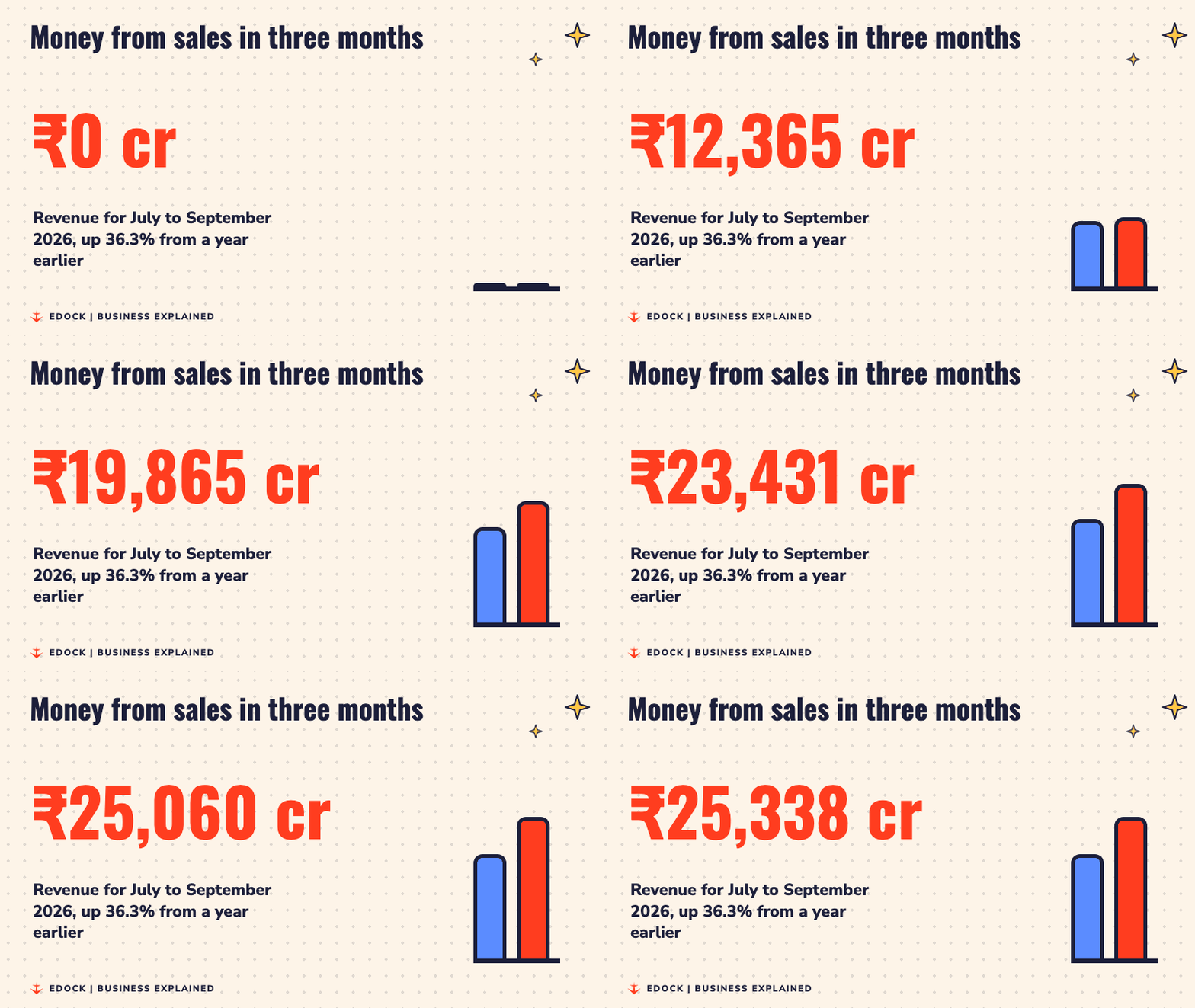
Tata Motors' stall got much busier. Its consolidated revenue, which is all the money that came in from sales, rose 36.3% to ₹25,338 crore compared with the same quarter last year.
Two profit numbers, one quarter
Big companies report two sets of numbers. Think of a family that runs a main shop and also owns a few small side shops.
- Standalone is the main shop alone.
- Consolidated is the whole family: the main shop plus everything it owns or invests in.
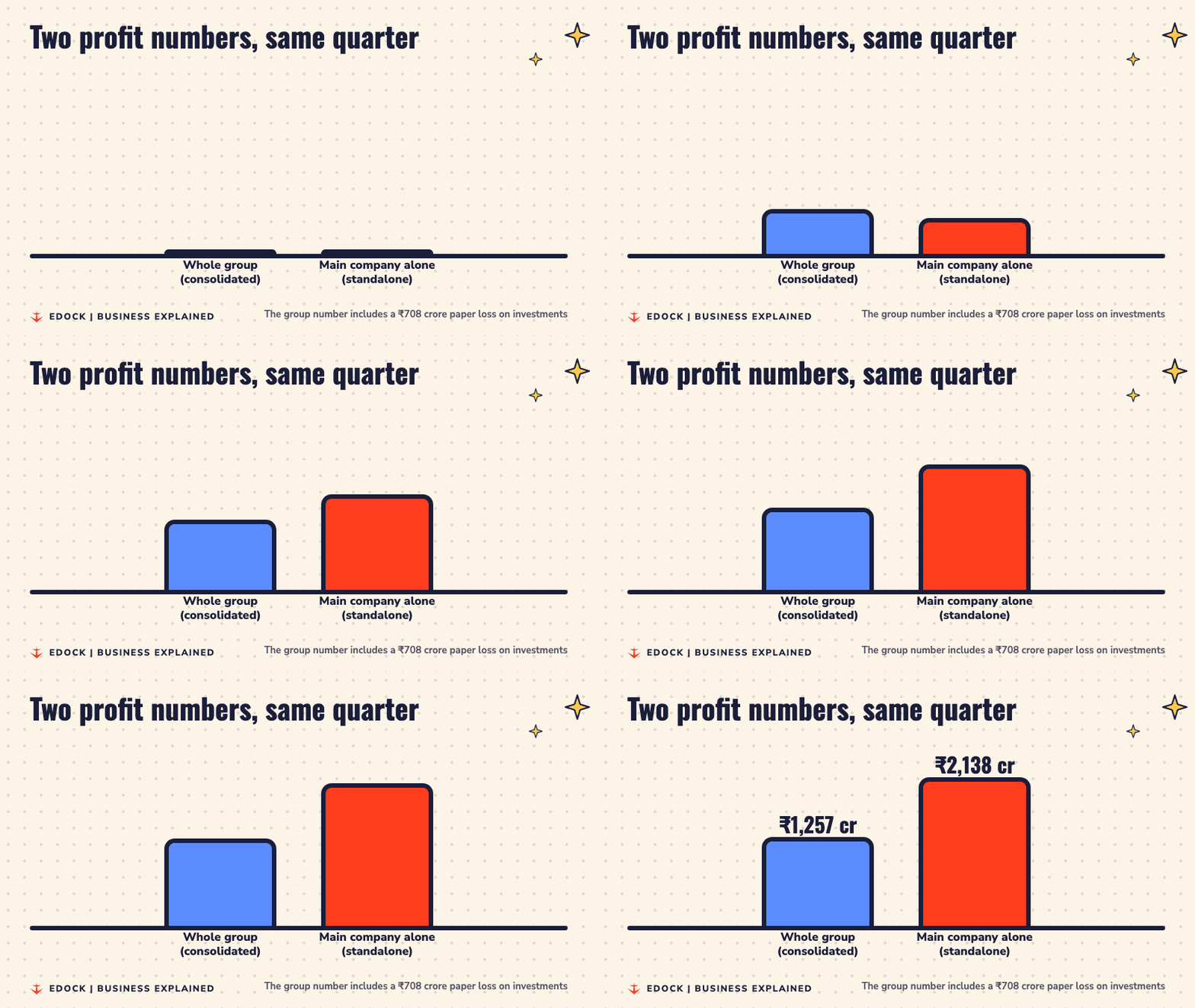
For Tata Motors, the standalone net profit was ₹2,138 crore, up from a loss of ₹1,021 crore a year earlier. Standalone revenue rose 41.9% to ₹23,930 crore. The consolidated profit, for the whole family, was ₹1,257 crore.
Why is the family number smaller? One big reason is a paper loss. The consolidated results included a ₹708 crore fair-value loss on equity investments. "Fair value" means checking what an investment is worth today. If you bought cricket cards for ₹100 and today they would sell for ₹80, you have a ₹20 loss on paper, even though you did not sell them. Business Standard reports that this loss was much smaller than the ₹2,027 crore loss a year earlier. The company said the improvement came from smaller paper losses on its investment in Tata Capital.
There is one more detail. The standalone profit included a one-time gain of ₹218 crore, mostly from reversing money set aside for employee costs. It is like keeping ₹500 aside for a bill, then finding out the bill is smaller, so the money comes back to you. Mint also reported this one-time gain.
Why did people buy so many trucks?
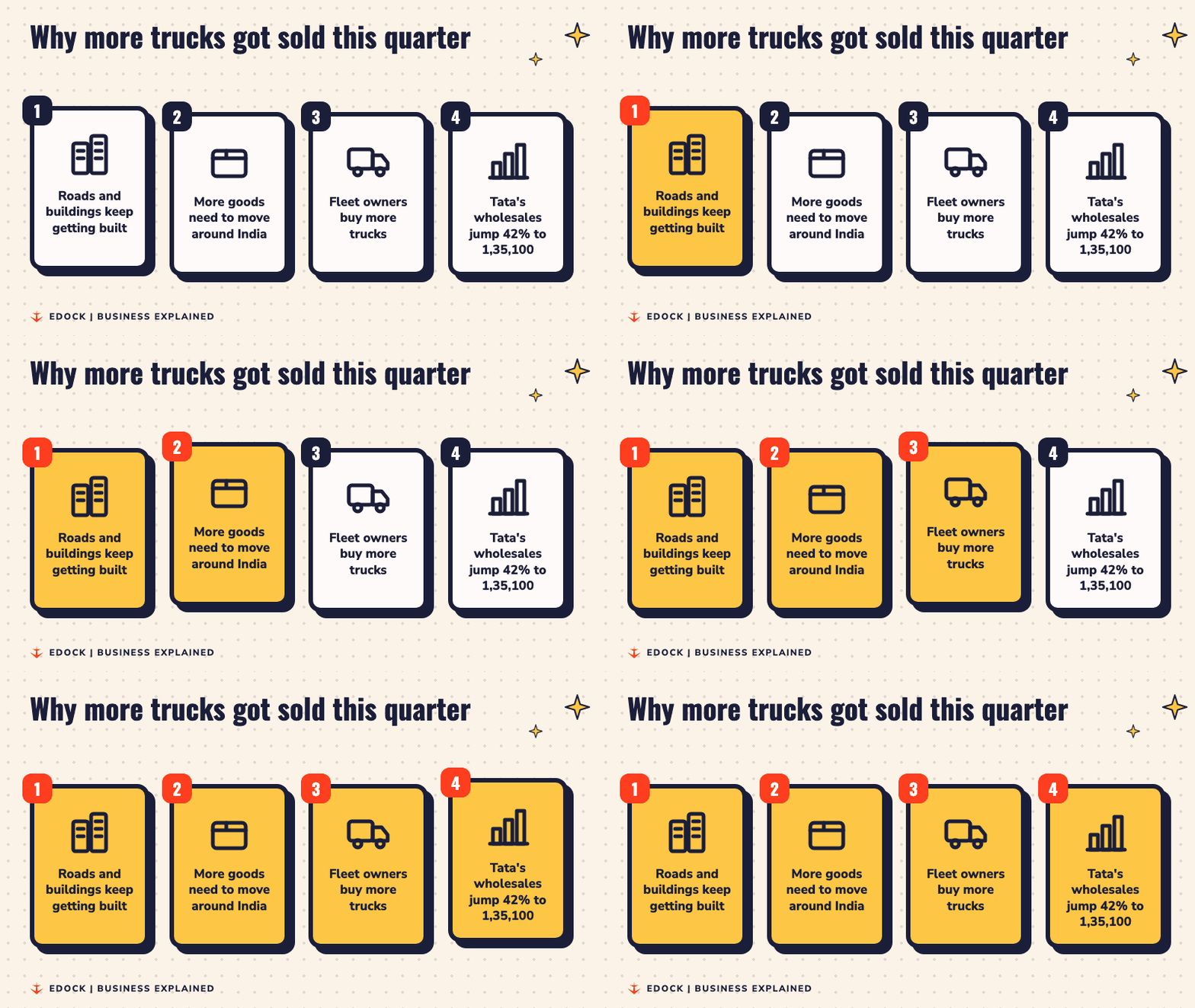
Tata Motors' truck and bus wholesales grew 42% to 135,100 units. Wholesales are vehicles the company sends to its dealers, like a bakery sending trays of bread to shops. Sales inside India grew 30%, while exports to other countries jumped 177%.
The company's CEO, Girish Wagh, said sustained infrastructure activity and stable fleet use supported freight demand. Infrastructure means things like roads, bridges and ports. Freight means goods carried for money. Mint also points to steady freight movement and government-led infrastructure activity. Simply put: when India builds more and ships more, truck owners need more trucks.
Tata Motors also won a bigger slice of the market. Its share of truck and bus sales in India, counted by government vehicle registration data, rose to 36.2% in April to September 2026, from 35.1% in the last financial year. So out of every 100 such vehicles registered, about 36 were Tata's.
The worry: steel and rubber got costlier
Not everything went up in a good way. A truck is made of a lot of steel, and its tyres are made of rubber. Both got more expensive. The chief financial officer, GV Ramanan, said the company faced significant commodity cost pressures, particularly in steel and rubber.
This shows up in the EBITDA margin. EBITDA is the money a business makes from its daily work, before paying interest, tax and the cost of machines wearing out. The margin tells you how much of that is left from every ₹100 of sales. For the main company, it slipped from 12.6% to 11.7%. So from every ₹100 of sales, about ₹11.70 was left at this stage, compared with about ₹12.60 a year ago.
To cope, Tata Motors raised prices. It made three price hikes this year, the latest in September of up to 1%. Mint reports that rising raw material prices more than cancelled out the benefit of those hikes.
A big shopping trip in Italy
There is a bigger story running in the background. Tata Motors is trying to buy Iveco, an Italian truck maker. Tata first agreed in July 2025 to buy Iveco's commercial vehicle business for about €3.8 billion.
To buy a listed company, Tata runs a tender offer. That means it offers every Iveco shareholder a fixed price for each share, and each owner decides whether to sell. Tata raised its offer from €14.10 to €14.40 per share on 9 October. The offer closes on 26 October, with settlement planned for 30 October, if it succeeds.
Here is the catch. Tata needs about 80% of Iveco's shares to take full control. As of 21 October, shareholders had tendered about 33.4%. So the final days of the offer matter a lot. If the deal goes through, the company plans to count Iveco in its results from the next quarter.
What else is worth knowing?
- Cash in hand: The main company's free cash flow, the cash left after running the business and paying for new machines, more than doubled to ₹4,606 crore. It had about ₹11,300 crore of net cash at the end of September.
- Slower months ahead: Volumes grew 35% in the first half of the year. The company expects growth to slow in the second half, because last year's numbers in those months were already higher.
Why should a student care?
Trucks are the hidden backbone of daily life. Your phone, your clothes, the milk in your fridge and the cement in a new metro station all travel by road. When truck makers sell more, it usually means more goods are moving and more things are being built. Watching companies like Tata Motors is a simple way to read the mood of the economy.
Here is the NDTV Profit summary of the results:
Sources
- Business Standard: Tata Motors CV swings to ₹1,257 crore profit in Q2; revenue rises 36%
- BusinessLine: Tata Motors CV's profit rebounds to ₹2,138 crore in Q2 as revenue jumps 41.9%
- Mint: Tata Motors posts Q2 profit on strong commercial vehicle demand
- Mint: Three Iveco investors stand to gain as Tata Motors races to secure buyout
- Cover photo: Tata Prima truck, by Trucksindiawiki, CC0
