Tata Motors calls its €14.40 Iveco offer final as the 26 October deadline nears
India's Tata Motors says it will not pay more for the Italian truck maker. It needs 80% of Iveco's shares, and three big investors could decide the result.

Picture a shopkeeper who tells a crowd of buyers that the price on the board will not go up, not even by one paisa. That is roughly what India's Tata Motors told the owners of Iveco, a big Italian truck maker, on Friday, 23 October 2026.
Tata Motors boss Girish Wagh said its offer of €14.40 for every Iveco share is "last and final". And the clock is ticking. The offer closes on 26 October, just a few days away.
First, who is Iveco?
Iveco is an Italian company that makes trucks and other commercial vehicles. A commercial vehicle is any vehicle used to earn money: a truck carrying cement, a bus carrying school kids, a van delivering parcels. Think of it as the working cousin of the family car.
Tata Motors first announced its plan to buy Iveco in July 2025. It was an all cash deal worth about €3.8 billion, or nearly ₹38,240 crore at the time. Iveco also had a defence business, but that was not part of the deal. It was sold separately to another Italian company, Leonardo, and the money went back to Iveco's owners as dividends in April 2026, according to Mint.
Why does Tata want Iveco? Together, the two would sell more than 5,90,000 vehicles a year, with revenue of about €21 billion. Revenue is all the money that comes in from sales, before costs. About 46% of that would come from Europe and about 32% from India. Iveco is strong in Europe, Tata is strong in India, and the two hardly overlap, the companies said.
What is a takeover offer, in plain words?
A company is owned by thousands of people who hold its shares. A share is a tiny slice of the company, like one slice of a big pizza. To buy the whole company, Tata cannot just pay one person. It has to ask every slice owner to sell.
So Tata made a tender offer. That means it asked every Iveco shareholder to hand in their shares, and promised a fixed price for each one. To tender a share simply means to hand it in for that price.
Imagine a class where every kid owns some cricket stickers from one collection. One kid wants the full set. He offers ₹10 for every sticker. Some kids sell at once. Some wait, hoping he will pay ₹12. Others refuse. He only wins the full set if enough kids agree.
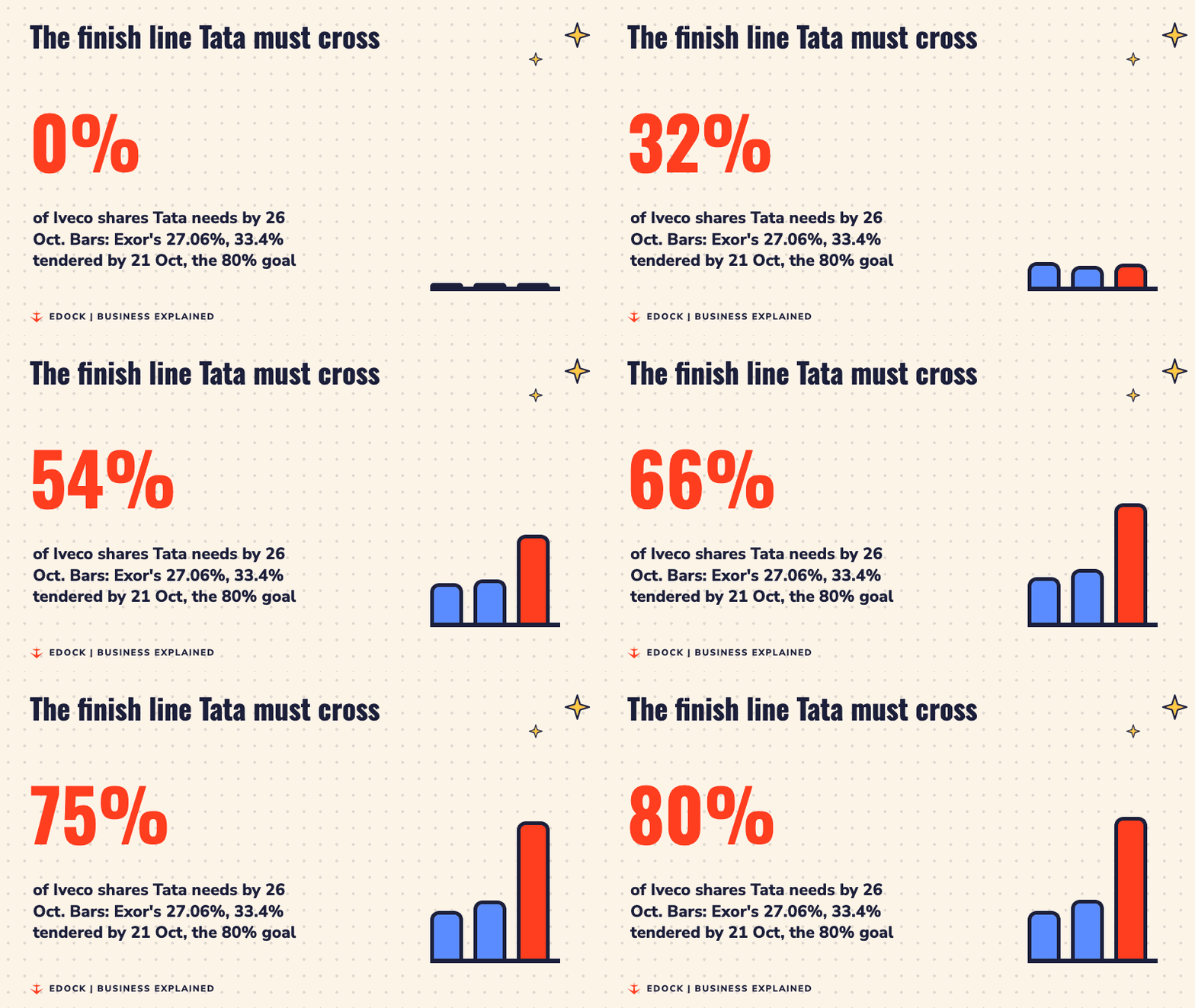
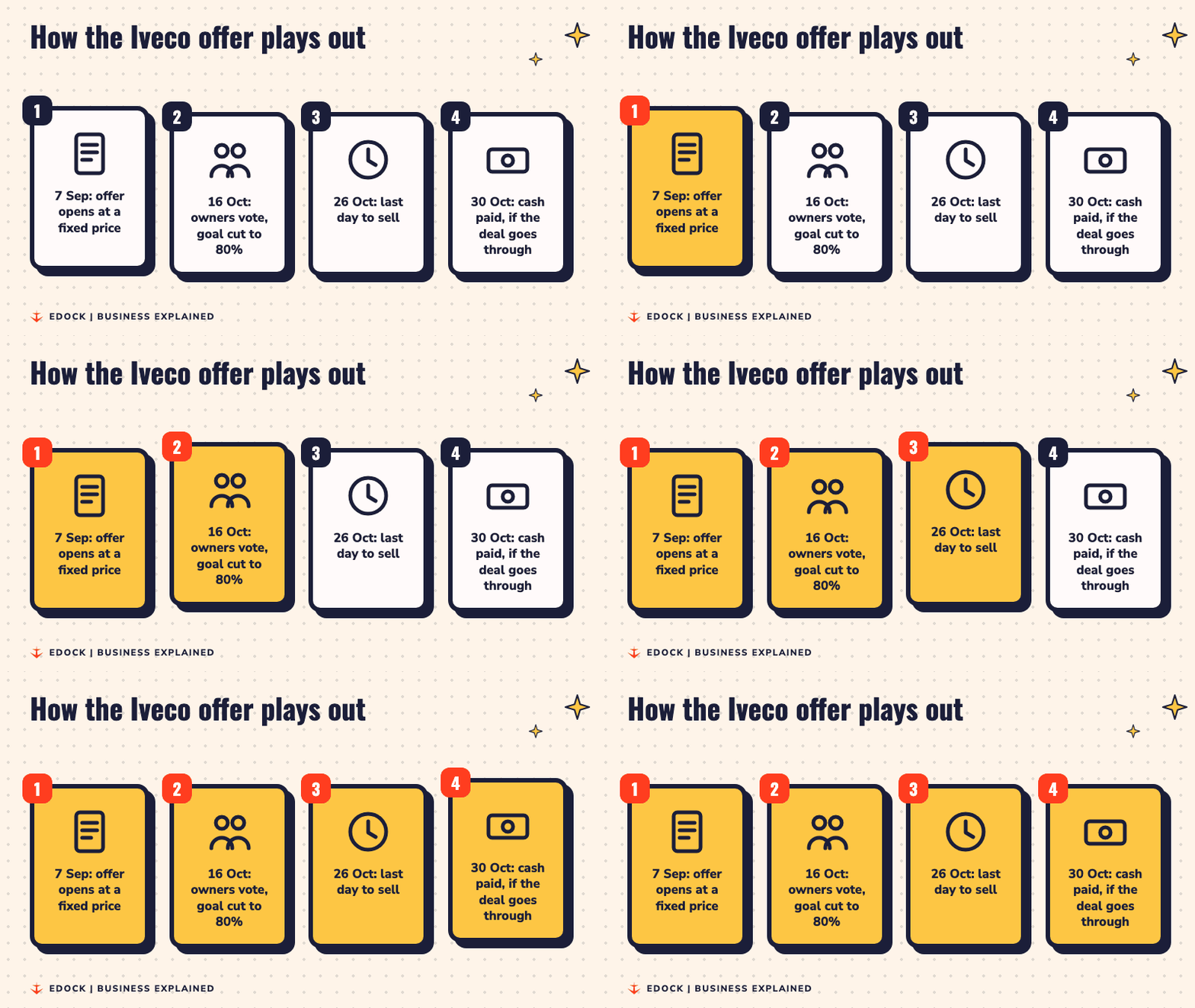
That last part is called the acceptance level. It is the share of the company the buyer must collect for the deal to go through. Tata first needed 95%. On 16 October, Iveco's shareholders voted to lower that bar to 80%.
How the price went up once
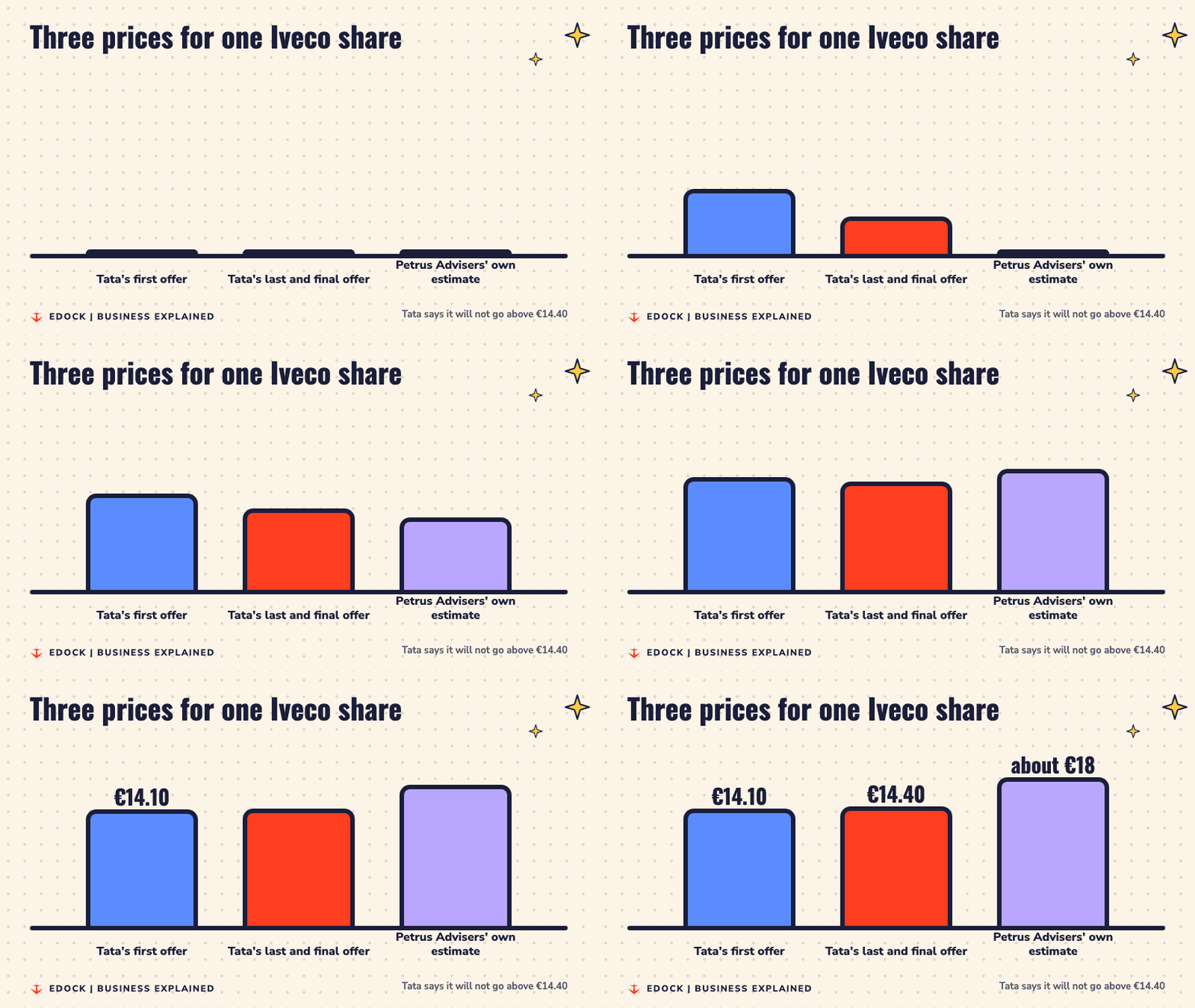
The offer opened on 7 September at €14.10 a share, valuing Iveco at about €3.82 billion. Iveco's own board backed it and asked shareholders to sell.
Then, on 9 October, Tata raised the price by €0.30, to €14.40. Its reason: government approvals in several countries took longer than planned, so it wanted to make up for the wait. If every one of Iveco's 271.2 million shares is handed in, the deal would now cost €3.91 billion. That is about ₹34,778 crore.
The new price is 33.47% higher than Iveco's share price on 17 July 2025, the last trading day before news of a possible Tata deal came out. The extra €0.30 is a raise of about 2%. Small, but on 271.2 million shares it adds up.
The three investors everyone is watching
Here is the twist. Three big investors, two hedge funds called Davidson Kempner and Syquant Capital and an activist investor called Petrus Advisers, bought Iveco shares after the deal was announced. A hedge fund is a pool of money from rich investors that hunts for quick, clever gains. An activist investor buys shares and then pushes the company loudly to do things its way.
Mint worked out that these three together hold about 20.4% of Iveco's common shares. At €14.40, they could make a combined gain of about €63 million. That comes on top of about €288 million they are estimated to have received in dividends in April. A dividend is a share of profit a company pays its owners, like a bonus for holding the slice.
Petrus wants more. In a presentation on 29 September, it said an Iveco share was really worth about €18, roughly 25% above Tata's offer. It has openly opposed the deal. Syquant and Davidson Kempner had not handed in their shares more than a month after the offer opened.
Mint says their choice could decide whether Tata reaches 80%. Iveco's biggest owner, Exor, already agreed to sell its stake of about 27.06% of the common shares.
So why say "last and final"?
When a buyer says the price may still rise, many sellers simply wait. Why sell at ₹10 if ₹12 might come tomorrow? By calling €14.40 the final price, Tata tells holdouts that waiting will not bring a better deal.
Wagh said Tata remains confident after all the resolutions passed at Iveco's shareholder meeting. He said the company is "confident of crossing the 80% threshold".
The numbers show how much is left to do. As of 21 October, about 33.4% of Iveco's shares had been handed in. To reach 80%, Tata needs another 46.6 percentage points in the last few trading days. An executive told Mint that a large part of the shares usually comes in during the final 48 hours, like students who submit homework just before the deadline.
What happens next?
The offer closes on 26 October. If the deal goes through, payment, called settlement, is expected on 30 October.
The final number decides the path. If Tata gets 95% or more, it can use a Dutch legal step called a squeeze out, which lets it buy the last few shares even from owners who did not sell. If it lands between 80% and 95%, it plans a different route, splitting and closing the old company structure, as approved at the meeting, according to the offer terms. Either way, Tata would take full control and Iveco would leave the stock market.
For young Indians, this is a chance to watch a big deal play out live: an Indian company trying to buy a well known European truck maker, slice by slice. In a few days, the scoreboard will show whether Tata's "final" price was enough.
Sources
- The Economic Times: Tata Motors rules out raising Iveco bid, calls €14.40 offer last and final
- Mint: Three Iveco investors stand to gain €63 million as Tata Motors races to secure buyout
- The Economic Times: Tata Motors raises Iveco takeover offer price to 14.40 euro per share
- Outlook Business: Tata Motors launches tender offer for Iveco, acceptance opens 7 Sep
- Free Press Journal: Tata Motors unit raises Iveco Group tender offer to €14.40 per share
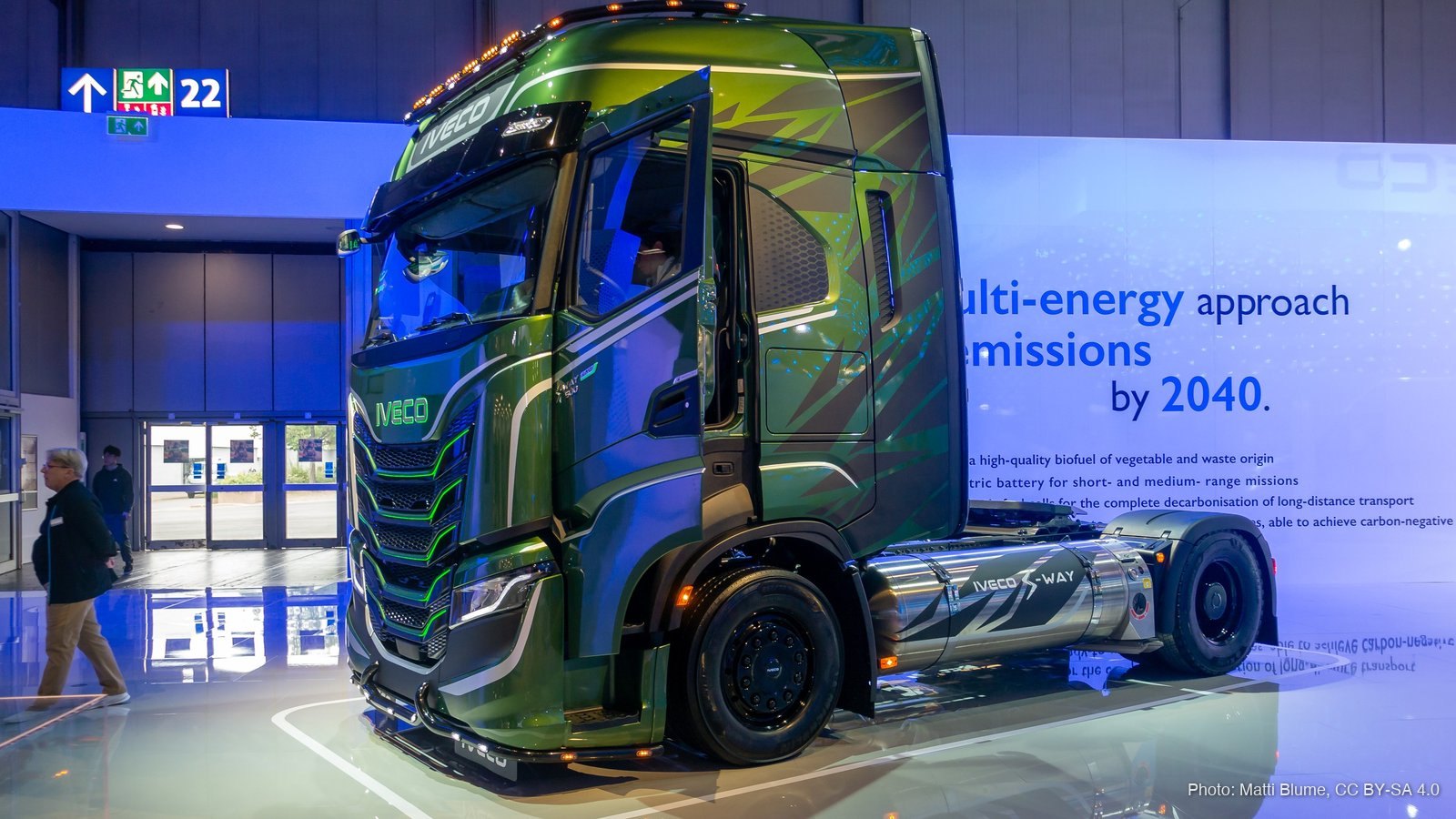
- Cover photo: Iveco S-Way semi-trailer tractor at IAA Transportation 2024, by Matti Blume, CC BY-SA 4.0

You may republish this story under CC BY 4.0: credit Pranav Sharma and link to this page.