Tata Communications to lay 10,000 km of fibre as India's AI super highway
Version 1 of 1 saved 26 Oct 2026, 11:47 pm IST · Chain line 251
As it was first published
Tata Communications to lay 10,000 km of fibre as India's AI super highway
A plan worth up to $450 million will join data centres from Mumbai to Chennai and beyond, so AI work can move data much faster.
Picture a giant food court where every kitchen is ready, but the roads to it are narrow lanes. Orders pile up and the food goes cold. That, in simple words, is the worry behind a big plan Tata Communications announced on Monday, 26 October 2026.
The company says it will put $400 to 450 million into about 10,000 km of new fibre cable across India. It calls the network an "AI super highway". Its job is to join India's big data centres to each other, so that artificial intelligence (AI) work can move huge piles of data quickly.
First, what are these words?
A data centre is a huge building full of computers that run apps, store photos and train AI tools. Think of it as a giant kitchen that cooks the internet's food.
Fibre is a thin glass cable that carries data as flashes of light. It is far faster than old copper wire, like a metro line compared to a cycle rickshaw.
Connectivity here means the links between data centres. Imagine roads between warehouses. More lanes mean more trucks can move at the same time, and deliveries get faster.
Tata Communications is a part of the Tata Group. It sells internet links, cloud and security services to companies, and its release says 300 of the Fortune 500 companies are its customers.
How much money, in rupees?
The company gave the figure in dollars. Indian outlets turned it into rupees, and they did not all land on the same number. Mint says Rs 4,350 crore, while Fortune India says about Rs 4,280 crore.
Both are honest. They simply used slightly different dollar rates. Rs 4,350 crore for $450 million works out to about Rs 96.7 per dollar. Rs 4,280 crore works out to about Rs 95.1 per dollar. It is like two friends changing the same pocket money at two different exchange counters.
Mint reports that the company will pay for it from its operating cash flows, meaning the money its normal business already earns, not a fresh loan.
Where will the cable go?
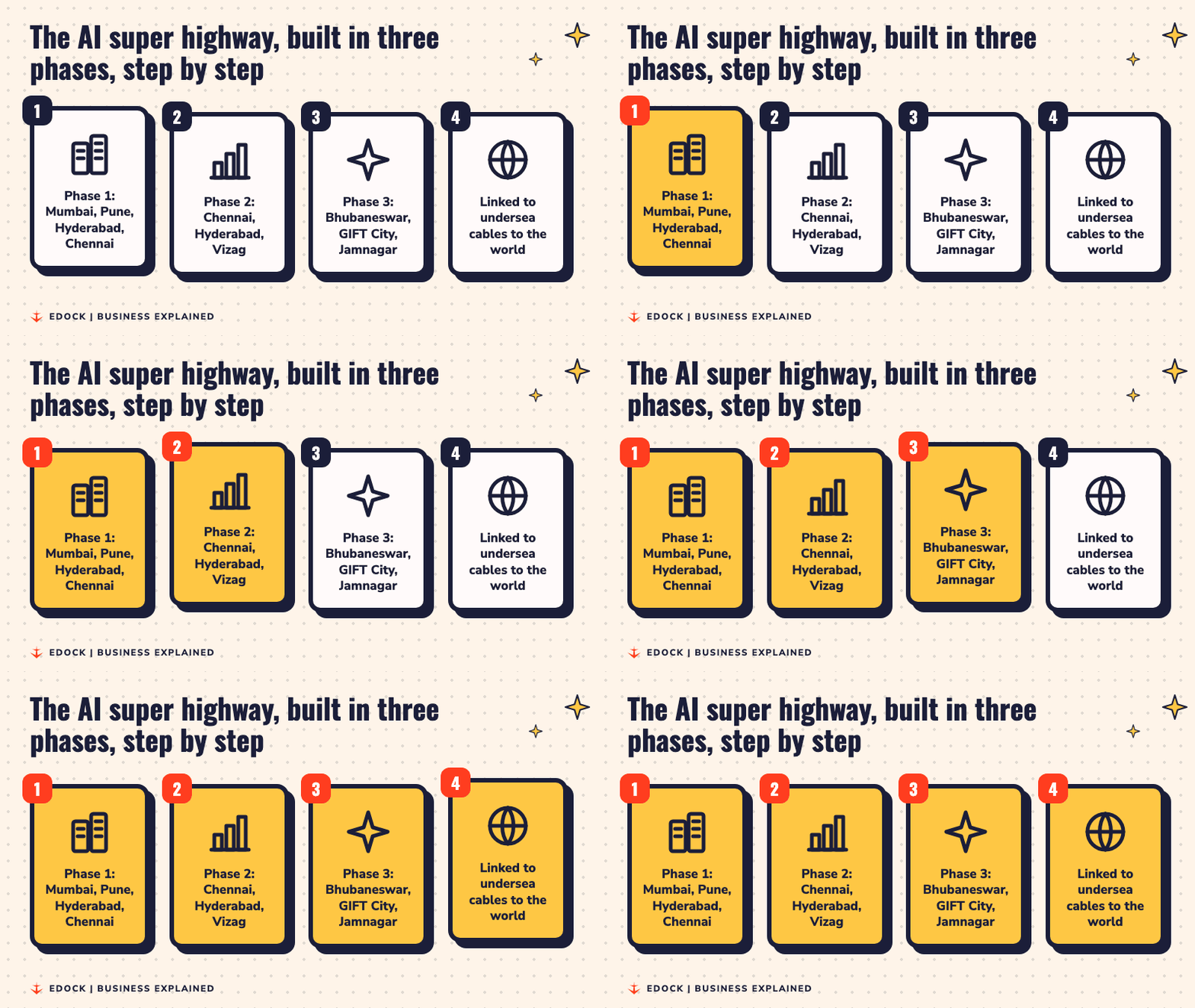
The plan comes in three phases. According to Moneycontrol, which spoke to network chief Rupesh Chokshi:
- Phase 1 joins Mumbai, Pune, Hyderabad and Chennai.
- Phase 2 links Chennai, Hyderabad and Visakhapatnam (Vizag).
- Phase 3 reaches Bhubaneswar and Gujarat, including GIFT City and Jamnagar.
Mint says the first phase is expected to start working over the next three years. Moneycontrol says the money will be spent over three to five years.
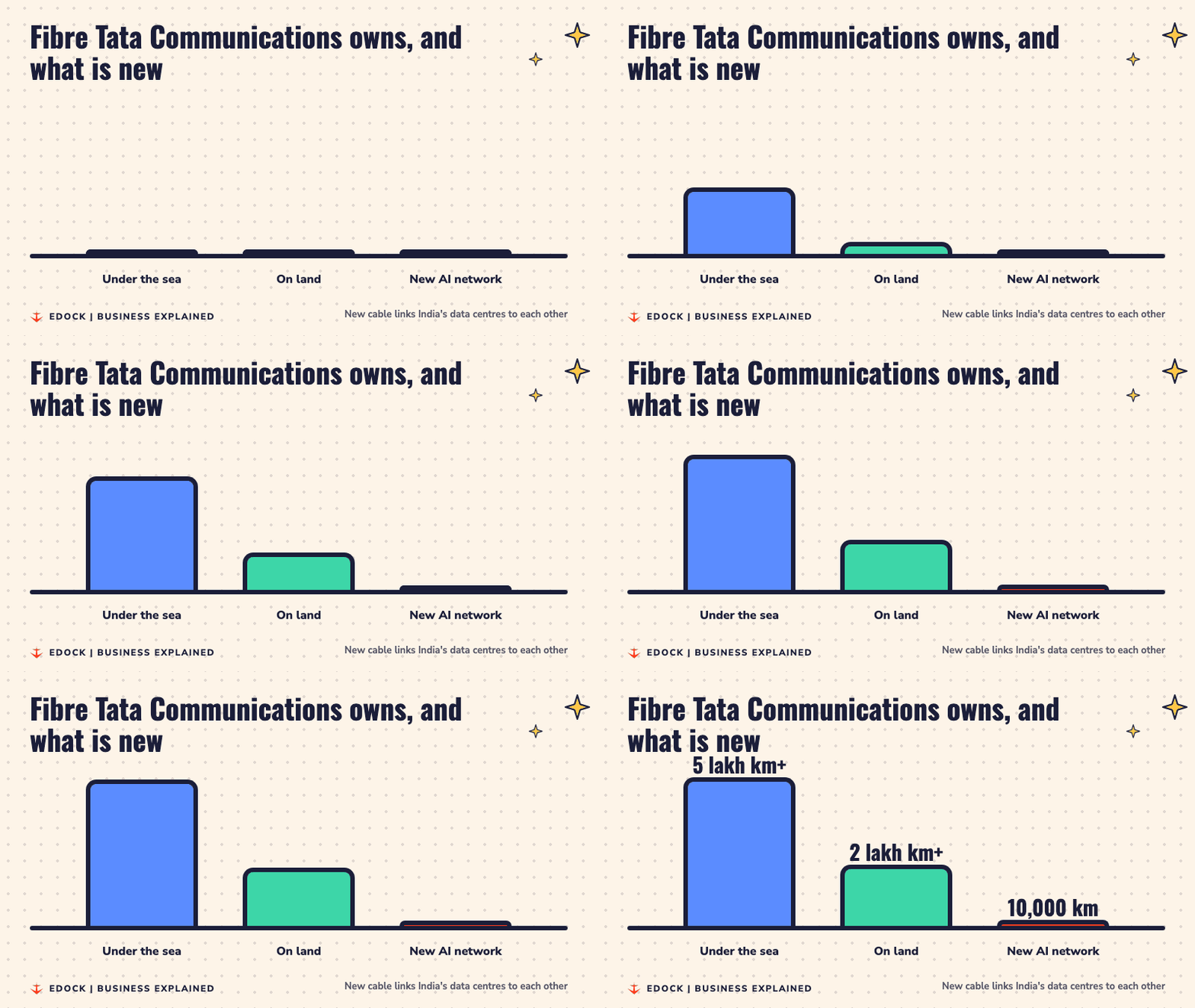
The network will also join the spots where undersea cables land on India's coast. So data can travel from an Indian data centre to the rest of the world in one smooth trip. The company already runs more than 5 lakh km of undersea fibre and over 2 lakh km on land.
Why does AI need fatter roads?
Training or running an AI model is not one computer doing one sum. It is thousands of chips passing data back and forth, often between buildings in different cities. If the road between them is slow, the costly chips sit idle, like cooks waiting for vegetables to arrive.
India is adding a lot of these kitchens. Mint, quoting the property firm Cushman and Wakefield, says India had nearly 1.8 GW of working data centre capacity in the first half of 2026, with another 3.86 GW being built or planned by 2030.
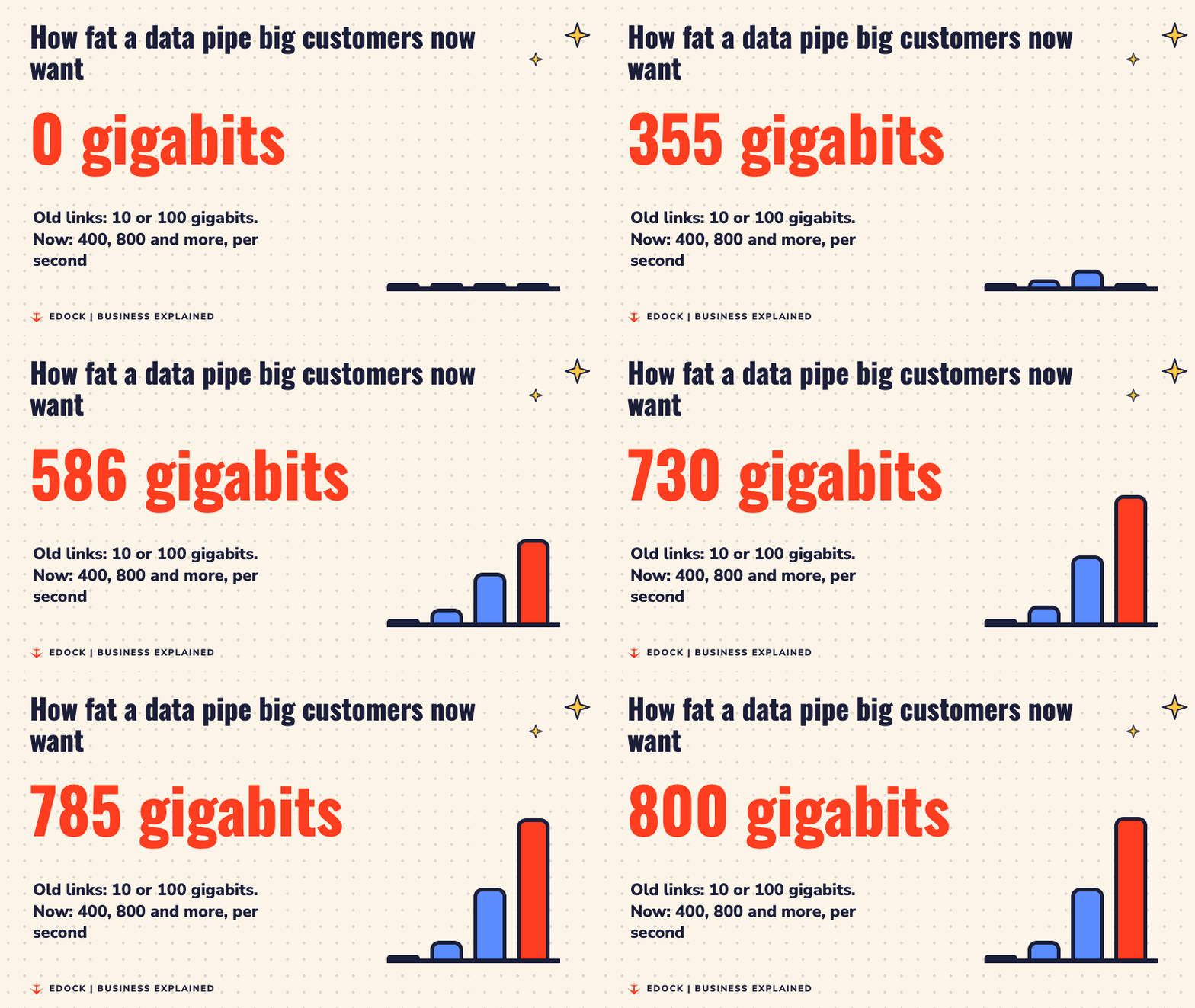
Chokshi told Moneycontrol that customers used to buy 10 or 100 gigabit links. Now they ask for 400 gigabits, 800 gigabits and even more. He said the new network is designed to carry 7.2 petabytes of capacity, and that a Mumbai to Chennai round trip could take 15 to 16 milliseconds. That is far less than the blink of an eye.
What does Tata Communications hope to win?
CEO Ganesh Lakshminarayanan said the market for links between Indian data centres could grow past $1 billion over the medium term. Fortune India puts that at about Rs 9,500 crore.
Chokshi told Moneycontrol the company is aiming for around 30 to 40 percent of the work it can go after in this market. Market share simply means your slice of the pie. If ten customers want such links, a 40 percent share would mean four of them buy from you.
He also explained why a company would spend so much upfront. Customer deals for such links can last five to 10 years, while the cable itself lasts about 25 years. It is like building a toll road: costly at first, but trucks keep paying for decades. He said such projects usually aim for a 15 to 20 percent return.
One honest point: Moneycontrol reports that the company is in advanced talks with customers but has not yet announced contracts for this network. The CEO's statement says a growing part of its expansion is driven by "anchor customer commitments", meaning big early buyers who agree to use the capacity.
Who will use it?
The company names global cloud giants (called hyperscalers), newer AI cloud firms, digital platforms and the Global Capability Centres that big foreign companies run in India. BusinessLine adds that banks and other organisations will also be connected to data centre clusters.
For a student or first-jobber, the bigger picture is this. Much of what happens online, from a chatbot answer to a video stream, travels along fibre cables like these. If India wants to run more AI at home and serve the world from here, the roads between its data kitchens matter as much as the kitchens.
Here is a short video report on the plan:
Sources
- Tata Communications press release: India's AI super highway
- Mint: Tata Communications plans Rs 4,350 crore AI network
- Moneycontrol: AI Super Highway, targets up to 40% market share
- Fortune India: Rs 4,280 crore, 10,000 km AI network
- Analytics India Magazine: $450 million, 10,000 km AI network
- BusinessLine: Tata Communications to spend $450 million on AI connectivity
- Cover photo: Tata Communications Tower near Churchgate, Mumbai, by Srinivasan V, CC BY-SA 3.0
