Tanmay Bhat backs Chapter Home as ex-PharmEasy team raises Rs 63 crore
A home and kitchen startup started in 2025 is now valued at close to Rs 1,000 crore. Here is what a house of brands, equity and debt mean.
Picture this. A startup that only began in 2025, selling home furnishings now and planning pots and pans next, is already priced at close to Rs 1,000 crore. On Thursday, 22 October 2026, a home and kitchen company called Chapter Home said it had raised Rs 63 crore. One of the people putting in money is comedian and influencer Tanmay Bhat.
Here is who is behind it, what they sell, and what all the money words in this story actually mean.
Who started Chapter Home?
Chapter Home was founded in 2025 by five former PharmEasy executives: Nitin Chugh, Akarsh Bharadwaj, Shrey Mittal, Dhiraj Jain and Dheeraj Goyal. PharmEasy is an online pharmacy app for ordering medicines. These five were part of its founding and leadership teams.
So they have worked on a big online shop before. Now they want to build one for the things that fill a home.
What does it sell?
Its first brand is HOKIPO, an online home furnishing brand. Home furnishing means the soft things that make a room feel like home: bedsheets, cushion covers, sofa covers and curtains.
Next, the company wants to build brands for bed and table linen, cookware, home decor and small kitchen appliances. Think of a frying pan, a mixer or a pretty wall light.
What is a "house of brands"?
Imagine one big kitchen behind a food court. From the front, you see a dosa stall, a momo stall and a juice stall, each with its own name and board. At the back, they all share the same cooks, the same gas, the same suppliers and the same delivery boys. That is a house of brands.
Chapter Home is building separate brands for different parts of the home. Each brand looks different to the buyer. But behind the scenes, they share one platform for sourcing (finding factories and buying goods), supply chain (moving goods from the factory to your door), content, technology and distribution.

Anant Vidur Puri, a partner at investor Bessemer Venture Partners, explained the idea in one line. "Home is not one category, it is many," he said. The person who buys bed linen, cookware and a wall light is the same customer, but the products and their design are very different.
Who put in the money?
The Rs 63 crore came from Bessemer Venture Partners, Stride Ventures, Tanmay Bhat and a group of family offices. A family office is a small team that looks after the money of one rich family and invests it for them.
Bessemer invests in startups. This is not its first home startup from the PharmEasy circle this year. In June, it led a Rs 200 crore round in AllHome, a home improvement startup started by PharmEasy's co-founders, at a value of Rs 2,000 crore. AllHome sells building and interior products like hardware, bath fittings and lighting. Chapter Home sells furnishings, cookware, decor and kitchen appliances, so the two are not selling the same things.
What do "funding", "equity" and "debt" mean?
Funding is money a young company gets from outsiders so it can grow faster. Say you run a lemonade stall and want a second one. Your uncle gives you money now and, in return, owns a part of your stall. That is equity: money for a share of the business.
Debt is different. It is a loan. Your aunt lends you money, and you must pay it back later with a little extra, called interest. She does not own any part of your stall.
Chapter Home's round was a mix of equity and debt. The news reports do not say how much was each.
Why is it worth nearly Rs 1,000 crore?
Valuation is the price tag on the whole company. If an investor pays a certain amount for a small slice, you can work out what the full company is "worth" in their eyes. The round values Chapter Home at close to Rs 1,000 crore.
That number is a bet on the future, not money in a bank. Investors think the home and kitchen market is big and still messy. Co-founder Nitin Chugh said "the home and kitchen market in India remains highly fragmented". Fragmented means it is split into thousands of small, mostly unbranded sellers, with no clear big name.
The company says it wants to fill the gap between unbranded products of uneven quality and costly premium ones, with good design at prices people can afford.
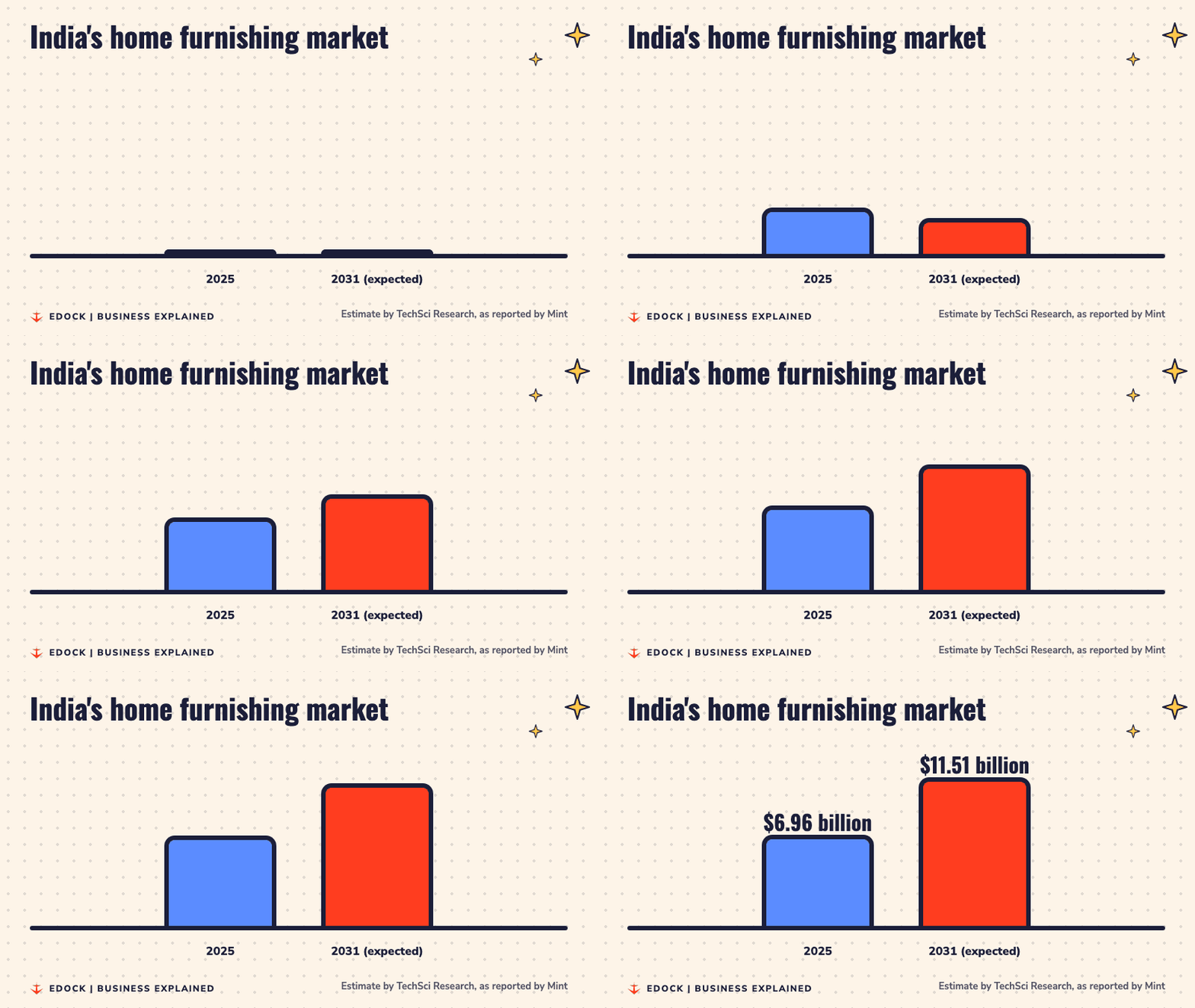
Mint quotes TechSci Research saying India's home furnishing market was worth $6.96 billion in 2025 and may reach $11.51 billion by 2031, with online sales growing the fastest.
Where will the money go?
Chapter Home says it will use the cash to improve its products, enter new categories, and invest in technology and brand building. Part of it will also go into reaching more buyers and opening its first offline stores.
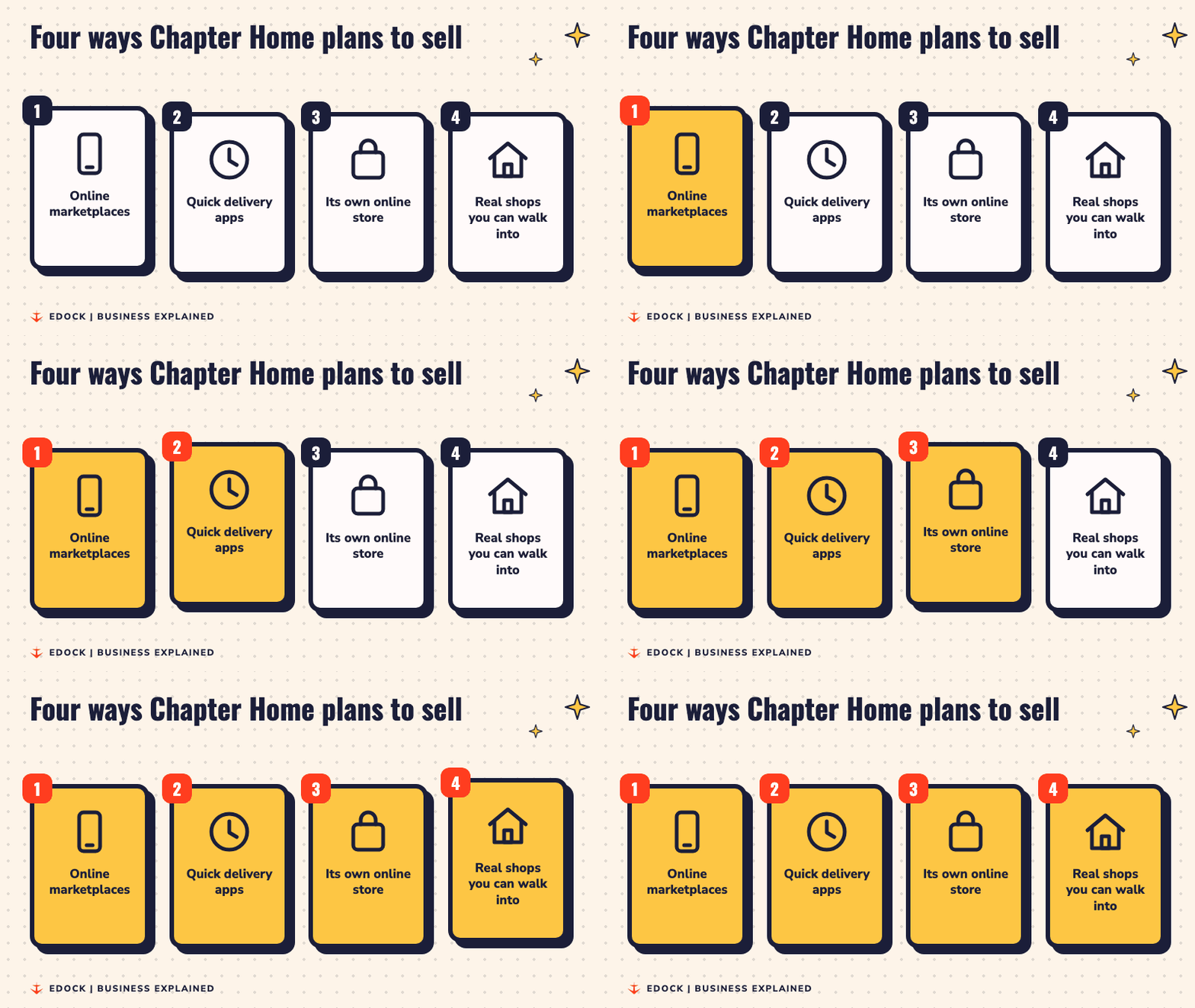
It plans to sell in four places: online marketplaces, quick commerce apps (the ones that deliver in minutes), its own direct-to-consumer store (D2C, where a brand sells to you straight, with no middle shop) and real shops.
Where does AI come in?
The company says it uses artificial intelligence across its work: writing product listings, making content, guessing how much of each item people will buy, choosing which products to stock, and finding and keeping customers. It says this lets its brands launch faster and at a lower cost.
Think of a chai stall owner who knows that more people want ginger chai when it rains. If a computer can make that kind of guess for thousands of bedsheets and pans, less stock sits unsold in a godown.
Why should a young reader care?
Many students and first-jobbers are setting up their first room, hostel corner or rented flat. They buy bedsheets, a pan and a lamp, often online. Startups like Chapter Home are fighting to be the name you pick when you search for those things.
It is also a good lesson in how startups grow. A team learns how to run one big online business, then uses the same skills in a new market. And Inc42 reports the company says it already has more promises of money from unnamed investors for a future round.
Sources
- Mint: Tanmay Bhat backs Chapter Home as ex-PharmEasy executives raise Rs 63 crore
- Entrackr: Chapter Home raises Rs 63 crore from Bessemer, Stride Ventures and others
- ET Retail: Chapter Home raises Rs 63 crore
- ET Entrepreneur: Chapter Home raises Rs 63 crore funding
- Inc42: Chapter Homes raises Rs 63 crore to build home and kitchen brands
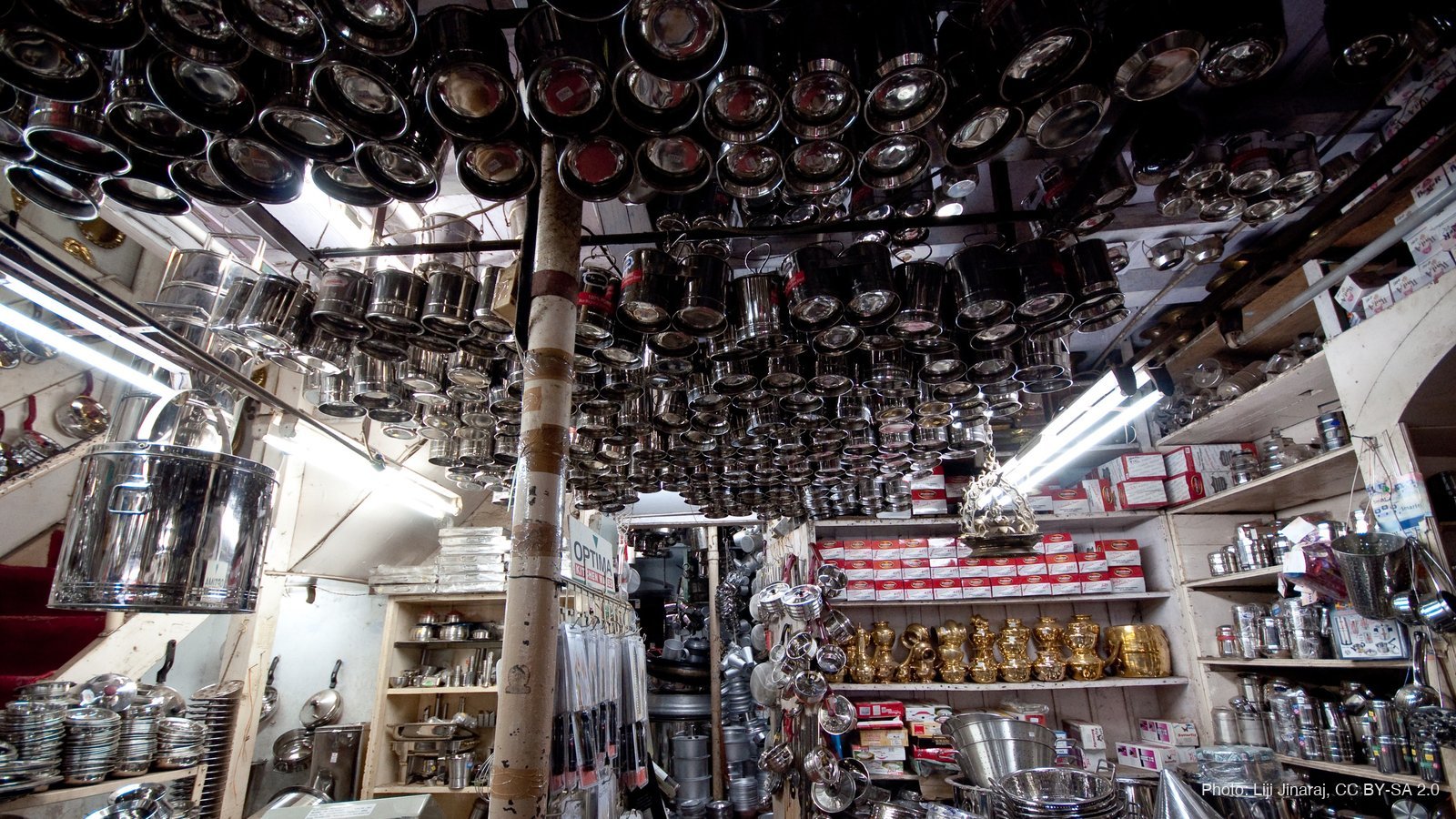
- Cover photo: Stainless Steel Utensils Store, Kochi, by Liji Jinaraj, CC BY-SA 2.0

You may republish this story under CC BY 4.0: credit Manpreet Kaur and link to this page.