Swarovski wants to double its India business. Here is the plan
Its India sales grew 26% to ₹478 crore. Now the crystal brand wants more stores, cheaper pieces and more young buyers.

Picture this. You get your very first salary, and you walk into a mall. For a long time, most Swarovski jewellery in India was bought as a gift for someone else. But now, more young people are buying something shiny just for themselves.
A big global brand has noticed. On October 12, 2026, the crystal jewellery maker Swarovski told Mint that it wants to double its business in India in the next four or five years. It also said India is one of its top three growth chances in the whole world.
So what is the plan, and why India? Let us break it down.
First, who is Swarovski?
Swarovski is a company from Austria. It is famous for jewellery and watches that sparkle with cut crystal. Jewellery makes up around 75% of its business around the world, Mint reports.
It is a big name. In 2025, Swarovski made 1.97 billion euros in revenue, which is about 2.26 billion dollars. Revenue means all the money customers paid for its products. It has about 2,200 shops in more than 140 countries, FashionUnited reports.
How big is it in India right now?
India is already one of Swarovski's top 10 markets by size. It has 82 stores in the country. Its watches are also sold in nearly 350 other shops. About 15 of its stores are run by Swarovski itself.
Sales are growing fast. In FY25, its India sales rose 26% to ₹478 crore. That was its best number in at least five years, according to company filings that Mint looked at.
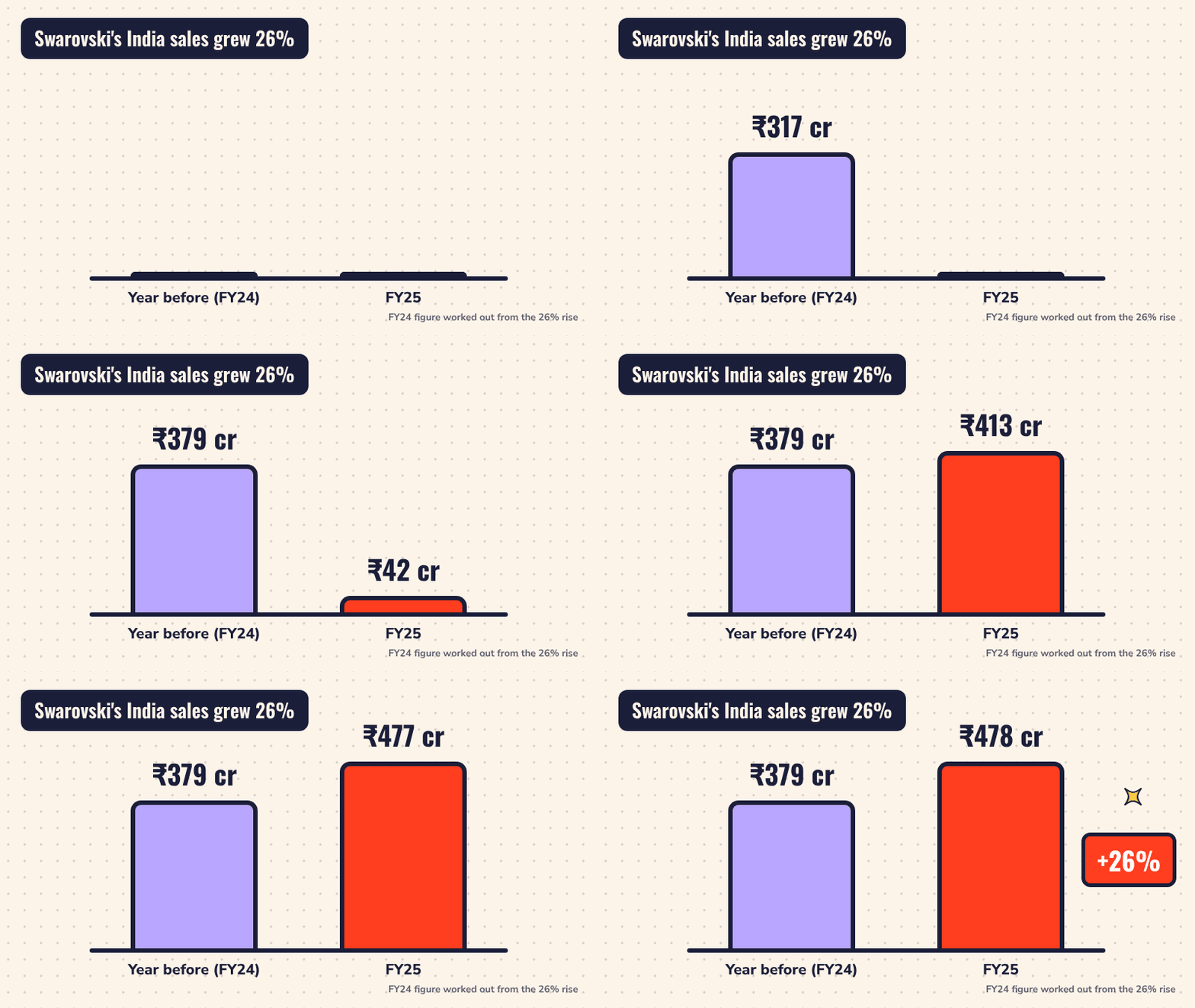
FY25 is short for the financial year 2025. Think of it as a company's yearly report card.
But how much did it keep?
Selling a lot is one thing. Keeping some money is another. That leftover money is called profit.
Imagine a samosa stall that sells ₹100 worth of samosas in a day. It still has to pay for potatoes, oil, rent and its helpers. What is left at the end is its profit.
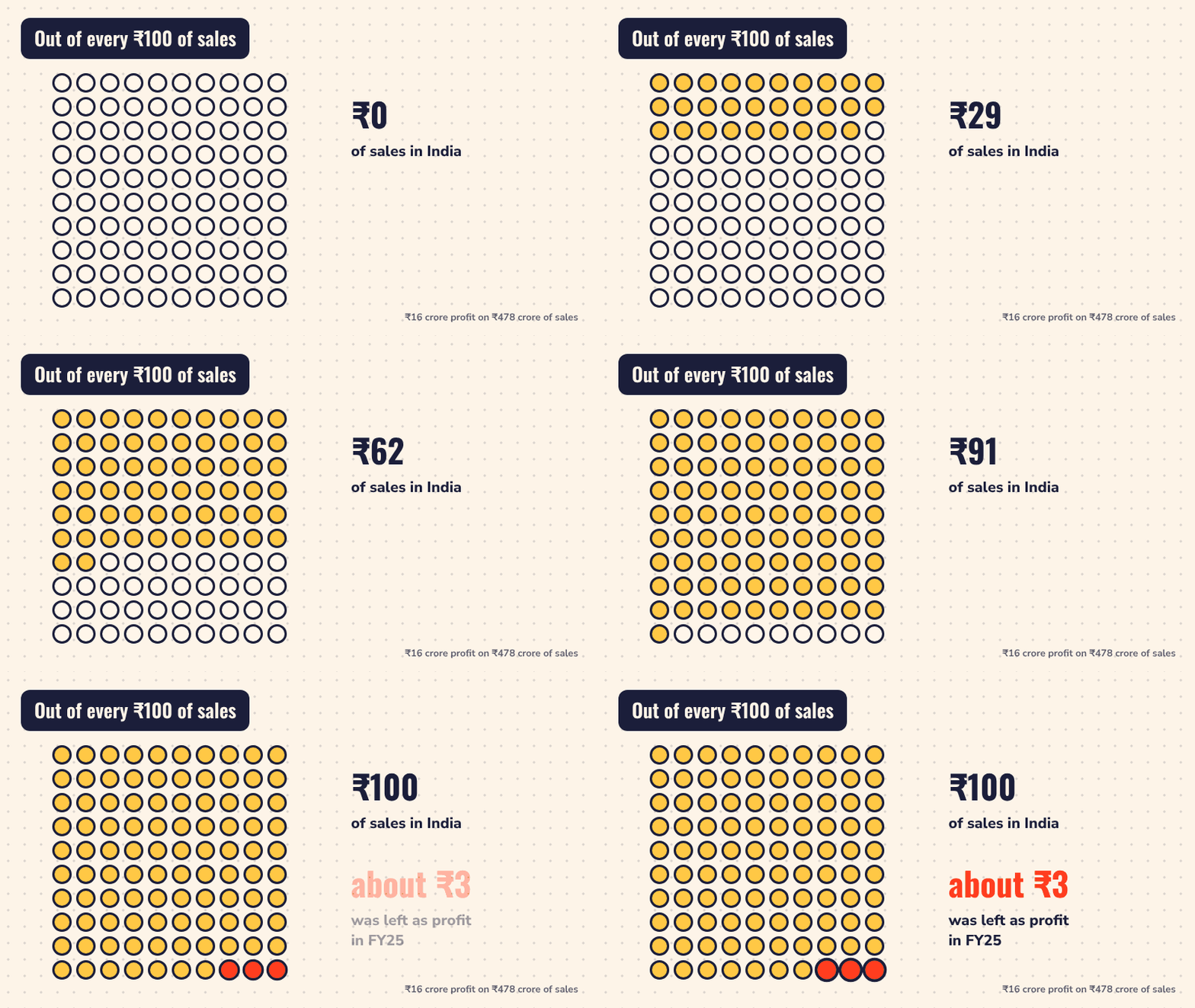
Swarovski India made a net profit of about ₹16 crore in FY25, Mint reports. Net profit is what is left after paying for everything, including taxes. Out of ₹478 crore of sales, that is a little more than ₹3 for every ₹100.
Why is India so important to it?
The answer is young people with jobs. Swarovski's chief commercial officer, Kolja Kiofsky, told Mint this:
"The Indian consumer, also the younger generation coming into jobs, having better disposable income, is more and more open to self-purchase."
Disposable income is the money left after you pay for rent, food and bills. It is like the pocket money left after you pay for your canteen lunch. You can choose how to spend it.
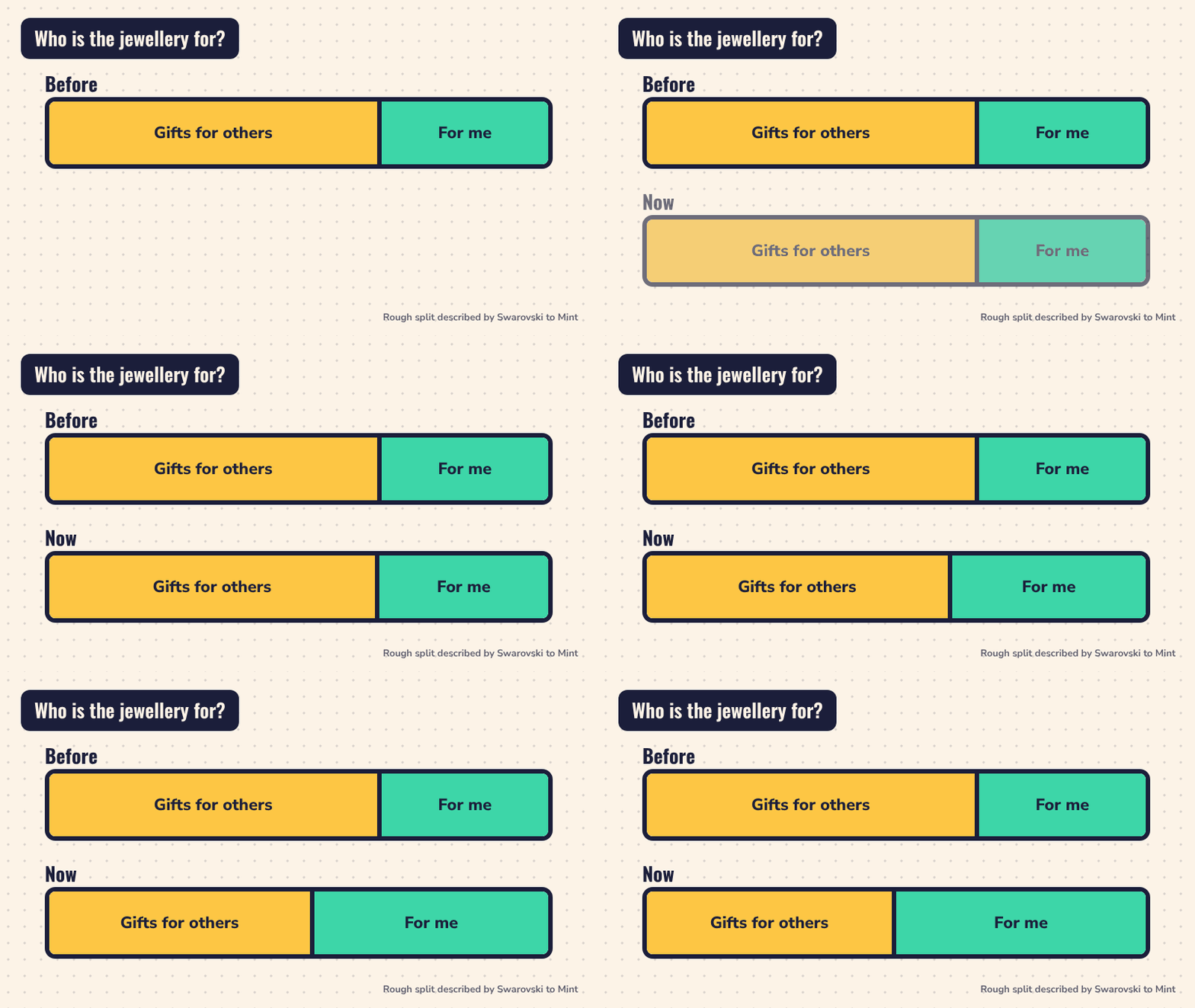
Earlier, about two out of every three Swarovski buys in India were gifts. Only one in three was for the buyer. Kiofsky said the mix is now "pretty balanced."
There is another reason. Swarovski's business in China has been mostly flat, while India is growing. Its India store network is only half the size of its mainland China network. Still, the company expects India's business to catch up with China's.
The plan, step by step
1. Open shops where new malls open
The biggest share of the new spending will go into new stores. The company will grow along with India's malls. "Wherever new malls open, we will also go in with new openings," Kiofsky said.
2. Sell more things people can afford
Swarovski does not want to be seen only as a very expensive brand. About half of its collection is now in a more affordable range. That includes its lab-grown diamonds.
A lab-grown diamond is a real diamond. It is just grown inside a machine, instead of being dug out of a mine. Swarovski makes its lab-grown diamonds in Surat, in Gujarat, and ships them around the world. The range is now sold in around 15 countries.
India helps in other ways too. It supplies pearls and some small figurines to Swarovski. Mint reports that Kiofsky spoke during a visit to a factory in Pune that makes products for the company.
3. Spend big on the festive season
Diwali and the wedding season are the most important time of year for Swarovski in India. Actor Rashmika Mandanna is part of its local campaigns. She was named its brand ambassador for India in August 2025, Indian Jeweller reported. A brand ambassador is a famous face who appears in a company's ads.
Swarovski also spends extra on marketing in countries where it wants to grow, and India is one of them.
4. Maybe faster delivery later
Swarovski is testing same-day delivery in some big cities around the world. It is not in India yet. "It will sooner or later also be a service that we offer in India," Kiofsky said.
What could make this hard?
Doubling is an ambition, not a promise. Kiofsky did not share a sales target or say how much money Swarovski will invest.
India is also a tricky jewellery market. Many families buy gold, and a lot of buying happens around weddings. Swarovski is betting that its colourful crystal pieces can be a different choice.
And it is not alone. Its rivals include the jewellery brand Pandora and crystal maker Preciosa. It also competes with famous names like Tiffany and Cartier for the same shoppers.
The simple takeaway
Big brands watch where young earners spend their money. When first jobbers start buying gifts for themselves, companies like Swarovski open more shops, offer cheaper pieces and bring in film stars for ads. Over the next four or five years, its India numbers will show whether the plan worked.
Sources
- Mint: Swarovski bets on India to double business in five years
- FashionUnited: Swarovski reports revenue of 1.97 billion euros for fiscal year 2025
- Indian Jeweller: Swarovski appoints Rashmika Mandanna as brand ambassador for India
- Cover photo: Decorative necklaces and jewellery, by Aminul Islam, CC0
You may republish this story under CC BY 4.0: credit Pranav Sharma and link to this page.