Stellantis India wants to build new Jeep and Citroen cars in half the time
Version 1 of 1 saved 21 Oct 2026, 11:23 am IST · Chain line 107
As it was first published
Stellantis India wants to build new Jeep and Citroen cars in half the time
The company aims to cut development time from 48 months to about 24 and make over 90% of its cars' parts in India. Here is what localisation means.
Picture this. A car company comes up with an idea for a new car today. If it works the usual way, that car reaches showrooms about four years later. By then, a student in Class 9 has finished school. Stellantis, the company behind Jeep and Citroen, now wants to do the same job in about two years.
In an interview with PTI, carried by The Economic Times on 20 October 2026, Stellantis India's MD and CEO Shailesh Hazela said the company wants to halve the time it takes to develop a vehicle. He also wants more of each car to be made in India. Here is what that means, in simple words.
Who is Stellantis?
Stellantis is a big global car group. It owns 14 car brands and works across Europe, the Americas, the Middle East, Africa and Asia. In India, the two brands most people see are Jeep and Citroen.
Jeep sells four models here: Compass, Wrangler, Meridian and Grand Cherokee. Citroen also sells four: C3, BasaltX, AircrossX and C5 Aircross.
The company runs three factories in India: Ranjangaon in Maharashtra, and Thiruvallur and Hosur in Tamil Nadu. It also has engineering and software teams in Bengaluru.
Why does building a car take so long?
A new car is not just a new shape. Engineers design the body, the engine, the seats, the screens and hundreds of small parts. Every part is tested again and again. Then the factory has to set up machines to make it. Suppliers have to be ready to send parts on time.
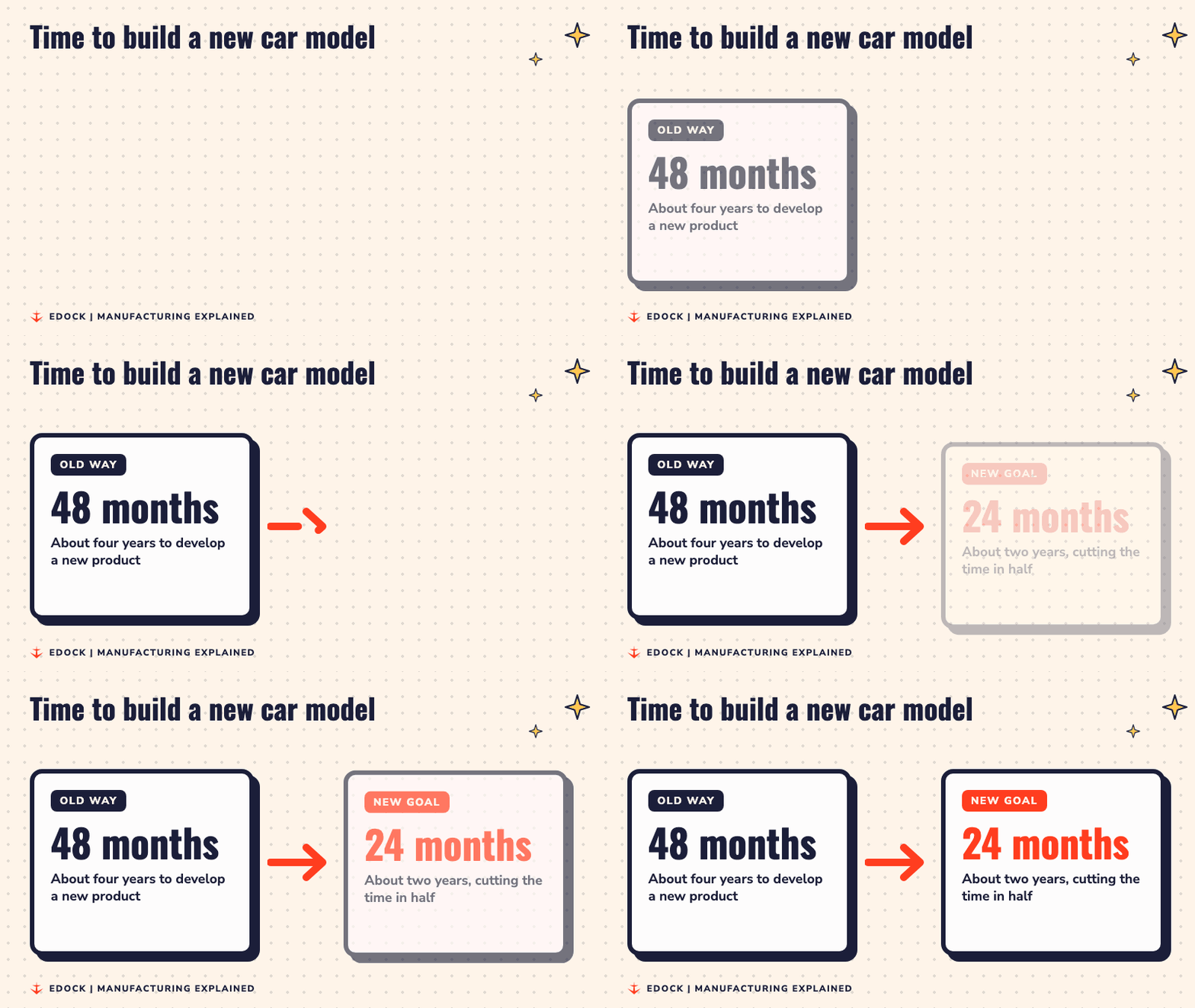
Hazela said Stellantis has a global goal to cut development time for new products from 48 months to close to 24 months. That is from about four years to about two years. He said the India team is working towards the same target for the cars it will launch.
Why does speed matter? Think of a chai stall near a college. If students suddenly want cold coffee, the stall that adds it next week wins. The stall that adds it next year has already lost those customers. Car buyers change their taste too. Today many want SUVs, CNG cars or electric cars. A company that takes four years may launch a car that people no longer want.
Hazela also said the Bengaluru centre is one of four large Stellantis tech centres in the world. It develops cars not only for Jeep and Citroen in India but also for models sold globally. It has the same goal of cutting development time.
What is localisation?
Localisation means making the parts of a product in the same country where it is assembled, instead of bringing them from abroad. Think of a samosa stall. If the owner buys potatoes, flour and spices from the local market, they are cheap and arrive fast. If the spices come from another country, they cost more, take weeks to arrive, and the price can jump if the rupee falls.
Cars work the same way. When the engine, gearbox and other parts are made in India, the car usually costs less to build. That helps the company set a lower price.
Hazela shared how local the two brands are today. Citroen cars are 90 to 95% localised, while Jeep is at around 70 to 75%. The goal is to reach more than 90% in the cars it makes here, using local engineering and a local supply chain. A supply chain is the line of companies that make and deliver parts to the factory. He said this gives the company room to price cars the way the market expects.
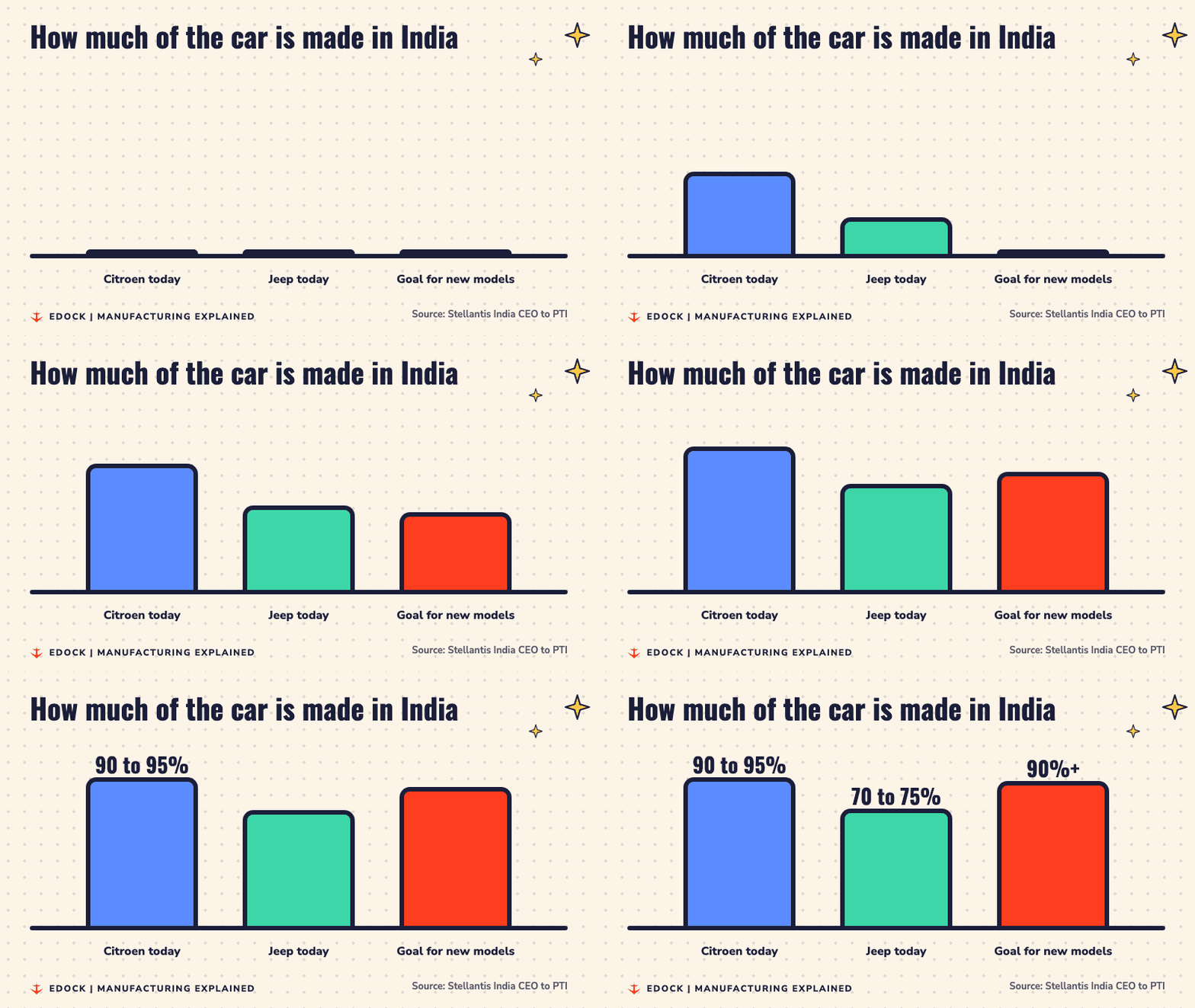
Citroen gives a hint of what is possible. Hazela told Autocar India that Citroen's India-developed cars reached 95% localisation, including the engine and transmission.
Twelve launches and Rs 4,000 crore
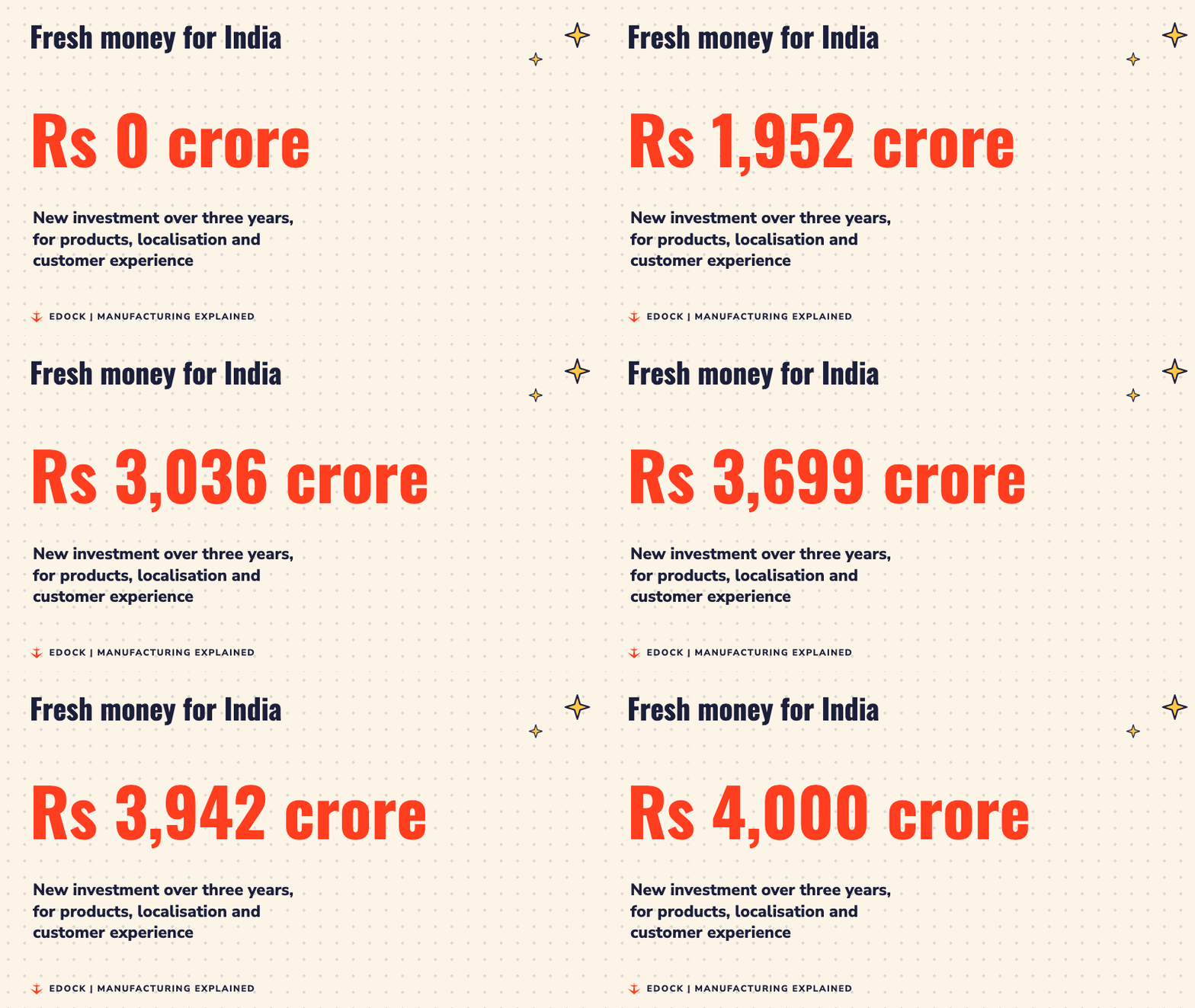
All of this is part of a plan called FaSTLAne 2030. Under it, Stellantis India plans to invest close to Rs 4,000 crore over the next three years. Hazela said this takes its total investment in India close to Rs 15,000 crore. The money will go mainly into products, localisation and customer experience.
Over three years, Jeep and Citroen will bring 12 models. Seven are new and five are refreshed versions of current cars. The first launch is planned for April to June 2027. Jeep gets four new models: SUVs in three size groups and a pickup truck. Citroen gets three: a mid-size SUV, a large MPV (a family people carrier) and a small car.
The company also wants to triple its sales in India by 2030, across both brands. The new cars will include regular fuel engines, factory-fitted CNG, hybrids and fully electric cars, as reported by BusinessLine.
Here is Hazela explaining the roadmap in his own words.
Where does Tata Motors fit in?
Stellantis and Tata Motors have worked together for more than 20 years. They share a factory through a 50:50 joint venture called Fiat India Automobiles. A joint venture is like two friends putting equal money into one shop and sharing it.
That plant is in Ranjangaon near Pune. It makes Jeep cars and Tata's Nexon, Altroz and Curvv. It also makes engines, gearboxes and electric motors, and sends cars to markets such as Japan and South Africa.
In a deal reported on 12 October 2026, the two companies signed a definitive agreement to go further. Tata will give Stellantis access to its vehicle technology and design platforms. Stellantis will adapt these cars for more than 50 global markets. The cars will be built in India at the joint venture factory.
This links back to speed. Using a design that already exists is like borrowing a friend's tested recipe instead of inventing a new dish from scratch. It can save a lot of time.
Why should a young Indian care?
Faster launches mean more choice in showrooms, sooner. More local parts can mean steadier prices. And when a global company builds cars in India for over 50 countries, more design, engineering and factory work happens here. For anyone studying engineering, design or supply chains, these are the kinds of teams that grow when such plans work out.
The targets are still targets. The first new car is due only in 2027. But the plan is clear: build faster, build more of it in India, and sell to the world from here.
Sources
- The Economic Times: Stellantis India targets to halve vehicle development time, boost localisation
- CNBC-TV18: Stellantis India targets 24-month vehicle development cycle
- BusinessLine: Stellantis India to invest Rs 4,000 crore, launch 12 Jeep and Citroen models
- Autocar India: Stellantis lines up 12 Citroen and Jeep launches for India by 2030
- CNBC-TV18: Tata Motors, Stellantis join hands to develop cars in India for 50+ markets
- Cover photos: Car factory assembly line, Opel factory in Gliwice, Poland, Car dashboard manufacturing process and Car dyno testing, by Marek Ślusarczyk (Tupungato), CC BY 3.0


