SRF to build a Rs 600 crore battery foil plant in Madhya Pradesh
Version 1 of 1 saved 21 Oct 2026, 7:08 pm IST · Chain line 119
As it was first published
SRF to build a Rs 600 crore battery foil plant in Madhya Pradesh
The thin aluminium sheet inside lithium-ion and sodium-ion cells will be made at Jetapur, in two phases by 2030. Here is what the foil does.
Picture the battery of an electric scooter. Deep inside sits a sheet of aluminium foil, much like the one that keeps your roti warm, only far thinner and purer. Without it, the battery cannot be built. Now an Indian company wants to make a lot more of it.
On Wednesday, 21 October 2026, chemicals maker SRF Ltd said its board had approved a plant worth about Rs 600 crore in Madhya Pradesh. It will make aluminium foil for batteries used in electric vehicles and in energy storage, according to the company's stock exchange filing.
What exactly is SRF building?
The plant will make what is called battery-grade aluminium foil. It will serve two kinds of batteries: lithium-ion and sodium-ion. Both are rechargeable batteries used in electric vehicles and in big energy storage units.
The plant can make about 12,000 tonnes of foil a year once it is fully built. One tonne is 1,000 kg, so that is 12 million kg of very thin metal every year.
It will come up at Jetapur in Madhya Pradesh. This is not an empty field. The plant goes on the existing site of SRF Altech Ltd, a company fully owned by SRF, as the filing quoted by ET says. SRF Altech already runs an aluminium foil factory there, set up with an investment of about Rs 536 crore.
Why does a battery need foil at all?
Think of a battery cell like a sandwich. There are two "breads" called electrodes. One side is the cathode, the positive side. The other is the anode, the negative side.
Each electrode needs a thin metal sheet to sit on, like butter needs bread. In a lithium-ion cell, aluminium foil does this job on the cathode side, and copper foil on the anode side, a senior Hindalco executive explained to EVreporter. The foil also carries the electric current in and out, which is why experts call it a current collector.
Here is how it is used. A cell maker buys the foil. It mixes a paste for the cathode, spreads it on the foil, dries it and then presses it flat. Only then does the sheet go into a cell.
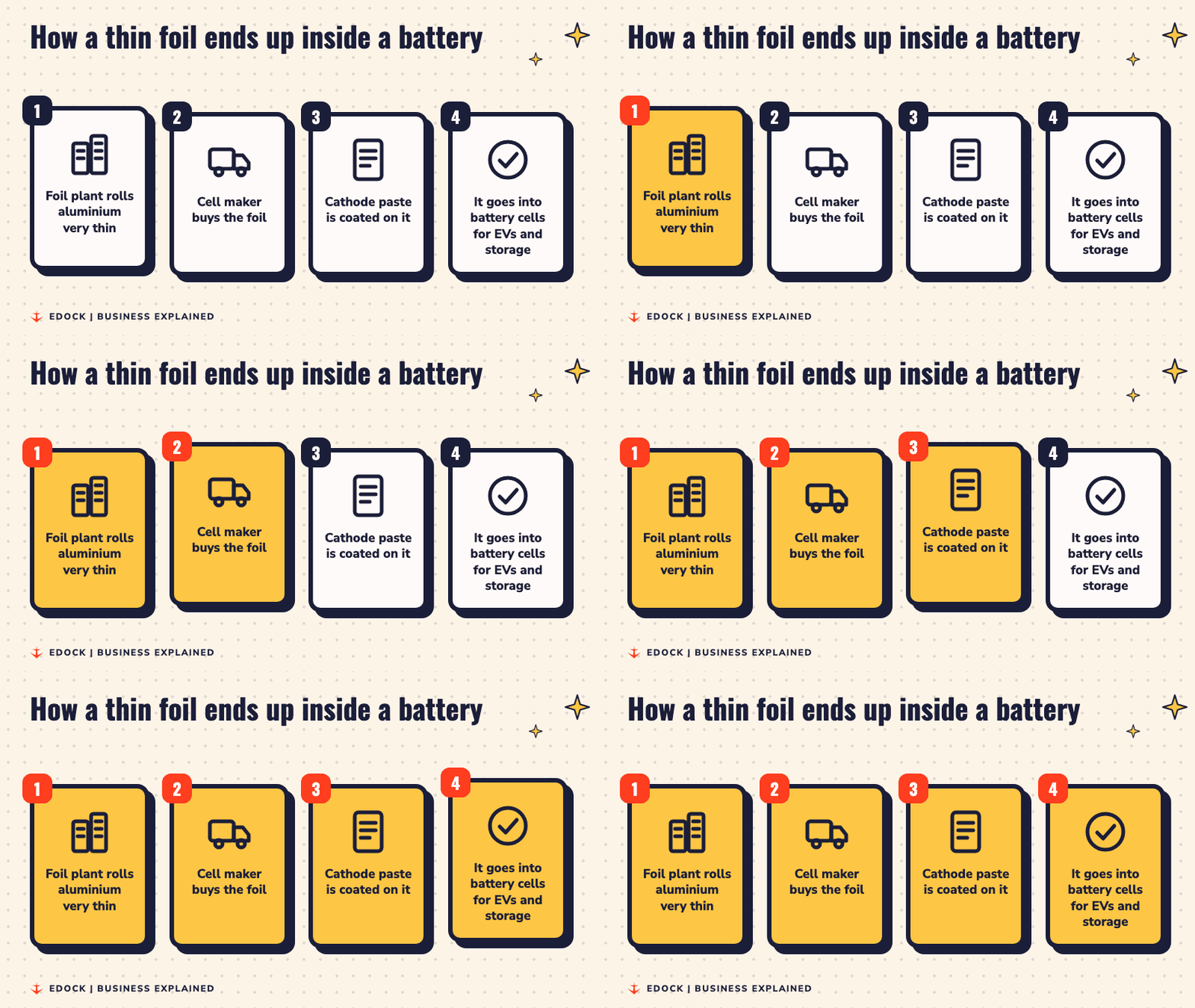
This foil cannot be any random kitchen foil. It must be very pure and the same thickness everywhere. One maker's battery foil is 12 to 20 microns thick. A micron is one thousandth of a millimetre.
How much foil does one battery factory eat?
Battery factories are measured in GWh, short for gigawatt hours. It is a way of saying how much energy all the cells made in a year can hold together.
To make 1 GWh of lithium iron phosphate cells, a common type used in electric vehicles, about 350 tonnes of aluminium foil is needed, says pv magazine India. A simple sum follows: 12,000 tonnes divided by 350 tonnes is about 34. So SRF's full plant could, in theory, feed roughly 34 GWh of such cells a year, if all of it went to that one type.
Sodium-ion cells need even more. They are expected to use aluminium foil on both sides, so the same report says the demand doubles for them.
Why make battery parts in India?
Every electric vehicle battery and every energy storage unit is made of cells, and every lithium-ion cell needs this foil. Battery-grade foil made at home can help India win a share of the raw materials market for the fast-growing global cell business, pv magazine India notes.
That is why Indian metal companies are racing into this space. In January 2026, Hindalco started what was called India's first battery-grade aluminium foil plant, in Odisha, to strengthen local supply for electric vehicles and energy storage. The foil is only about 4 to 5% of a lithium-ion cell's material cost, but without it, there is no cell.
Think of it like samosas. The filling gets all the attention, but without the outer layer, there is no samosa.
What is capex, and why two phases?
Money a company spends to build something that lasts for years, like a factory or a machine, is called capital expenditure, or capex. Money spent every month, like salaries and electricity, is not capex.
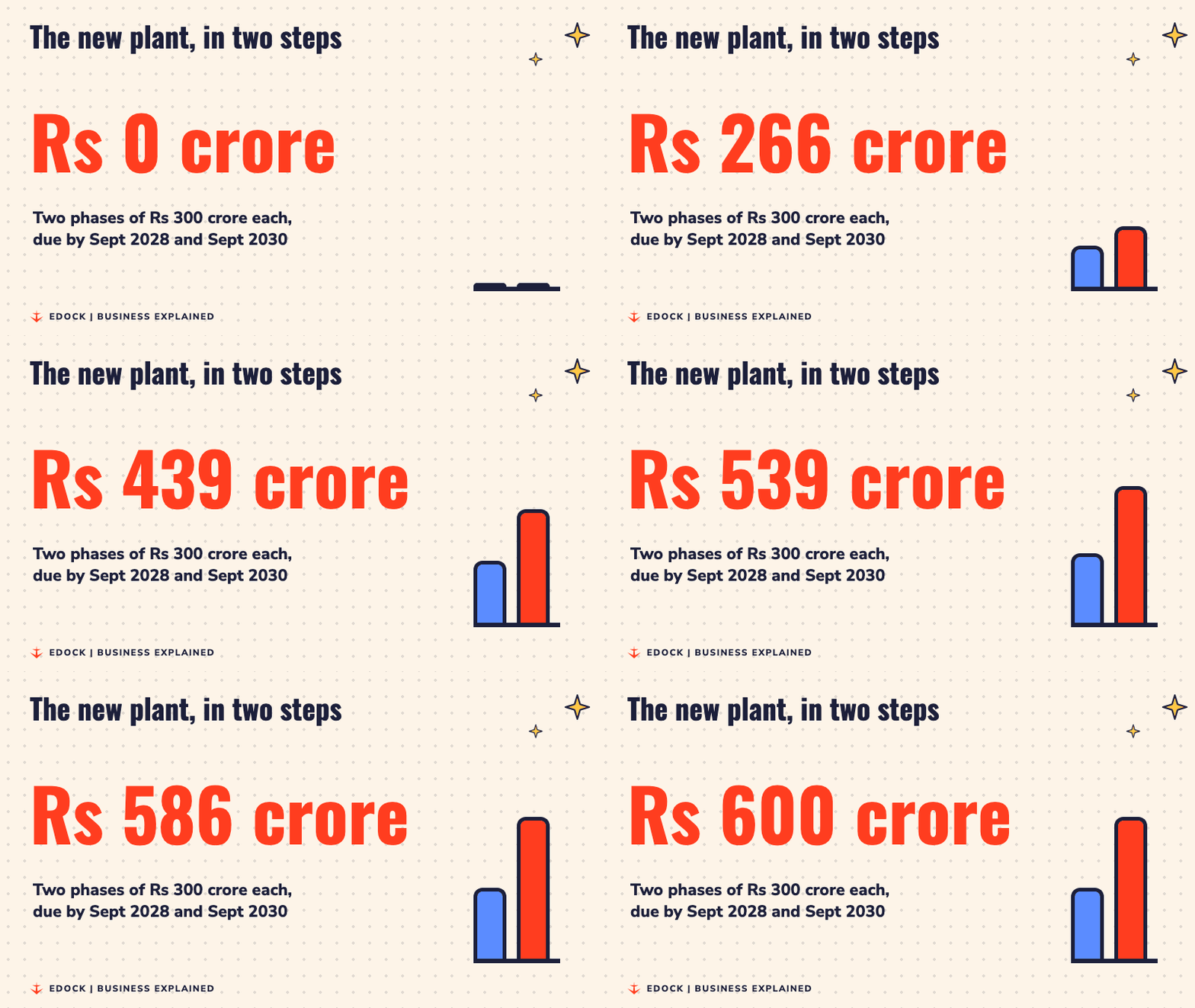
SRF will not spend the Rs 600 crore all at once. The plan is two phases of Rs 300 crore each. Phase I is due by September 2028. Phase II is due by September 2030. It is like a cricket team building its squad over two seasons instead of buying everyone in one auction.
How is SRF doing right now?
The plant news came on the same day as SRF's results for July to September 2026. Companies call this Q2 FY27, the second quarter of the money year that ends in March 2027.
Its revenue, the money that came in from sales, rose 35% to Rs 4,904 crore, from Rs 3,640 crore a year earlier. That is about Rs 1,264 crore more.
Its net profit, what is left after all bills and taxes, rose 31% to Rs 509.12 crore, from Rs 388.18 crore. So the new plant will cost a little more than one quarter's profit.
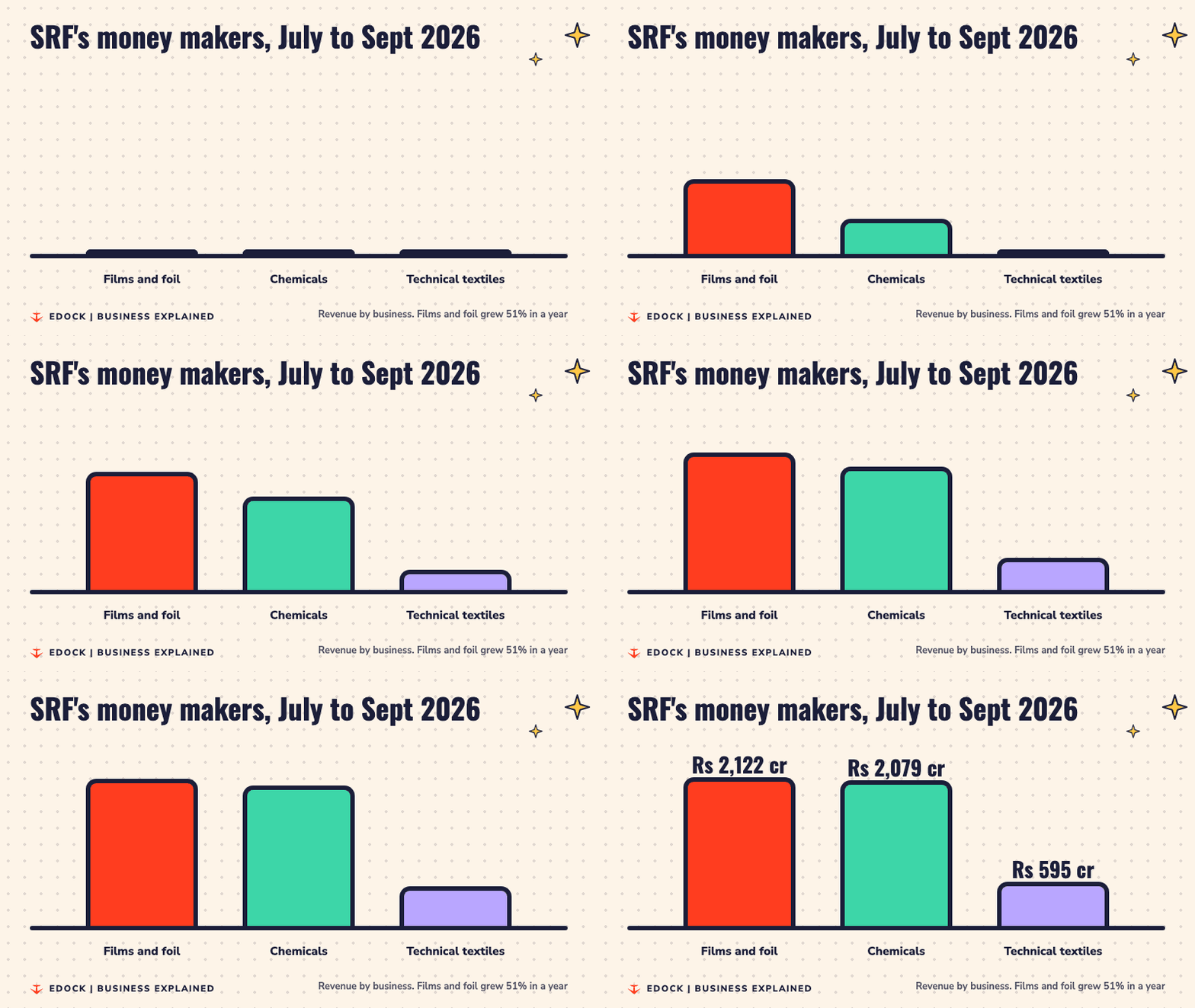
The fastest-growing part was the performance films and foil business. Its revenue jumped 51% to Rs 2,122 crore, and its operating profit rose 73% to Rs 206 crore. Chemicals brought in Rs 2,079 crore and technical textiles Rs 595 crore.
Chairman and Managing Director Ashish Bharat Ram said SRF's spending on "sunrise sectors" remains strong. Sunrise sectors are young industries that are expected to grow a lot, like batteries.
Who is SRF, anyway?
SRF makes chemicals, packaging films, foil, technical textiles and coated fabrics. It has 16 factories: 13 in India and one each in Thailand, South Africa and Hungary. It has more than 9,500 employees and sells to more than 90 countries.
So the next time you charge an electric scooter, remember the thin silver sheet inside. Soon, more of it may be made in Madhya Pradesh.
Sources
- The Economic Times: SRF announces Rs 600 crore aluminium foil plant in Madhya Pradesh
- BusinessLine: SRF Q2 profit rises 31% to Rs 509 crore
- Free Press Journal: SRF Q2 profit and new battery foil plant
- AL Circle: SRF's aluminium foil project
- EVreporter: Hindalco on battery foils for lithium-ion cells
- pv magazine India: Aluminium foil for lithium-ion cells
- Power Line: Hindalco's battery-grade aluminium foil plant in Odisha
- Cover photo: Aluminum foil 1, by James St. John, CC BY 2.0
