Silver drops to an 11-month low near ₹1.95 lakh a kg as oil prices climb
Costlier oil is raising fears of higher prices and interest rates, and silver has now lost more than half its value since its January record.

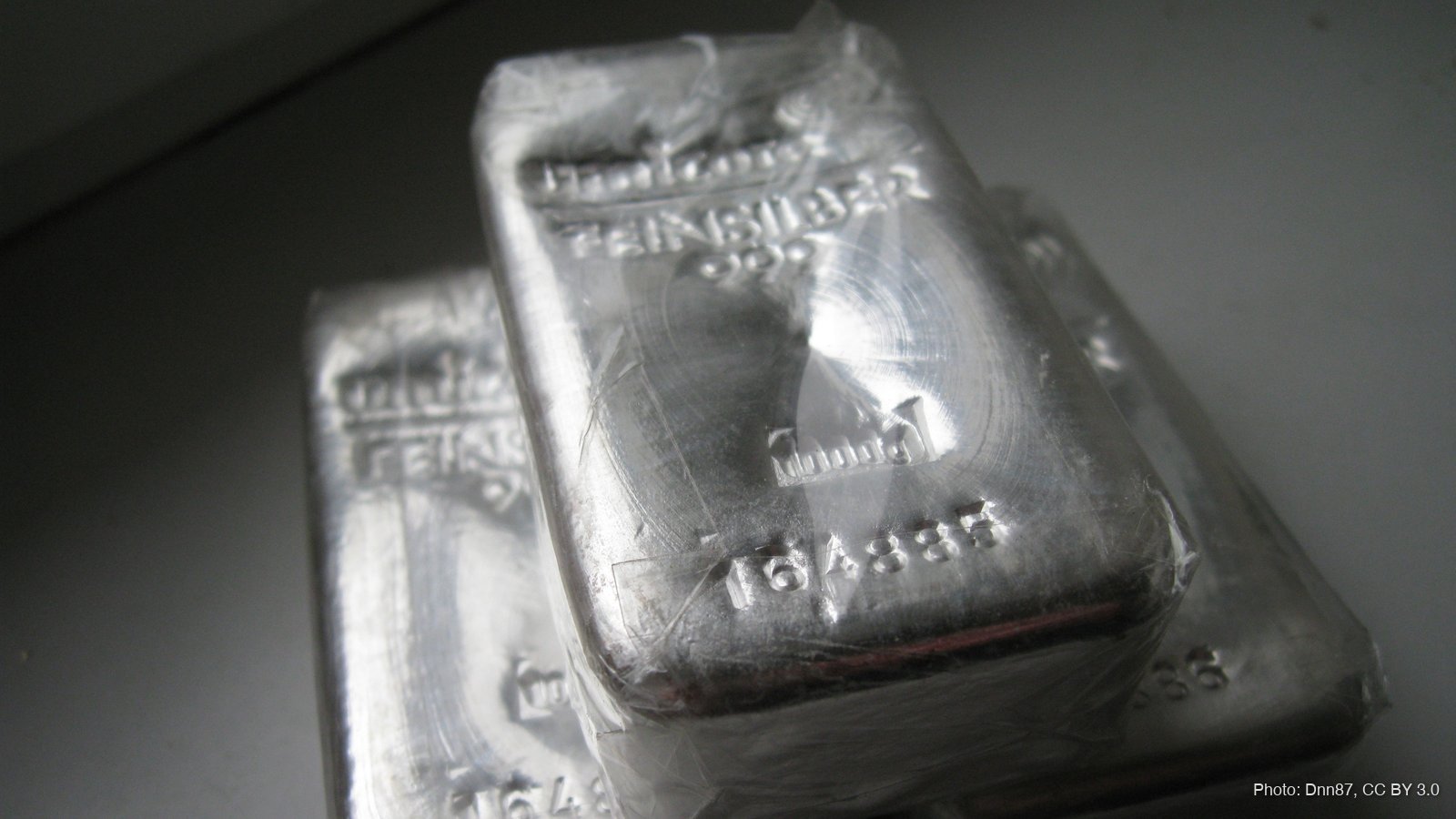
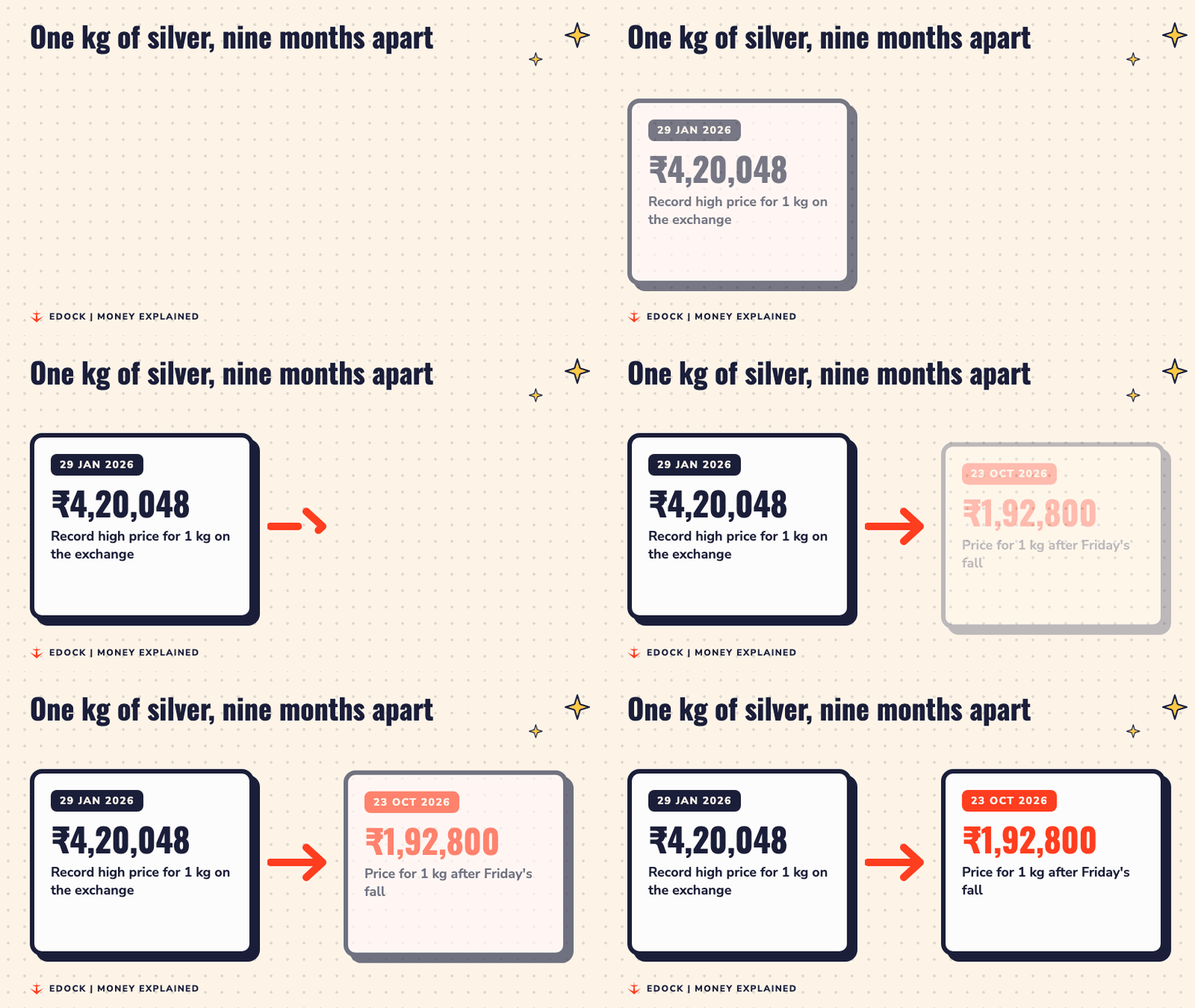
Picture this. At the start of 2026, one kilo of silver cost more than ₹4.2 lakh. On Friday, 23 October 2026, the same kilo was selling for less than half of that. Silver fell to an 11-month low, and in Mumbai's local market it was trading at about ₹1.95 lakh a kg, down from ₹2 lakh a day earlier.
The surprising part is the reason. It is not mainly about silver at all. It is about oil, and about the price of borrowing money. Here is the story in simple words.
What exactly happened on Friday?
India has a big market where people trade metals like gold and silver, called the Multi Commodity Exchange. On Friday, the price of silver there fell by ₹6,799 per kg, or 3.4%, to ₹1,92,800 per kg, as reported by The Economic Times. Over the last 10 trading days, silver has lost ₹32,955, which is more than 14%.
The price traded there is a "futures" price. Think of it like booking a cricket match ticket today at a fixed price for a match that happens next month. Traders agree on a price now for silver to be handed over later.
According to Mint, this was silver's lowest level since December 2025. Silver was down 7.5% for the week, its fifth weekly fall in a row.
How big is the fall from the top?
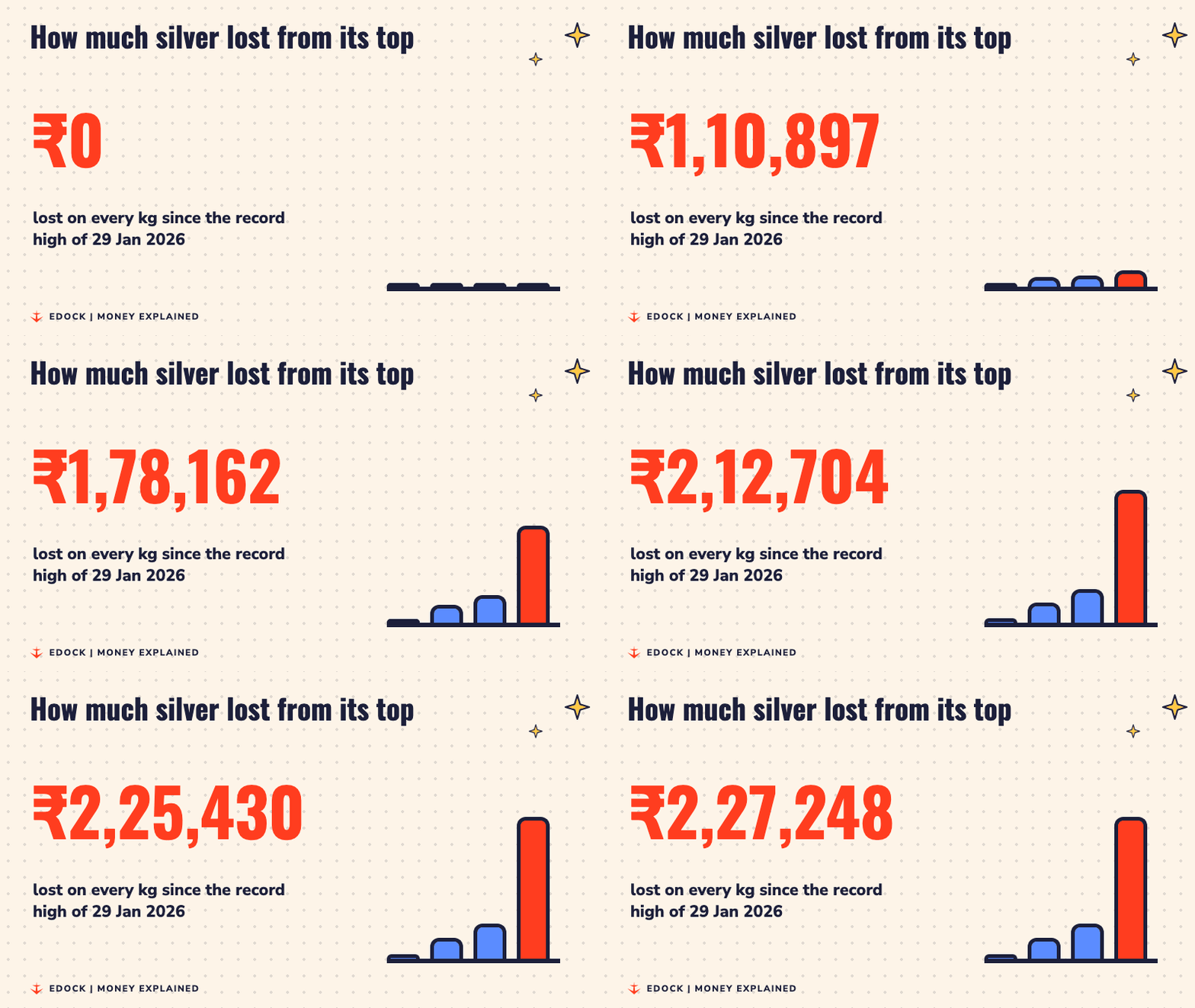
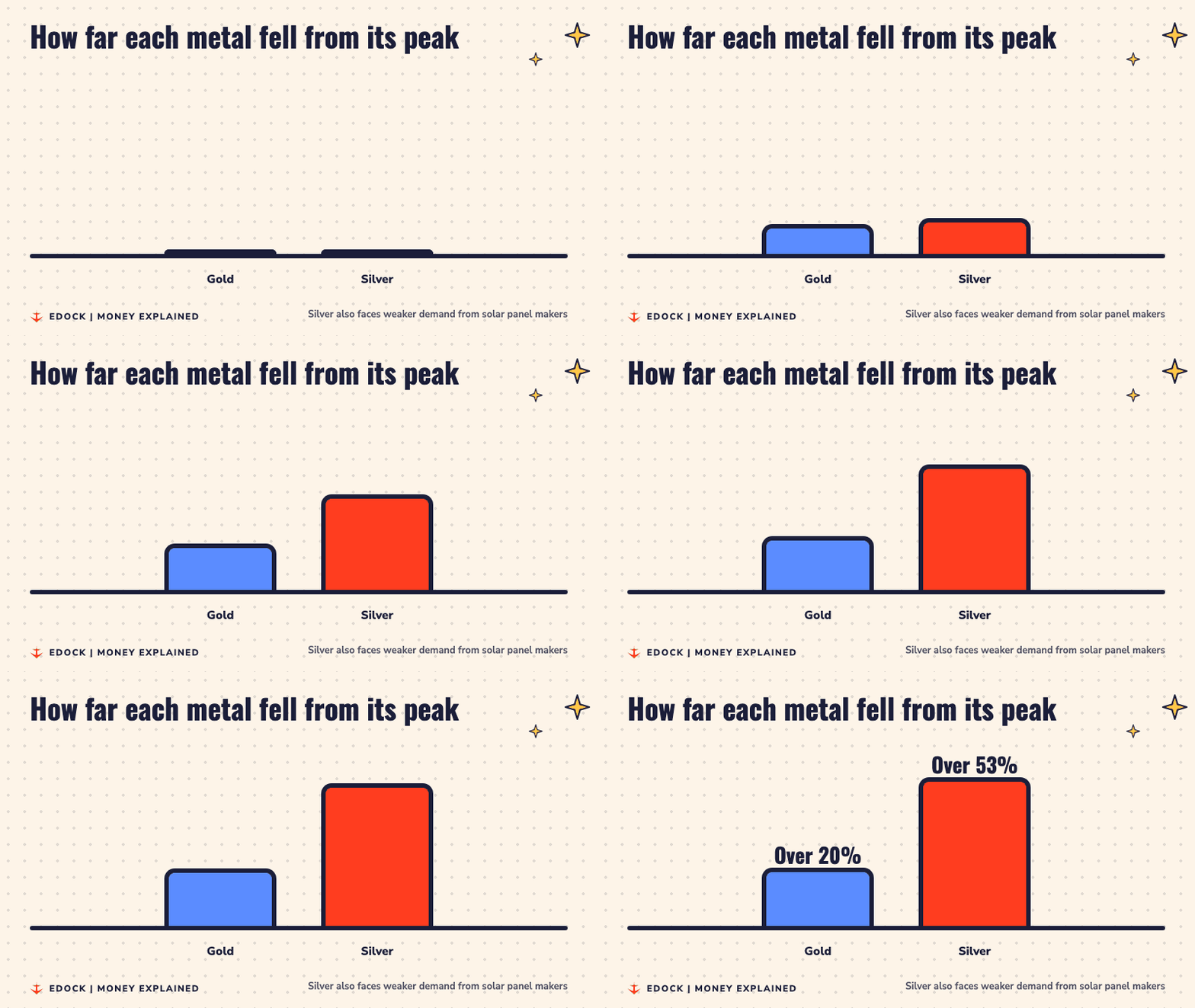
Silver hit a record high of ₹4,20,048 per kg on 29 January 2026. Since then, it has fallen more than 53%, says The Economic Times. From that record to Friday's ₹1,92,800, the drop works out to ₹2,27,248 on every kilo.
Even the shorter story is sharp. In August, silver was at ₹2,48,800 per kg. It has fallen ₹56,000 since then, reports Mint. It is worth remembering that the price had gone up about 170% in 2025, so it climbed very fast before it came down.
Why does oil pull silver down?
This is the key idea, so take it step by step.
Step 1: Oil got costly. Brent crude, a world price for oil, climbed above $110 a barrel because of fresh supply risks in the Gulf, says The Economic Times. Mint reported it moving towards $115 on Friday, close to a four-year high of $115.25 reached on 4 May.
Step 2: Costly oil means costly everything. Oil runs trucks, ships and factories. When oil costs more, the cost of moving and making almost everything goes up. This general rise in prices is called inflation. It is like your favourite samosa going from ₹15 to ₹20 because the shopkeeper's gas cylinder and oil got costlier.
Step 3: Banks fight inflation with higher interest rates. To slow rising prices, central banks raise interest rates, which makes borrowing costlier. The US central bank, the Federal Reserve, raised its rate in September for the first time in three years, Mint notes. Markets now see an 81% chance of another US rate rise in December, based on a tool called CME FedWatch, as per the same Mint report.
Step 4: Higher rates make silver look less attractive. A savings account or a bond pays you interest every year. A bar of silver in a locker pays you nothing. When interest rates go up, the money you "miss out on" by holding metal gets bigger. Gold and silver do not generate interest income, so assets that pay interest start to look better.
Imagine two piggy banks. One quietly adds a few rupees to your savings every month. The other just sits there. When the first one starts adding more, many people move their money into it.
Aditya Agarwala, chief investment officer at InvestValue, put it in one line to The Economic Times: "Oil is driving this selloff more than fear is."
Silver has a second problem
Unlike gold, silver is both a savings metal and a factory metal. It is used in electronics, solar panels and many manufacturing processes, so its price reacts when factories slow down.
Right now, that side is weak too. The Economic Times reports weakness in solar panel manufacturing in China and worries about demand from chip makers during a fall in technology shares. So silver is being hit from two sides: savers and factories.
What about gold?
Gold is falling as well, but less. On the same exchange, gold futures slipped below ₹1.42 lakh per 10 grams on Friday, more than 20% below this year's peak of ₹1.81 lakh in January, says The Economic Times. Around the world, gold fell to about $4,015 an ounce, its lowest since 20 July.
India also got a small cushion. The rupee has become a little stronger recently, which makes metals bought from abroad slightly cheaper. But The Economic Times says this gave only limited relief against the fall in world prices.
What does this mean for wedding and festive shoppers?
Many Indian families buy silver for weddings and festivals: anklets, coins, pooja plates and gifts. The price at the local jeweller is linked to the market price.
But the two numbers are not the same. As Times Now explains, the exchange price is for a trading contract, while the rate a dealer offers can change with local market conditions and extra charges. So the price you see on the news is a guide, not the exact bill at the counter.
Nobody can say where silver goes next. The next big event markets are watching is the US Federal Reserve meeting on 27 and 28 October, Mint reports. What is clear today is the chain: costlier oil, fears of rising prices, higher interest rates, and a metal that pays no interest losing its shine.
Sources
- The Economic Times: Silver hits 11-month low of ₹1.95 lakh as crude stokes inflation fears
- Mint: Silver crashes ₹56,000 per kg from August peak; gold slides ₹23,000 per 10 grams
- Times Now: Silver price crash below ₹2 lakh, why the white metal has fallen 53% from its record high
- Business Today on YouTube: Gold heads for worst week in months
- Cover photo: Silver bars, by Dnn87, CC BY 3.0

You may republish this story under CC BY 4.0: credit Arshdeep Singh and link to this page.