SBI Card's profit jumps 75% to Rs 778 crore even as spending grows only 3%
Version 1 of 1 saved 24 Oct 2026, 10:48 am IST · Chain line 203
As it was first published
SBI Card's profit jumps 75% to Rs 778 crore even as spending grows only 3%
Fewer unpaid card bills meant far less money kept aside for bad loans. Here is how a credit card company earns, in simple words.
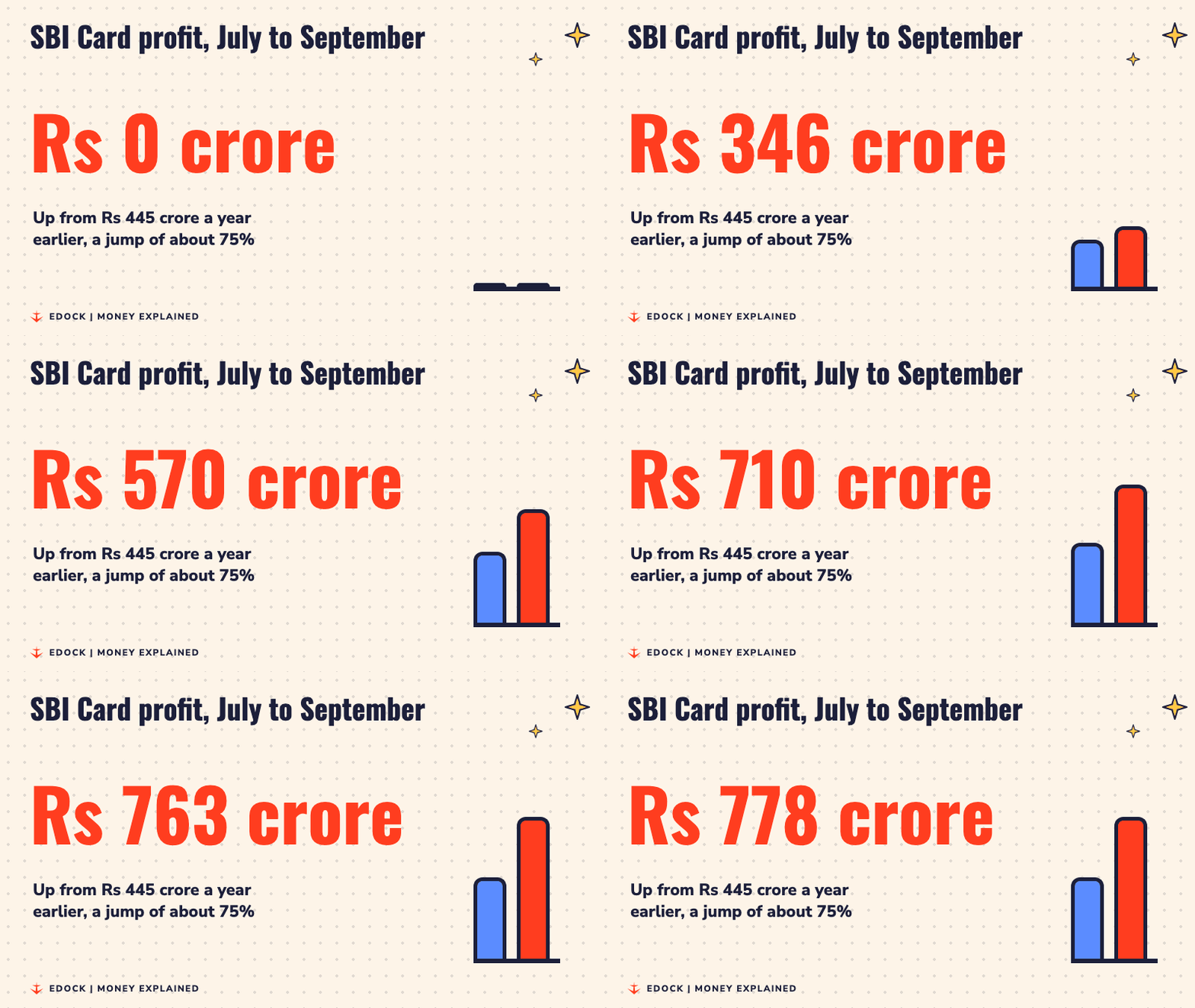
Picture this. A company's card spending grows by just 3% in a year. Its revenue grows by less than 4%. And yet its profit jumps by about 75%. That is exactly what SBI Card, one of India's biggest credit card companies, reported on Friday, 23 October 2026.
SBI Card's profit after tax rose to Rs 778 crore for July to September 2026, up from Rs 445 crore a year earlier. So how does a company earn so much more when its sales barely move? The answer is a story about borrowed money, and about people paying it back.
First, who is SBI Card?
SBI Card, whose full name is SBI Cards and Payment Services, is the credit card arm of State Bank of India, a public sector lender. Its shares are listed on the stock market, so it shares its results with the public every three months. Those three months are called a quarter. July to September is Q2 of the money year that ends in March 2027, which companies write as Q2 FY27.
A credit card is like a friend at the canteen who pays for your samosa today and asks you to pay back at the end of the month. If you pay the full amount on time, it costs you nothing extra. If you pay late or pay only part of it, the friend starts charging you extra money on what you still owe. That extra is called interest.
SBI Card's cards-in-force rose 8% to 2.32 crore by the end of September, from 2.15 crore a year earlier. "Cards-in-force" simply means the number of SBI credit cards that are out there and active in people's wallets.
How does a card company make money?
Think of a lemonade stall. The money that comes in from selling glasses is its revenue. Whatever is left after paying for lemons, sugar and cups is its profit.
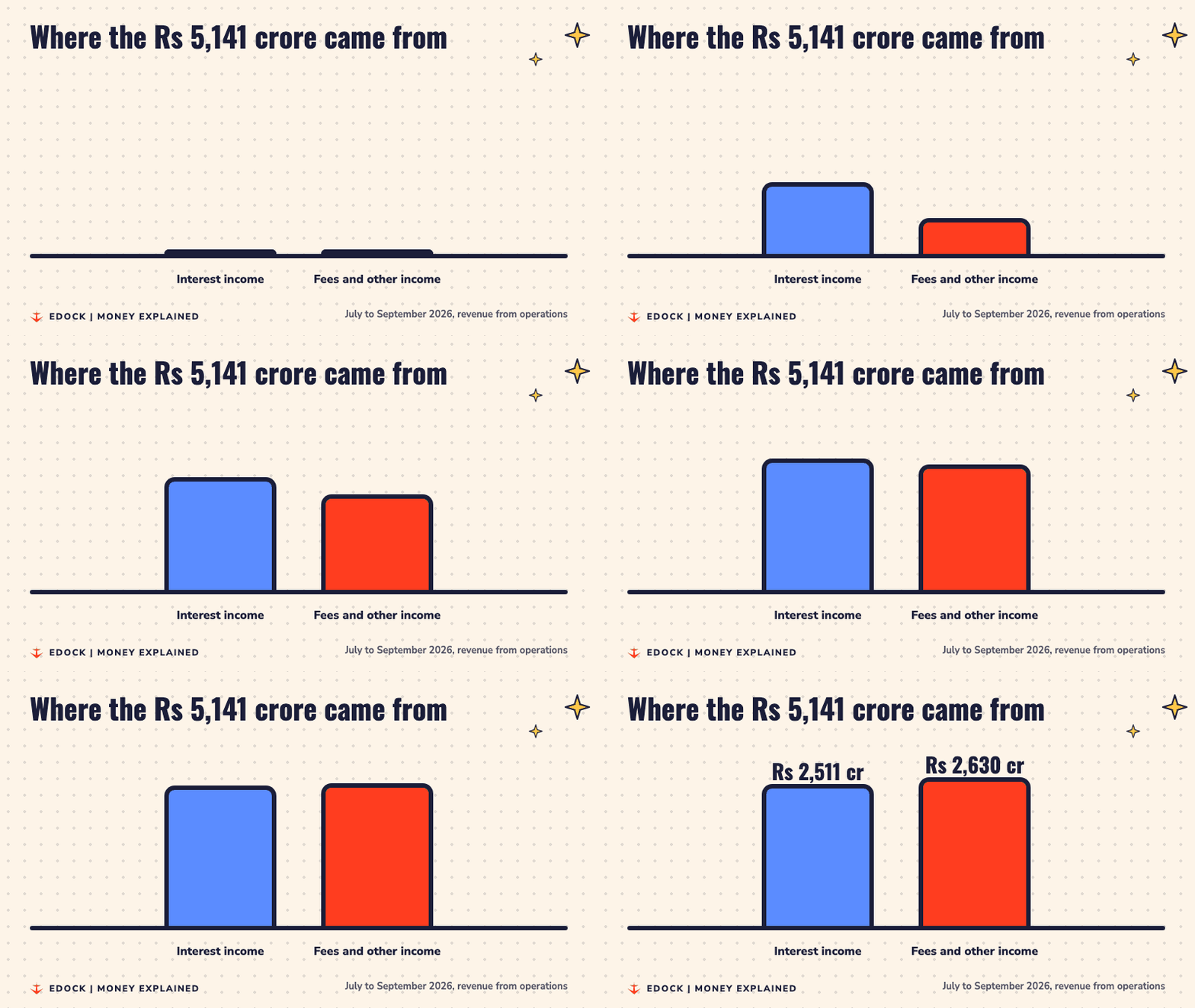
For SBI Card, revenue from operations rose 3.6% to Rs 5,141 crore. That money came from two big buckets. Interest income rose 1% to Rs 2,511 crore. This is the extra money people pay when they do not clear their full bill. Fees and other income rose 6% to Rs 2,630 crore. That bucket holds the charges and other earnings outside interest. Add the two and you get Rs 5,141 crore.
Notice something: the fees bucket is now slightly bigger than the interest bucket.
Card spending tells a similar slow story. Total spending on SBI cards rose 3% to Rs 1.11 lakh crore. The exact figure was Rs 110,689 crore, against Rs 107,063 crore a year earlier. New accounts added in the quarter rose to about 11 lakh, from about 9.4 lakh.
So where did the big profit come from?
Here is the twist. Before counting bad loans, SBI Card actually earned a little less than last year. Its earnings before credit costs fell 1% to Rs 1,865 crore, from Rs 1,892 crore. Total operating costs rose 7% to Rs 2,649 crore. The cost of its own borrowing rose 4% to Rs 787 crore.
The big change came from one line: money set aside for bad loans.
Imagine you lend pocket money to ten friends. You know from experience that one or two may never pay you back. So, to be safe, you keep some money aside in a box, ready to cover that loss. Companies do the same thing. That box is called a provision.
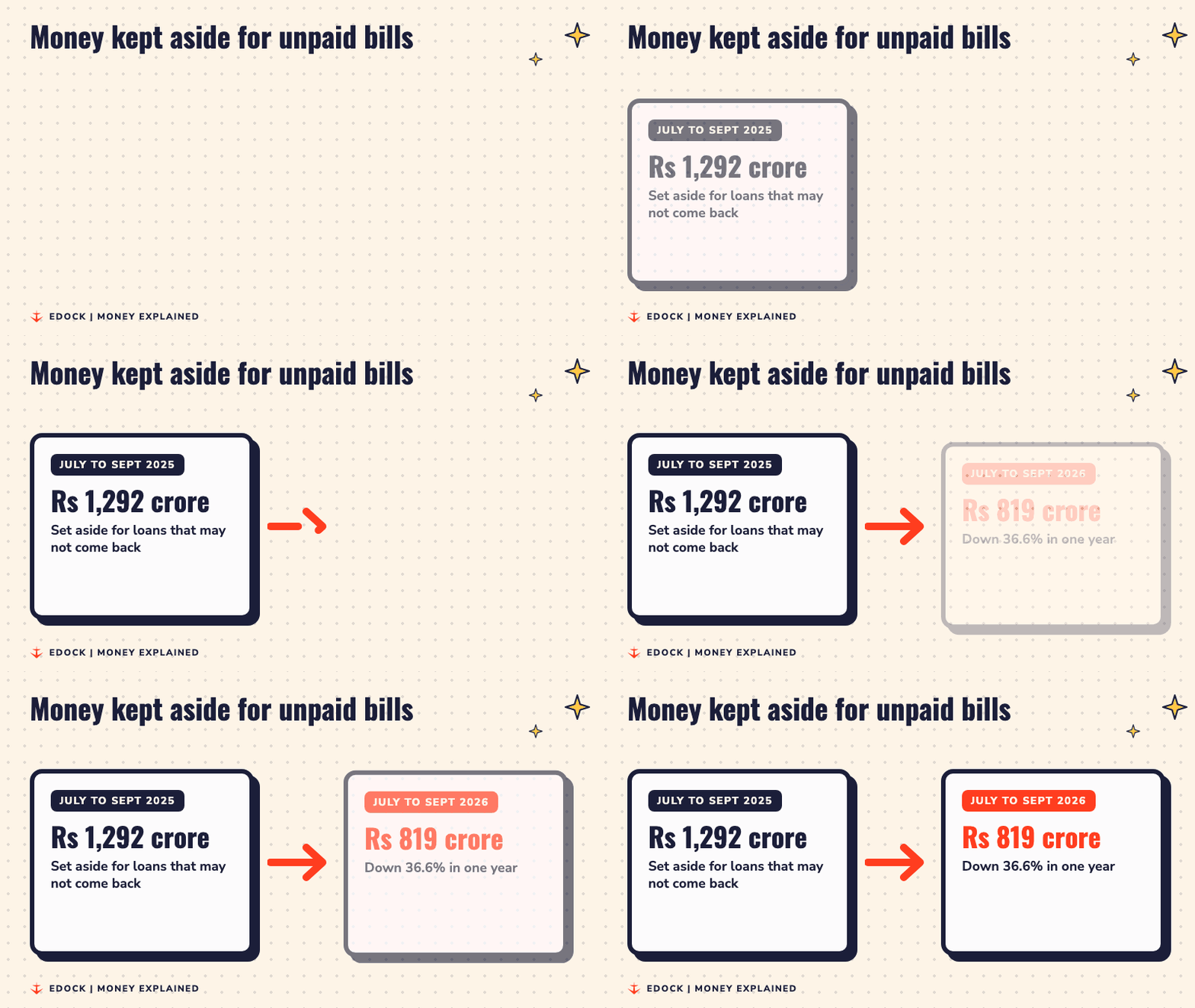
A year ago, SBI Card had to fill a big box. This year, the box was much smaller. Its impairment costs fell 36.6% to Rs 819.37 crore, from Rs 1,292 crore. "Impairment" is a fancy word for the value of loans that may not come back. Less money in the box means more money left over as profit.
Check the sum: Rs 778 crore minus Rs 445 crore is Rs 333 crore of extra profit. The fall in provisions, about Rs 473 crore, is bigger than that whole gain. That is the real engine behind the 75% jump.
What is "asset quality"?
For a card company, the money people owe it is its asset, like the IOU notes your friends give you. "Asset quality" asks a simple question: how many of those IOUs will actually be paid?
When a borrower stops paying for a long time, the loan becomes a non-performing asset, or NPA. Think of the friend who borrowed Rs 500 for a movie three months ago and now changes the topic every time you meet.
SBI Card's gross NPAs stood at 1.90% at the end of September, down 14 basis points from three months earlier. A basis point is one hundredth of one percent, so 14 basis points is 0.14 percentage points. Its net NPAs fell to 0.77%, from 1.29% a year earlier. "Net" means after removing the part already covered by money in the box.
Why did this improve? According to Business Standard's report, the company has steadily tightened credit underwriting over the last few quarters. Underwriting is the check a lender does before saying yes, like asking around before you lend money to a new classmate. A stricter check means fewer cards go to people who may struggle to pay.
The company still kept a little extra cushion. It made an additional provision of Rs 30 crore above what its usual model asked for, pointing to an uncertain economic environment.
How did the stock market react?
Good news on paper did not lift the share price that day. After the results, SBI Card's stock fell 7.3% to a 52-week low of Rs 525 on the NSE, before closing 3.66% lower at Rs 545.55. A 52-week low means the cheapest price in a whole year. Spending and revenue, remember, grew only slowly this quarter. This post does not say whether the share is a good or bad buy.
Why should a first-jobber care?
Many young people get their first credit card soon after their first salary. This result shows how the business behind that card works. A large part of the company's money comes from interest when people do not clear their full bill. And the company has become stricter in checking who gets a card.
SBI Card also says it is ranked second in India in both cards-in-force and spending, using RBI data up to August 2026. So what happens inside this one company says a lot about how Indians borrow on plastic.
Want the bigger picture of how card companies earn money? This explainer walks through it.
Sources
- Business Standard: SBI Card Q2 profit rises 75% to Rs 778 crore as asset quality improves
- APAC News Network: SBI Card Q2 results, net profit Rs 778 crore
- The Week: SBI Card Q2 profit jumps 74 per cent after shrinking impairment costs
- Cover photo: State Bank of India branch, Hudkeshwar, Nagpur, by Ganesh Dhamodkar, CC BY 4.0
