Samsung made $80 billion profit in three months. AI memory chips did it
AI is gobbling up memory chips, so their prices have shot up. That helped Samsung, and it is also why phones cost more.
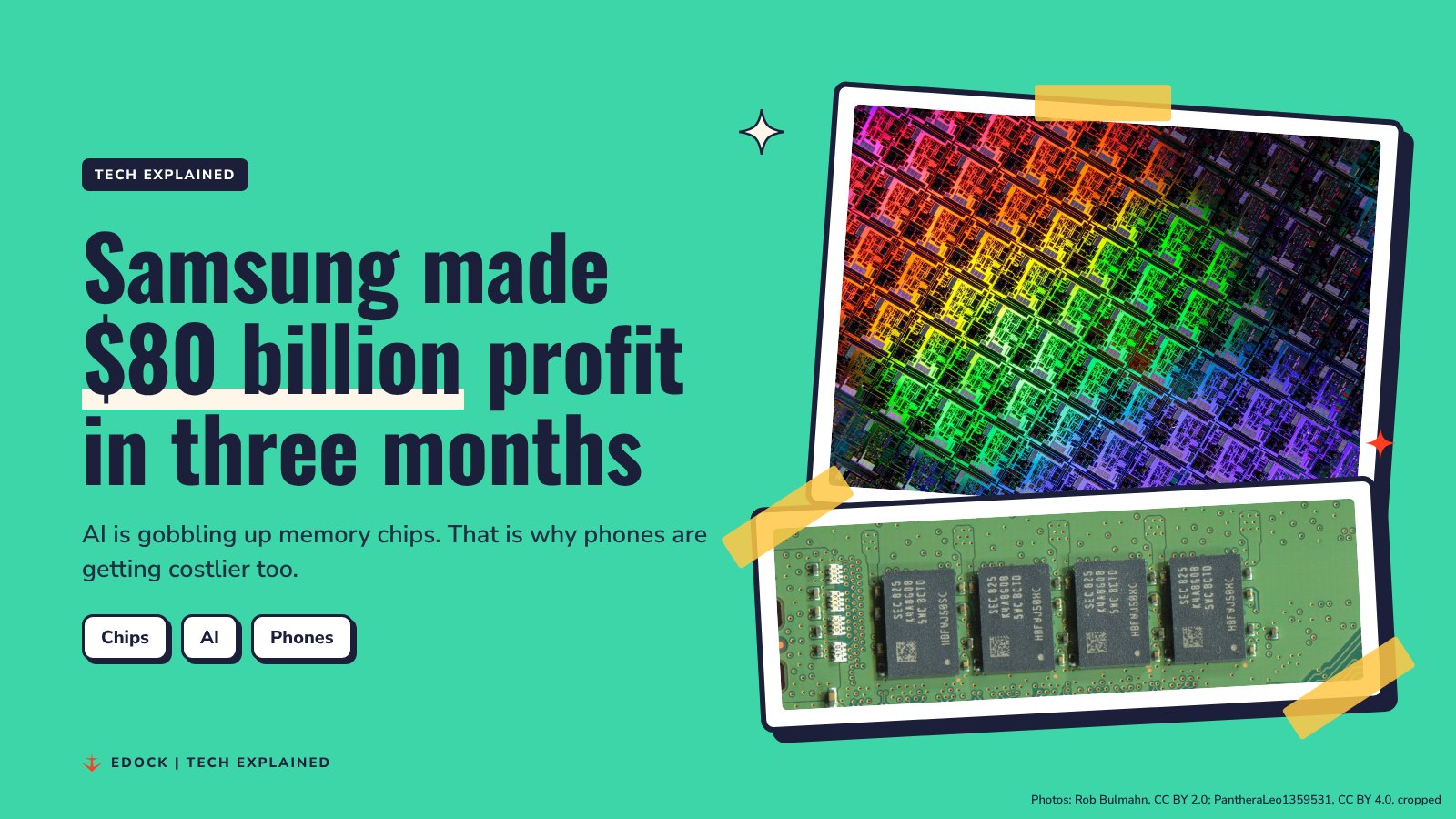
Picture this. In just three months, one company made about $80 billion in profit. That is more than the best three months ever for Nvidia, the star of the AI boom, which made about $63.7 billion in its record quarter. The company is Samsung, and it shared the numbers on 8 October 2026.
Most of us know Samsung for phones and TVs. But this giant profit did not come from phones. Its chip division is expected to account for almost all of it. It came from tiny memory chips, and from AI's huge hunger for them. Here is the story, step by step.
How big is this profit?
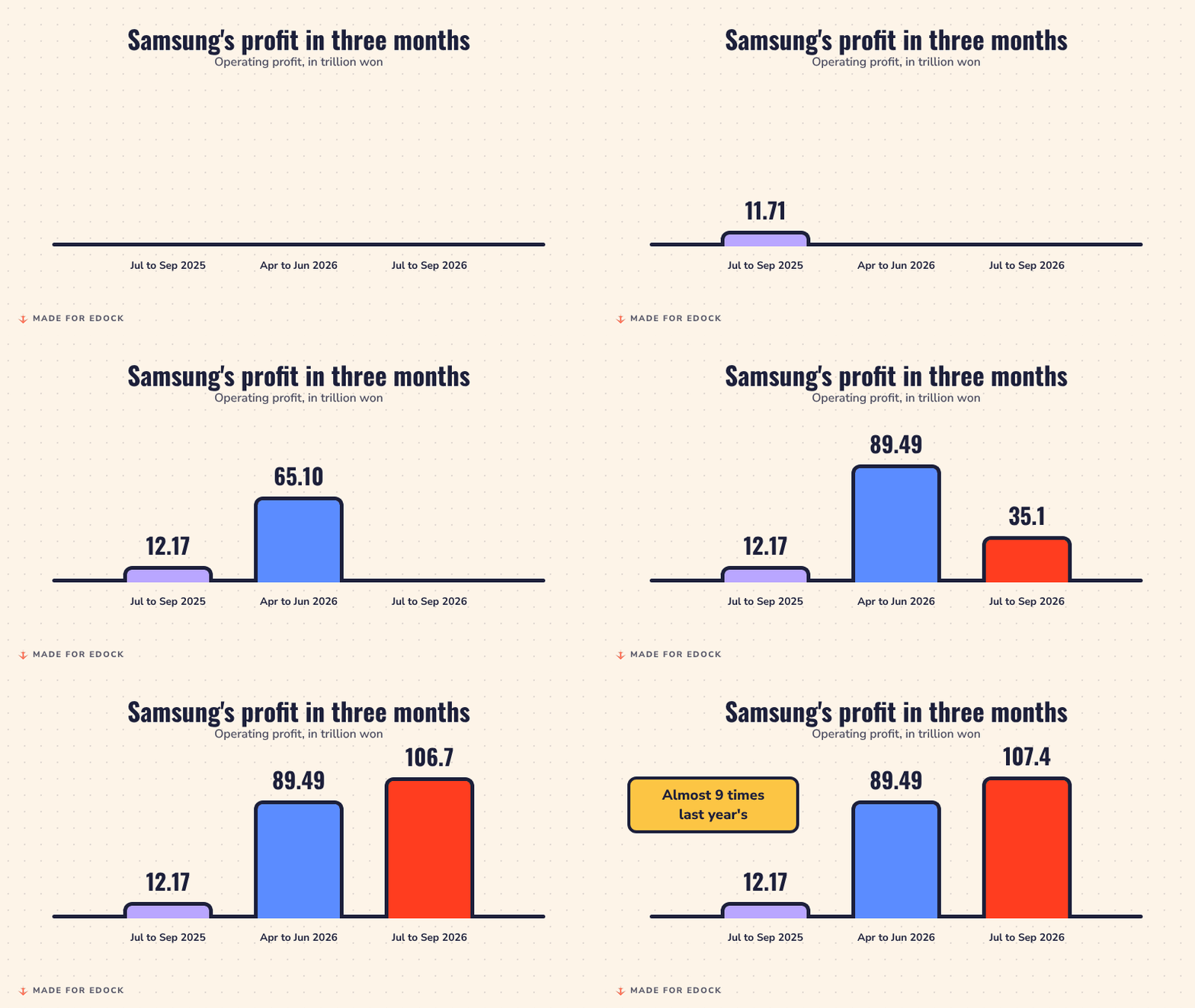
Samsung said its operating profit for July to September 2026 was about 107.4 trillion Korean won. Operating profit is the money left from sales after paying the costs of running the business, like staff, factories and materials. Think of a chai stall: you sell ₹1,000 of chai, spend ₹600 on milk, tea leaves and the helper's pay, so your operating profit is ₹400.
In US dollars, that is about $80.1 billion. It is the first time Samsung has crossed 100 trillion won in a single quarter, and its fourth record quarter in a row. A quarter is just a three-month block of the year.
Now compare. One year earlier, in the same three months of 2025, Samsung's operating profit was 12.17 trillion won. So this year's number is almost 9 times bigger. Even compared with April to June 2026, when it made 89.49 trillion won, profit jumped about 20% in three months.
Sales grew too, from 86.06 trillion won a year ago to about 195 trillion won now. That is more than double. And out of every 100 won Samsung earned in sales, about 55 won was left as operating profit.
Wait, what is a memory chip?
Every phone, laptop and computer needs memory. There are two main kinds.
- DRAM is like your study desk. It holds what you are working on right now, so the device can grab it fast.
- NAND flash is like your cupboard. It stores your photos, apps and files, even when the power is off.
Samsung makes both kinds. It also makes a special kind called HBM, or high-bandwidth memory. HBM is a stacked type of memory used with AI processors. Picture many thin layers of memory piled up like a stack of rotis, so data can move very quickly.
Why did profit shoot up?
The short answer: AI. Samsung's memory chips go into the servers that train and run AI models, and Samsung says demand for AI chips drove its memory growth. The Next Web reports that demand for AI infrastructure has grown faster than the supply of memory chips, and the gap is expected to last into 2027.
When many people want something and there is not enough of it, the price goes up. It is like the last few samosas in the college canteen at lunch break. Everyone wants one, so the seller can charge more.
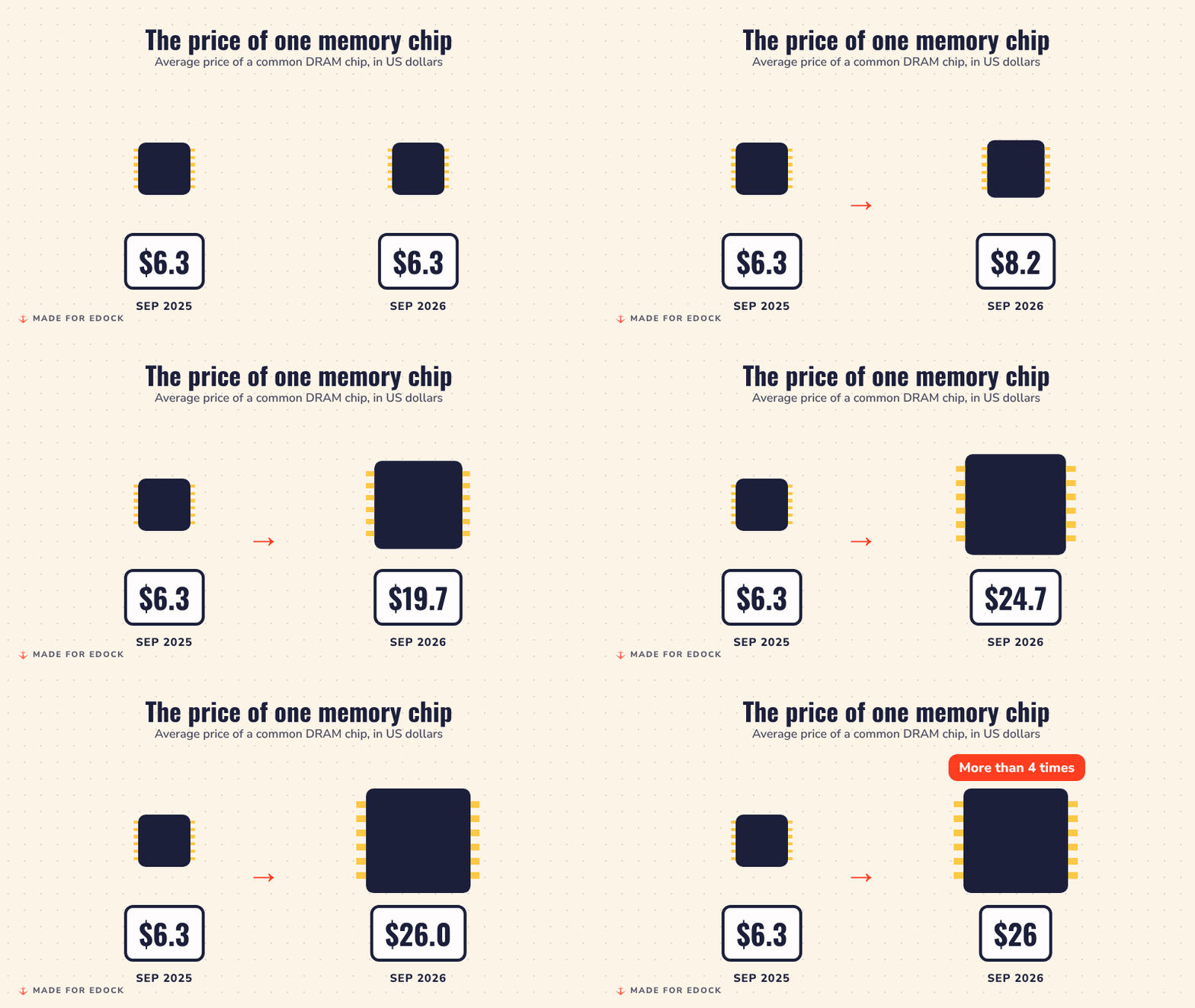
That is exactly what happened to memory. Seoul Economic Daily says a common DRAM chip cost an average of $26 at the end of September 2026. A year earlier, it was $6.3. That is more than 4 times the price. A common NAND chip became about 8 times pricier over the same year.
Samsung's sales of its newest HBM4 chips also rose steeply, as big tech firms got ready to launch new AI chips like Nvidia's Vera Rubin.
So why are phones getting costlier?
Here is the twist. The same chip shortage that helps Samsung's chip business hurts phone makers, including Samsung itself. Every phone needs memory, and now that memory costs much more.
Samsung's own phone and appliance unit is expected to post a loss. Earlier in October, Samsung raised Galaxy S26 prices by $100 in the US and South Korea, citing memory costs.
India is feeling it too. Research firm Omdia says smartphone shipments in India fell 13% in April to June 2026, to 33.9 million phones. Shipments means phones sent to shops and sellers. Omdia says rising memory costs pushed handset prices up again and again. It expects prices to stay high for the rest of 2026, and does not see them settling before the first half of 2027.
Another research firm, IDC, saw the same trend. According to CRN Asia, IDC found the average Indian phone price hit a record $315, up 14.4% in a year. Shipments of phones under $100 fell 74.3%.
What happens next?
These are early numbers. Samsung calls them earnings guidance: early estimates, shared as the middle point of a small range. The full results, with a breakdown for each business, are due on 29 October 2026.
For now, the lesson is simple. AI is not just apps and chatbots. It runs on physical chips, and when AI needs more of them, the memory inside your next phone gets costlier too.
Sources
- Samsung Newsroom: Earnings guidance for third quarter 2026
- Seoul Economic Daily: Samsung quarterly operating profit tops 107 trillion won
- The Next Web: Samsung expects record $80bn quarterly profit as AI memory demand soars
- Omdia: India smartphone shipments fall 13% in 2Q26
- CRN Asia: India smartphone shipments fall 11.1 percent as memory shortage pushes prices to record high
- Cover photos: 5C2A5960R Silicon Wafer, by Rob Bulmahn, CC BY 2.0; 16 GiB DDR4 RAM module, by PantheraLeo1359531, CC BY 4.0, cropped


You may republish this story under CC BY 4.0: credit Manpreet Kaur and link to this page.