Sagarmala Finance wants to lend Rs 60,205 crore for ports and ships by 2031
Version 1 of 1 saved 24 Oct 2026, 6:08 am IST · Chain line 192
As it was first published
Sagarmala Finance wants to lend Rs 60,205 crore for ports and ships by 2031
India's only lender just for ports and shipping has paid out Rs 5,107 crore so far. Here is what its new goal means and what it still needs.
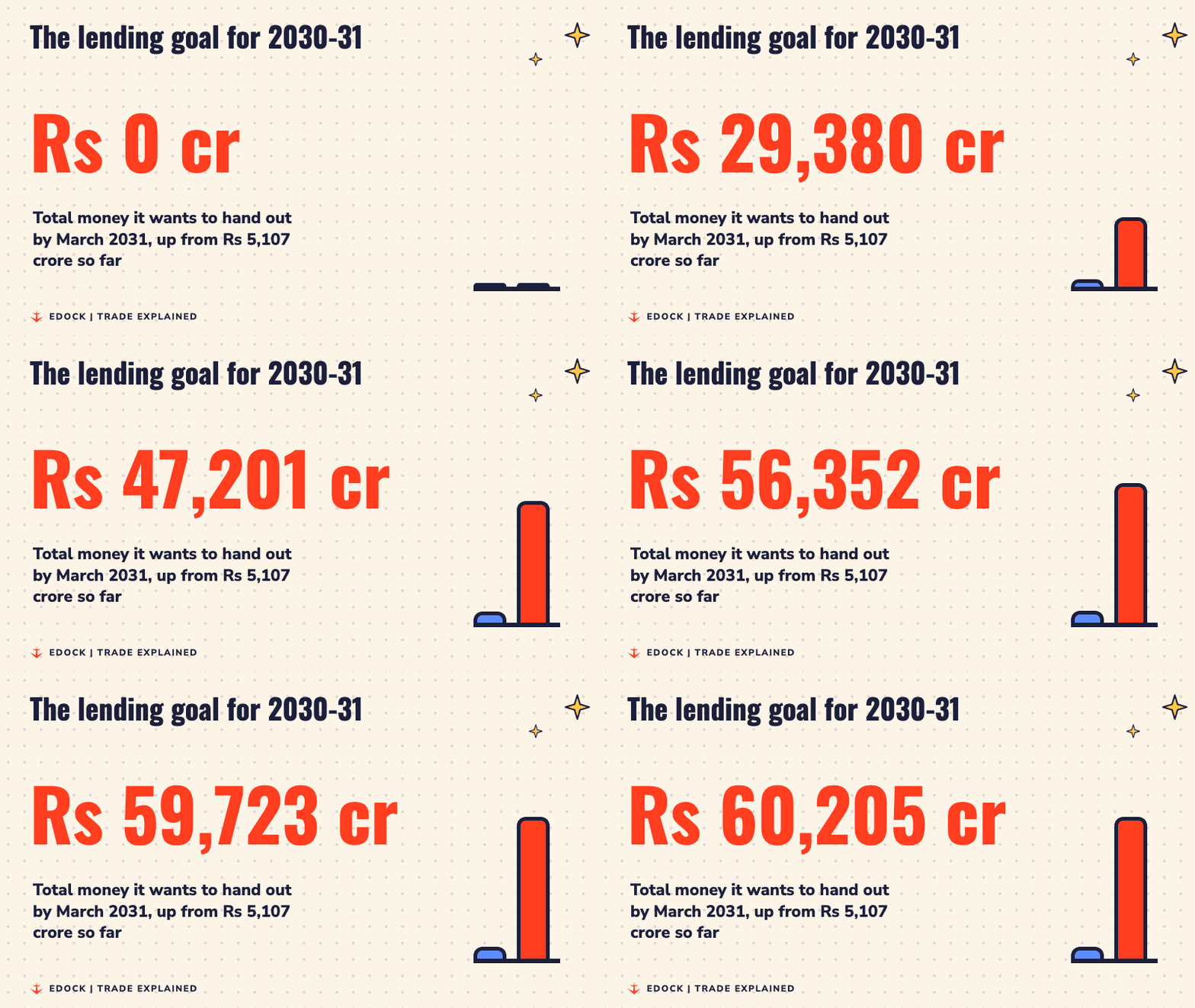
Picture a lender that does only one thing: it gives loans to ports, shipyards and ship projects, and to nobody else. India has one. It is called Sagarmala Finance Corporation Limited, or SMFCL for short. On Friday, 23 October 2026, it said it wants to hand out Rs 60,205 crore in total by the end of the 2030-31 money year, which ends in March 2031.
That is almost 12 times what it has paid out so far. Here is what this lender is, why it exists, and why anyone who ships goods out of India should care.
First, what is Sagarmala?
Sagarmala means "Garland of the Sea". It is a big government plan that the Union Cabinet approved on 25 March 2015. The idea: India has a 7,517 km long coastline, so use the sea and rivers more to move goods. The plan's stated aim is to cut the cost of moving goods, both inside India and for export and import cargo, and to make Indian exports more competitive.
Think of it like this. If a samosa stall pays less for its potatoes and gas, it can sell samosas cheaper and still earn. If an exporter pays less to move a container to a port and onto a ship, it can quote a better price to a buyer abroad.
So what is Sagarmala Finance?
SMFCL was made by revamping an older company, Sagarmala Development Corporation. Its one purpose is to boost lending for the sea and shipping world, called the maritime sector. The idea was announced in the Budget speech in February 2025, and it was registered as a lender in June 2025.
It is an NBFC, a non-banking financial company. That is a fancy name for a lender that is not a bank. A bank keeps your savings account and also gives loans. An NBFC mostly just gives loans, a bit like a friend who lends money but does not keep your piggy bank. SMFCL is India's first NBFC only for the maritime sector, and it is owned by the government.
So far it has mostly lent to government-run firms. It gave its first loan of Rs 150 crore to the Dredging Corporation of India, the company that digs mud out of ports so big ships can enter, and Rs 110 crore to Goa Shipyard.
Promised money vs money handed out
Two words matter a lot in this story.
- Sanctioned means a loan is approved. It is like your parents saying, "Yes, we will pay for your cricket kit."
- Disbursed means the money has actually been handed over. It is the moment the cash is in your hand at the sports shop.
As of 30 September 2026, SMFCL had sanctioned Rs 11,563 crore of loans. Of that, Rs 5,107 crore had been disbursed. So about Rs 6,456 crore of approved money was still waiting to be paid out. Ship and port projects take years to build, so loans are usually paid in parts as the work moves ahead.

The big goal for 2031
The new target is Rs 60,205 crore of total disbursals by March 2031. It was shared when Union Shipping Minister Sarbananda Sonowal opened SMFCL's permanent office at the Institute for Studies in Industrial Development in New Delhi.
He said SMFCL is helping raise long-term money for port-led growth, shipbuilding and coastal links. Long-term money means loans that are paid back over many years, which is what a port or a ship needs.
The catch: it needs more money of its own
The official statement says the 2031 goal depends on getting more equity support. Equity is the owner's own money put into a company, not borrowed money. RBI, the country's money regulator, sets rules on how much a lender can borrow and lend compared to its own money.
Here is a simple way to see it. If you run a lending stall with Rs 100 of your own, the rules say you cannot lend too much of it to one friend. In January 2026, SMFCL's managing director, LVS Sudhakar Babu, told Business Standard that the company could not lend more than 25% of its capital to one borrower, or more than 40% to one group. He said there was business available, but these limits held it back, so it had asked the government for at least Rs 2,000 crore of fresh equity.
He also said SMFCL could lend at rates about 0.2 to 0.3 percentage points below the market, because it has a small team and no old bad loans.
A second pot of money: the Maritime Development Fund
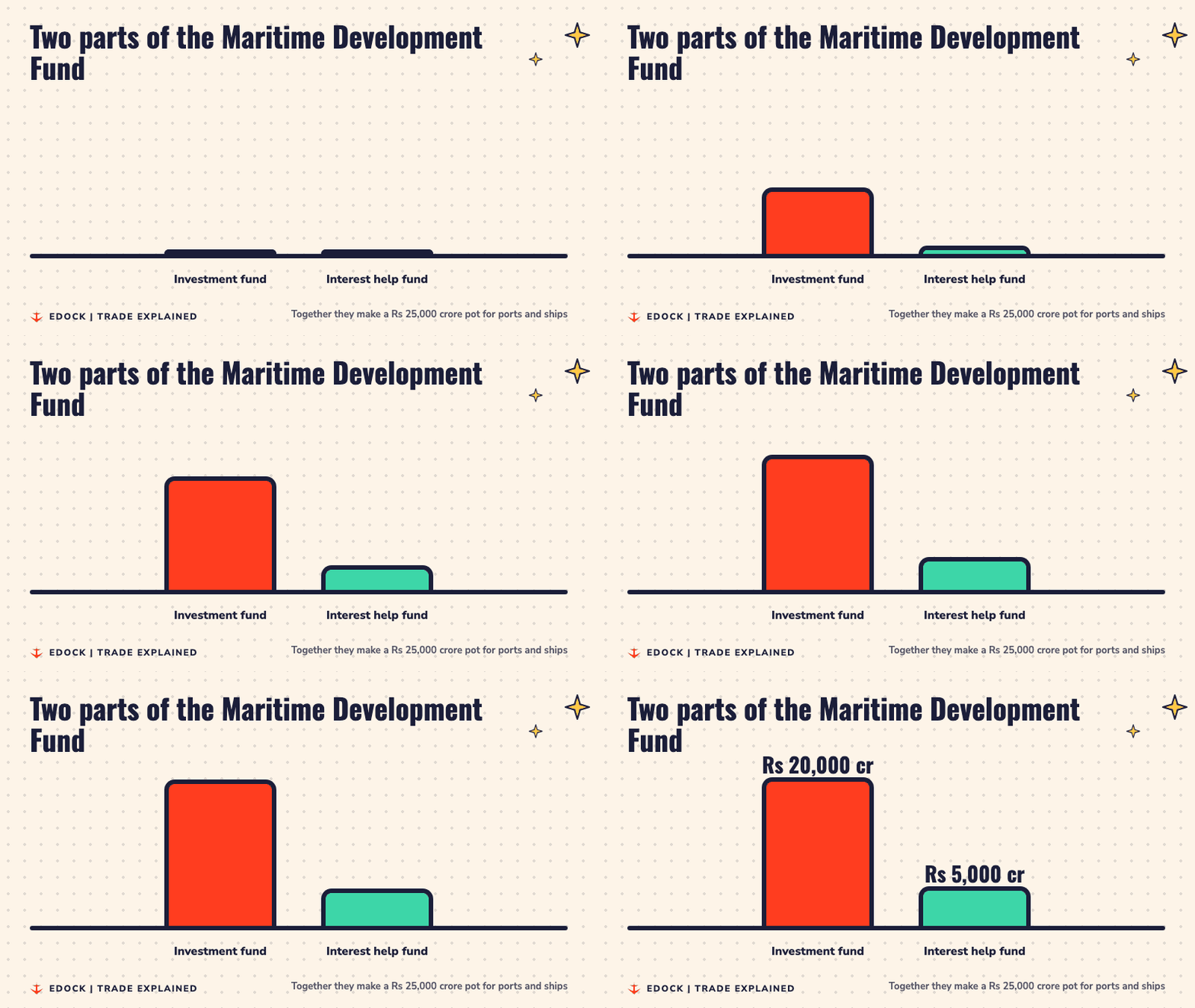
SMFCL also helps run the Maritime Development Fund, a Rs 25,000 crore pot. It has two parts.
- The Maritime Investment Fund, of Rs 20,000 crore, puts money into maritime projects. The Centre's share, up to Rs 9,800 crore, goes through SMFCL. SBI Ventures is its fund manager. It should be registered with SEBI, the market regulator, by the end of November, and its first close, the first batch of money collected from investors, of Rs 5,000 crore is targeted by January 2027.
- The Interest Incentivisation Fund, of Rs 5,000 crore, helps shipyards pay less interest. Its online portal is live. Loans of Rs 4,500 crore have been supported so far, and about Rs 25 crore of interest help has been released.
Interest help works like a discount coupon on a loan. The shipyard pays its interest, and the fund pays back part of it, so the loan feels cheaper.
This fund is part of a larger Rs 69,725 crore maritime support package from September 2025.
Why should an exporter care?
Every export from India, whether rice, cotton shirts or car parts, ends up on a ship at a port. If ports are crowded or old, ships wait longer, and waiting costs money. More loans for new berths, cranes and ships can mean faster and cheaper trips over time, which is what the Sagarmala plan aims for.
Shipbuilding is another part of it. Few lenders backed it in the past because a ship costs a lot and takes years to build. SMFCL is likely to work with other lenders to share such big loans.
For students thinking about trade or logistics, this is one to watch. The money is still small next to the goal, and the big jump depends on more equity coming in. The next markers are clear: SEBI registration in November, and the first Rs 5,000 crore close of the investment fund by January 2027.
Sources
- The Economic Times: Sagarmala Finance Corp aims for Rs 60,205 crore disbursal by 2031
- The Week: Sagarmala Finance eyes Rs 60,205 crore by 2030-31
- Pratidin Time: Sonowal opens SMFCL's office in New Delhi
- Business Standard: Sagarmala Finance expects at least Rs 2,000 crore equity from the government
- Wikipedia: Sagarmala Programme
- Cover photo: JNPT Port container handling, by Ccmarathe, CC BY-SA 4.0
