Replit makes OpenAI its default AI model over Anthropic, its CEO says
Replit, the app that builds software when you type what you want, has a new default AI supplier. Here is why one setting matters so much.

Picture a chai stall that has bought its tea leaves from one supplier for years. Then, in front of a big crowd, the owner says the stall now uses a different supplier. Later, people close to the old supplier say the deal is still on. Something very close to that happened in the world of AI this week.
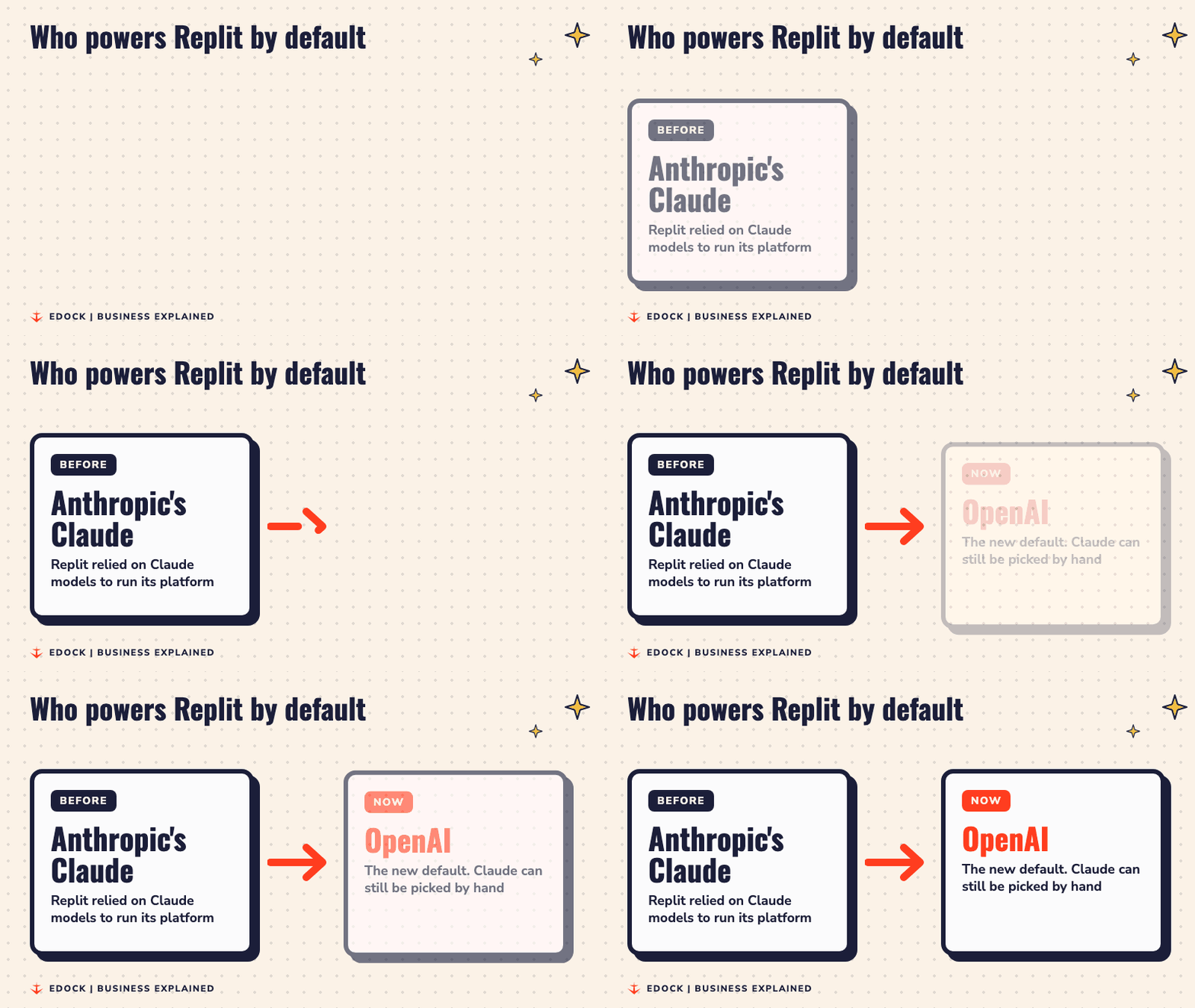
On Thursday, 15 October 2026, Amjad Masad, the CEO and co-founder of the coding app Replit, said on stage at TechCrunch Disrupt that Replit is no longer working with Anthropic, the company that makes the Claude AI models. After the event, he clarified that customers can still use Anthropic's models on Replit, but OpenAI's models are now the default. TechCrunch updated its story with that extra detail on 17 October.
First, what does Replit do?
Replit sells a cloud-based software tool where people build and launch apps straight from their browser. You do not need to install anything. You type what you want, for example "a page where my friends can vote on where to eat", and Replit's AI helper, called Replit Agent, writes the code for you.
Masad calls this kind of work building "vibe-coded applications". Vibe coding simply means describing an app in plain words and letting AI do the typing, a bit like telling a tailor what kind of kurta you want instead of stitching it yourself.
Wait, what is an AI model?
An AI model is the "brain" that reads your request and writes the answer, or in Replit's case, the code. Replit does not make these big brains itself. It uses brains made by companies like OpenAI and Anthropic, and it pays them for that use. That is why Masad could say on stage that Replit had been, until recently, one of Anthropic's top five customers.
So think of OpenAI and Anthropic as suppliers, and Replit as a shop that turns their supply into something people can use.
Why the word "default" matters so much
A default is the choice that is already made for you. Think of the ringtone that came with your phone. Most people never change it.
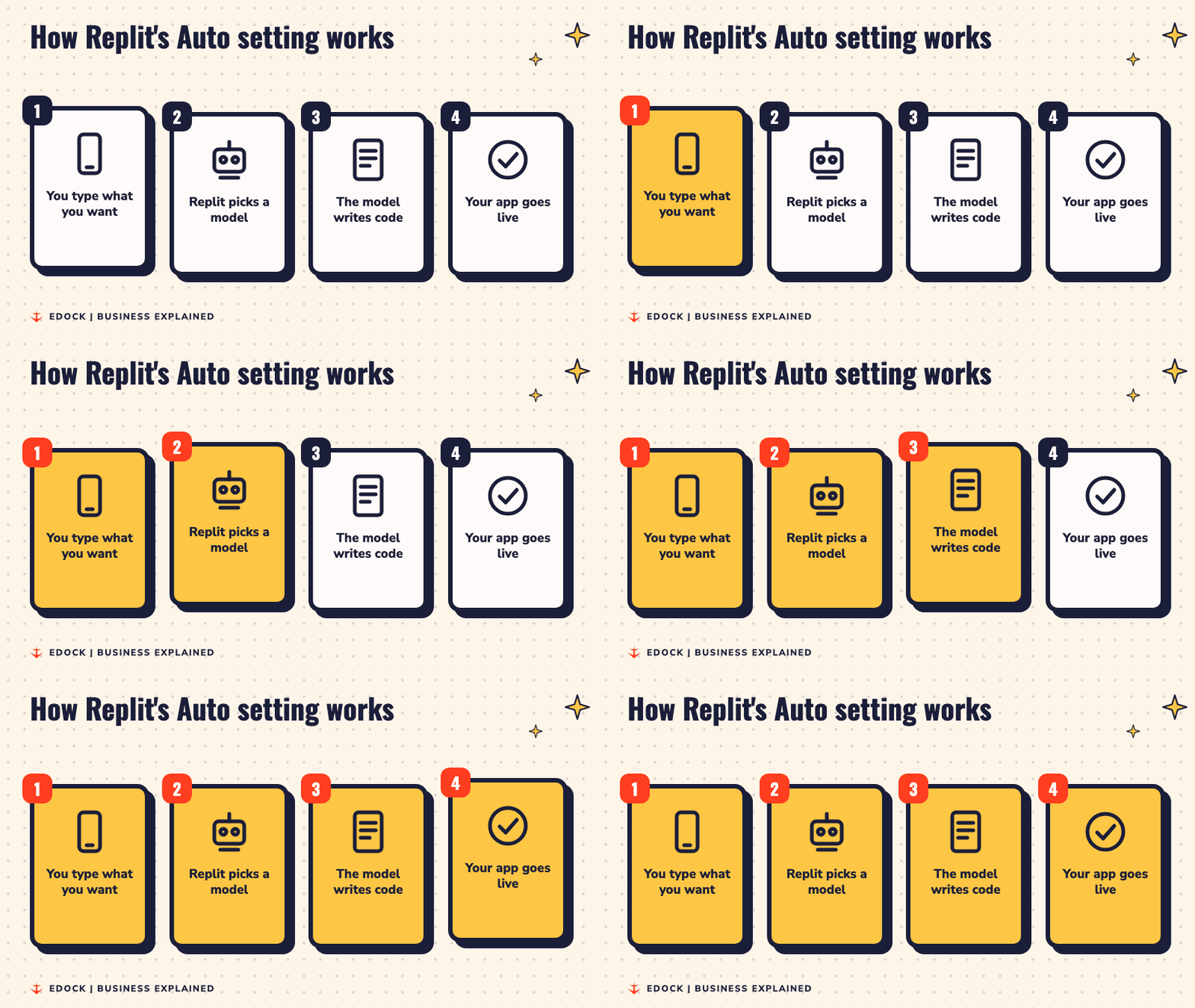
Replit works in a similar way. Its help pages explain that when users see "Auto", Replit picks a model for each task on its own, balancing quality and cost. In Free Mode, it always picks for you. Users on the paid Core and Pro plans can open a menu in Power Mode or Max Mode and choose a model by hand.
Here is the key point. TechCrunch notes that most customers stick with the default rather than picking a model themselves. So when the default moves from one supplier to another, most of the work moves with it. TechCrunch says this shift could greatly reduce how much Replit spends with Anthropic.
Masad's three reasons
On stage, Masad gave three reasons. In his words, as reported by TechCrunch: "It was a decision based on both cost, partnership, and performance."
1. Cost. Every time an AI model writes something, the app using it pays a small amount. A busy coding app sends a huge number of such requests, so even a tiny price gap adds up, like a samosa stall saving one rupee on each samosa and selling thousands a day.
2. Performance. This means how well the model does the job. Masad said Replit uses its own test, called a benchmark, to compare models. A benchmark is like a common exam that every student writes, so marks can be compared fairly. Unite.AI reports that Replit's internal test is called VBench. Masad said OpenAI's Sol and Astra models did better at building vibe-coded apps from scratch.
3. Partnership. Replit announced a tie-up with OpenAI in August, when it launched Free Mode, powered by OpenAI's GPT-5.6 Luna model. Replit said people on its $20 a month Core plan could create up to 30 times more than before, with everyday tasks in Free Mode no longer using up credits.
Later, Masad told TechCrunch: "Replit remains model agnostic." Model agnostic means the app is not tied to one supplier, the way a cricket team can field any bowler it likes. He added that "OpenAI is now our preferred partner for powering Replit Agent, based on performance, economics, and the strength of our partnership."
Not everyone tells the same story
This part is still unclear. TechCrunch reports that insiders familiar with the partnership rejected Masad's comments. One person, who asked not to be named, said the partnership was still in place.
There are also signs that Anthropic is still part of the picture. A Replit engineering post from late September described Anthropic's Claude Fable 5 and Fable 5.1 models working inside Replit Agent. And Replit's model menu, according to Unite.AI, still lists several Claude models in Max Mode, next to OpenAI's GPT-6 Astra and others.
So the clearest version of the facts is this: Masad says OpenAI is now the preferred partner and the default, while Claude models can still be chosen.
How do AI suppliers compete?
For a shop like Replit, the suppliers compete on the same things Masad listed: price, quality on tests, and how close the partnership is.
Replit's own engineers wrote in September that "the frontier is jagged". In simple words, the best model at writing code is not always the best at designing screens or making slides. That is one reason Replit's Auto setting picks a model for each task. Its help pages say a focused request can use a lower-cost model, while harder work may need a more capable one.
It is like a cricket captain who brings on a spinner for one over and a fast bowler for the next, depending on the batter. Each supplier wants to be the bowler the captain trusts most often.
Replit's own money picture
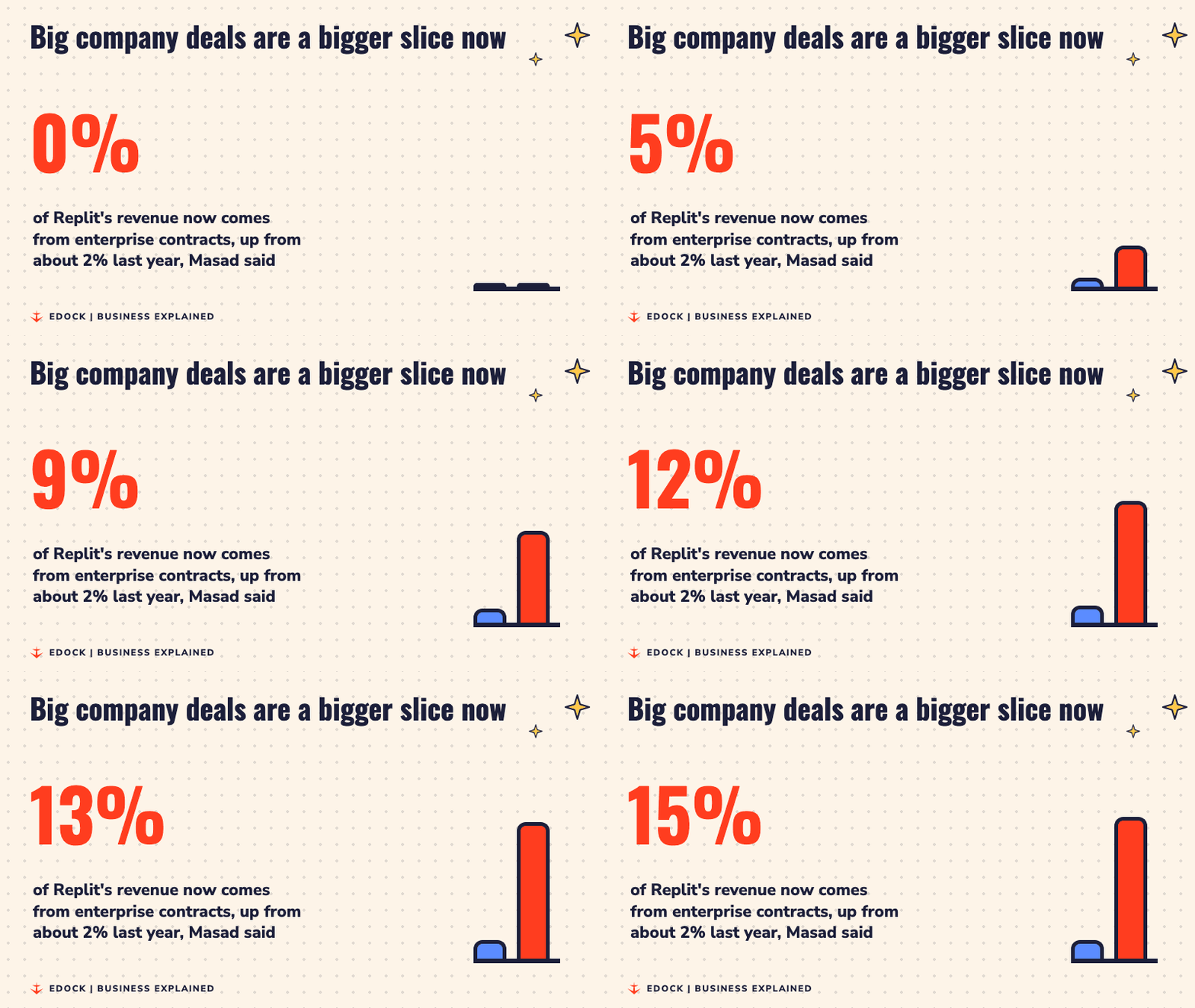
Masad also shared how Replit's income is changing. He said enterprise contracts, meaning deals with big companies, were about 2% of revenue last year and are about 15% this year. He also said more than half of Replit's revenue is B2B, short for business to business, which means selling to companies rather than to single people.
He did not share ARR, or annual recurring revenue, which is the money a company expects to keep earning each year from repeat customers, like a tuition teacher counting the fees from students who renew every year. Backstage, he told TechCrunch he expects more than half of Replit's revenue to come from enterprise and government customers in 2027.
The "self-driving company" idea
At the same event, Masad described Replit as a "self-driving company". He did not mean cars. He meant that AI agents now do much of the routine work inside Replit. For example, when a customer sends a help request, an AI agent first checks the code and past issues. By the time a person sees the request, the background work is ready. Masad said human judgment and taste still sit in the middle of that loop.
What to take away
Most people who use an AI app never see which model sits behind it. This story shows that the brain behind an app can change without the app's name or look changing at all. For the companies that make AI models, a single default setting inside a popular app can mean a big change in how much work, and money, flows their way.
Whether the Replit and Anthropic tie-up has fully ended is still disputed. What Masad has said clearly is that OpenAI is now Replit's default.
Sources
- Replit makes OpenAI its default over Anthropic, CEO says, TechCrunch
- Replit's CEO says the future of work is the "self-driving company", TechCrunch
- Replit CEO Masad says company no longer works with Anthropic, Unite.AI
- Replit introduces Free Mode, Replit
- Free the models, Replit
- Model selector, Replit Docs
- Replit's CEO Amjad Masad at Disrupt 2026, TechCrunch on YouTube
- Cover photo: Server Room, by Carl Lender, CC BY 2.0
- Cover photo: A close-up view of a MacBook Pro keyboard with code, by Naeem Haque, CC0
- Cover photo: Desk, laptop, working, technology, by Pixel.la Free Stock Photos, CC0

You may republish this story under CC BY 4.0: credit Arshdeep Singh and link to this page.