Renault India sees hybrids and CNG making up half its sales in 2 to 3 years
Version 1 of 1 saved 18 Oct 2026, 10:56 am IST · Chain line 89
As it was first published
Renault India sees hybrids and CNG making up half its sales in 2 to 3 years
Renault's India CEO also hopes to grow market share from below 1% to 3 to 5% by 2030. Here is what hybrids, CNG and market share mean.
Picture 100 new cars rolling out of showrooms across India. Right now, fewer than one of them is a Renault. The French carmaker wants that number to climb to three, four or even five by 2030. And it has a plan for how to get there: sell a lot more cars that do not run only on petrol or diesel.
On Saturday, 17 October 2026, Renault India's chief executive, Stephane Deblaise, told news agency PTI that hybrid and CNG cars could make up about half of the company's sales in the next two to three years. "It is possible, 50 per cent is possible from hybrid and CNG, but we do not have a target," he said. On the same day, Renault launched its first strong hybrid car in India, the Duster Strong Hybrid E-Tech 160.
So what is a hybrid, what is CNG, and why would a car company change what it sells? Let us take it one step at a time.
First, what is market share?
Imagine your school canteen sells 100 samosas a day, and three stalls make them. If one stall makes 60 of those samosas, it has a 60% share of the samosa market. Market share simply means: out of all the things sold, how many came from you?
For cars, Renault's slice in India is small. The Hindu BusinessLine reports that Renault's retail market share is below 1%. Deblaise said Renault could reach a share of 3 to 5% by 2030. But he was careful with his words. "We should be between 3-5 per cent in 2030. But we always say that it is not a target; it is a consequence of our job," he told PTI.
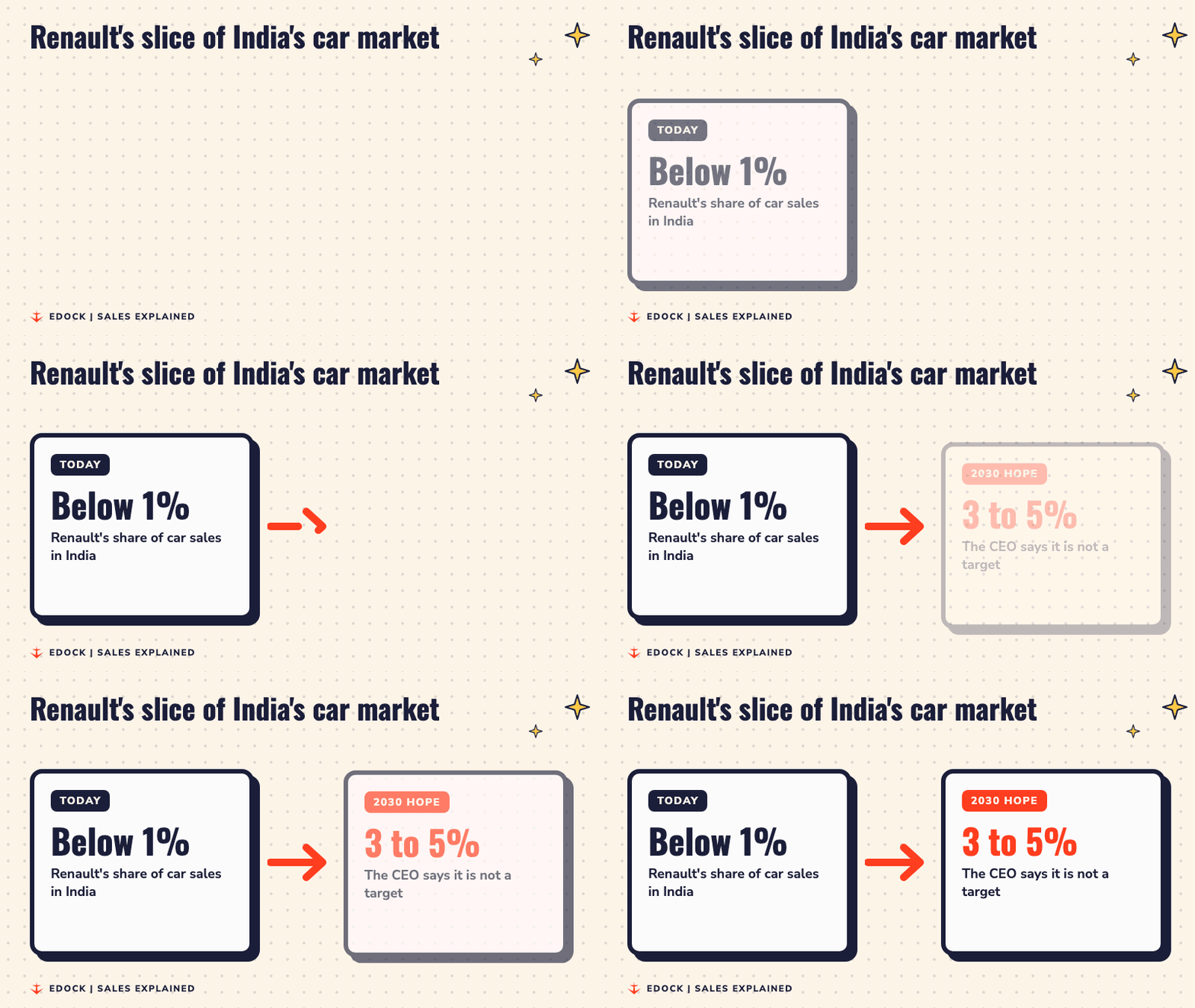
In other words, Renault is not chasing a number for its own sake. Deblaise told BusinessLine the company wants to make customers happy so that they come back to buy a new car.
What is a hybrid car?
A normal car has one heart: a petrol or diesel engine. A hybrid has two kinds of power working together. It has a fuel engine and electric motors with a battery. Think of a cyclist who also has a small helper motor for the uphill bits. The rider still pedals, but gets tired less.
The new Duster hybrid has a 1.8-litre petrol engine, two electric motors and a 1.4 kWh battery, with a combined output of 160 PS. BusinessLine says the battery lets the car run on electricity alone for up to 80% of city driving time, depending on conditions.
Here is the key point: a hybrid like this does not need to be plugged in. Deblaise told BusinessLine that hybrids offer electric driving benefits without depending on charging points. That matters in a country where charging stations are still hard to find in many places.
And what is CNG?
CNG stands for compressed natural gas. Instead of petrol, the car runs on gas squeezed into a strong tank. Drivers fill it up at special CNG pumps instead of a petrol pump nozzle.
Renault plans to bring factory-fitted CNG models, including a CNG version of its Triber, a compact seven-seat car. Factory-fitted means the gas kit is put in by the carmaker itself, not added later by a local garage. In an interview with BusinessLine, Deblaise said CNG makes up about 25% of the relevant market, and that Renault is bringing it to the Triber and Kiger. "If CNG accounts for 25 per cent of the segment, why should we not aim for a similar proportion of sales in our models?" he asked.
Renault thinks hybrids fit its bigger cars, those longer than four metres, while CNG fits its smaller cars under four metres, as The Economic Times reported.
Why would a carmaker change what it sells?
Think of a lemonade stall. If the city bans plastic cups, or buyers start asking for less sugar, the stall must change. Car companies face the same kind of pressure.
First, the rules. Mint reports that stricter emissions regulations are reshaping the market. Emissions are the smoke and gases that come out of a car. BusinessLine adds that the diesel segment is narrowing amid tighter regulations. So Renault is pitching its hybrid as a diesel replacement. Its slogan, Deblaise said, is "Forget diesel, Go Hybrid."
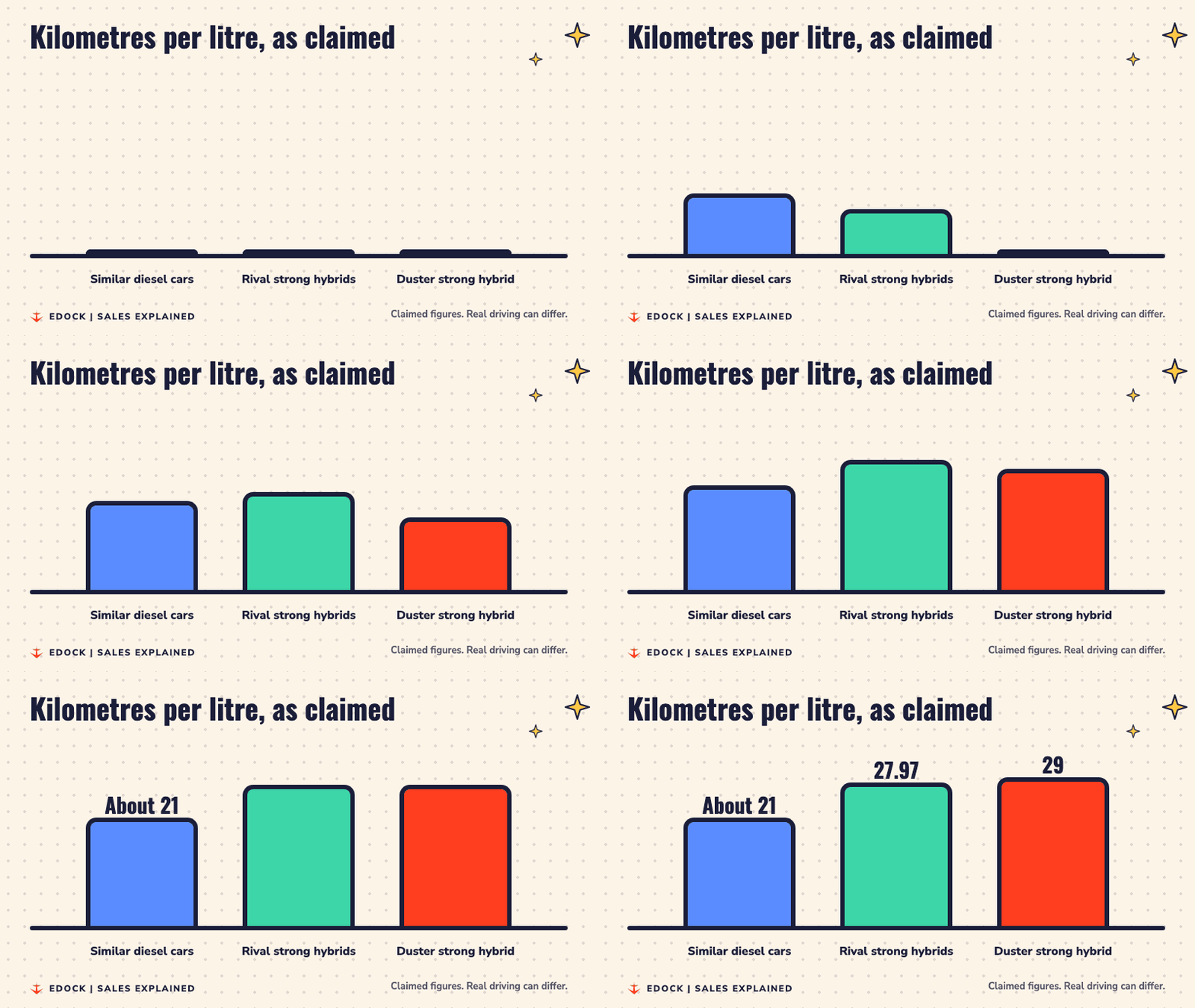
Second, the buyers. Indian car buyers care a lot about how far a car goes on one litre of fuel. Deblaise told Mint that engines and value are very important to buyers here. The Duster hybrid claims 29 km per litre. Deblaise compared that with around 21 km per litre for comparable diesel cars.
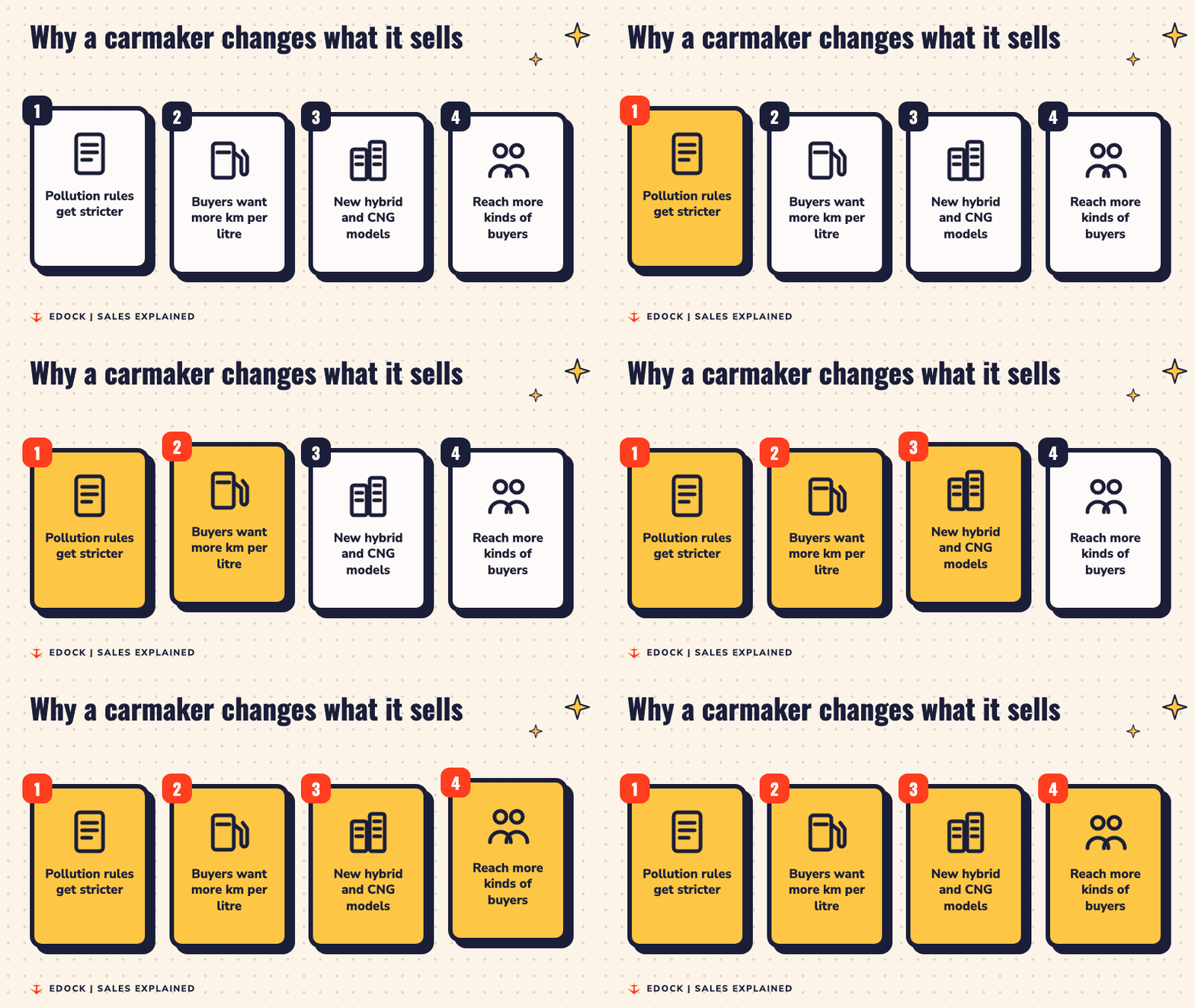
Third, choice. Renault says offering more fuel types lets it reach more people. Deblaise told BusinessLine that CNG helps the company increase volumes without depending entirely on new launches. Volumes here simply means the number of cars sold.
How big are these markets in India?
Electric cars are growing fastest. Mint, quoting dealer body Fada, says electric cars made up about 8.5% of passenger vehicle sales in September, up from 5.7% a year earlier. Strong hybrids have stayed around 2%. Electric car sales jumped 84% to nearly 200,000 units in the year to March 2026.
Strong hybrids are smaller but still growing. BusinessLine says the strong-hybrid market was about 1.23 lakh units in FY26. Registrations rose 9.5% to 86,403 units in January to September 2026, from 78,881 a year earlier.
Tax plays a part too. India charges 5% GST on electric cars, while hybrids are taxed at 40%, Mint reports. That makes hybrids costlier to buy. Deblaise said electric car sales are high partly because of that low tax.
Who else is in the race?
Renault is not alone. Strong hybrids in India are already sold by Maruti Suzuki, Toyota Kirloskar and Honda Cars. The Duster hybrid starts at Rs 16.99 lakh (ex-showroom). That is Rs 31,000 more than the entry Maruti Suzuki Grand Vitara strong hybrid at Rs 16.68 lakh. The Duster's rivals claim 27.97 km per litre.
Renault does have some good news. Its sales in India rose 32% to 23,122 units between April and September 2026, according to Siam data quoted by Mint. Siam is the group that represents Indian carmakers.
Still, BusinessLine points out that rivals have stronger dealer networks and customer loyalty. Deblaise also admitted gaps in service and spare-parts pricing that Renault is working on.
A lesson from South Korea
Deblaise has seen this play out before. In South Korea, Renault once launched the hybrid version of a new car first. The hybrid ended up being 92% of that car's sales over its life. He told Mint he does not expect India to repeat that number, but hopes hybrids become "a big two-digit percentage" of Renault's volumes.
What comes next
Renault plans seven models in India by the end of the decade, from small cars to bigger SUVs, including strong hybrids and fully electric cars. It also aims for 2 billion euros (about Rs 25,000 crore) in yearly exports from India by 2030, covering cars, parts and services.
The big lesson for anyone curious about sales: a company's market share is not just about selling harder. It is about having the right product for what buyers want and what the rules allow. Renault is betting that, for India, the right product runs on more than one kind of fuel.
Sources
- Renault India CEO sees hybrids, CNG making up 50% of sales in 2-3 years, Mint
- Why Renault is betting on hybrids in EV outlier India, Mint
- Hybrids, CNG may contribute 50% of sales in 2-3 years: Renault India CEO, The Hindu BusinessLine
- Renault Duster Strong Hybrid takes on Toyota, Maruti Suzuki, The Hindu BusinessLine
- Wider powertrain options key for Renault's future roadmap in India, The Hindu BusinessLine
- Renault India's hybrid, CNG bet could transform its sales mix, The Economic Times
- Cover photos: Compressed Natural Gas (CNG) Filling Station, Maharastra, India, by K.Venkataramana, CC0 1.0; and 2023 Denver Auto Show Kia Sportage Hybrid engine bay, by Corqe, CC0 1.0