Reliance says it has never feared competition as Musk's Starlink waits for India's nod
Version 1 of 1 saved 17 Oct 2026, 9:37 am IST · Chain line 59
As it was first published
Reliance says it has never feared competition as Musk's Starlink waits for India's nod
Elon Musk says Starlink is being kept out of India. Reliance says Jio's own satellite internet is waiting too. Here is what the fight is about.
Two of the biggest names in business are now arguing in public about internet that comes from space. On Friday, 16 October 2026, Reliance Industries said it has "never feared competition". It was answering Elon Musk, whose company Starlink wants to sell satellite internet in India.
The twist? Reliance says its own satellite internet, from Jio, is also still waiting for a green signal. So both sides are standing in the same queue.
What did Reliance actually say?
Reliance put out a short statement. Here are its key lines, as The Economic Times reported them:
"At Reliance, we have never feared competition. We see it as the truest test of who serves the customer best."
"We welcome competition in satellite communications, including Starlink. Every player, Jio included, must serve the people of India and abide by the laws and policies of the land."
Reliance also said that "Jio's own satellite services await clearances." In simple words: Jio has not got the final permission either.
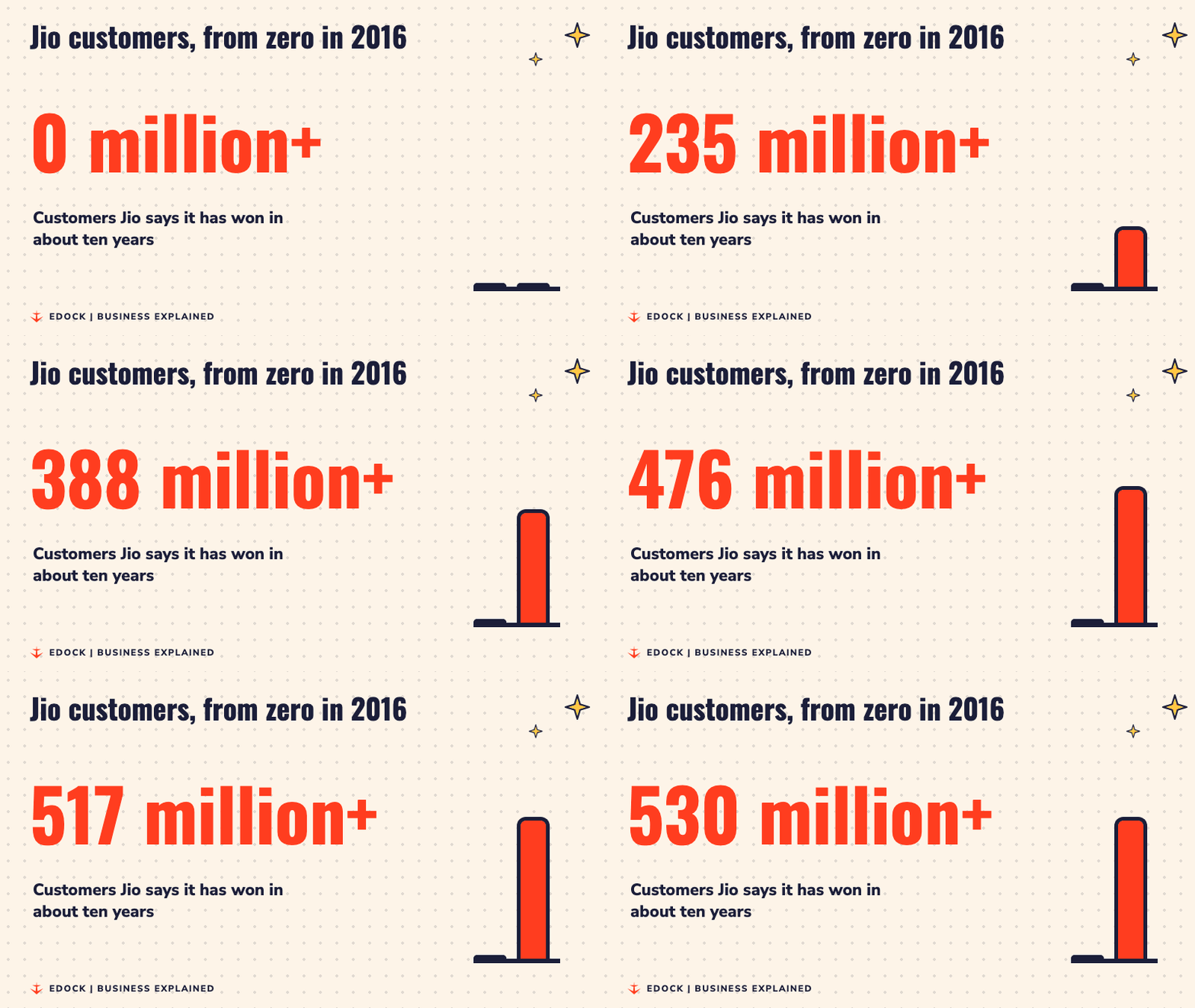
Then Reliance reminded everyone of its own story. Jio entered India's crowded mobile market in 2016 with not a single customer. In about ten years, it says, it has won more than 530 million customers. Think of a new samosa stall that opens in a lane full of old stalls and still ends up with the longest line.
So what started this fight?
The spark came from Musk's posts on X. According to a PTI report carried by ThePrint, Musk alleged that "certain oligarchs" were blocking Starlink to protect a "monopolistic chokehold" on the Indian market. At first he did not name anyone.
Later, Inc42 reported, he singled out Reliance chairman Mukesh Ambani and, in one post, sarcastically called him "Prime Minister Ambani".
Musk's main point was about choice. In a post quoted by Mint, he wrote that "competition would greatly benefit the average citizen in India by giving them more choices". He also argued that satellite internet could reach remote places where poor internet holds back students and small shops.
Two new words here. A monopoly is when one seller controls a market. Imagine only one chai stall on your college campus: it can charge what it likes, because you have nowhere else to go. An oligarch is a very rich and powerful businessperson. Musk is accusing big Indian players of keeping rivals out. Reliance says that is not true.
Wait, how does internet come from space?
The internet on your phone usually comes from mobile towers on the ground. Satellite internet works differently. Hundreds or thousands of small satellites fly around the Earth. A dish on your roof talks to them, and they pass your data along.
Companies like Starlink use satellites in low Earth orbit. That just means they fly fairly close to the Earth, so the signal does not have to travel as far. Starlink has reapplied for approval of its second batch of nearly 30,000 such satellites, Inc42 reported.
Why does this matter? Building towers in hills, forests and far-off villages is hard and costly. Satellite internet could fill in where towers are difficult or uneconomic to set up.
Satellites also need help on the ground. A gateway is a ground station with big antennas that links the satellites to the regular internet. A Starlink executive said the company has built 20 gateway sites in India with hundreds of antennas.
What does the government say?
On 8 October, the telecom ministry rejected Musk's claim. It said India's rules for satellite services are "fair and non-discriminatory", and called any suggestion of picking favourites "baseless and misconceived".
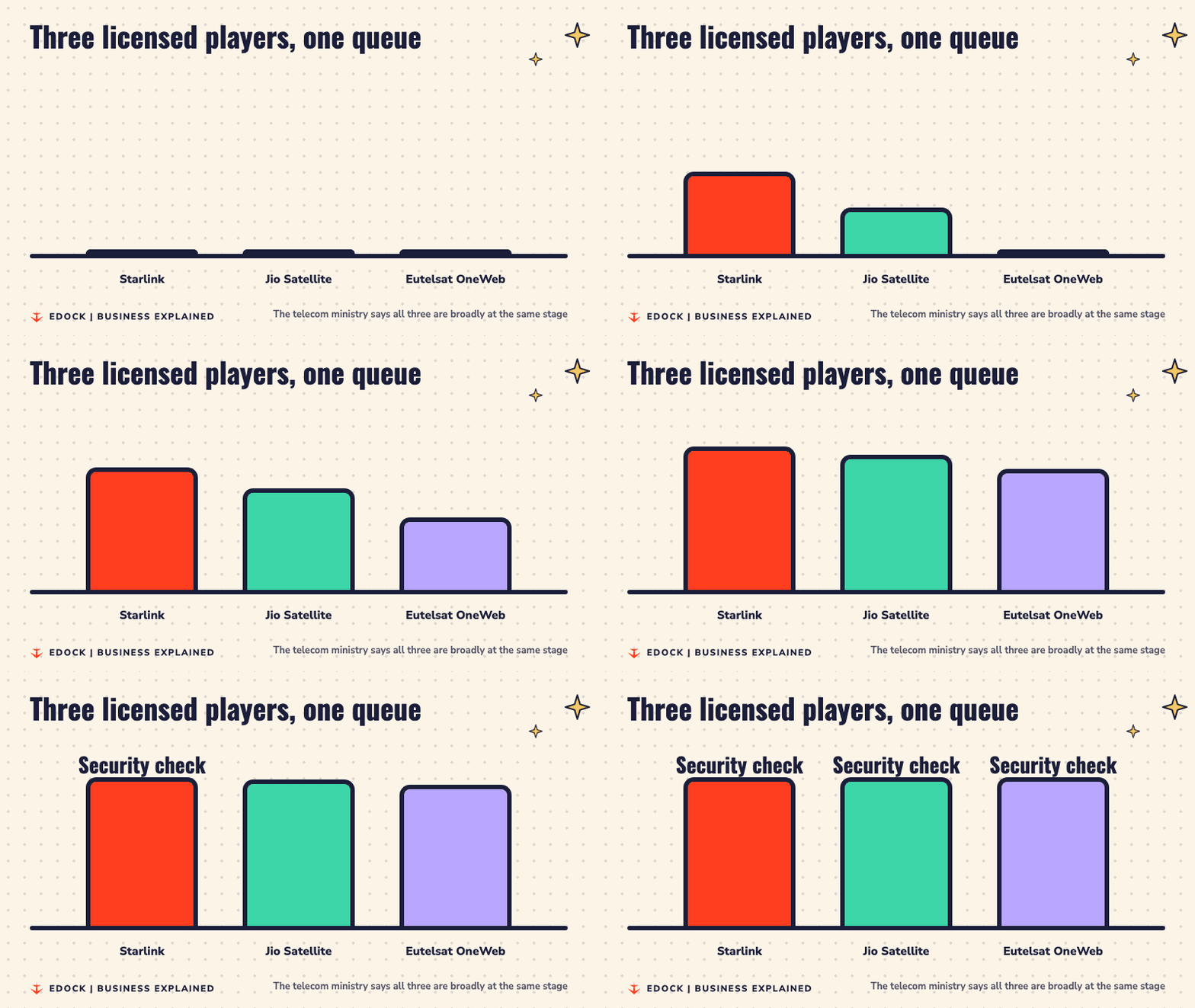
Three companies hold licences for satellite internet in India:
- Starlink, owned by Musk's SpaceX
- Jio Satellite Communications, owned by Reliance
- Eutelsat OneWeb, backed by Bharti, the group behind Airtel
But a licence is not the finish line. A licence alone does not allow commercial services. Each company must first pass a security check. Only then can it ask for spectrum.
Spectrum means the invisible airwaves that carry signals. Think of them like lanes on a highway. The government owns the lanes and decides who gets to drive on which one.
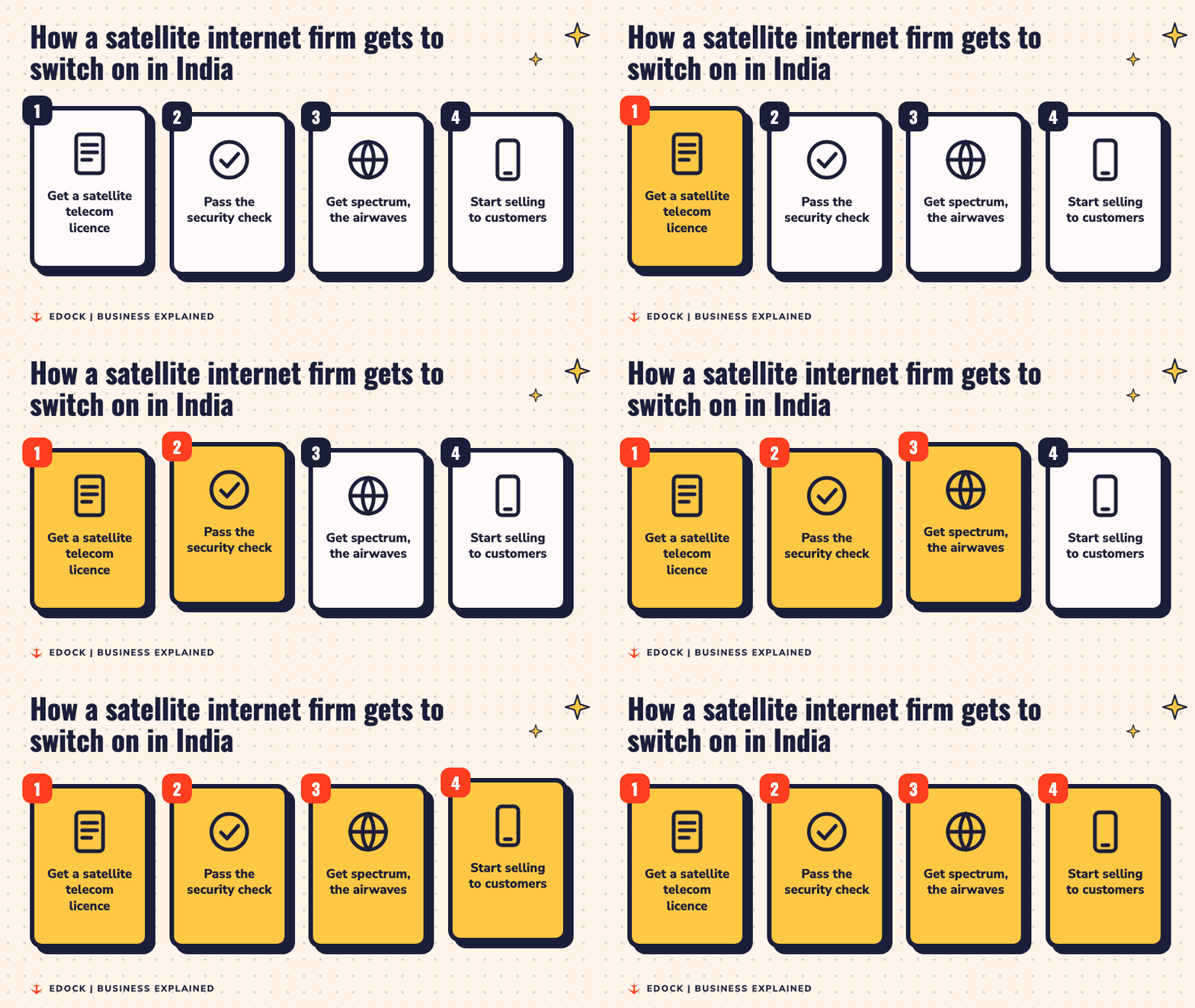
The ministry said the security check is under way for all three and that they are "broadly at the same regulatory stage." Communications Minister Jyotiraditya Scindia said there was no question of allowing any monopoly in satellite communications.
And where does Airtel fit in?
Airtel's side has its own complaint about waiting. Speaking in New Delhi this week, Bharti chairman Sunil Bharti Mittal said OneWeb applied five years ago and is well ahead of Starlink in the queue. He said its ground network has been ready for three years.
Inc42 also noted a report from September that OneWeb had been waiting more than 18 months since showing it met security rules in January 2025.
So the picture is a little like three teams padded up and waiting outside the ground, while the umpires finish checking the pitch. Each team thinks it should have been sent in first.
Why should a young Indian care?
Because this is a fight over who gets to sell you internet in the future, and at what price.
Reliance's own story shows how a new player can shake up a market. It says Jio gave Indians some of the most affordable data in the world. Musk says Starlink would bring the same kind of push. Both are making the same argument, that competition is good, from opposite sides of the table.
For now, no prices for satellite internet in India have been set, because none of the three can launch yet. What happens next depends on the security clearance. After that comes spectrum. Only then will people be able to compare plans and pick one.
One thing is clear. When one of the world's best-known founders and one of India's largest companies argue in public, it tells you how big they think this market could become.
Sources
- Mint: Jio parent Reliance Industries breaks silence on Starlink row
- The Economic Times: Reliance Industries welcomes Starlink competition while urging compliance with Indian laws
- Inc42: Reliance responds to Elon Musk's Starlink allegations
- ThePrint (PTI): India rejects Musk's Starlink claim, says all satcom firms face same security process
- Business Today on YouTube: Reliance responds to Elon Musk's Starlink jibes
- The Hindu on YouTube: Why hasn't India approved Starlink?
- Cover photo: Starlink over M.B Gonnet 06, by BugWarp, CC0 1.0
