RapidCanvas raises $29 million to get big companies' AI out of the test lab
Version 1 of 1 saved 17 Oct 2026, 2:33 pm IST · Chain line 67
As it was first published
RapidCanvas raises $29 million to get big companies' AI out of the test lab
The AI startup, with offices in Austin and Hyderabad, closed a Series B led by Vertex Ventures on 16 October. Here is what it makes and what the money is for.
Picture a giant company with a pile of money set aside for AI and a boss who wants results in six months. It has tried a few small AI tests. None of them made it into daily work. On 16 October 2026, a startup that promises to fix exactly this problem, RapidCanvas, said it had raised $29 million. That is about Rs 280 crore.
First, is this an Indian startup?
Not exactly. The funding news was put out from Austin, Texas, in the US. The company's own page lists three offices: Austin, Hyderabad and São José dos Campos in Brazil, with around a hundred people across three countries.
So it is a US company with a strong India link. It has an office in Gachibowli, Hyderabad. It plans to hire more AI engineers in India, the US and Brazil. And the investor leading this round, Vertex Ventures SEA & India, is a fund that backs startups across Southeast Asia and India.
Who put in the money?
This round is called a Series B. Startups raise money in stages, a bit like levels in a video game. The seed round is the first small push. Series A comes next, and Series B is the round where a company that already earns money tries to grow much faster.
The lead investor is the one who puts in the biggest share and usually sets the terms, like the captain of a team. Here that was Vertex Ventures SEA & India. Hitachi Ventures joined as a new investor. Old investors Accel, Peak XV Partners, Valley Capital Partners and Titanium Ventures also put in money again.
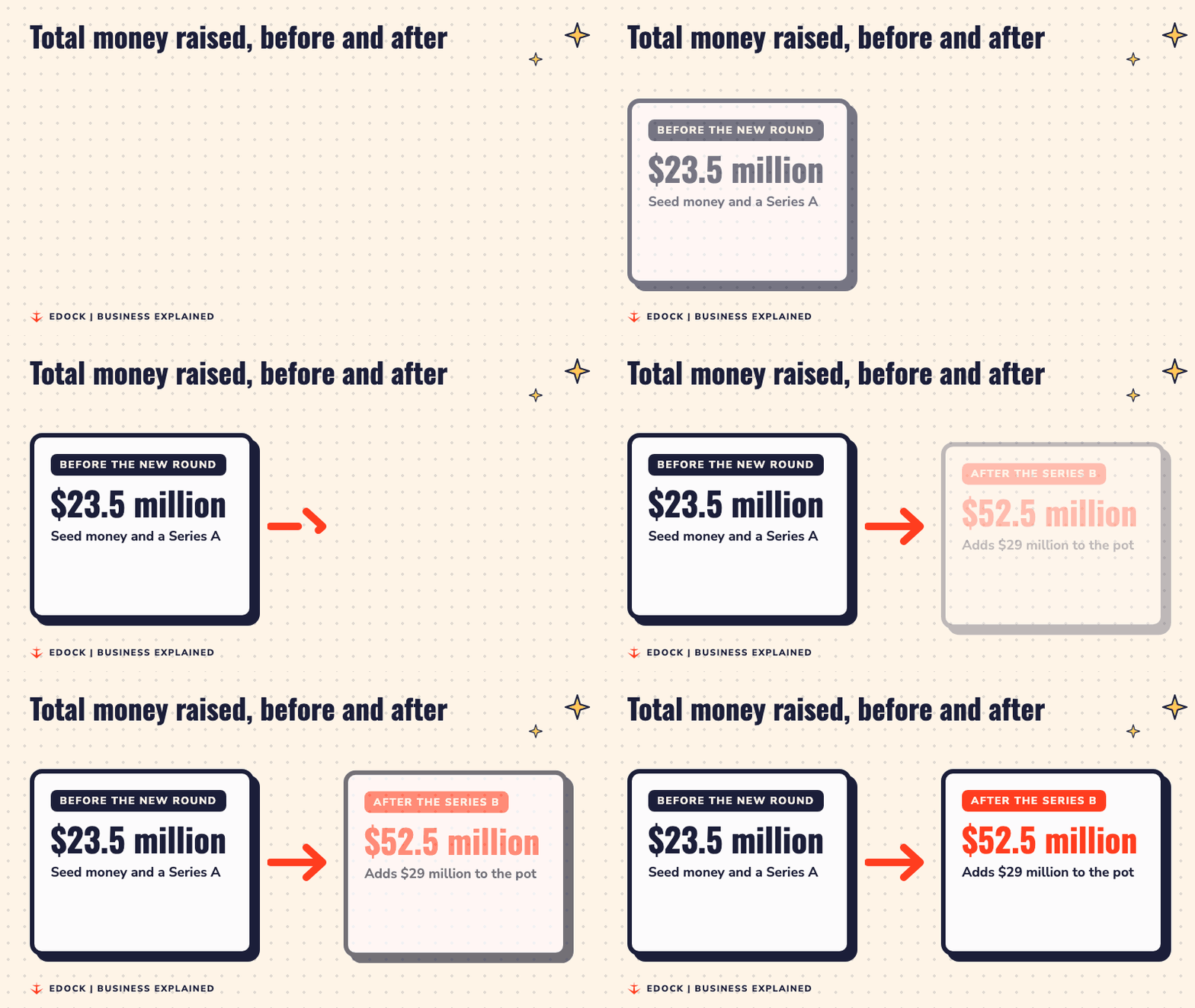
With this round, RapidCanvas has raised $52.5 million in total. Simple maths: $52.5 million minus the new $29 million means about $23.5 million came in before, through its earlier rounds. Its own timeline shows it came out of hiding with seed money in March 2024 and raised a Series A in December 2024. It was founded in 2021 by Rahul Pangam and Uttam Phalnikar.
So what does it actually make?
Think of a big company as a huge kitchen. Buying an AI tool is like buying a fancy new oven. But an oven alone does not cook dinner. Someone has to know the recipes, the timings and what the customers like.
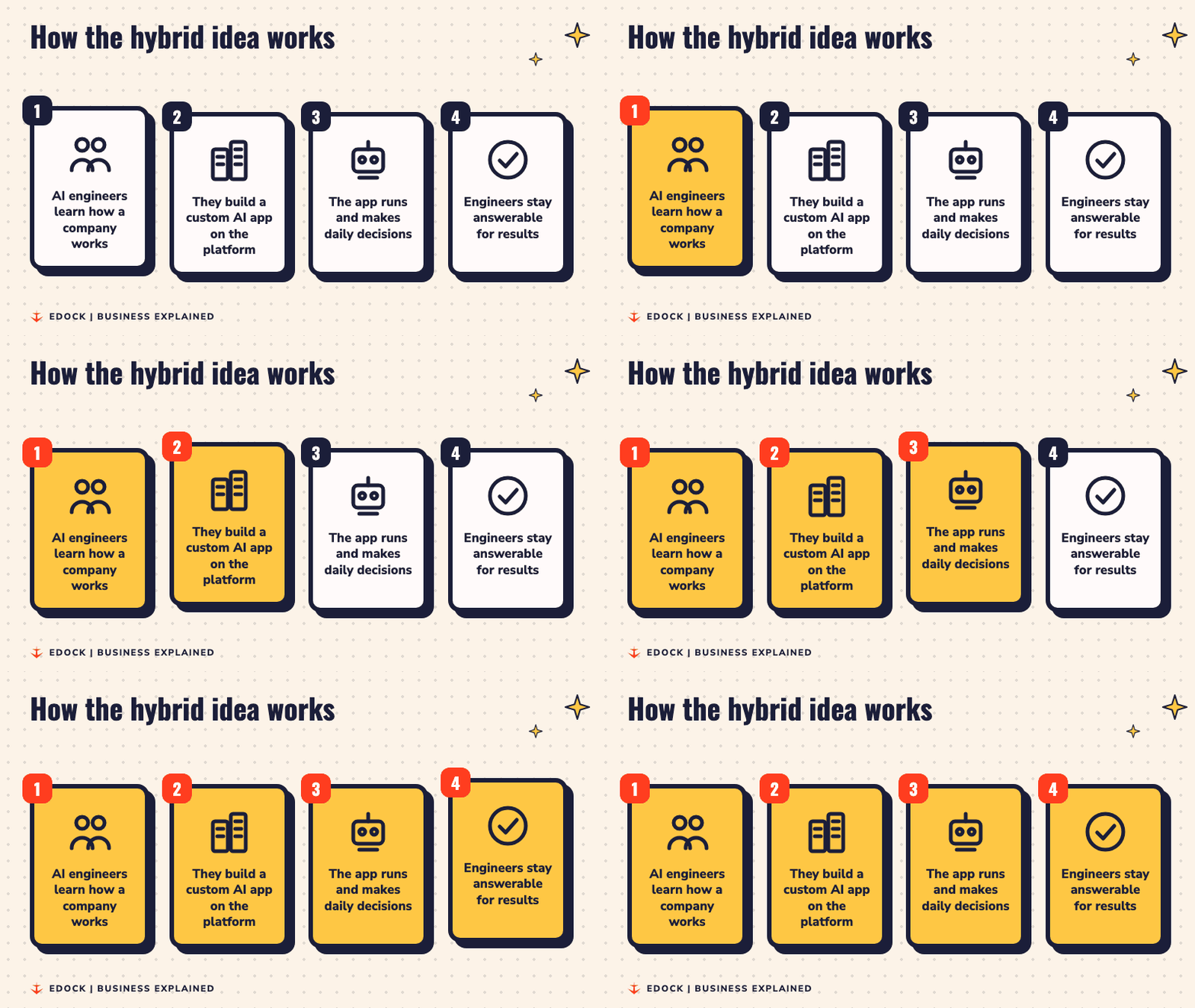
RapidCanvas calls itself a managed AI execution company. It sends its own AI engineers, whom it calls field AI engineers, to each customer. They learn how that business runs, build custom AI apps for it, and stay responsible for how those apps perform even after handing them over. The company calls this mix of people plus software its Hybrid Approach.
Its software has three parts, according to the announcement:
- Enterprise Context Engine: a place to store how a business process works, from rules and data to the unwritten know-how in people's heads. The customer owns this.
- Visual Development Canvas: a tool engineers use to build apps fast. It uses a library of tested code that gives each new app a 60% head start.
- Operational Harness: the part that watches over and controls the AI apps once they are running.
Inc42 reports that customers pay a regular fee to use it, instead of one big bill for a single project. That is a bit like a monthly phone plan instead of buying minutes one at a time.
Who are its customers?
RapidCanvas goes after big but not giant companies. Its target is firms with yearly sales of $100 million to $10 billion. The company says these firms are stuck between costly services firms that take months, and do-it-yourself tools that need rare AI experts most of them do not have.
The company says that in 2026 so far, more than 75 enterprises in manufacturing, financial services, retail, business services and infrastructure have made 1.4 million AI-led decisions using apps built on its platform. More than 40% of its customers run more than one AI use in daily work.
It names PayPal, TresVista, Yale Appliances, Orion and Treetech among the companies that use it. These are the company's own claims, not checked by an outside body.
Why did investors say yes?
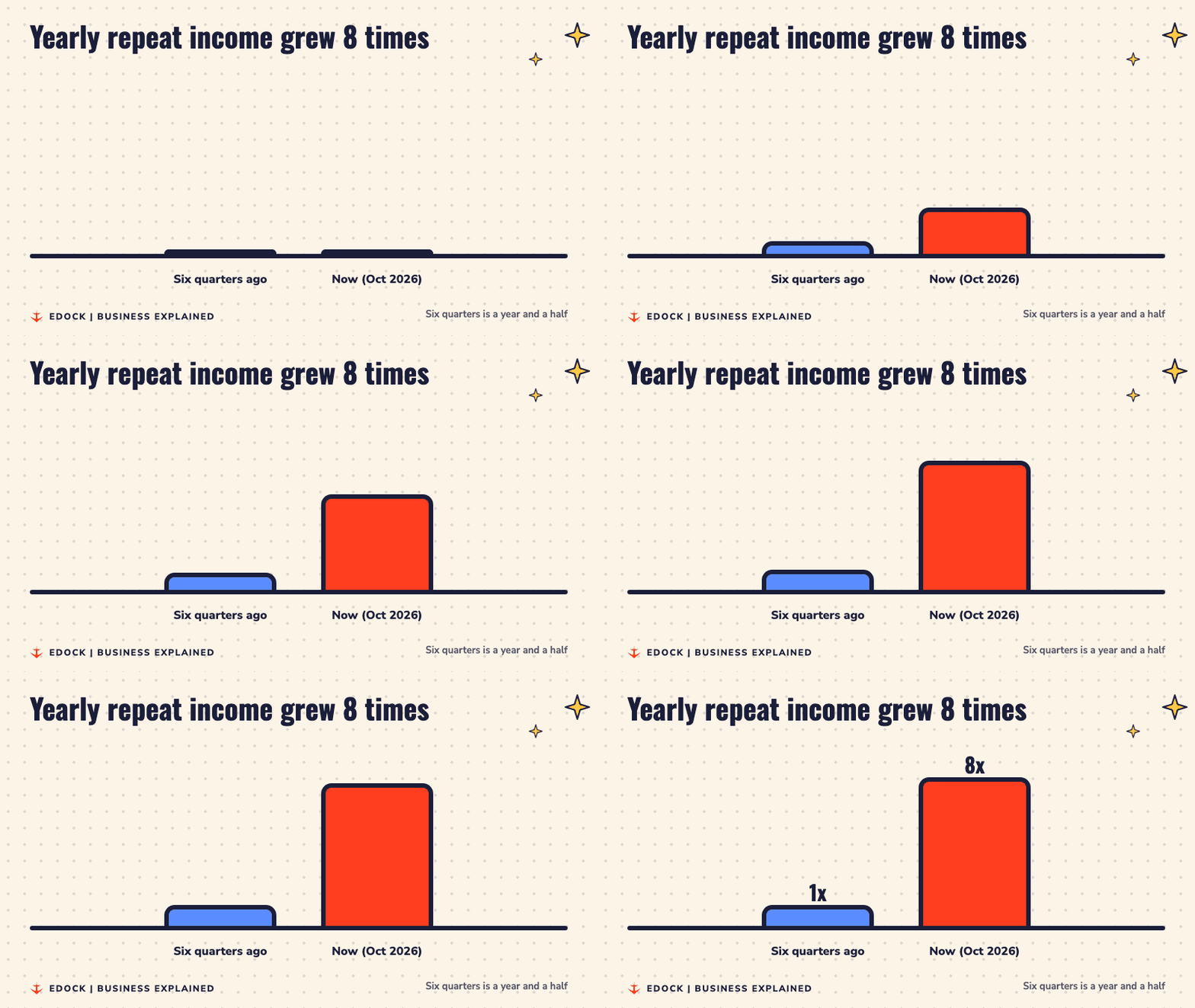
The big reason is growth. RapidCanvas says its annual recurring revenue grew 8 times over the past six quarters. Annual recurring revenue, or ARR, is the money a company expects to get every year from customers who keep paying. Picture a tiffin service: ARR is what all its regular monthly customers will pay in a full year. A quarter is three months, so six quarters is a year and a half.
The company did not share the actual revenue number. Data firm Tracxn estimated its revenue at $35.8 million as of December 2025, Mint reported. That is an outside estimate, not a figure from RapidCanvas.
The bigger market is also huge. Mint, citing a Gartner note, said global spending on AI services will reach $516 billion by 2029. Mint named Databricks, Altair and Quantexa among its competitors.
What is the money for?
The plan, as set out in the announcement, has three parts:
- More sales teams. It will grow its go-to-market teams. Go-to-market just means the people and plans used to find customers and sell to them.
- More partners. It wants a bigger network of private equity and advisory firms that can bring its service to the companies they own or advise.
- More engineers and better products. It will hire field AI engineers in the US, Brazil and India, and improve all three of its software parts.
The "vibe coding" line
CEO Rahul Pangam said in the company's statement: "Vibe coding has made it easy to start building with AI. Getting AI into production reliably and safely still remains the biggest gap." Vibe coding means asking an AI to write code from plain instructions. Building a quick demo is easy. Making it work safely every single day inside a real company is the hard part, like the difference between making one cup of chai at home and running a chai stall that serves hundreds daily without a single bad cup.
Part of a bigger wave
RapidCanvas is not alone. Inc42 reported that Shamrock AI raised $5 million in a seed round the day before, and Parallel Loop raised $6.6 million a day earlier, both to help businesses use AI. Its data also showed funding for Indian AI startups jumped 265% from a year ago to $438 million in the July to September quarter.
For young people who want to work in tech, the takeaway is simple: companies are paying for people who can turn AI from a cool demo into something that works every day.
