PVR INOX's record quarter shows why popcorn matters as much as tickets
Version 1 of 1 saved 28 Oct 2026, 11:03 pm IST · Chain line 312
As it was first published
PVR INOX's record quarter shows why popcorn matters as much as tickets
India's biggest cinema chain had its best three months ever, and it now plans to give 30% of its spare cash back to its owners.
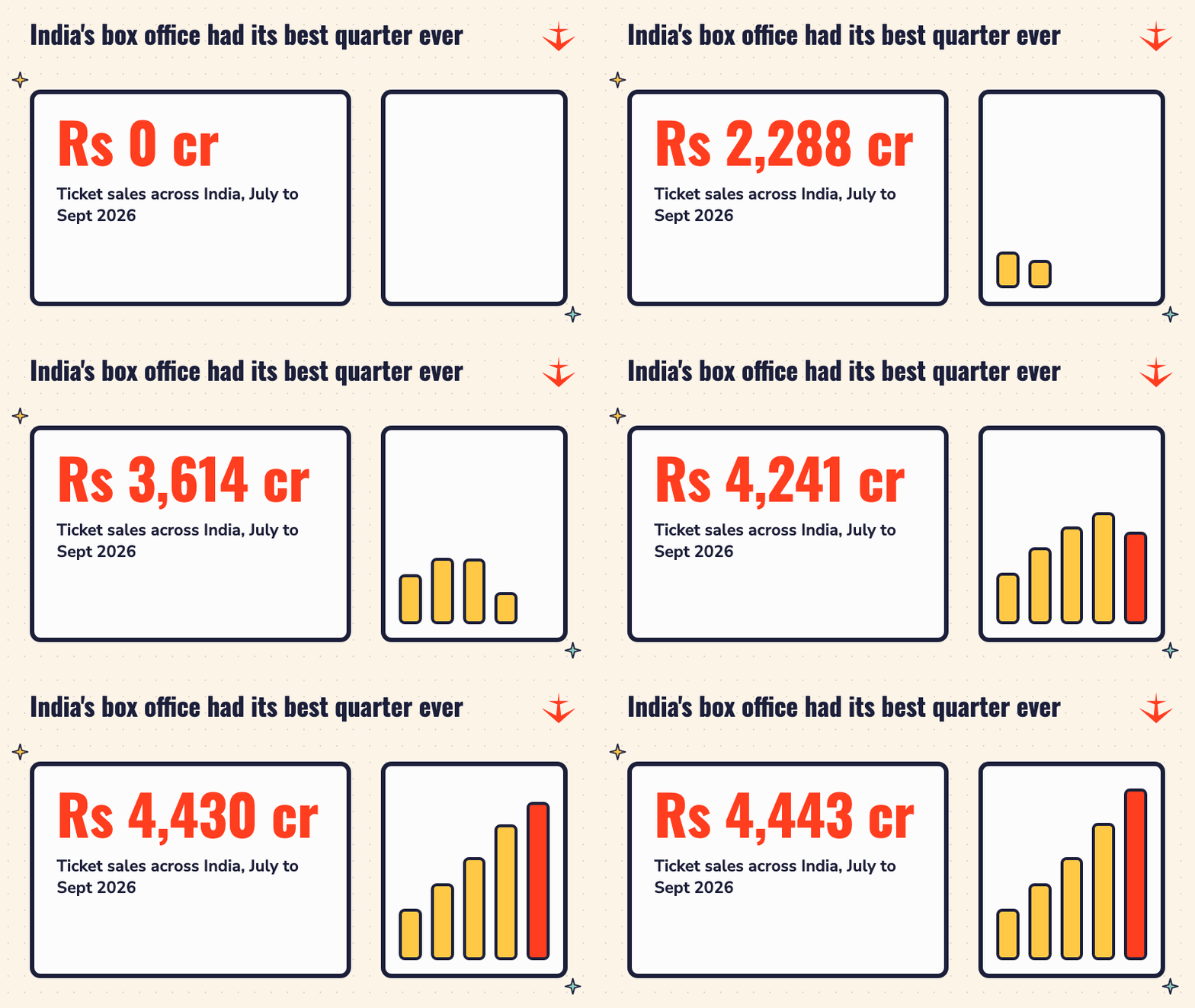
Picture every cinema hall in India for three months. Between July and September 2026, people bought tickets worth a record Rs 4,443 crore, up 23% from a year earlier. That figure comes from Ormax Media and estimates by PVR INOX, the country's biggest multiplex chain.
On Wednesday, 28 October 2026, PVR INOX shared its own numbers for the same three months, and they were the best in the company's history. Its board met on 28 October to approve the results. The board also signed off on a new rule for what to do with spare cash: about 30% of the extra cash it makes each year will go back to the people who own its shares.
So how does a cinema chain make money, why does popcorn matter so much, and what does "returning cash" really mean? Here is the story in simple words.
First, who is PVR INOX?
PVR INOX was formed in 2023, when two cinema chains, PVR Cinemas and INOX Leisure, merged. A merger is when two companies join and become one, like two samosa stalls on the same street deciding to run as one shop. PVR's roots go back to a single hall, Priya Cinema in Delhi, and it opened India's first modern multiplex in 1997 at Saket, New Delhi.
Today the company runs 1,797 screens in 114 cities across India and Sri Lanka.
The record quarter in numbers
A quarter is a block of three months. Companies report their earnings every quarter, like a school report card that comes four times a year. For July to September 2026, PVR INOX said:
- Revenue (all the money that came in from customers) was a record Rs 2,132.7 crore, up 17%.
- Profit after tax (what is left after every cost and tax is paid) from its continuing business more than doubled to Rs 273.3 crore, up 111%.
- A slightly different measure, the net profit that belongs to the owners in the company's filing, rose about 149% to Rs 263 crore, from Rs 106 crore a year earlier. Both numbers point the same way: profit jumped.
The company also reported EBITDA of Rs 475.2 crore, up 44%. EBITDA is the money a business earns from its daily work before paying interest on loans, taxes and the slow wear and tear of things like seats and projectors. Its margin was 22.3%, up from 18.1% a year ago. In plain words, out of every Rs 100 that came in, about Rs 22 was left as operating earnings.
Which films filled the seats?
Big films pulled people out of their homes. In a Business Today interview, executive director Sanjeev Kumar Bijli spoke about hits like Spider-Man and Hanuman Ansh, plus more people choosing IMAX and 3D shows.
Hollywood had a huge quarter too. English films earned Rs 1,024 crore in India, up 87%, crossing Rs 1,000 crore for the first time.
How a cinema chain makes money
A cinema has two big cash counters. The first is the ticket window. The second is the snack counter with popcorn and cold drinks.
In the quarter, the company welcomed 46.3 million visitors, only 4% more than a year ago. Even so, the company's ticket money and its food and drinks money each grew 18%. How? Each visitor spent more.
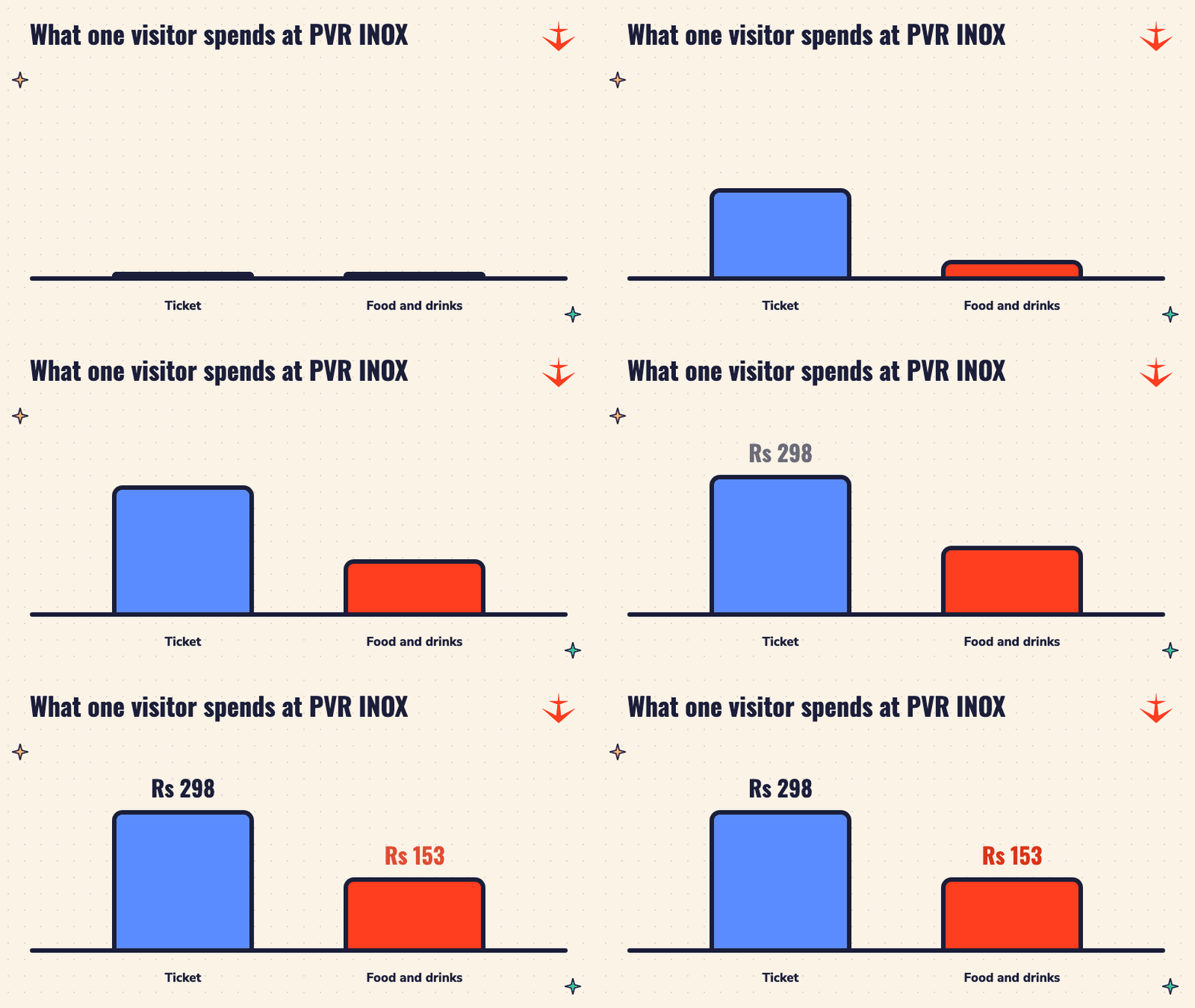
- The average ticket price rose 14% to Rs 298.
- The average spend on food and drinks per person rose 14% to Rs 153.
Think of a chai stall. If the same number of people come, but each one now also buys a biscuit, the stall earns much more without needing extra customers. That is what happened here.
Why popcorn matters so much
Look at those two numbers again. For every Rs 298 ticket, a visitor spent Rs 153 on food, a little more than half the ticket price, on top. A ticket is only the entry fee. The snack counter is where a cinema can earn a lot more from the same visitor.
This also explains why margins grew. A cinema pays rent, salaries and electricity whether a hall is full or half empty. Those costs stay fairly fixed. So every extra rupee from a bigger popcorn tub or a pricier ticket adds more to the profit. Ajay Bijli, the managing director, said: "Our margins are now well above pre-COVID levels, a clear sign of a structurally stronger business."
Most seats are still empty
Here is a surprise. Occupancy, the share of seats that get filled, rose to 30.4% from 28.7%. That means roughly 3 out of every 10 seats had someone in them, on average across all shows. Picture a cricket stadium where 7 of every 10 seats stay empty.
The company is also trimming weak spots. In the first half of the year, it opened 24 screens and closed 25, mostly ones that were losing money. It plans to add 90 to 100 screens this financial year, most of them in the second half, using "capital light" ways. Capital light means the company spends less of its own money on each new screen.
What "returning cash to owners" means
When a business makes more cash than it needs, it can do three things: spend it on growth, pay back loans, or hand some back to its owners. People who hold shares in PVR INOX are its part owners.
There are two common ways to hand cash back:
- A dividend is a cash payment to every shareholder, like a shop owner sharing extra earnings with partners at the end of the year.
- A buyback is when the company buys its own shares from shareholders. Fewer shares remain, so each one left stands for a bigger slice of the company.
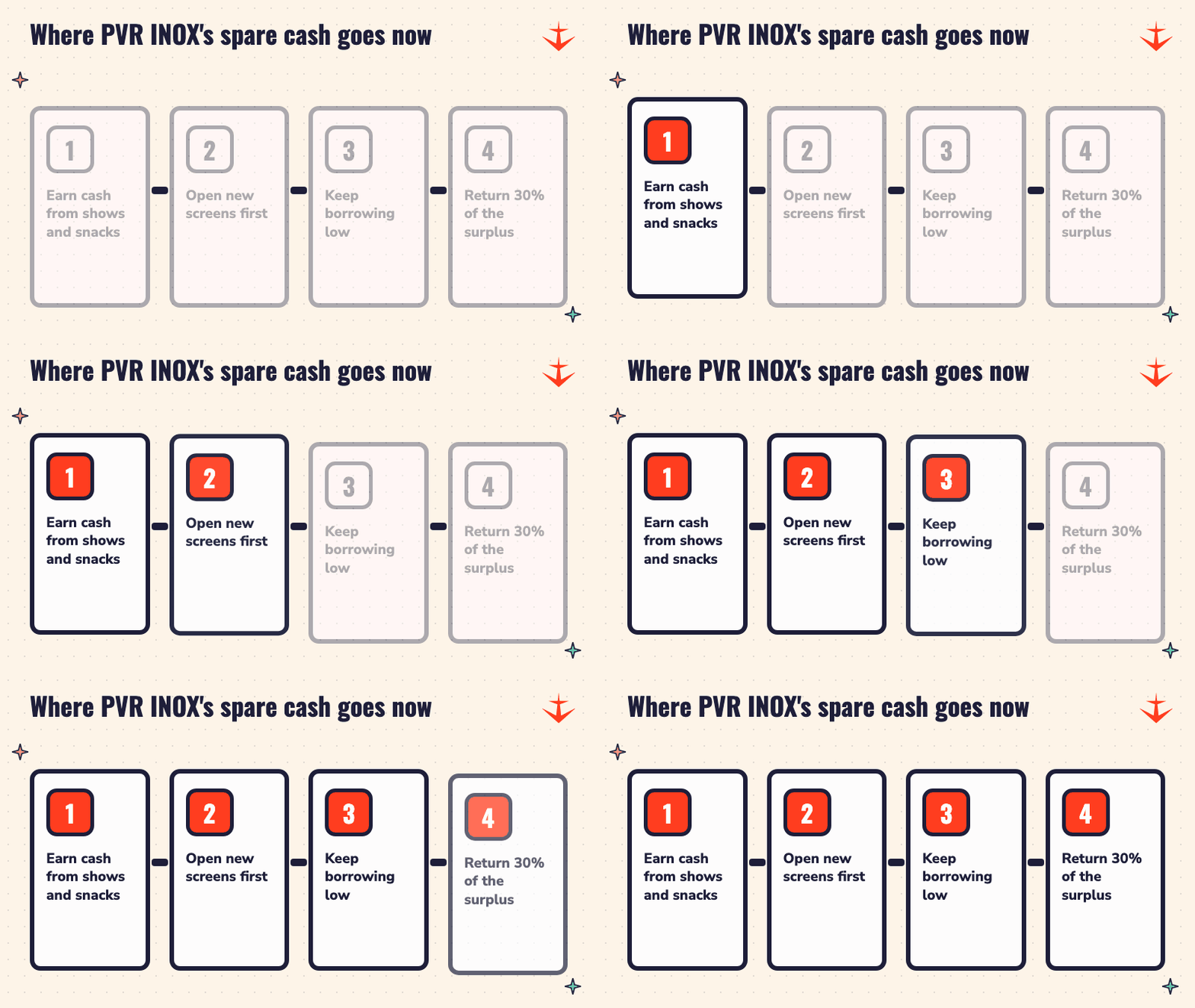
The new policy says the company will return about 30% of its yearly surplus cash flow, which is the cash left over after running the business and paying for growth. The earlier policy only spoke of dividends; the new one is wider. PVR INOX already ran its first buyback in September, buying 20,68,965 shares at Rs 1,450 each, for a total outflow of about Rs 300 crore.
Even after that, on 30 September the company had Rs 140.7 crore more in cash than it owed in loans. Its investor update says growth comes first, with a plan to keep borrowing low and give back the spare cash.
What this means for movie lovers
The record quarter tells a simple story: when big films arrive, people still go out to watch them on a large screen. But each trip now costs more, with the average ticket and the average snack spend both up 14%. The company also has a list of big films coming. Upcoming films it named include Ramayana: Part One, King and Avengers: Doomsday.
In short, the film brings people in, but the ticket price, the snack counter and the choice of which halls to keep open decide how much money is left at the end.
This second video, also from Business Today, looks at the films lined up for the next quarter.
Sources
- The Economic Times: PVR INOX posts record Q2 earnings, plans to return 30% of annual surplus cash flow
- InvestyWise: PVR INOX press release on record Q2 FY27 results (from the exchange filing)
- InvestyWise: PVR INOX investor update for Q2 FY27 (from the exchange filing)
- InvestyWise: PVR INOX board meeting outcome and buyback details (from the exchange filing)
- Upstox: PVR Inox Q2 results, key things to know
- Business Today: PVR INOX Q2 results decoded with Sanjeev Kumar Bijli
- Wikipedia: PVR INOX
- Cover photo: PVR Lulu in Lucknow, by Pooja.sirsat26, CC BY-SA 4.0
