Power Grid asks cable makers to get ready for a big rise in orders
After spending about Rs 40,000 crore on power lines last year, Power Grid says this year will be bigger, and cable factories must grow to keep up.
Picture one company spending about Rs 40,000 crore in a single year only on power lines and the big steel towers that carry them. That is what Power Grid did last year. On 28 October 2026, its chairman, Vamsi Rama Mohan Burra, told wire and cable makers to build more, build better and build faster, because this year's spending should be "much higher".
He said this at a cable and wire conference in Mumbai, held on 27 and 28 October 2026 by IEEMA, the industry body for electrical equipment makers. The message was simple. More power lines mean more orders for cable factories, and those factories need to get ready now.
Who is Power Grid, in simple words?
Think of electricity like water. A power plant is the tank. Your home is the tap. Power Grid builds and runs the big pipes in between, only these pipes are wires on tall towers. The company is owned by the government, under the Ministry of Power, and carries about 50% of all the power made in India on its network.
Burra is its chairman and managing director. He has more than 33 years of work in power transmission and telecom and earlier ran the company's projects.
How much did Power Grid really spend?
Companies use a word called capex, short for capital expenditure. It means money spent on things that last for years, like towers, wires and grid stations. Buying a new bat that lasts five cricket seasons is capex. Buying chai after the match is not.
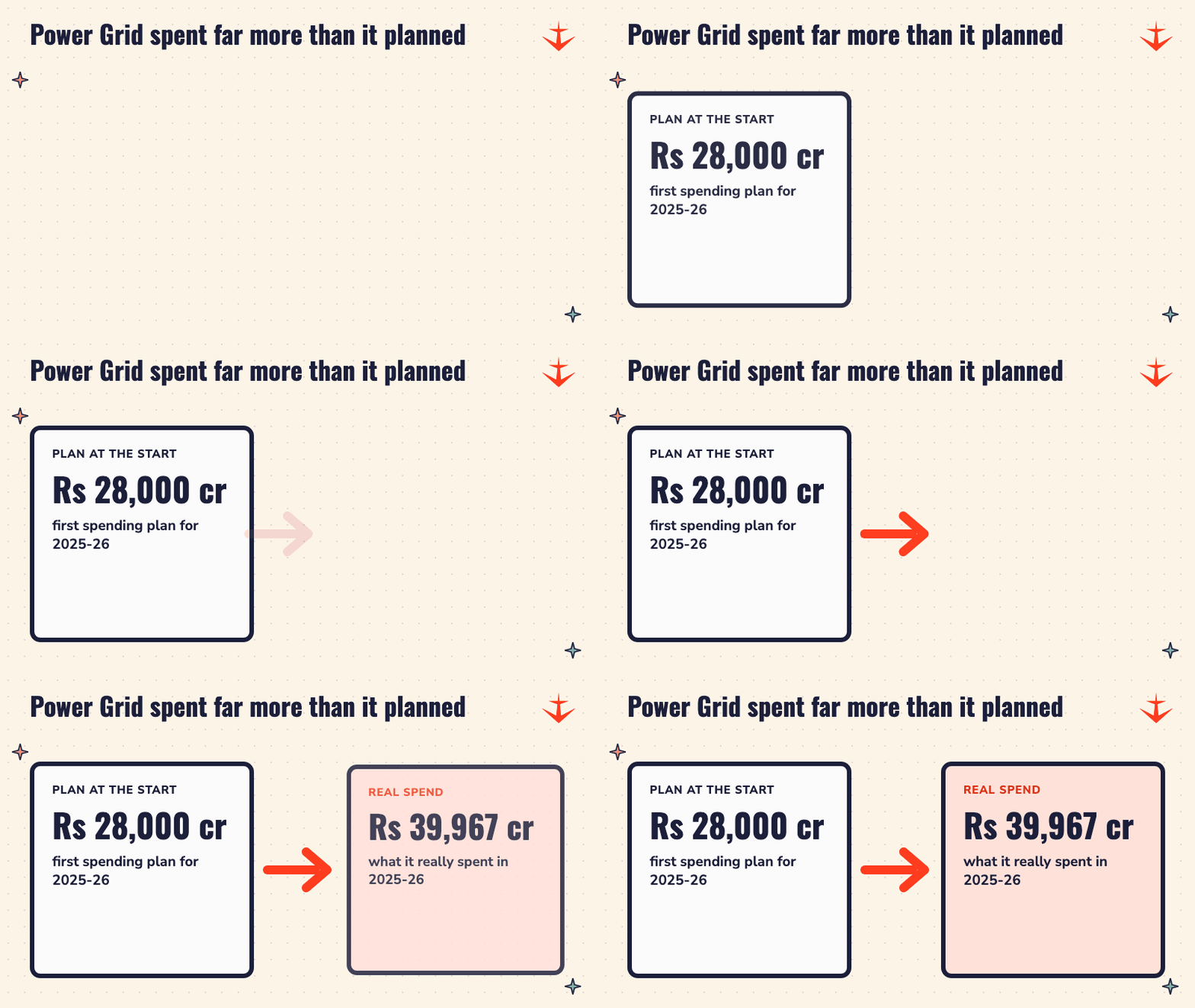
At the start of 2025-26, Power Grid planned to spend Rs 28,000 crore. It raised that plan twice, to Rs 35,000 crore. In the end it spent Rs 39,967 crore, the highest in any year so far, according to T&D India. PSU Watch reports the same figure and says it was 14% more than the final plan.
For this year, 2026-27, the first plan given in May was Rs 37,000 crore. Burra has said this is only a starting number and will be raised as the year goes on.
What did all that money build?
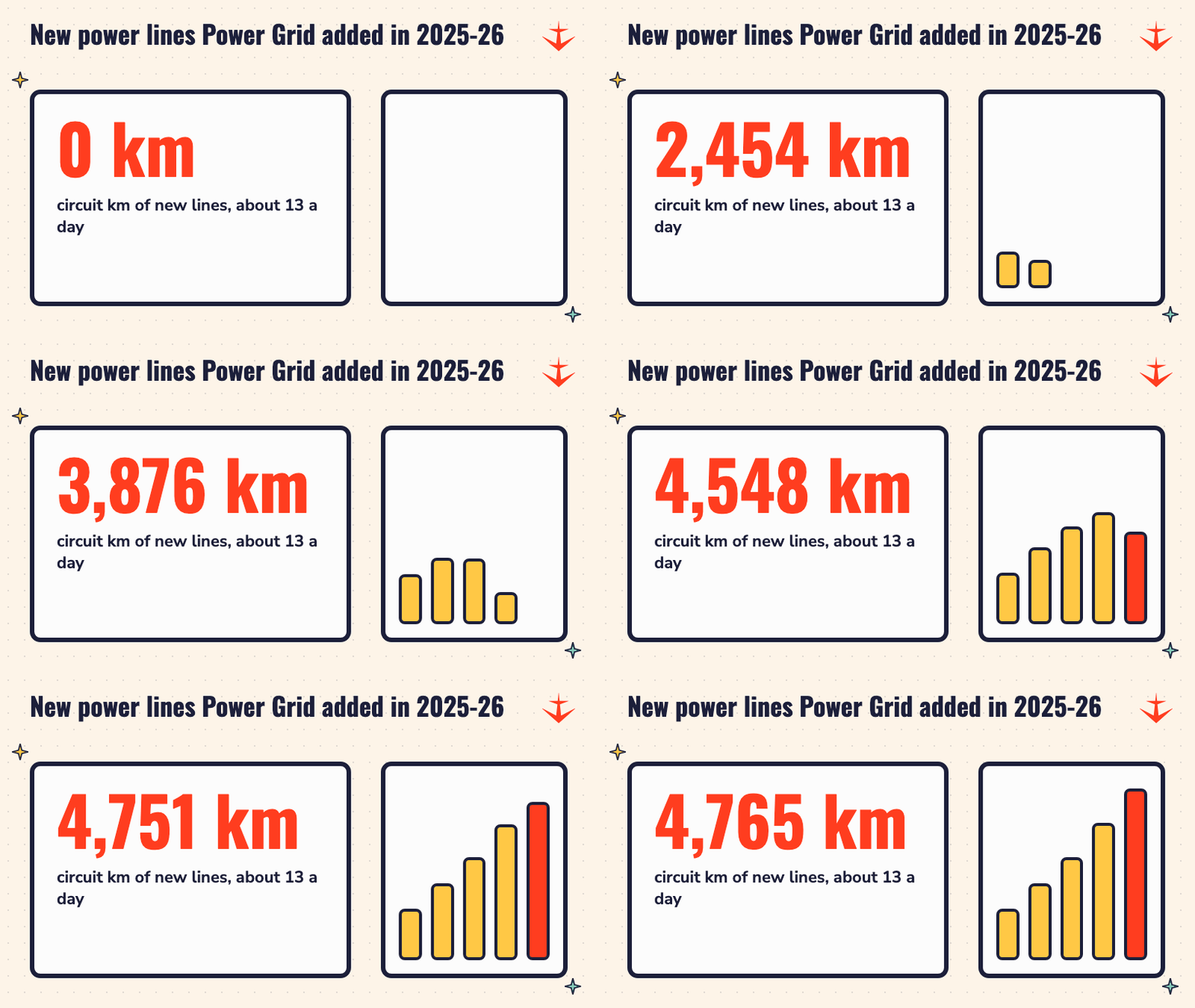
In 2025-26, Power Grid added 4,765 circuit km of new power lines, up from 4,054 the year before. A circuit km is one km of one complete power line. The company's chief said this works out to around 13 circuit km of new lines every day.
It also added 72,055 MVA of transformer capacity, more than double the year before. MVA is a unit for how much power a grid station can handle, a bit like the size of a water tank.
Why does a power company care about cable factories?
Every new line needs wires, cables and conductors. Power Grid does not make them. It buys them. So when Power Grid spends more, cable makers get more orders.
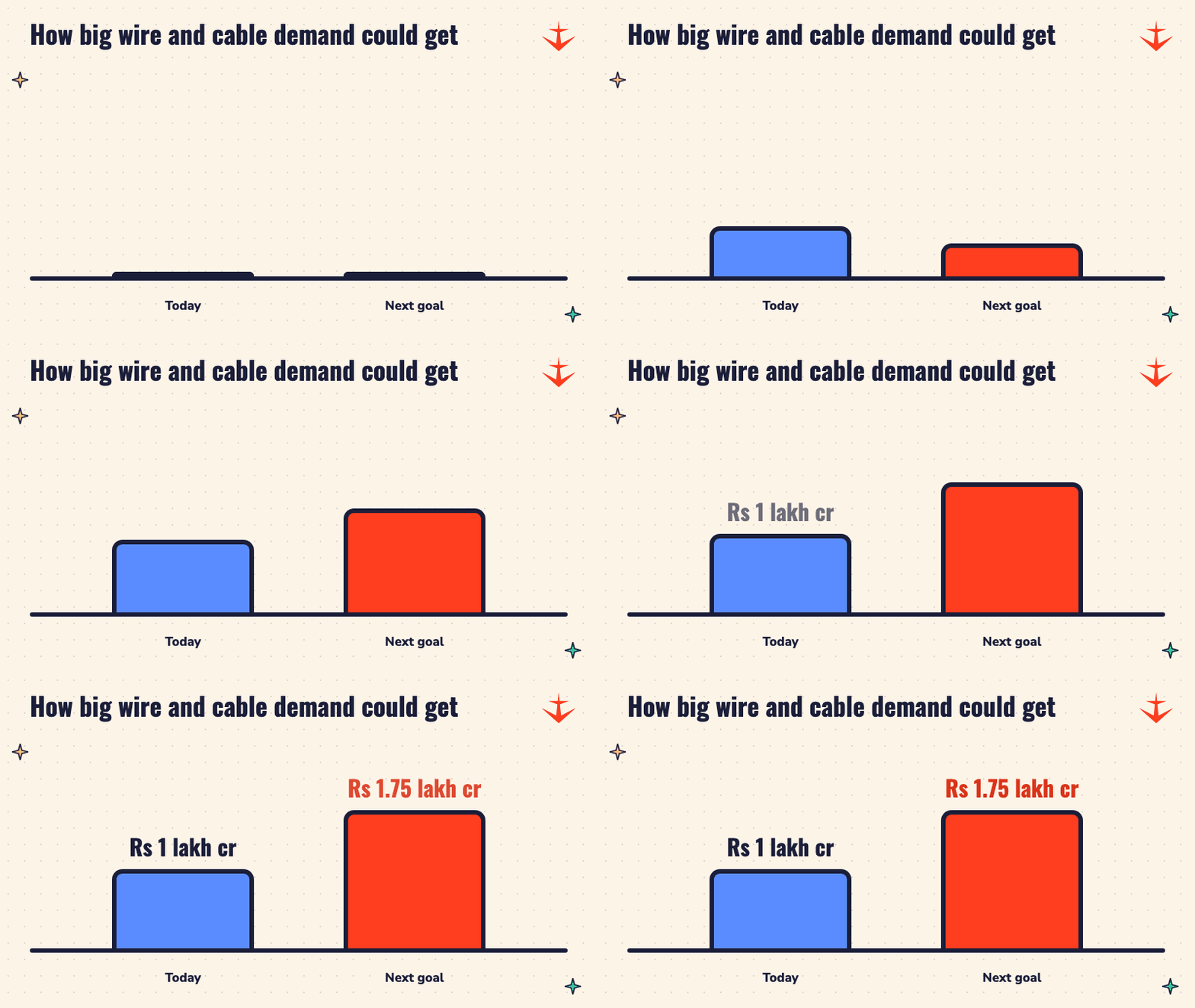
India's wires and cables industry is worth over Rs 1 lakh crore, and the power line sector is one of its biggest buyers. Some cable companies get as much as a third of all their orders from it. That means for every three rupees of business, one rupee can come from power lines.
Burra asked the makers to grow their factories, improve quality and finish orders on time. At the same event he called cable "the backbone of infrastructure" and said it is no longer a commodity. A commodity is something where every seller's version looks the same, like plain salt. His point: cables now need special skill, so quality matters more than just the lowest price.
What is pushing the demand up?
Three things, as Burra listed them: more solar and wind power, growing cities, and new data centres, the big buildings full of computers that run apps and online services day and night.
Solar parks are a big one. They are often far away from cities, so new lines must carry their power to homes and offices. "Today, if there is no transmission evacuation, we cannot sell that product," Burra said. Evacuation here simply means carrying the power out of the plant. A solar farm with no line is like a samosa stall with no road to it.
Solar parks also use a lot of cable. Manjit Singh Sethi of Havells India said the need in such projects is "pretty huge". Where land is hard to get for towers, companies use underground cables instead, which adds even more demand. Underground and undersea cables are among the fastest growing parts of the market.
There is more work ahead. The Green Energy Corridor III plan, which builds lines for clean power across states, involves about Rs 1.86 lakh crore of investment, and Burra called it another big chance for cable makers.
What could this mean for factories and work?
The cable makers say they are already growing. At the same event, IEEMA's president said the industry put more than USD 4 billion into new capacity over the last two years. Cables are about 30% of India's electrical industry and have grown about 15% a year for five years.
Shashi Amin of Polycab India said demand could go from Rs 1,00,000 crore to Rs 1,75,000 crore, and that expansion is needed. That is a jump of 75%.
Bigger factories usually need more people to run them. India's power line network is also expected to reach 650,000 circuit km by 2032, as one cable company chief said at the conference. No one at the event gave a number for new hires, so the exact count of new roles is not known yet.
There is a catch too. Building lines takes longer than building solar parks, because land and permission to cross farms and roads are hard to get. So the cable orders depend on how fast these lines really get built.
Watch: how a power grid works
This short video explains what a power grid is and how power travels from plants to homes.
This documentary looks at a Power Grid line from Raipur Pool to Dhamtari in Chhattisgarh.
Sources
- The Economic Times: Power Grid asks cable and wire makers to scale up as transmission capex set to rise
- T&D India: IEEMA cable and wire conference, Mumbai, 27 to 28 October 2026
- T&D India: Power Grid sets first 2026-27 capex plan at Rs 37,000 crore
- PSU Watch: Power Grid 2025-26 results and capex
- Wikipedia: Power Grid Corporation of India
- Deccan Chronicle: Vamsi Rama Mohan Burra takes charge at Power Grid
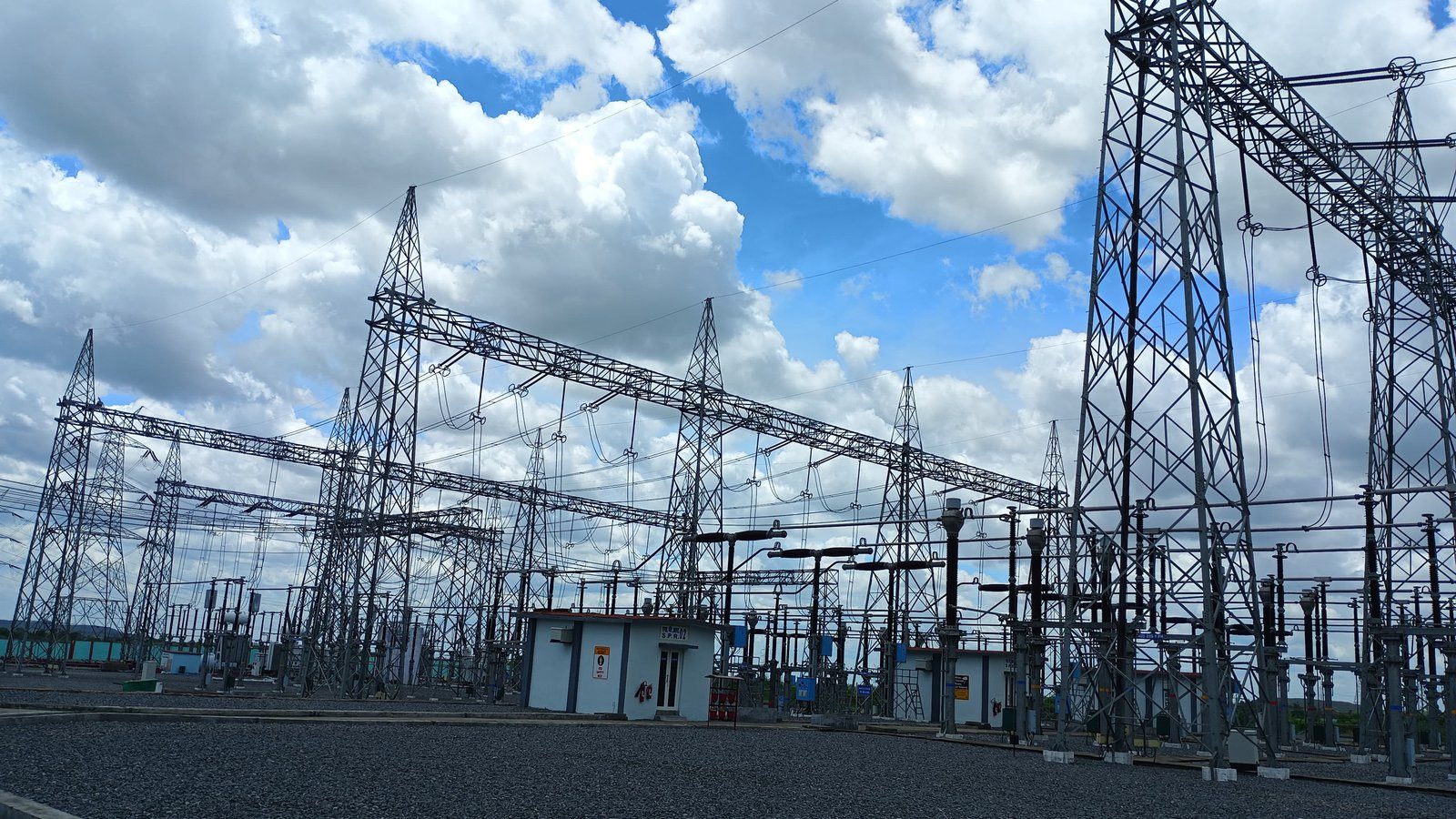
- Cover photo: Power Grid 400/220 kV grid station in Jamshedpur, by SHUBHAM KR SONI, CC0

You may republish this story under CC BY 4.0: credit Manpreet Kaur and link to this page.