Policybazaar's profit jumps 43%, but new rules could shrink the app's cut on your policy
PB Fintech earned Rs 192 crore in three months, while Irdai's draft commission caps put the company's agent network in question.
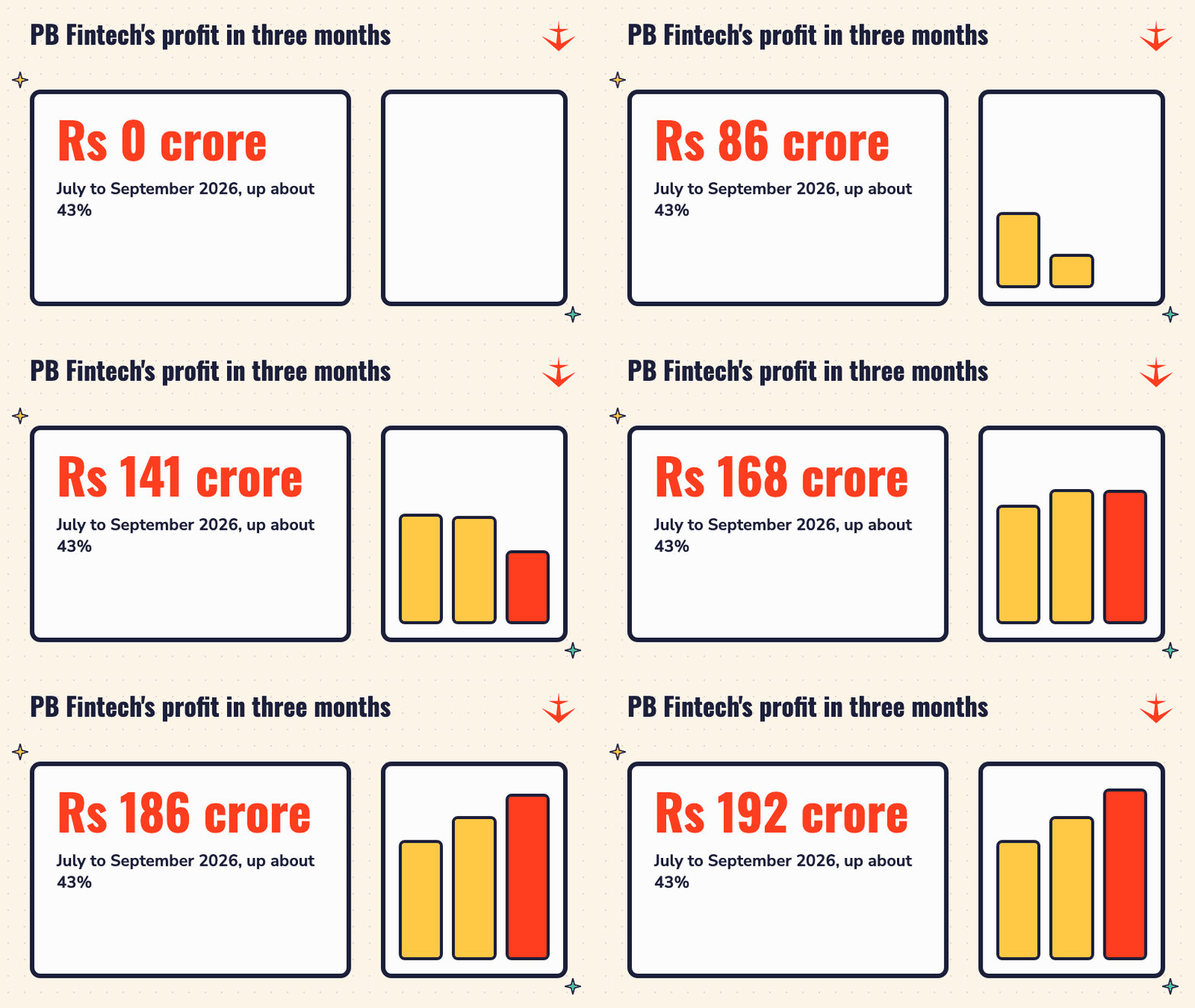
Picture this. You open an app, pick a health plan for your family and pay Rs 20,000 for the year. You never see the second half of the deal: the insurer quietly pays the app a cut of your money. That cut is how Policybazaar makes its living. On Friday, 30 October 2026, its parent company PB Fintech said its profit for July to September rose 43%. But a set of draft rules from the insurance regulator could change how big that cut is allowed to be.
What happened on 30 October?
PB Fintech owns Policybazaar (for insurance) and Paisabazaar (for loans and credit cards). For July to September 2026, its profit rose about 43% to Rs 192 crore. A year earlier, the same three months gave it Rs 135 crore.
PB Fintech's revenue, the money coming in from its work before costs, grew 35% to Rs 2,178 crore, up from Rs 1,614 crore. Most of that, Rs 2,015 crore, came from its insurance broking work, and that part grew 41% in a year.
The company is big. Policybazaar says 17.3 crore people have signed up on it, close to 3 crore have bought something, and it has helped sell 7.7 crore insurance policies since it began. The company was founded in Gurugram in June 2008 by Yashish Dahiya, Alok Bansal and Avaneesh Nirjar, first as a simple price comparison site.
How does an insurance comparison app earn?
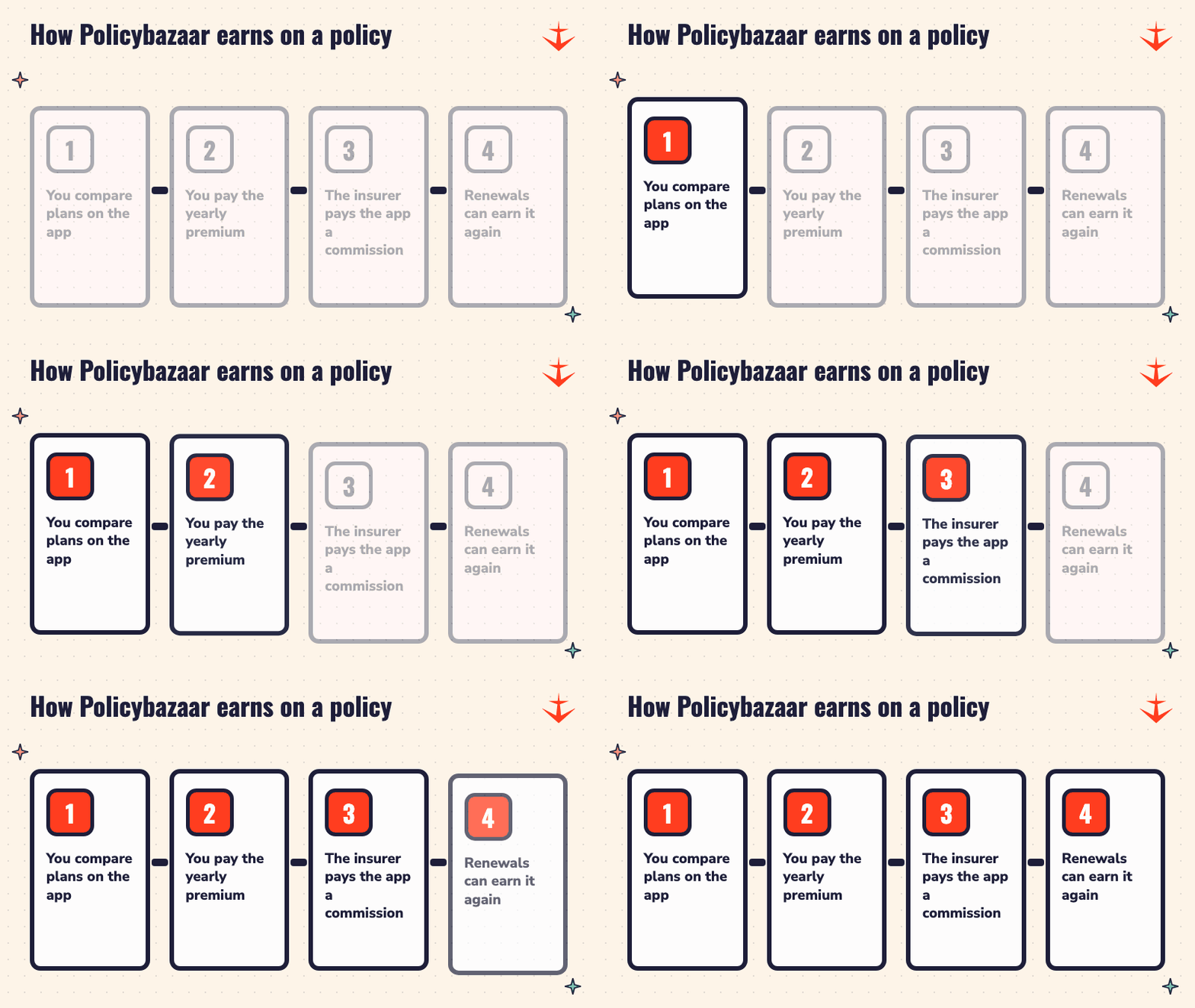
Think of a samosa stall inside a busy railway station. The stall does not own the station, but every samosa sold there brings the station a small fee. Policybazaar works a bit like the station. Insurers put their plans on the app. You compare them, pick one and pay the premium (the yearly price of the policy). The insurer then pays Policybazaar a commission, a slice of that premium, for bringing you in.
Inc42 explains this with a buyer who pays a Rs 20,000 premium for a family health plan: the insurer she picked pays the app a part of that amount. In the April to June quarter, PB Fintech said its average slice on its main online insurance business was eighteen and a half per cent of the premium. On a Rs 20,000 plan, a slice of that size would come to about Rs 3,700.
There is a second, quieter stream. When you renew your policy next year, the app often earns again. This "renewal and trail" money stood at Rs 1,097 crore over the 12 months to September, up from Rs 774 crore a year earlier.
Why are these cuts suddenly in the news?
On 23 September 2026, Irdai, the insurance regulator (the referee that sets the rules for all insurers in India), released a paper called "Recalibrating Economics of Insurance Distribution".
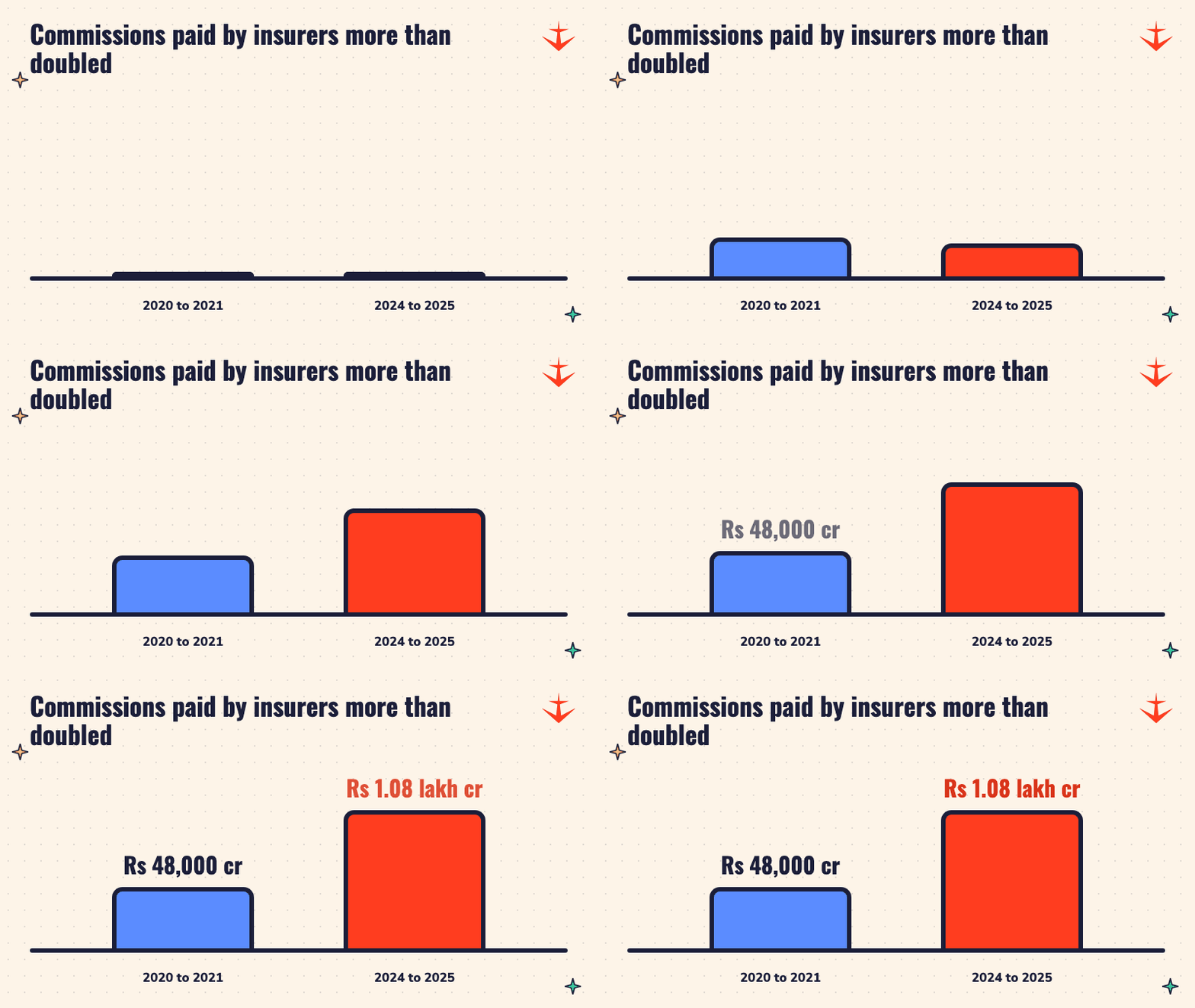
The regulator's worry is simple. Payments to sellers have grown far faster than insurance itself. Commissions more than doubled, from Rs 48,000 crore in 2020 to 2021 to Rs 1.08 lakh crore in 2024 to 2025. Between 2022 to 2023 and 2024 to 2025, payouts to sellers rose 125%, while new premiums grew only 28%.
So the draft brings back limits, or caps, on commissions for each kind of product and each way of selling. Rewards, incentives and other extra payments to sellers would be counted inside the cap too. For example, first-year commissions on life savings plans would be kept between 5% and 20%. Sellers would get an extra 10% of the limit for business from towns with fewer than 10 lakh people, and up to 20% where fewer than 50,000 people live. According to Bloomberg, quoted by Outlook Money, the regulator is looking at 1 January or 1 April 2027 as possible start dates.
What could change for people buying insurance?
If insurers pay less to sellers, they could charge buyers less. Analysts quoted by Inc42 say insurers could hand those savings to customers, which could bring premiums down and get more people insured.
The paper also goes after a habit many app users know: having to type your name, phone number and city before seeing a single price. Irdai called this a "dark pattern", a design trick that nudges people. The draft also wants to stop lenders forcing a buyer to take insurance as a condition for a loan, Policy Circle reports.
For the app, the hit could be large. The brokerage Jefferies estimates Policybazaar's commissions on new health cover could drop by 33% to 50%, Inc42 reports.
What about the agents in small towns?
PB Fintech also runs PB Partners. This is a network of PoSPs, or point-of-sale persons, a kind of insurance agent who sells plans through PB Fintech's platform. PB Partners earned Rs 698 crore in the quarter, up 39%, and has 131,000 active partners. Smaller tier-II and tier-III towns gave 76% of its premium.
Under the draft, sellers who offer plans from many insurers would be paid less than those tied to one. Speaking to analysts after the results, Dahiya said this "does not leave scope for PoSP the way it is today". He said the business could carry on if it became something different, "like maybe a services player", and added, "these are not the final regulations. So let us wait and watch". He also said the company already makes a loss on this business, because it pays its partners before insurers pay it.
The brokers' industry body has warned that up to one million roles could be hit, Outlook Money reports. Irdai's member Girija Subramanian has rejected this fear, saying the changes could instead create work by letting more people sell insurance.
How is PB Fintech getting ready?
The company has already slowed hiring. Its managers told analysts that hiring in October was at "a very, very small fraction" of earlier levels, Mint reports. Existing leaders will be moved to run newer businesses instead of hiring from outside. The company could also start charging for the claims help Policybazaar now gives for free, if the final rules allow it.
Spending on ads, though, is rising. Advertising and promotion costs went up 59% in a year to Rs 447 crore, because the management said demand was "very tough" compared with last year.
Why does the UAE matter here?
One part of the company is growing far from India: its business in the UAE. PB Fintech set up there in 2018 to 2019, and the business has grown 19 times since 2021 to 2022, The Economic Times reports. Its UAE premiums grew 36% in the July to September quarter, and the yearly pace of premiums there has reached Rs 2,258 crore.
It now wants to sell more health and life cover there, including plans for Indians living in the UAE that work in both countries.
This video from Business Today explains the commission caps and who could gain or lose:
And in this video on the Policybazaar for Business channel, Dahiya talks about building PB Fintech:
What happens next?
Comments on the paper closed on 25 October. Dahiya said more than 1,000 responses had already reached the regulator. Irdai will now study them and put out draft rules for another round of comments before anything is final. Until then, the size of the app's slice stays an open question.
Sources
- Entrackr: PB Fintech Q2 FY27 profit rises 43% to Rs 192 crore
- Inc42: PB Fintech Q2 profit and revenue
- Mint: Policybazaar's agent business may need to change under Irdai's draft rules
- The Economic Times: PB Fintech's UAE insurance business grows 19-fold
- Inc42: Policybazaar, Turtlemint feel the squeeze
- Policy Circle: Irdai's commission caps could reshape insurance distribution
- Outlook Money: Irdai's proposed insurance commission caps
- Wikipedia: Policybazaar
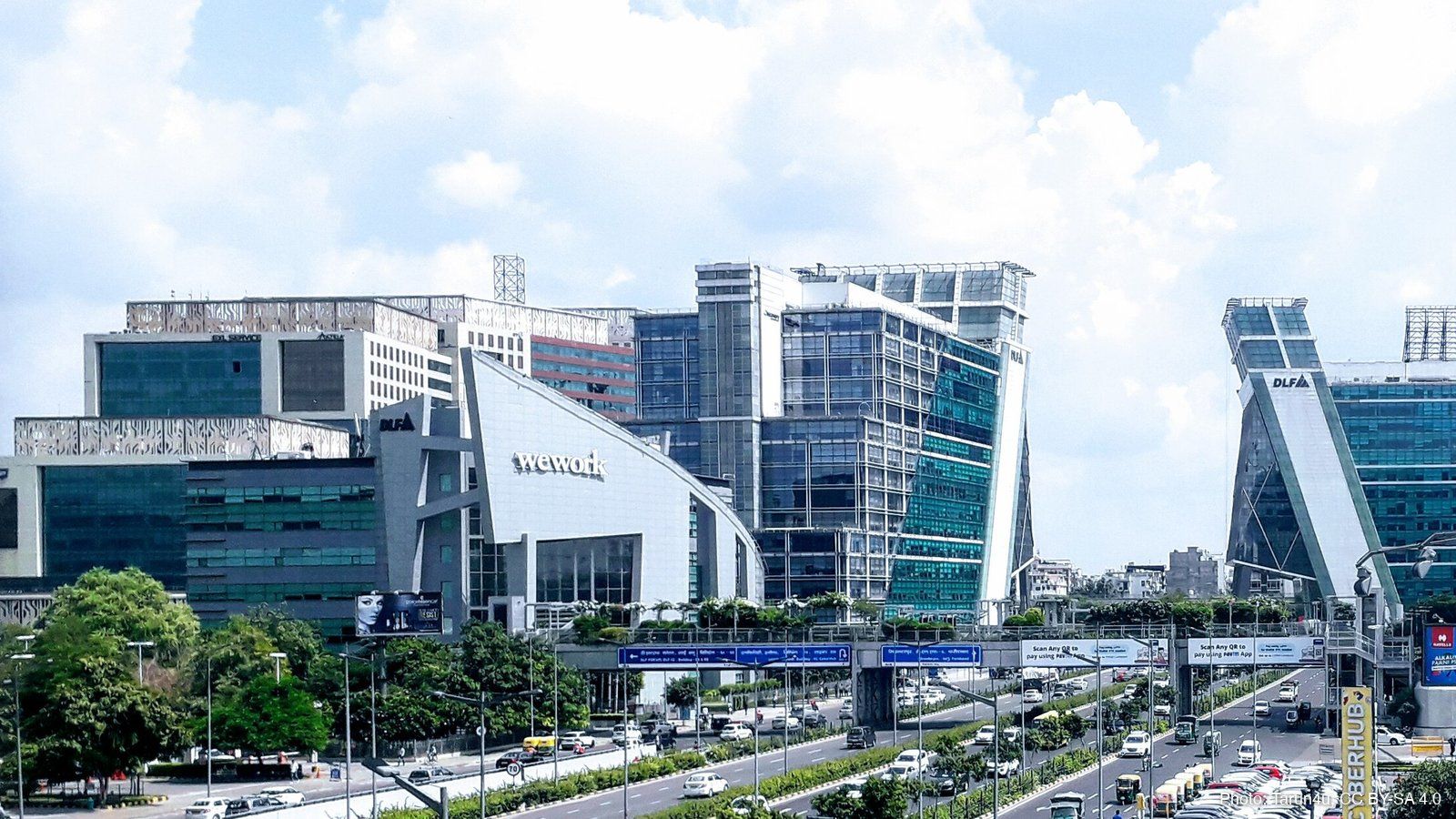
- Cover photo: Cyber City View, Gurgaon, by Tarun4u, CC BY-SA 4.0

You may republish this story under CC BY 4.0: credit Manpreet Kaur and link to this page.