Plum wants 40% growth a year and plans to reach over 100,000 shops
The beauty brand crossed Rs 500 crore in sales in FY26 and now aims for Rs 1,500 crore plus. Here is how 10-minute apps and corner shops fit in.
Picture a beauty brand that sits on fewer than 15,000 shop shelves today and wants to be on more than 100,000. That is the plan Plum shared on 16 October 2026 with ETRetail. The company wants to grow by more than 40% every year and become a business with sales of over Rs 1,500 crore.
Plum makes skincare, body care and haircare products. It says it began in 2013 and has always been 100% vegan. Here is the story of how it plans to get bigger, in plain words.
How big is Plum right now?
Plum had a turnover of over Rs 500 crore in FY26, the financial year that ended in March 2026, ETRetail reported. Turnover simply means the total money that came in from selling things, before any costs are taken out.
One year earlier, in FY25, its revenue from operations was Rs 402 crore, with a profit of Rs 25 crore, according to its filings reported by Entrackr. The year before that, FY24, it had made a loss of Rs 84 crore. So the brand has already moved from losing money to making money.
For this year, Plum expects to grow 40 to 50%. Founder Shankar Prasad said the brand wants to grow 2.5 to 3 times faster than the overall beauty market. Think of a cricket match where the whole team scores at 6 runs an over, and one batter wants to score at 15 to 18.
What does 40% a year really mean?
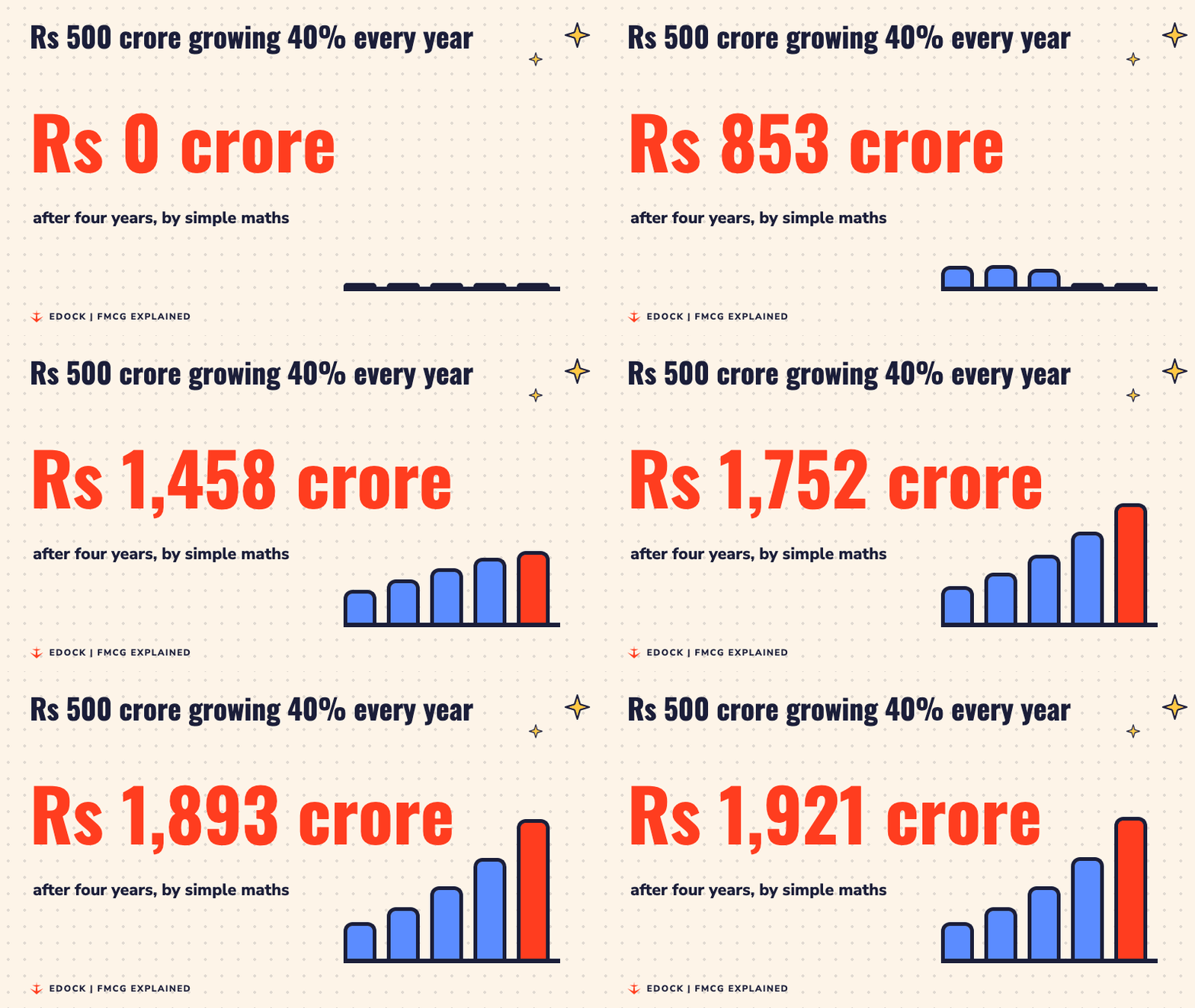
Growth that repeats every year stacks up fast, like pocket money that grows on top of last year's amount, not the first one. Here is a simple sum starting from Rs 500 crore and growing exactly 40% each year:
- After one year: Rs 700 crore
- After two years: Rs 980 crore
- After three years: about Rs 1,372 crore
- After four years: about Rs 1,921 crore
So at that pace, Rs 1,500 crore would be crossed in about four years. Prasad did not set a fixed target year for 2030, and said he sees revenue numbers as something that builds a business structurally, not just points on a curve.
From 15,000 shops to 100,000
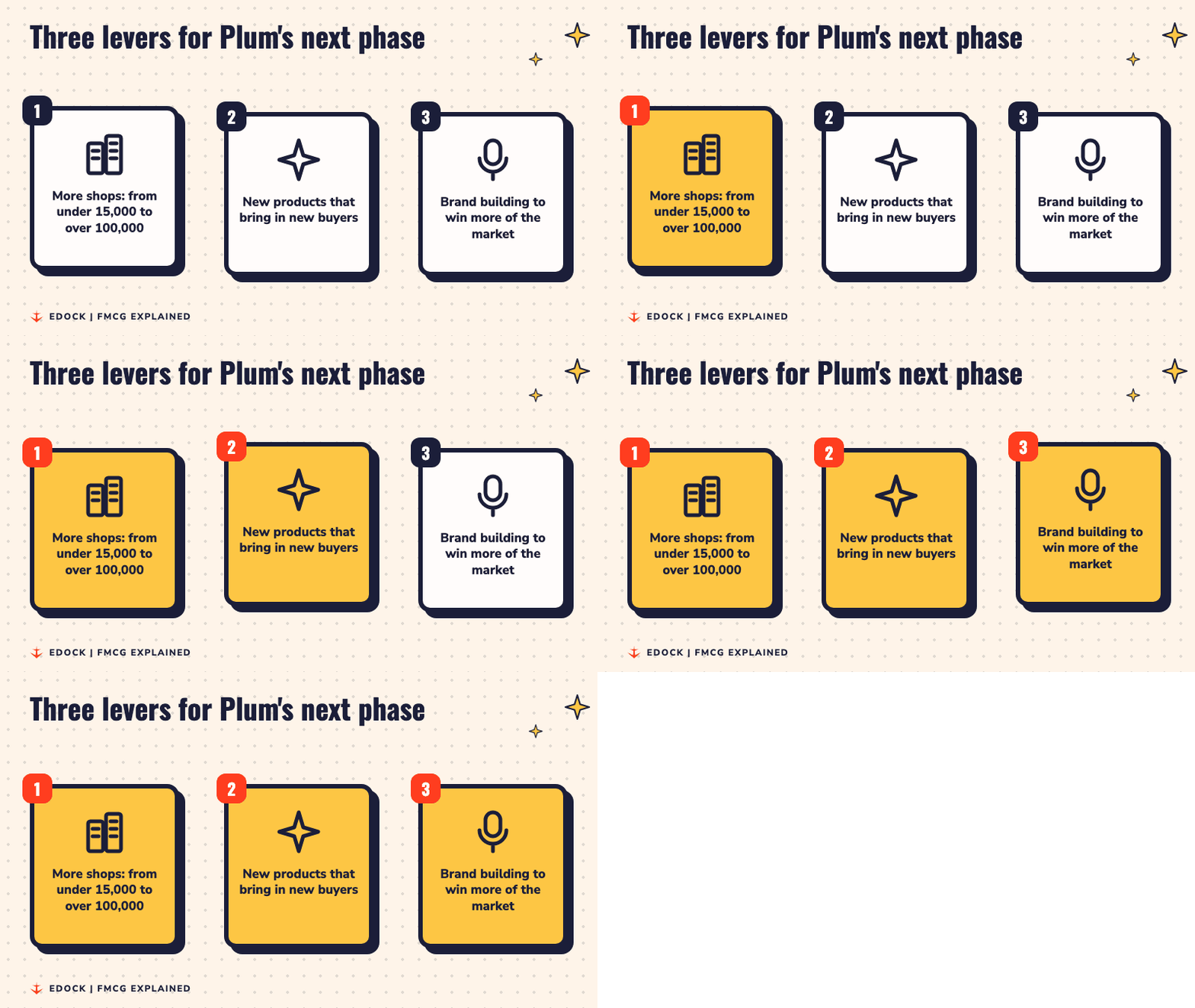
The biggest part of the plan is distribution. Distribution just means getting your product to the places where people can buy it. Plum wants to reach more than 100,000 general trade outlets, up from fewer than 15,000 today. That is nearly seven times as many shops.
General trade means the small neighbourhood shops: the kirana store, the corner chemist, the little cosmetics counter near the chai stall. Modern trade means big chain stores and supermarkets. Plum wants to grow in both. ETRetail notes it is still catching up in modern retail.
Prasad said the brand does not want to push products into stores just to hit a number. In simple words, a shop should stock Plum because people ask for it, not because a salesperson forced boxes onto its shelf.
The 10-minute delivery boost
Plum started as an online brand, and about two thirds of its sales still come from online channels. These include its own online store (called D2C, or direct to consumer, meaning the brand sells straight to you with no shop in between), big shopping apps, and quick commerce.
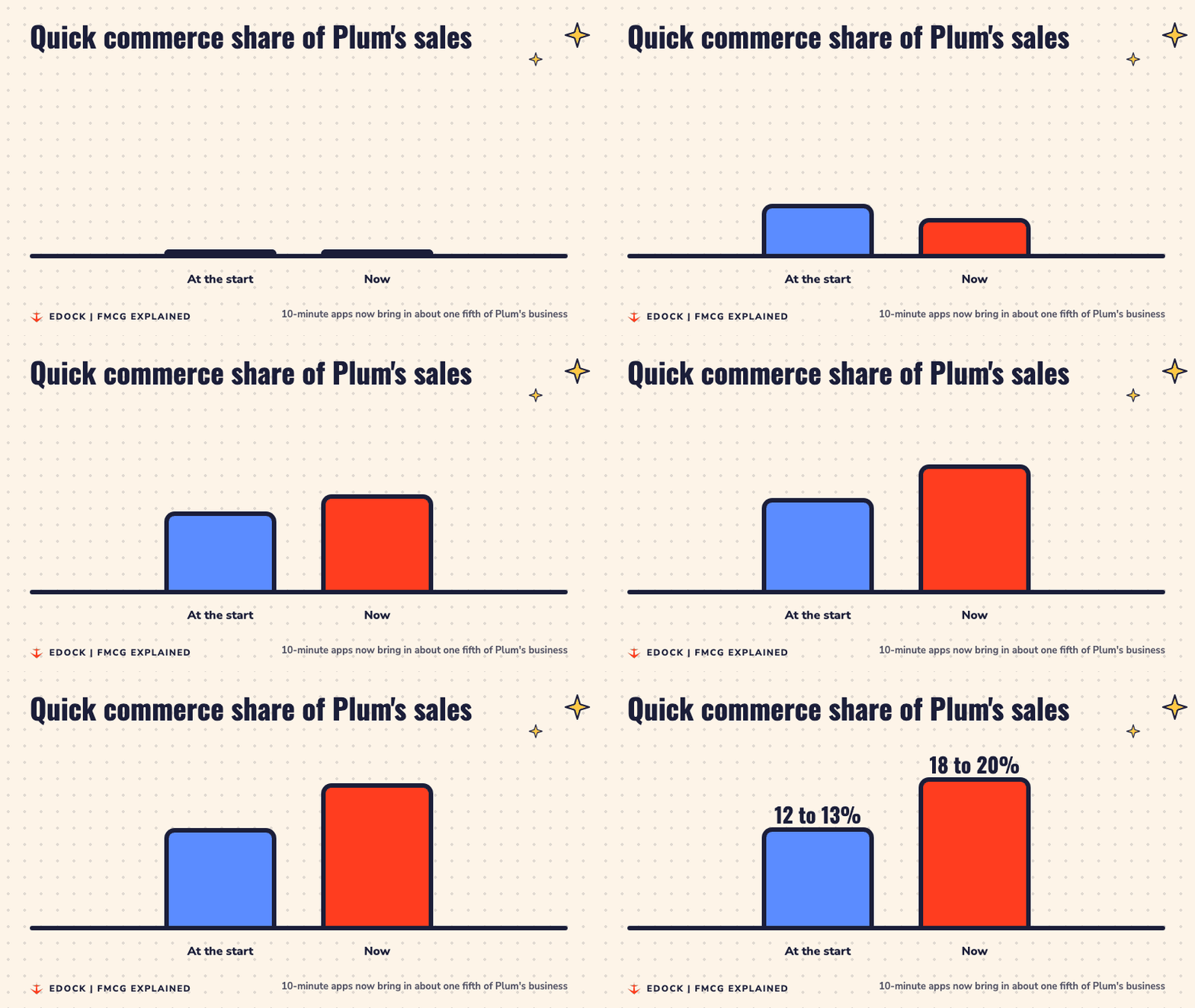
Quick commerce is the apps that deliver in about 10 minutes. They keep goods in small closed warehouses called dark stores, close to where people live. Quick commerce now brings in 18 to 20% of Plum's business, up from around 12 to 13% at the start. It is growing nearly twice as fast as the company overall, and on some apps growth has been over 60% to 100%.
Around 90% of Plum's products sell well enough to keep their place in these dark stores. Prasad said this shows people are using the apps for replenishment. Replenishment means buying the same thing again when it runs out, like ordering a new packet of chai leaves the moment the old one is empty.
What does Plum sell?
The brand has around 160 SKUs. An SKU, or stock keeping unit, is one exact product in one exact size. A 50 ml cream and a 100 ml cream of the same kind count as two SKUs.
Skincare brings in over 60% of revenue. Body care brings in about 25 to 30%, and haircare makes up the rest. Body care has now been turned into its own separate brand called BodyLovin', with its own online store. Plum says it is not looking at new product categories right away. It wants to make its current range stronger first.
Its own shops, with a simple rule
Plum runs around 12 to 15 exclusive brand outlets. These are shops that sell only Plum products, used mainly to build the brand. Each one is usually 300 to 350 square feet, roughly the size of a small bedroom and a half.
Setting up one store costs about Rs 16 to 20 lakh, not counting the rent deposit. Plum wants each store to pay back its cost in about a year. This is called the payback period: how long it takes for a shop to earn back the money spent to open it. If a lemonade stall costs Rs 1,000 to set up and earns Rs 100 profit a month, its payback period is 10 months.
Prasad said every channel must stand on its own feet. The online store, a shopping app or a physical shop must each make sense in money terms, and one must not quietly pay for the losses of another. Plum says its D2C business is already profitable.
Will it stay profitable?
Plum reported an EBITDA margin of about 8 to 9% last year. EBITDA is the money left from regular business before paying interest, tax and the wear and tear on equipment. A margin of 8 to 9% means about Rs 8 to 9 left over from every Rs 100 of sales, before those costs.
The brand wants this to reach double digits, meaning 10% or more, over time. But Prasad said Plum would not make margins look better by cutting spending on growth. He said the brand wants to be strongly profitable and self-sufficient.
Plum also does not own a factory. Its formulas are developed in-house, and outside manufacturers make the products. It has thought about building its own factory, but there is no plan to do so right now.
Why this matters
Plum was born online. Its plan shows the next step: moving into a lakh of local shops while also riding the 10-minute delivery wave. The hard part is doing all of that while still making a profit. Plum is betting that more shops, new products and a stronger brand can do it together.
Sources
- Plum targets over 40 pc annual growth, eyes Rs 1,500 crore-plus scale as it expands distribution 7X, ETRetail
- D2C beauty brand Plum turns around in FY25 with Rs 25 Cr PAT, Entrackr
- About Plum, Plum Goodness
- Cover photo: Skin care products displayed on a light pink background, by Shixart1985, CC BY 2.0

You may republish this story under CC BY 4.0: credit Manpreet Kaur and link to this page.