Piyush Goyal visits Europe's biggest port as India works on faster, digital cargo checks
Version 1 of 1 saved 26 Oct 2026, 6:12 am IST · Chain line 241
As it was first published
Piyush Goyal visits Europe's biggest port as India works on faster, digital cargo checks
Indian customs and the Port of Rotterdam are working together to bring digital, quicker cargo handling to Indian ports, Goyal said on 25 October.
Picture a giant ship sitting at an Indian port, full of boxes. It cannot leave until its cargo is checked, cleared and moved out. Every extra hour it waits costs money. On Sunday, 25 October 2026, Commerce and Industry Minister Piyush Goyal stood at Europe's biggest port and said India wants to fix exactly this problem.
Goyal toured the Port of Rotterdam in the Netherlands on 25 October, guided by its chief executive, Boudewijn Siemons. There, he told reporters that Indian customs and the Rotterdam port authorities are working together to bring digital, faster cargo handling to India.
Here is what that means, why Rotterdam matters, and how it links to a big trade deal with Europe.
What exactly did Goyal say?
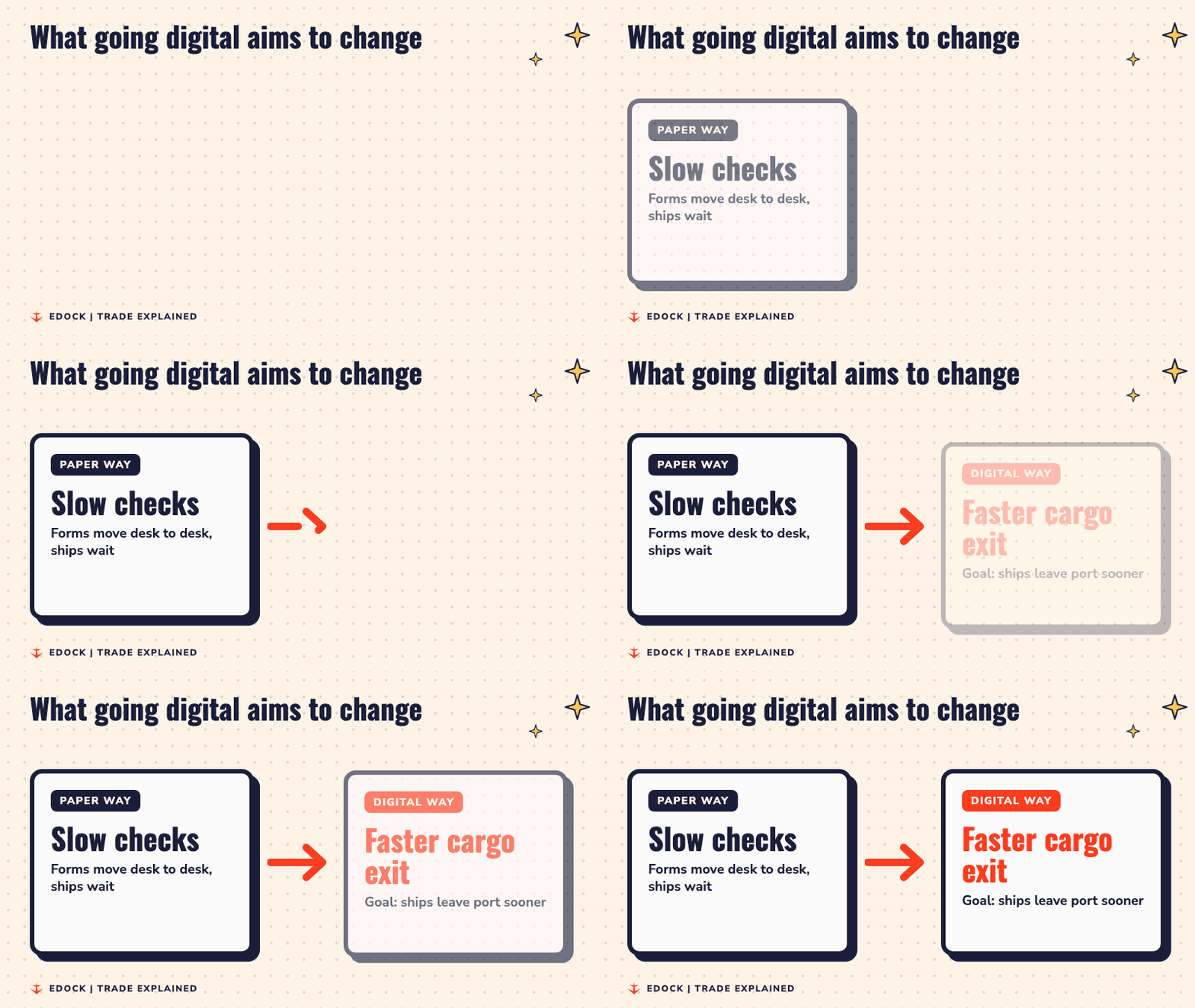
His words, as reported from Rotterdam: "The customs authorities in India and the authorities at the Port of Rotterdam are engaged to see how we can digitalise in India to bring in modern standards, faster evacuation of cargo, and speed up the turnaround time of ships."
That one sentence has three big ideas packed inside. Let us open them one by one.
Customs is the team that checks goods coming into or going out of a country. Think of the bag check at a metro station, but for whole containers. Customs makes sure the papers match the goods and the right taxes are paid.
Digitalise means moving work from paper to computers. Instead of forms going from one desk to the next, the details travel online, and many checks can happen at the same time.
Cargo evacuation sounds scary, but it simply means moving goods out of the port once a ship drops them off. If boxes pile up at the dock, the port gets jammed, like a school gate at 3 pm when every parent's car stops in the same spot.
What is "turnaround time" and why does it matter?
Turnaround time is how long a ship spends at a port, from the moment it arrives to the moment it sails away. Think of a cab at a pickup point. The driver earns nothing while the cab waits. The quicker the passenger gets in, the sooner the cab can take the next ride.
Ships work the same way. A ship that waits for days at a port is not carrying goods to the next customer. So, a quicker turnaround means each ship, and each port, can do more work in the same time. That matters for every exporter who wants goods to reach buyers abroad on time.
Goyal did not give a date or a target number for the digital project. He only said both sides are working on it. So, for now, this is a plan in progress, not a finished system.
Why Rotterdam, of all places?
Rotterdam is Europe's largest port, and the government calls it a gateway for Indian goods to the European market. A gateway is like the main door of a big mall. Goods from India land in Rotterdam first, and from there they travel by road, river and rail into many European countries.
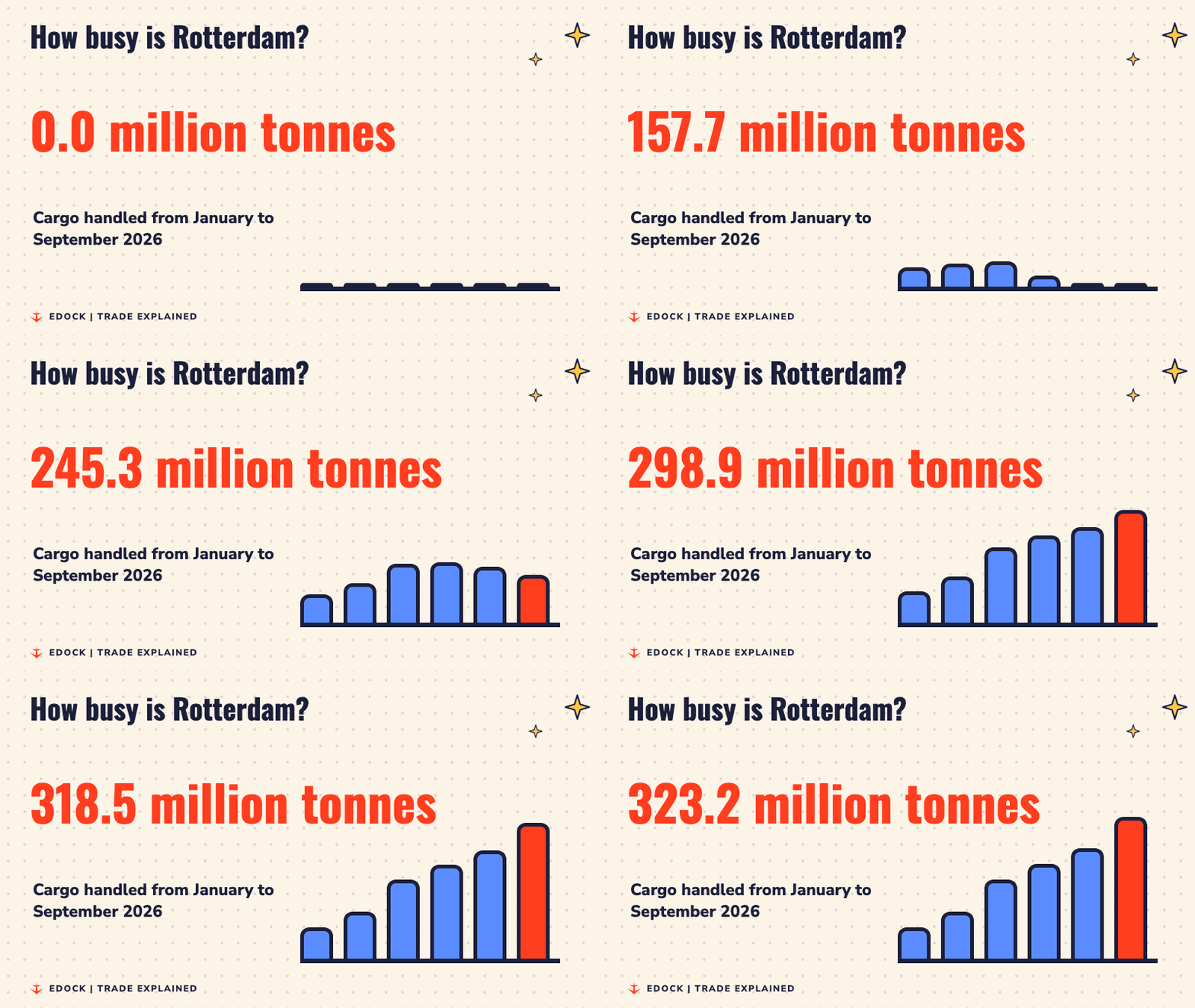
How busy is it? The port itself says it handled 323.2 million tonnes of cargo in the first nine months of 2026, up 0.9% from the same months last year. That is coal, oil, grain, containers and much more, all passing through one port in nine months.
India's port plan: double, then double again
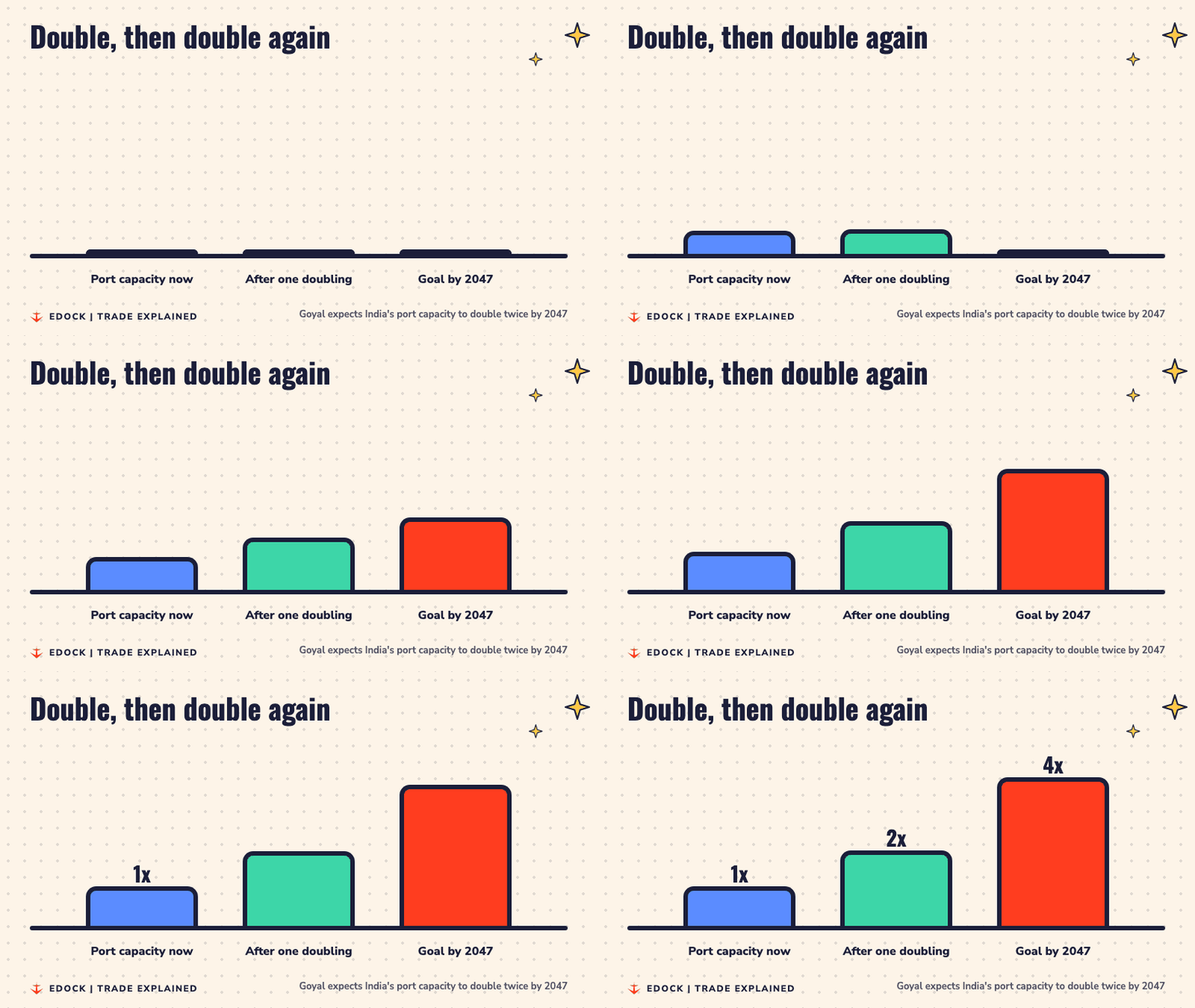
Goyal also spoke about how much bigger India's ports need to get. In his words: "Despite doubling our port capacity over the past decade, India still needs more capacity. By 2047, we expect port capacity to double twice over the next two decades to support GDP growth and international trade," as reported by NewsMobile.
Port capacity is the amount of cargo a port can handle in a year. Think of it like the number of plates a canteen kitchen can serve in a day. If more students join the school, the kitchen needs more stoves and more cooks, or the queue gets very long.
Now the maths. Doubling once means 2 times today's size. Doubling twice means doubling that again, so 2 times 2, which is 4 times today's size. In short, the plan is for India's ports to handle about four times as much as now by 2047, the year India turns 100 as a free country.
Why so much? Goyal linked it to two things: GDP growth and international trade. GDP is the total value of everything a country makes and sells in a year. As India makes and trades more, it needs more space at its ports, just like a growing shop needs a bigger storeroom.
Where does the India-EU trade deal fit in?
The visit comes ahead of a big trade agreement between India and the European Union, a group of 27 countries. An FTA, or free trade agreement, is a deal that makes trade between two sides easier and cheaper, often by cutting the taxes charged on each other's goods. Think of two neighbouring shops agreeing to give each other's customers a discount.
India and the EU announced in January that talks had ended, and the deal is expected to be signed by the end of this year and may start next year. According to the government's own note on the visit, the deal is expected to create big new chances for Indian exporters, and Dutch ports can help more goods flow between India and Europe.
The port's boss sounded keen too. Siemons said he has "very high expectations" from the deal and that Europe is looking forward to doing more business with India, as reported by The Economic Times. He also said making sure goods can flow more easily between India and Europe is something the port will be working on.
Put simply: a trade deal cuts the cost of selling to Europe, and faster ports cut the time. Exporters need both.
What else happened on the trip?
Goyal also met the Indian community in Amsterdam at an event hosted by the Embassy of India, with around 70 people attending, including business and professional representatives. His programme in Rotterdam also included meetings with people from the shipping and logistics world. Logistics means the whole job of moving goods from the factory to the buyer: trucks, ships, warehouses and paperwork.
Here is a short video from the Port of Rotterdam about how it uses digital tools to help everyone at the port work together:
Why should a student care?
Ports may feel far away, but they touch daily life. The phone parts, the cooking oil and the clothes in many Indian shops travel by sea at some point. Faster ports help goods reach buyers sooner, which matters to Indian sellers trying to compete abroad.
There is also a career angle. Bigger and more digital ports need people who understand trade rules, shipping, data and software. A port that runs on screens instead of stacks of paper needs coders, analysts and logistics planners, not just crane drivers.
For now, the key facts are simple. On 25 October, India said it is working with Europe's largest port to bring faster, digital cargo handling home. And it wants its ports to grow about four times bigger by 2047. How fast the paper turns into screens is the part to watch.
Sources
- Press Information Bureau: Union Minister Piyush Goyal holds trade and investment talks in the Netherlands
- NewsMobile: Piyush Goyal announces India-Rotterdam port digitalisation push
- The Economic Times: "Very high" expectations from India-EU FTA, says Rotterdam port chief
- Moneycontrol: Piyush Goyal visits Rotterdam port, flags its role in boosting Indian exports to Europe
- Port of Rotterdam: Throughput rose by 0.9% in the first nine months of the year
- Cover photo: Piyush Goyal at a G20 event in Gurugram, 2023, by Shariquejamalworld, CC BY-SA 4.0
