Pirelli and BKT team up to make 8 lakh car tyres in India by 2030
Version 1 of 1 saved 23 Oct 2026, 8:24 am IST · Chain line 160
As it was first published
Pirelli and BKT team up to make 8 lakh car tyres in India by 2030
The Italian tyre maker behind Formula One tyres signed deals with Mumbai's BKT on 22 October, with a 50:50 joint venture planned for later.
Picture the tyres on a Formula One car, screaming round a track at top speed. Since 2011, every one of those tyres has come from one Italian company, Pirelli. Now Pirelli tyres for normal cars are set to be made in Gujarat.
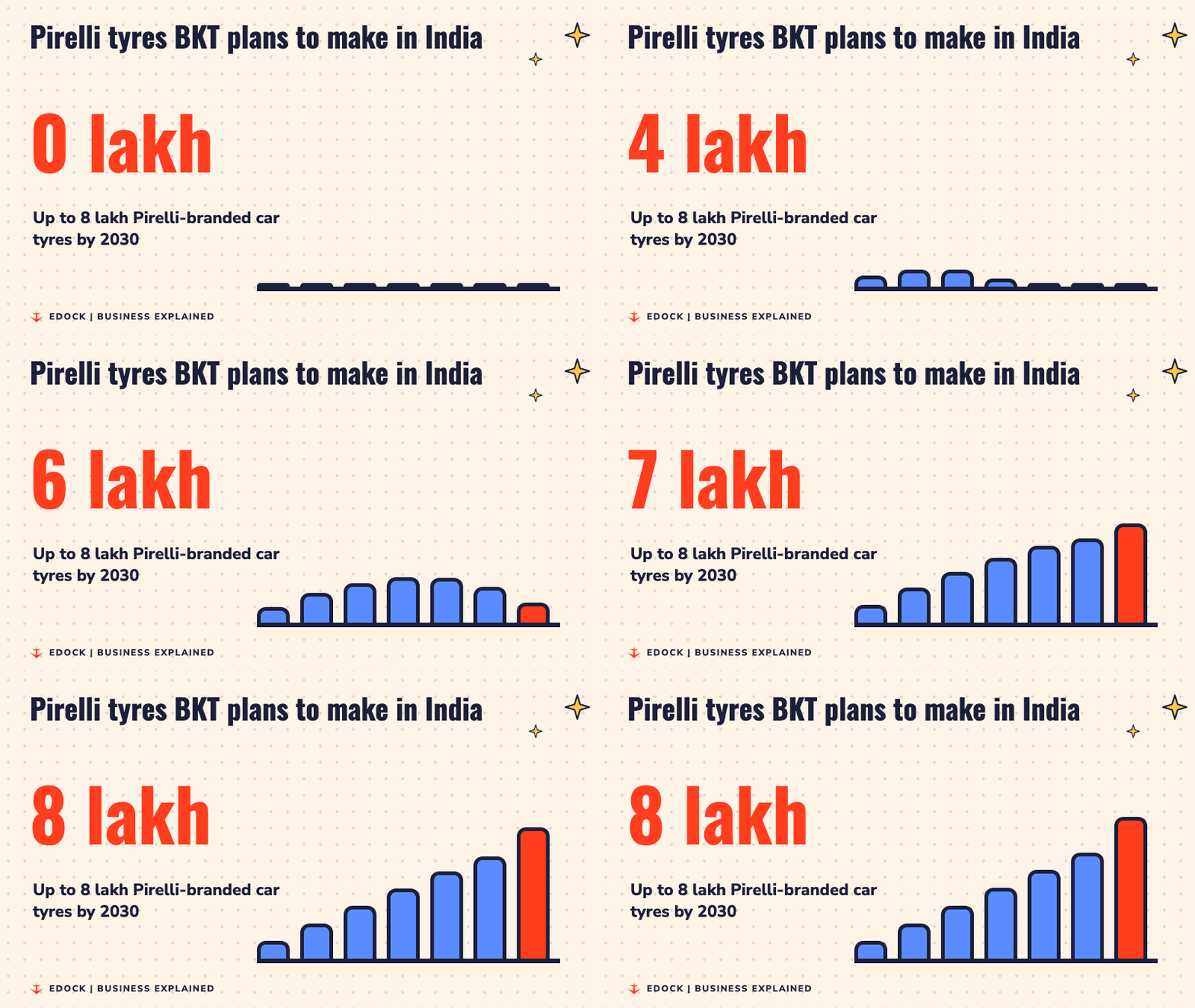
On 22 October 2026, Pirelli and Mumbai's Balkrishna Industries, known as BKT, signed a set of agreements to make car tyres together. BKT plans to make up to 8 lakh Pirelli-branded tyres a year by 2030 at its plant in Bhuj, Gujarat. Later, the two want to open a brand new company that they own half and half.
Here is the deal, in simple words.
Who are these two companies?
Pirelli was founded in Milan in 1872. Today it is the fifth largest tyre maker in the world. It makes tyres for cars, motorbikes and bicycles, and has 18 factories in 12 countries.
BKT began in 1987 with a factory in Aurangabad. It is based in Mumbai. It is famous for huge tyres for tractors, mining trucks and machines that dig and build. People call these off-highway tyres, because they work on farms and in mines, not on roads. BKT has been moving into car, truck and two-wheeler tyres too.
So one company knows fancy car tyres very well. The other knows how to run big factories in India. Put them together and each fills a gap for the other.
Step one: BKT makes tyres for Pirelli
The first part of the plan starts soon. BKT will make Pirelli car tyres at its existing car tyre plant in Bhuj. The tyres must follow Pirelli's own design rules. Then they go to Pirelli and its group companies, both in India and abroad.
BKT's joint managing director, Rajiv Poddar, said production at the Bhuj plant is expected to start in the next financial year.
This first step is called an offtake agreement. Think of a samosa stall that agrees to buy at least 200 samosas every day from a bigger kitchen. The kitchen, in turn, promises to keep enough space and cooks ready to make them. Pirelli has made the same kind of promise: it will buy a minimum number of tyres every year, and BKT will keep enough factory space ready.
How is the price set? Pirelli pays for the actual cost of the raw materials, like rubber, plus a fee for turning them into tyres. Tyres sold in India are paid for in rupees. Tyres sent abroad are paid for in euros.
There is one rule for BKT. It cannot make similar car tyres for any other company. But it can still make and sell car tyres under its own BKT name.
Step two: a joint venture
The bigger dream comes later. The two companies plan a joint venture, or JV. A joint venture is when two companies open one new company together and share it. Imagine two friends who each run a tea stall, and then open a third, bigger stall together. Each friend owns half of the new stall and shares its work and its earnings.
That is the plan here. The JV will be 50:50, so each side owns half. It will have four board members, two from each company. The chairperson, the person who leads the board meetings, will take turns between the two sides. The factory's output will be shared equally.
The JV will build a new plant in India for high-value car tyres, sold under both the Pirelli and BKT names, in India and in other countries.

What is not decided yet
This part matters. The final JV contract has not been signed yet. The companies aim to set up the JV by 31 December 2030, if certain conditions are met. They have not shared where the new plant will be, how much money will go into it, or how many tyres it will make.
Until then, step one keeps running. The tyre supply deal ends once the JV can meet Pirelli's needs. If that does not happen, it runs until 31 December 2031, and both sides can agree to stretch it.
Why does Pirelli want India?
Pirelli already sells tyres in India. But it does not have its own factory here.
The companies also see more cars coming. They estimate that car registrations in India will grow 5 to 7 percent every year until 2030. A registration is when a new car gets its number plate, so this is a simple way to count new cars on the road.
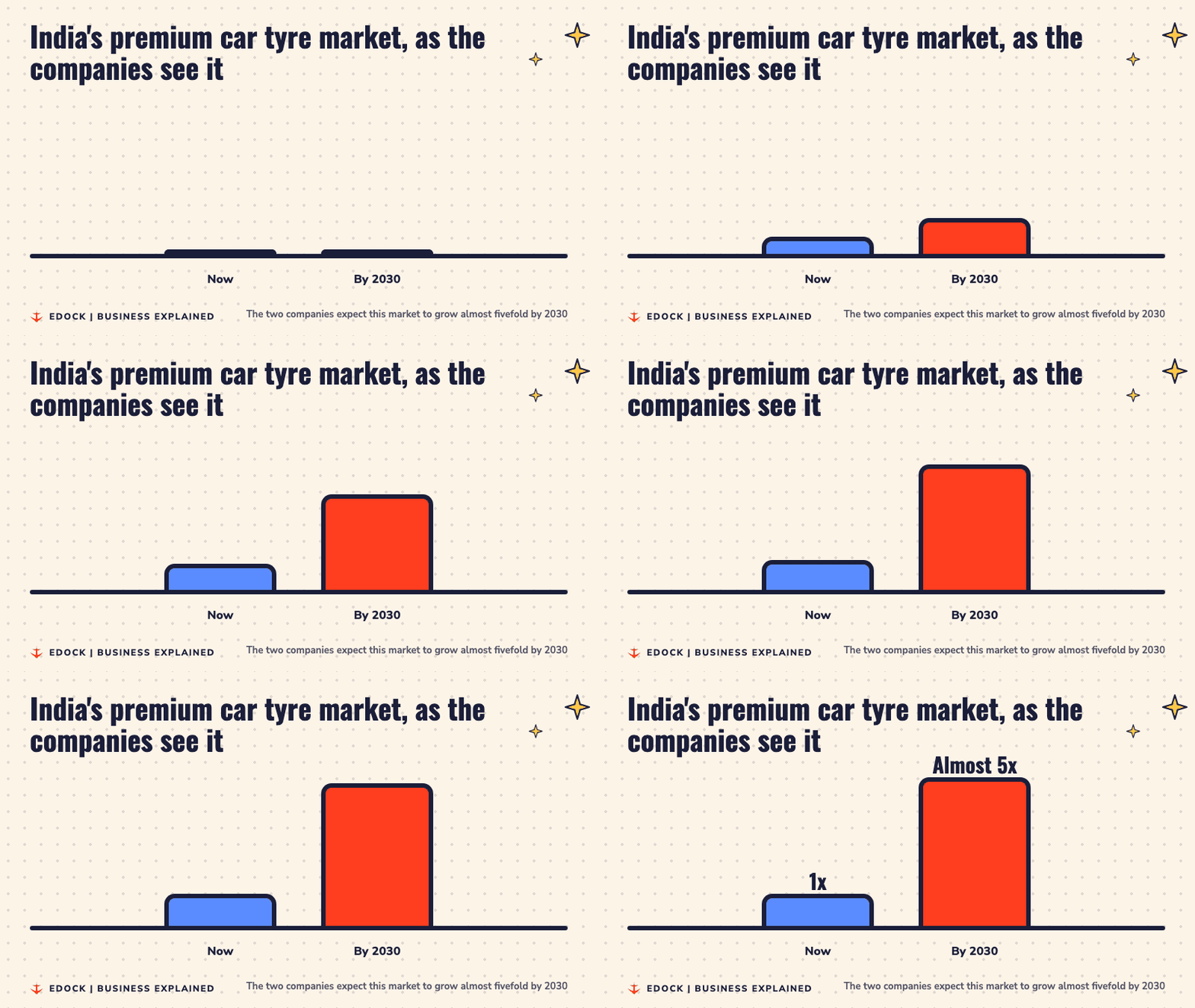
Even more striking, they think the market for premium car tyres, the costly, high-quality kind, could grow almost five times by 2030. A market is just all the buying and selling of one thing. So the two companies are betting that many more Indian drivers will pick costlier tyres in the next few years.
What does BKT get?
BKT gets a famous partner to learn from. Pirelli will give BKT limited rights to use some of its know-how and brand names to make these tyres.
There is also a separate service deal. Pirelli will help BKT test its own car, SUV and two-wheeler tyres. BKT can use Pirelli's testing places outside India, like special test tracks and computer tools that copy real driving. BKT will pay for this in euros.
Think of a young cricketer who gets to train at a top academy's nets. The cricketer still plays for their own team, but learns from the best coaches.
A promise to stay loyal
The main agreement also has a loyalty rule. While it lasts, neither company can form a similar partnership with anyone else in India to make tyres for cars, light trucks, motorbikes or bicycles. Factories that either company fully owns by itself are not covered by this rule.
The quick recap
- When: agreements signed on 22 October 2026.
- Who: Pirelli from Italy and BKT from Mumbai.
- Step one: BKT makes up to 8 lakh Pirelli car tyres a year by 2030 in Bhuj, Gujarat.
- Step two: a planned 50:50 joint venture with a new plant, aimed for 2030, with the final contract still to be signed.
- Why: more cars in India and a fast-growing market for premium tyres.
One last thing to notice: this is not one company buying another. Both keep their own names and factories, and work together on one shared plan.
Sources
- Italy's Pirelli and India's Balkrishna Industries float JV to make tyres, The Economic Times
- BKT, Pirelli plan 50:50 joint venture for passenger car tyres in India, Autocar Professional
- BKT, Pirelli join hands to manufacture passenger car tyres in India, Autocar India
- Pirelli, Wikipedia
- Balkrishna Industries, Wikipedia
- Cover photo: Stack of tires in the sun, by PheobeLongneck, CC0
