Phone makers got Rs 19,000 crore, minister says tax brought back far more
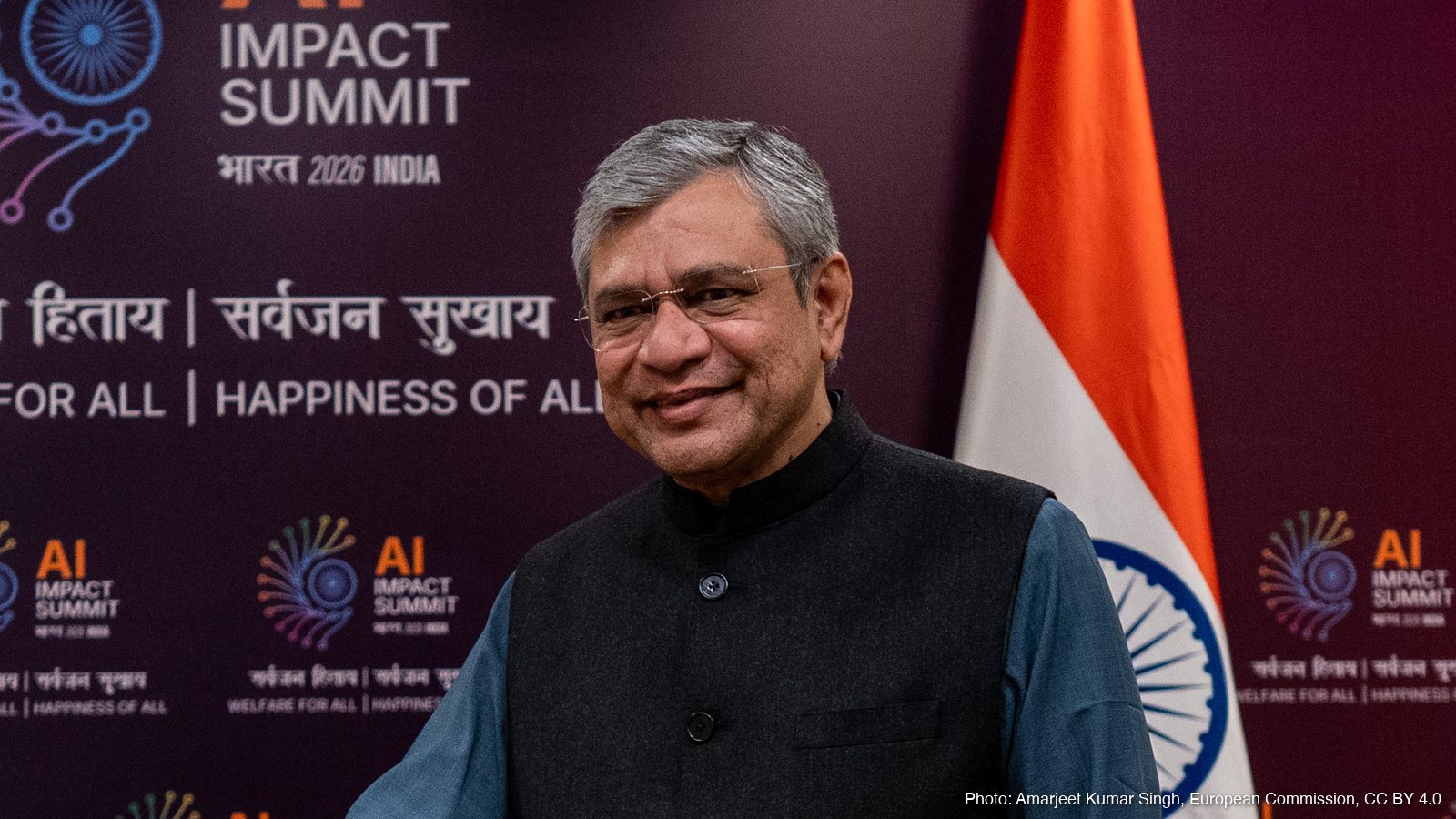
Ashwini Vaishnaw shared the mobile PLI scheme's numbers on X, replying to an opinion video that questioned the cost of paying phone factories.
Picture a tea stall owner who gets Rs 19 from the town council for every extra cup of chai he sells, and then pays Rs 25 back in tax. Is the council losing money or making money? India's IT minister has just shared numbers that raise the same question about phone factories.
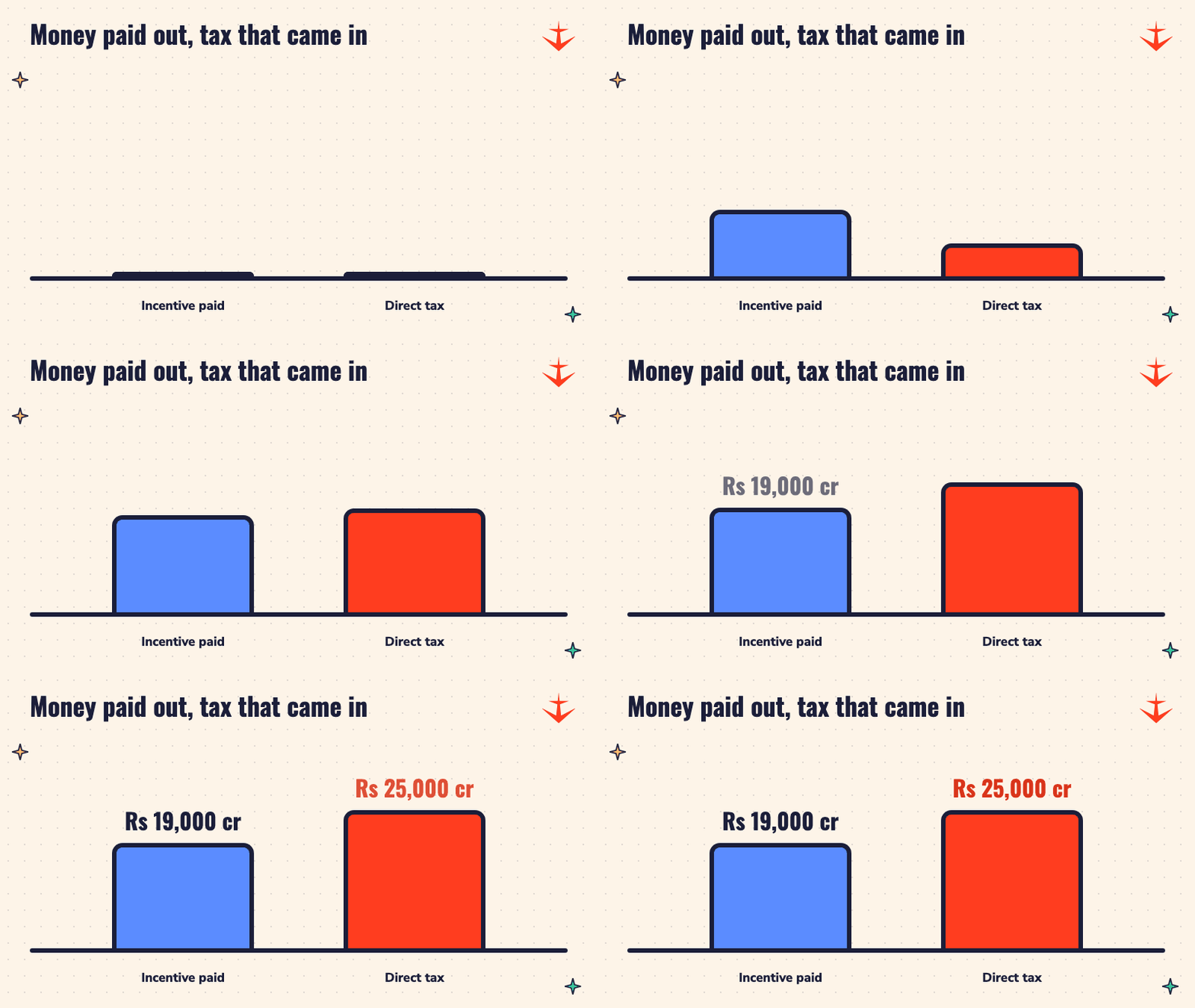
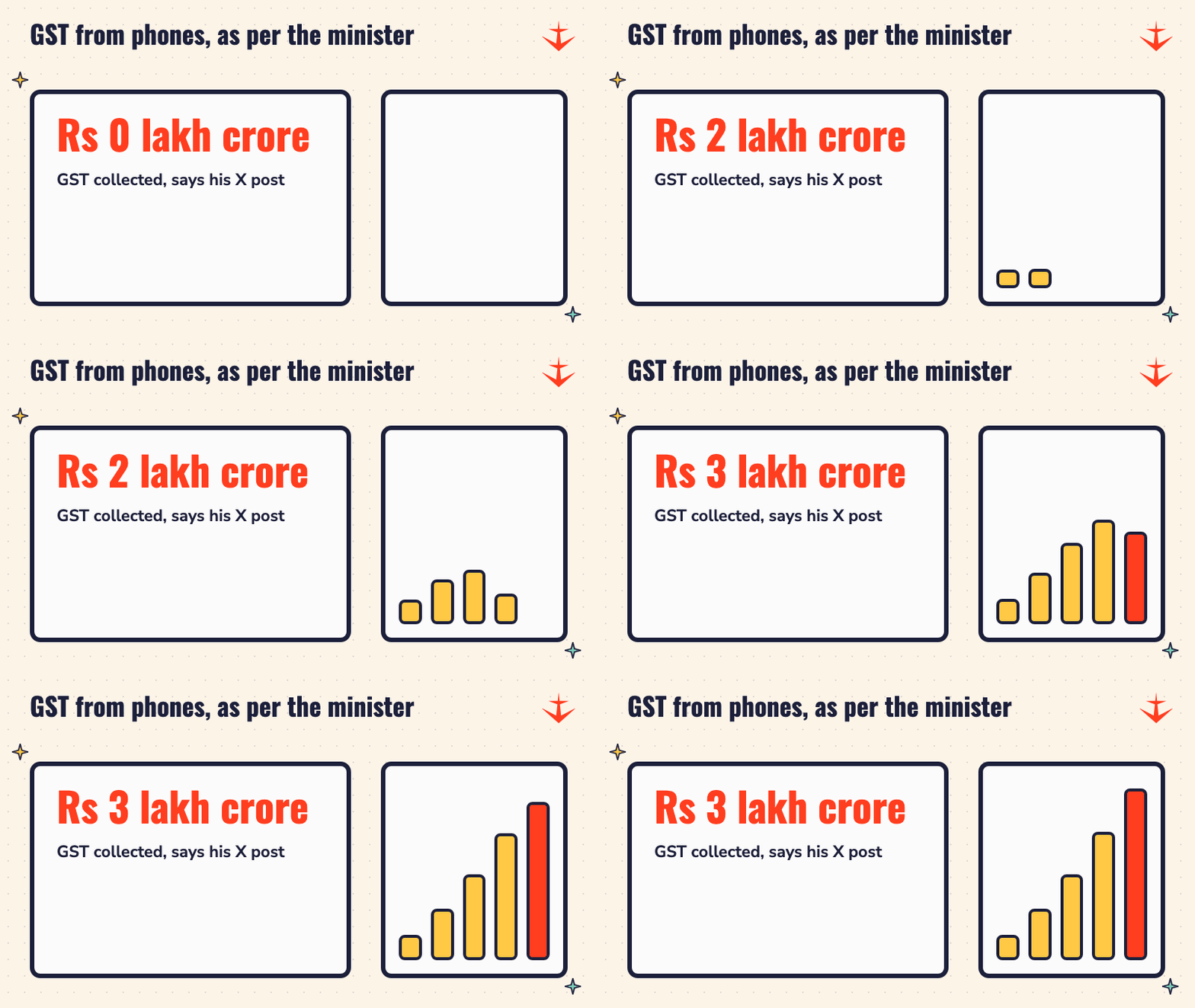
On Wednesday, 28 October 2026, Union electronics and IT minister Ashwini Vaishnaw put a short list of numbers on X. He said the government paid Rs 19,000 crore to phone makers under the mobile PLI scheme. In return, he said, the government collected Rs 25,000 crore in direct tax and Rs 3,00,000 crore (Rs 3 lakh crore) in GST.
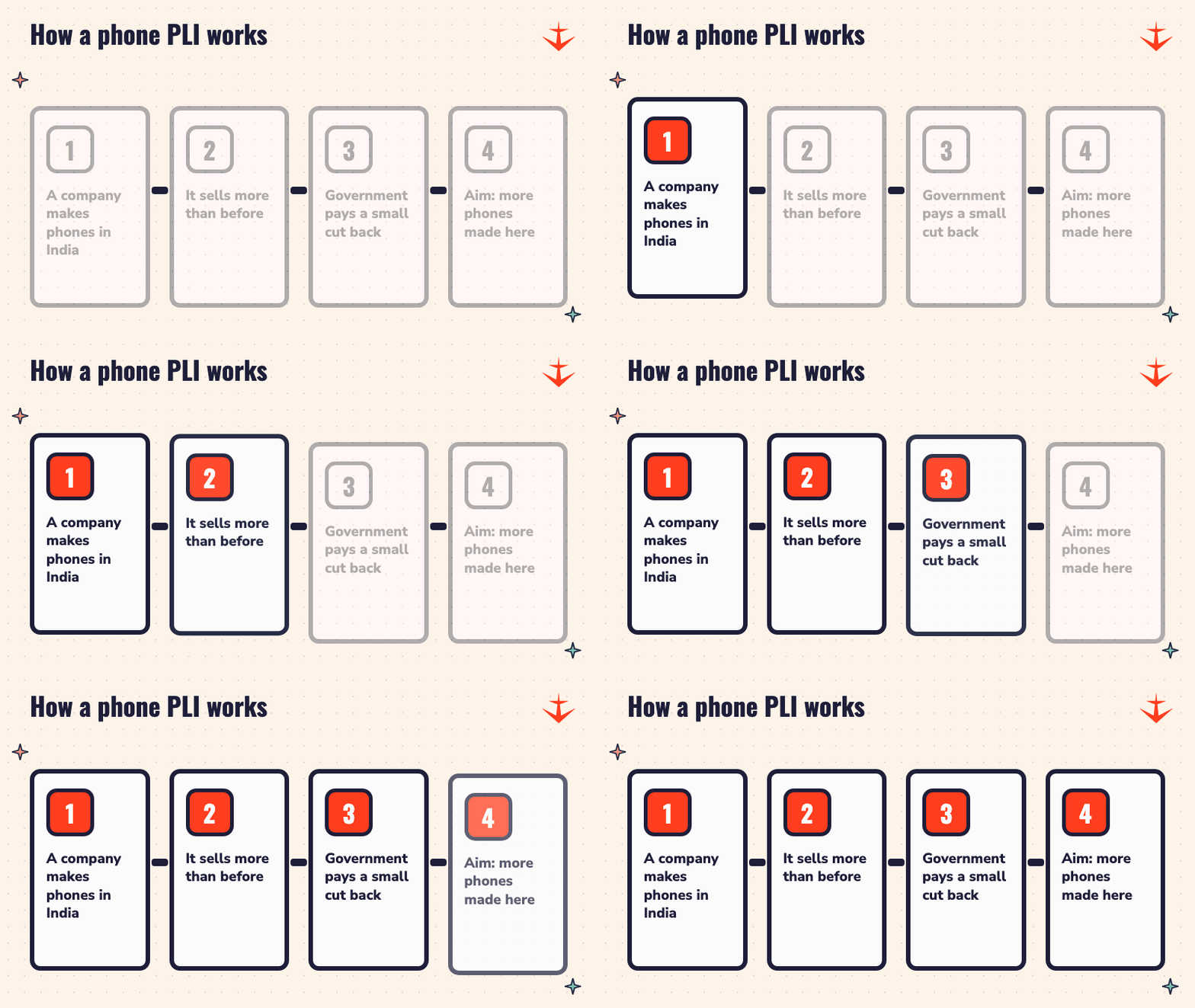
First, what is a PLI?
PLI means Production Linked Incentive. An incentive is a reward for doing something. Think of a chai stall owner who gets a small bonus on each extra cup he sells this year compared with last year. The more he makes and sells, the bigger the reward.
India's PLI schemes reward companies for extra sales of goods made in Indian factories. They began in April 2020 with mobile phones and electronics, and later spread to 14 sectors. The idea: make more things here, and buy fewer things from abroad.
What did the minister say?
His post was a few short lines. Here they are in plain words:
- Money the government paid to phone makers: Rs 19,000 crore.
- Direct tax collected: Rs 25,000 crore. Direct tax is tax paid straight from income, like the income tax on a salary or the tax a company pays on its profit.
- GST collected: Rs 3 lakh crore. GST is the tax added to the price when something is sold, the way a bill at a restaurant has GST at the bottom.
- People working in electronics manufacturing: 25 lakh.
- People working in mobile phone making alone: 12 lakh.
In his own words: "Electronics manufacturing employs 25 Lakh people; mobile manufacturing alone employs 12 Lakh." So mobile phones make up nearly half of all the electronics factory work he counted.
Add the two taxes and the total is Rs 3.25 lakh crore, the figure Business Standard also reported. One early report, in The Economic Times, printed the GST number as Rs 3,000 crore. The minister's post says Rs 3,00,000 crore.
Why did he post this now?
He was replying to a media opinion video. As Business Standard describes it, the video questioned India's plan of using public money to grow electronics factories, and compared India with the factory network that already exists in China.
Its main point, as per that report: the parts India imports to build phones cost more than what India earns by selling the finished phones abroad. In simple words, imagine a samosa stall that buys potatoes, oil and flour from another town. If the stall pays more for those things than it earns from selling samosas, the stall is busy but not really winning.
The minister's reply ended with two words: "Cope harder!!"
Bloomberg Opinion has a video on this same argument, called "India's iPhone boom has a costly catch":
Are both sides counting the same thing?
Not really. The minister's numbers are about tax and work: money that came in against money paid out. The video is about trade: how much India spends on imported parts against how much it earns from phones sold abroad.
The post also does not say which years the tax numbers cover.
Think of a cricket match. One team counts runs. The other counts wickets. Both numbers are real, but they answer different questions.
How big has phone making become?
Very big. Government data shared in March, as reported by Business Standard, shows:
- India made phones worth about Rs 5.5 lakh crore in 2024-25, up from about Rs 0.18 lakh crore in 2014-15.
- India sold phones worth Rs 2 lakh crore to other countries in the 2025 financial year.
- Ten years ago, 75 per cent of the phones Indians bought were imported. In 2024-25 the share was only about 0.02 per cent.
So almost every phone sold in a shop here is now made in an Indian factory. The open question in the debate is how much of what sits inside that phone is made here too.
What comes next: a new Rs 62,500 crore plan
The old phone PLI scheme, called the Production Linked Incentive Scheme for Large Scale Electronics Manufacturing, ended on 31 March 2026. In July, the Union Cabinet approved a new one, the Mobile Phone Manufacturing Scheme (MPMS), with a budget of Rs 62,500 crore.
Here is how the new scheme works, according to The Economic Times:
- It runs for five years, from 2026-27 to 2030-31.
- Companies get 2.25 per cent to 5 per cent on eligible phone sales. That is like Rs 2.25 to Rs 5 back on every Rs 100 of phones sold.
- They can earn up to 1.5 per cent more if they buy key parts from Indian suppliers.
- Indian phone brands get extra help for design and research.
- The government expects phone production of about Rs 39 lakh crore over the scheme's life, and around 60,000 direct new roles.
The extra 1.5 per cent for local parts goes straight at the point the video raised: making more of the phone's insides in India. Business Standard adds that the minister has set October 2028 as the timeline for an Indian smartphone brand.
This video explains the new scheme from the day it was cleared:
What this means for you
If you are looking for work, phone and electronics factories are now big employers, with 25 lakh people in electronics as per the minister. If you run a small business that makes parts, screws, packaging or chargers, the new scheme's extra reward for local parts means big phone makers have a reason to buy from Indian suppliers. And if you pay taxes, this is your money in play: the debate is about whether the rupees paid out come back to the country, and in what form.
Sources
- Ashwini Vaishnaw's post on X with the mobile PLI numbers
- Business Standard: Govt collects Rs 3.25 trn in taxes in lieu of Rs 19,000 cr mobile PLI
- The Economic Times: Vaishnaw says mobile PLI scheme generated Rs 25,000 crore in direct taxes
- Bloomberg Opinion video: India's iPhone boom has a costly catch
- Wikipedia: Production Linked Incentive schemes in India
- Cover photo: Visit of Henna Virkkunen to India (P-068900-00-17), by Amarjeet Kumar Singh, European Commission Audiovisual Service, CC BY 4.0

You may republish this story under CC BY 4.0: credit Manpreet Kaur and link to this page.